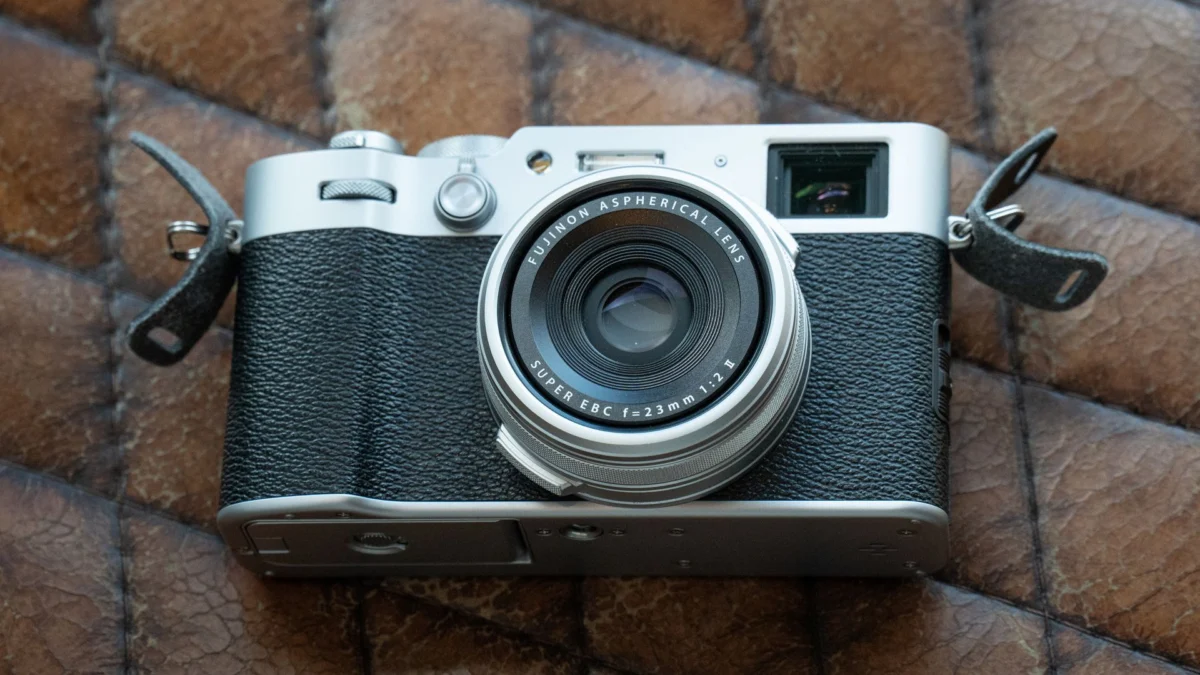
The digital camera market has undergone a dramatic renaissance over the past several years, driven largely by consumer demand for retro aesthetics, tactile analog controls, and compact form factors. Amid this resurgence, models like the viral Fujifilm X100VI compact camera have achieved unprecedented levels of popularity, frequently suffering from global backorders and skyrocketing demand on the secondary market. While much of the public discourse surrounding the X100VI focuses on its portability and classic rangefinder styling, professional and enthusiast photographers frequently highlight a more specialized feature: its unique hybrid viewfinder.
Merging the optical clarity of traditional rangefinders with the precise exposure telemetry of modern electronic viewfinders (EVFs), Fujifilm’s hybrid system represents one of the most innovative viewing technologies introduced to digital photography in decades. Yet, despite its critical acclaim and a history spanning more than ten years, this technology remains largely exclusive to the fixed-lens X100 series and the now-discontinued X-Pro interchangeable-lens line. For photographers heavily invested in Fujifilm’s broader mirrorless ecosystem, the absence of a hybrid viewfinder in modern bodies equipped with interchangeable lenses presents a lingering technological gap.
The Mechanics and Evolution of Fujifilm’s Hybrid Viewfinder
To understand the enduring appeal of the hybrid viewfinder, one must examine its foundational engineering. Traditional digital mirrorless cameras rely exclusively on electronic viewfinders, which route digital feeds directly from the image sensor into a miniature high-resolution screen inside the eyepiece. While this offers immense advantages—such as real-time previews of white balance, exposure adjustments, and focus peaking—it also introduces screen lag, battery drain, and challenges under extreme lighting conditions, such as working in bright sunlight or with studio flash lighting.
Conversely, traditional Digital Single-Lens Reflex (DSLR) and rangefinder cameras utilized optical viewfinders (OVFs), presenting a direct, lag-free optical path to the subject. However, optical systems lack the ability to overlay digital metadata accurately or show exact exposure simulations prior to shutter actuation.
Fujifilm solved this dichotomy by developing a hybrid optical/electronic viewfinder system. First introduced with the original Fujifilm X100 in 2011, the mechanism allows users to flip a physical lever on the front of the camera body to seamlessly transition between a pure optical frame and an electronic display. Furthermore, the system supports an electronic rangefinder (ERF) mode, which projects a small, high-magnification EVF window into the corner of the optical view. This gives photographers the benefit of manual focusing assistance while maintaining a wide, unobstructed view of the surrounding scene outside the definitive frame lines.
Chronology of the Hybrid Viewfinder Across Fujifilm’s Lineup

The trajectory of the hybrid viewfinder has been tightly controlled by Fujifilm, appearing only in specialized product tiers designed for purists and street photographers.
- 2011: Fujifilm launches the original X100, featuring the first-generation hybrid viewfinder paired with a fixed 23mm f/2 lens and an APS-C sensor.
- 2012: The technology makes its jump to an interchangeable-lens camera with the introduction of the Fujifilm X-Pro1, establishing a dedicated flagship tier for professionals who preferred optical viewing alongside swappable X-mount optics.
- 2016–2020: Iterative updates arrive through models like the X100F, X100V, and the X-Pro2 and X-Pro3. During this period, the electronic components of the hybrid system are upgraded with higher-resolution OLED panels and faster refresh rates.
- 2023–Present: Fujifilm officially discontinues the X-Pro3 without immediately announcing a direct successor, leaving the viral X100VI as the sole current-production camera in Fujifilm’s catalog to feature the hybrid viewfinder technology. Meanwhile, popular mirrorless models like the X-T5, X-S20, and the ultra-compact X-E series rely entirely on conventional electronic viewfinders.
Practical Challenges in Studio and Flash Photography
The persistent demand for hybrid technology among working professionals stems largely from specific real-world shooting scenarios, most notably flash and studio photography. When operating an electronic viewfinder, the camera attempts to simulate the final image exposure in real time. In ambient lighting, this is a distinct advantage.
However, when photographers introduce off-camera flash or studio strobes, the ambient exposure settings on the camera are frequently dialed down to eliminate background light and prioritize the flash output. Under these conditions, a standard EVF will render an excessively dark, nearly black preview because it does not account for the incoming burst of artificial light that will occur when the shutter opens.
To overcome this, photographers using pure EVF systems must manually disable their exposure preview settings or navigate deep within camera menus to adjust display behaviors. By contrast, a traditional optical viewfinder bypasses these electronic limitations entirely. Photographers can view the physical scene with absolute clarity, relying on optical frames to compose the shot while studio lights execute the exposure. For portrait, wedding, and commercial photographers, the ability to switch between optical and electronic viewing modes on demand eliminates unnecessary workflow friction.
Engineering Hurdles and the Rise of Advanced Autofocus
Despite clear operational benefits for specific user groups, industry analysts and camera designers point to several significant engineering hurdles that have prevented the hybrid viewfinder from becoming an industry standard or expanding deeper into mainstream mirrorless lineups.
Chief among these challenges is the integration of modern autofocus systems. Contemporary mirrorless cameras rely heavily on sophisticated subject-detection algorithms powered by deep learning—tracking human eyes, animals, vehicles, and fast-moving objects with pinpoint accuracy. These systems depend on continuous sensor-level data processing and visual feedback loops that are natively optimized for electronic display panels.

Adapting an optical viewfinder to display modern autofocus tracking overlays requires complex semi-reflective prism mechanics, digital projection overlays, and precise mechanical calibrations that add weight, bulk, and significant manufacturing costs to the camera body. Furthermore, in an era where consumers expect compact, weather-sealed bodies at competitive price points, adding a complex mechanical optical-electronic hybrid module increases the risk of mechanical failure and supply chain bottlenecks.
The Interchangeable-Lens Dilemma: X-Pro Versus X-Series Mirrorless
The fundamental engineering challenge of bringing a hybrid viewfinder to an interchangeable-lens body lies in parallax error and focal length accommodation. In a fixed-lens camera like the X100VI, the optical viewfinder is factory-calibrated to a single, permanent field of view.
When lenses are interchangeable—as seen on the X-Pro series—the physical framing lines visible inside the optical viewfinder must dynamically adjust in real time to match the attached lens, whether the user mounts a wide-angle 16mm prime or a telephoto 56mm portrait lens. While Fujifilm successfully solved this engineering puzzle with the X-Pro line, the discontinuation of the X-Pro3 has left many wondering if the company considers the market for interchangeable-lens rangefinder-style bodies economically viable compared to its high-volume center-evf models like the X-T series.
Broader Market Implications and Consumer Trends
The discussion surrounding Fujifilm’s hybrid viewfinder also intersects with broader shifts in the digital camera market. In recent years, the industry has witnessed a surprising consumer trend toward minimalist, screen-free, or optical-centric digital cameras. Younger demographics and photography purists increasingly seek out equipment that minimizes digital distractions, encouraging a more deliberate, analog-style shooting process.
While some consumers have embraced ultra-simplified digital compacts that entirely omit rear LCD screens, most working photographers require the versatility of modern sensors and customizable settings. For these users, the hybrid viewfinder represents the ideal compromise: the meditative, unobstructed framing experience of a classic film camera combined with the digital safety net of a modern sensor when required.
Looking to Alternatives: Pancake Lenses and Compact Bodies

As the secondary market prices for the X100VI remain high and availability is restricted, consumers seeking a lightweight, pocketable setup are increasingly exploring alternative configurations within the Fujifilm X-mount ecosystem.
Many photographers are pairing slim, lightweight "pancake" lenses—such as low-profile prime lenses—with interchangeable-lens bodies like the Fujifilm X-E series to achieve a footprint comparable to the X100 line. While this approach successfully reduces physical bulk and delivers exceptional image quality, it ultimately forces users to compromise on the viewing experience, locking them entirely into standard electronic viewfinders.
Industry Outlook and Future Prospects
As camera manufacturers continue to refine sensor technologies, artificial intelligence integration, and high-resolution electronic viewfinders, the future of mechanical optical viewfinders remains uncertain. High-refresh-rate EVF panels have closed the gap significantly in terms of visual fidelity and responsiveness, convincing the vast majority of mainstream manufacturers to abandon optical elements entirely.
Nevertheless, Fujifilm’s enduring success with the X100 series proves that a passionate segment of the photography community values tactile interaction and optical purity over pure digital efficiency. Whether Fujifilm will eventually develop a successor to the X-Pro line or introduce an updated interchangeable-lens camera featuring a next-generation hybrid viewfinder remains an open question. Until then, the hybrid viewfinder remains a singular, highly coveted feature—a bridge between analog heritage and digital innovation that continues to define the unique identity of Fujifilm’s most celebrated cameras.