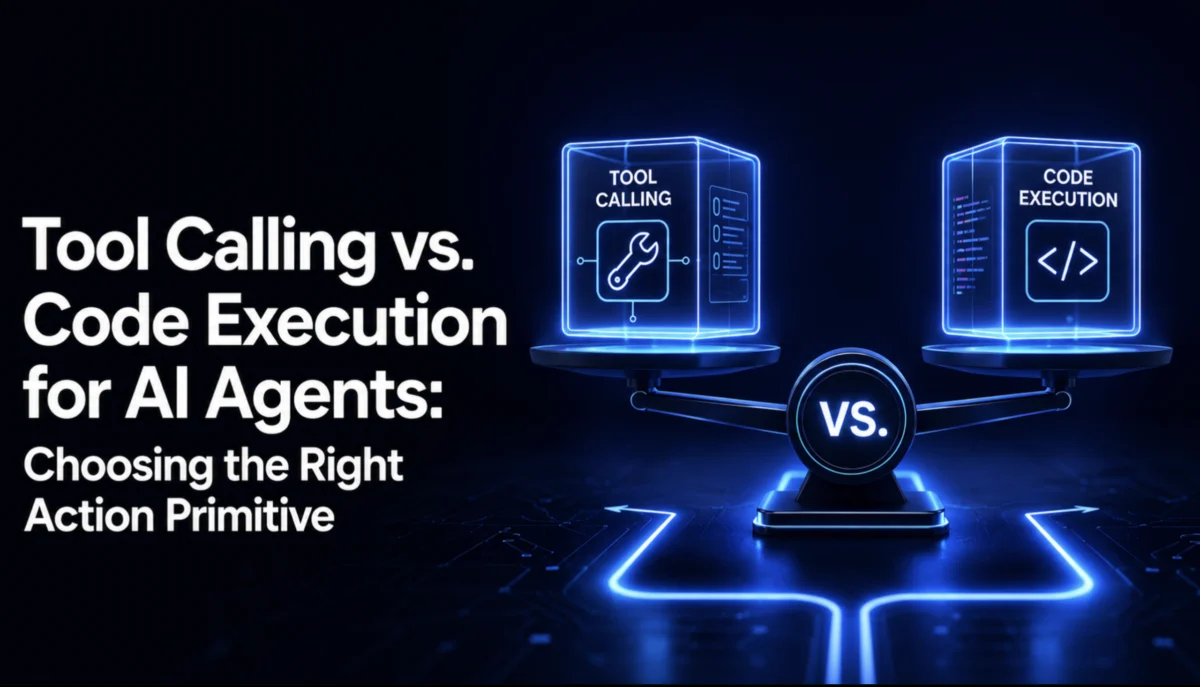
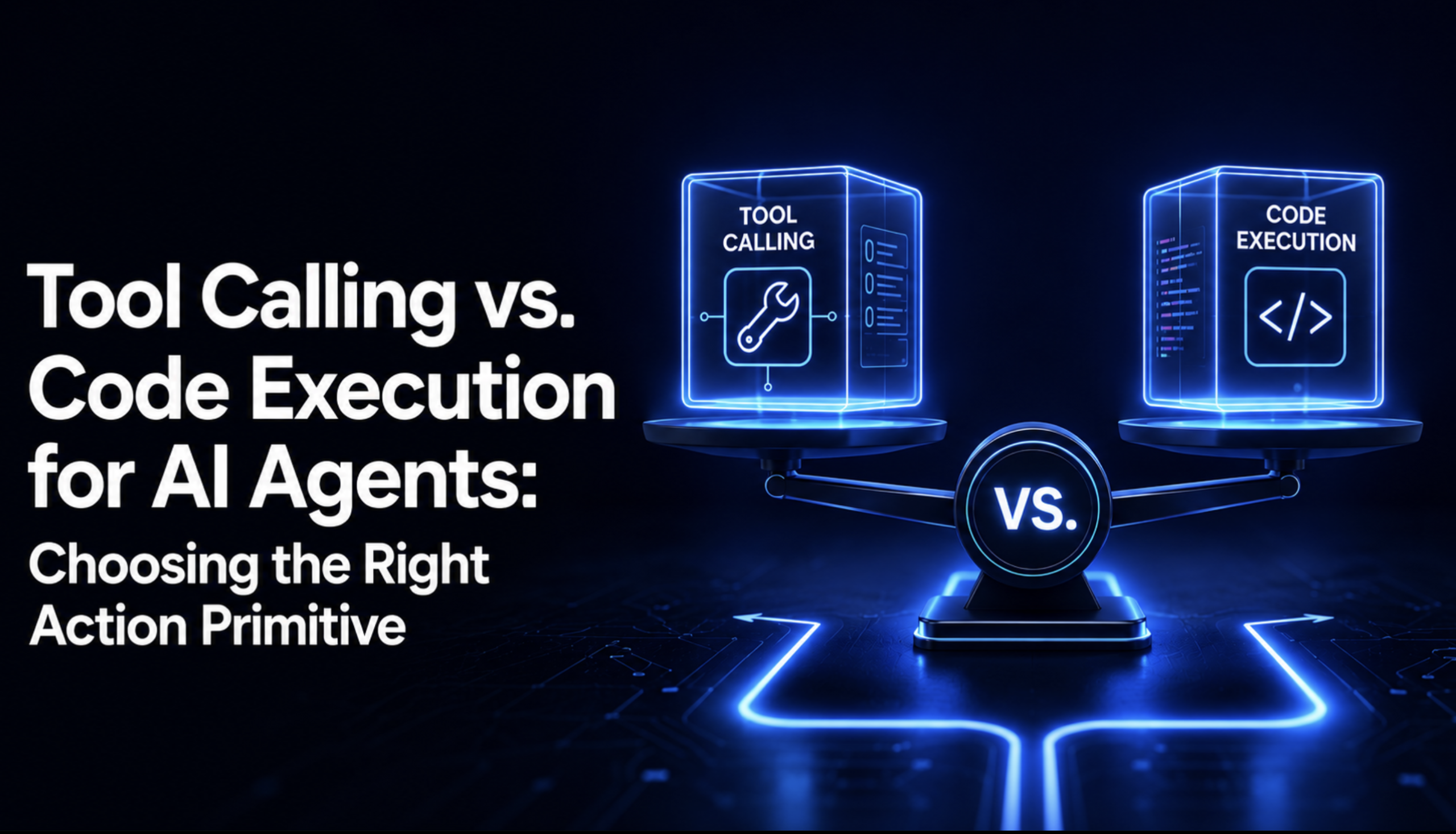
The evolution of artificial intelligence agents has shifted the industry’s focus from mere text generation to autonomous task execution in real-world environments. As developers deploy agents capable of navigating complex workflows, a foundational architectural debate has emerged concerning how these systems interact with external applications, databases, and APIs. This operational mechanism—known as an action primitive—dictates how a language model translates a high-level decision into a tangible digital effect. Engineering teams are increasingly forced to choose between traditional tool calling and modern code execution frameworks, a decision that carries direct consequences for operational costs, system latency, and overall task accuracy.
Understanding the Mechanics of Action Primitives
At its core, an action primitive serves as the bridge between a language model’s probabilistic reasoning and deterministic software execution. For years, the industry standard has relied heavily on tool calling. In this paradigm, a model produces a single structured request formatted as JSON, which a host application intercepts, executes, and feeds back into the conversation context for the model to review before determining its next step. This sequential, one-step-at-a-time loop offers high visibility and straightforward logging, making every action a discrete, auditable event.
However, scaling this approach reveals significant limitations. When an agent is tasked with complex, multi-step queries—such as auditing expense reports for dozens of employees or aggregating meteorological data across international cities—the traditional tool-calling loop generates thousands of raw data points. These intermediate results flood the model’s context window, driving up token consumption, increasing latency, and introducing cognitive friction that can degrade analytical accuracy.
The emergence of code execution as a primary action primitive addresses these systemic bottlenecks. Rather than forcing a model to request individual actions sequentially through constrained JSON payloads, code execution allows the model to write complete, sandboxed programs—typically in Python or TypeScript—that perform multiple actions in parallel or in sequence. Under advanced patterns like Programmatic Tool Calling, specific functions are marked as accessible from within the generated code via designated authorization parameters. The model drafts a comprehensive script containing loops, conditionals, and error-handling logic, executing multiple backend calls inside a secure sandbox. Only the final output of the script returns to the model’s context window, effectively stripping away unnecessary intermediate data.
Comparative Analysis: Token Economy and Performance Metrics
Industry benchmarking and empirical research highlight stark operational differences between the two primitives. Early implementations of code-execution patterns, such as those integrated with Anthropic’s Model Context Protocol (MCP), demonstrated dramatic reductions in token usage. Complex workflows, such as cross-platform data synchronization between cloud drives and customer relationship management systems, saw token counts drop by over 98 percent—shrinking from 150,000 tokens down to 2,000—by maintaining intermediate transcripts within the execution environment.
Furthermore, formal benchmarks evaluating complex research and data retrieval tasks indicate that programmatic tool use yields measurable improvements in accuracy. Studies tracking performance on standardized agentic benchmarks, such as GAIA, recorded accuracy increases from 46.5 percent to 51.2 percent when agents utilized code execution rather than standard JSON tool calling. Researchers attribute this performance boost to the offloading of orchestration logic. Allowing a programming language to handle loops, sorting, and arithmetic eliminates the error rates inherent in forcing a language model to track multiple intermediate numerical values in natural language.
These findings align closely with foundational academic research, including the 2004 CodeAct framework developed by Wang and colleagues, which established that agents operating through executable code achieve superior success rates on multi-step tasks compared to traditional tool-use architectures.
Operational Framework: When to Deploy Each Primitive
Despite the clear performance advantages of code execution in data-heavy or multi-step scenarios, industry experts emphasize that tool calling remains the optimal choice for specific use cases. Engineering teams must evaluate several operational factors before selecting an action primitive for production deployment.
Tool calling remains favored in environments characterized by:
- Single-call tasks or minimal, fixed interaction loops where the overhead of initializing a sandboxed execution environment introduces unnecessary latency.
- Tasks requiring the model to read, interpret, and qualitatively reason over intermediate results in natural language, where data filtering would destroy necessary context.
- Simpler infrastructure requirements, allowing teams to avoid the operational complexity and security overhead of maintaining isolated code-execution sandboxes.
- Strict auditability mandates that require every discrete system interaction to be independently logged and inspected.
Conversely, code execution is favored in scenarios involving:
- High-volume fan-out and aggregation tasks, where a single prompt requires numerous parallel API queries or database lookups.
- Large data payloads or sensitive information, such as Personally Identifiable Information (PII), which must be processed and filtered inside a secure environment to protect the model’s context window and maintain data privacy.
- Workflows where computational accuracy—such as numerical sorting, statistical averaging, or complex data manipulation—is paramount.
The Hybrid Reality of Modern Production Systems
Rather than presenting a mutually exclusive architectural choice, contemporary production deployments increasingly adopt a hybrid model. Advanced agent frameworks leverage tool calling for straightforward, single-shot queries while seamlessly escalating to code execution when tasks demand parallel processing, data aggregation, or heavy computational lifting.
As enterprise AI adoption matures, the ability to discern the appropriate action primitive on a task-by-task basis has become a critical engineering competency. Optimizing this choice ensures that production systems maintain high accuracy and responsiveness while avoiding the hidden costs of bloated context windows and inefficient computational loops.