Tesla (NASDAQ: TSLA) is poised to release its second-quarter 2026 earnings report this evening, with investors and analysts keenly awaiting the company’s financial performance and strategic outlook for the period. Wall Street consensus estimates project earnings per share (EPS) of $0.53, with revenues anticipated to reach approximately $26.4 billion. These figures represent a notable increase from the $0.39 EPS and $22.19 billion in revenue reported for the second quarter of 2025. Last quarter, Tesla reported an EPS of $0.41 on revenues of $22.387 billion, a performance that, despite beating analyst expectations, led to a slight decline in share price in the subsequent trading day.
The upcoming earnings call is expected to delve into several key areas, particularly the progress and future of Tesla’s ambitious ventures in autonomous driving, robotics, and the broader energy sector. Investor questions, curated through Tesla’s "Say" platform, highlight significant interest in the company’s ability to meet self-imposed deadlines for its robotaxi service and the development of its Optimus humanoid robot.

Financial Performance and Analyst Expectations
The consensus financial projections for Tesla’s Q2 2026 paint a picture of continued growth, building upon the company’s trajectory. The anticipated $0.53 EPS would mark a substantial 35.9% increase year-over-year from Q2 2025’s $0.39. Similarly, the projected $26.4 billion in revenue would represent a 19% uplift from the $22.19 billion generated in the same quarter of the previous year. These figures are crucial for assessing Tesla’s operational efficiency, pricing strategies, and the demand for its electric vehicles and energy products in a competitive market.
The automotive sector, while experiencing a gradual but steady shift towards electrification, remains subject to macroeconomic influences such as interest rates, consumer spending, and supply chain stability. Analysts will be scrutinizing Tesla’s gross margins, particularly within its automotive segment, to gauge its pricing power and cost management effectiveness. Furthermore, the performance of its Energy Generation and Storage division will be a key indicator of diversification success and its contribution to the company’s overall profitability.
Key Discussion Points: Robotaxi and Optimus Development
A significant portion of investor anticipation centers on the progress of Tesla’s autonomous driving initiatives, specifically the robotaxi service. Several prominent questions submitted through the "Say" platform underscore concerns about missed short-term guidance and the pace of expansion. One recurring theme queries: "Tesla has missed short-term guidance on robotaxi 3 earnings reports in a row, from 50% coverage of USA by end of 2025 to most recently 7 new cities in 1H26. What is keeping Tesla back from accomplishing these short term goals that they’ve set for themselves?" This question reflects a desire for clarity on the technical, regulatory, or operational hurdles impeding faster deployment.

Further inquiries delve into the interplay between robotaxi operations and the production ramp-up of the "Cybercab," asking: "What are the main constraints to expanding robotaxi operations faster, and how do you see that lining up with Cybercab production?" The success of the robotaxi network is intrinsically linked to the availability of a robust fleet and the efficiency of its underlying technology, including Full Self-Driving (FSD) capabilities. Investors will be looking for concrete updates on the scaling of these operations and any revised timelines.
The development of the Optimus humanoid robot is another critical area of interest. Questions such as: "What’s the current status of Optimus Gen 3 production ramp, initial deployment in factories, and external sales timeline/volume for 2027? What tasks can we expect the Optimus to perform by end of 2027?" indicate a strong retail investor interest in the commercial viability and timeline for this ambitious project. The ability of Optimus to move beyond internal factory use and into external sales represents a potential new revenue stream and a significant technological milestone. The anticipated performance capabilities by 2027 will be closely examined.
Institutional Investor Perspectives
Institutional investors are also posing pointed questions that address the strategic integration of Tesla’s various ventures and its competitive positioning. One key question regarding the potential collaboration with SpaceX highlights: "Previously, you’ve said Tesla would lead the R&D while SpaceX would lead production for Terafab. Can you provide an update on how that division of responsibilities is evolving, and any additional clarity on the expected capital contributions from Tesla and SpaceX?" This probes the synergistic potential between the two Musk-led companies and the financial commitments involved in future large-scale manufacturing projects.
The unique data advantage derived from Tesla’s vehicle fleet for autonomous driving is a well-established strength. However, institutional investors are keen to understand how this advantage translates to the development of Optimus. The question: "For autonomous driving, Tesla’s fleet created a huge data advantage by collecting billions of real-world miles. That advantage doesn’t yet exist for Optimus. How should we think about data availability and its impact on Optimus development?" points to the need for a clear strategy in acquiring and leveraging data for robot training, which may differ significantly from automotive FSD.
Operational strategy for autonomous services is also under scrutiny. The question: "Why is it necessary to limit robotaxi operations within specific zones within cities to start? Will every city have to be rolled out this way?" seeks to understand the phased approach to robotaxi deployment and the underlying rationale, likely related to safety, regulatory approval, and operational efficiency in controlled environments before wider expansion.
Broader Strategic Outlook and Future Commitments
Beyond the immediate financial and operational updates, investors will be attentive to any forward-looking statements regarding Tesla’s long-term vision. The question addressing shareholder rewards: "To reward long-term Tesla retail shareholders for their loyalty, can you commit to achieving at least half of the goals outlined in your 2025 compensation plan before considering any offers to acquire or merge Tesla?" suggests a desire for reassurance regarding the company’s independent growth trajectory and its commitment to existing shareholders.

The earnings call is scheduled to commence at approximately 5:30 p.m. ET, following the release of the Shareholder Deck at 4 p.m. ET. This provides an opportunity for the company to articulate its narrative and address investor concerns directly, potentially influencing market sentiment and share performance in the days and weeks to come.
Elon Musk’s AI Initiatives: Grok and SpaceX Data Integration
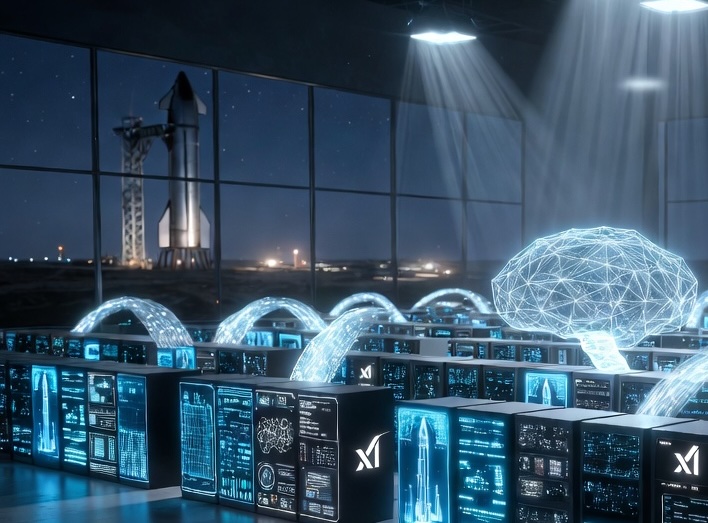
In parallel developments, Elon Musk’s ventures into artificial intelligence continue to generate significant attention. SpaceX is set to provide its extensive engineering data to enhance Grok, Musk’s AI model, for its next major training phase. This infusion of proprietary data, excluding information restricted by International Traffic in Arms Regulations (ITAR), is expected to substantially boost Grok’s engineering capabilities. The "2T run," referencing a model with approximately two trillion parameters, is positioned to nearly double the capacity of the recently released Grok 4.5.
This strategic data integration follows a pattern established across Musk’s companies. Tesla contributes real-world driving and manufacturing data, X (formerly Twitter) provides conversational data, and now SpaceX is contributing its aerospace engineering expertise accumulated since its founding in 2002. While specific propulsion and guidance system details may be restricted under ITAR, the vast trove of manufacturing knowledge, materials science insights, and Starlink hardware design data will undoubtedly enrich Grok’s understanding of complex engineering principles. The announcement comes in the wake of SpaceX’s Nasdaq debut and its acquisition of coding startup Cursor, further consolidating xAI’s access to enterprise software and developer data.
Warning to SpaceX Short Sellers
Adding to the ongoing narrative surrounding Musk’s companies, a recent statement issued on X serves as a direct warning to entities holding significant short positions in SpaceX. Musk declared that the survival probability for firms maintaining substantial short positions in the rocket company over time is "very low." This declaration follows the post-IPO volatility of SpaceX, now trading under the ticker $SPCX. Despite an initial peak market value that surpassed established tech giants, the stock has experienced a notable decline, presenting an opportunity for short sellers.
Musk’s warning echoes his long-standing confrontational stance towards short sellers, a pattern observed with Tesla. His optimistic outlook for SpaceX is anchored in the potential of projects like Starship to unlock a multi-trillion-dollar space economy, encompassing orbital solar power, asteroid mining, and eventual Mars colonization. In this vision, SpaceX serves as the foundational infrastructure provider, analogous to Amazon Web Services in the cloud computing era, generating substantial revenues from launches, crew transport, and data services across an expanding cosmic frontier. This perspective frames short positions as fundamentally misjudging the exponential technological advancements and the vast economic potential of space exploration, suggesting that bets against these ambitions carry existential risks for the firms involved. The long-term perspective, as advocated by Musk and his supporters, views current market fluctuations as temporary dips in a multi-decade ascent towards a multi-planetary future.