In the modern digital landscape, the privacy of personal information has become a rare commodity. Every time an individual registers an email address, registers a phone number, or submits a physical home address to online platforms, a digital paper trail is created. Unbeknownst to many internet users, much of this collected information is systematically harvested, curated, and repackaged by third-party data broker sites. These entities operate under legal frameworks that permit the collection and public display of details sourced from public records, allowing anyone with internet access and a small fee to uncover deeply personal dossiers on millions of citizens.
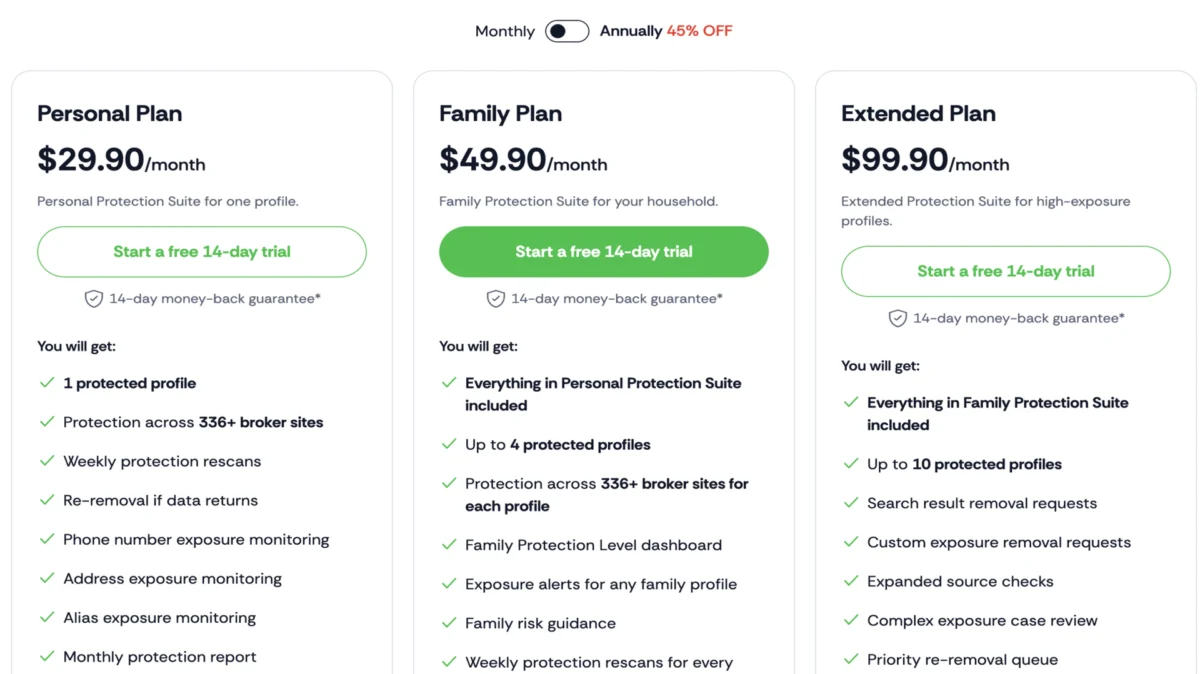
To combat this widespread monetization of personal lives, a growing sector of data removal services has emerged. Platforms like Incogni, DeleteMe, and newer market entrants such as ClearNym are designed to act as digital shields, scanning public directories, people-search sites, and data aggregators to automatically issue removal and opt-out requests on behalf of users. ClearNym has recently positioned itself as a notable contender in this privacy-focused niche, offering automated and custom deletion requests tailored heavily toward household protection.
The Mechanics of Data Brokering and the Rise of Removal Services
Data brokers are companies that collect information from various public and commercial sources—ranging from property deeds and marriage licenses to court filings and social media profiles—without requiring direct consumer consent. This data is then sold to marketers, financial institutions, insurance companies, and, most concerningly, malicious actors seeking to execute phishing scams, identity theft, or stalking. Because these brokers exploit loopholes in privacy legislation, primarily relying on the premise that the data is already publicly accessible, consumers have historically faced a tedious, near-impossible battle to scrub their information manually.
Data removal platforms automate this exhausting process. By deploying software crawlers, services like ClearNym cross-reference a user’s credentials against hundreds of known broker databases. When a match is found, the platform triggers formal opt-out procedures. While established competitors like Incogni boast broader database networks exceeding 420 sites, ClearNym has carved out a distinct market share by focusing on user-friendly architecture, robust custom deletion capabilities, and aggressive multi-user pricing structures designed explicitly for families.
ClearNym Pricing Structure and Subscription Tiers
Financial accessibility remains a major hurdle for consumers seeking comprehensive digital privacy, as many individual protection plans can accumulate significant annual costs. ClearNym attempts to address this economic barrier by scaling its services across three distinct tiers: a Personal plan, a Family plan, and an Extended plan.
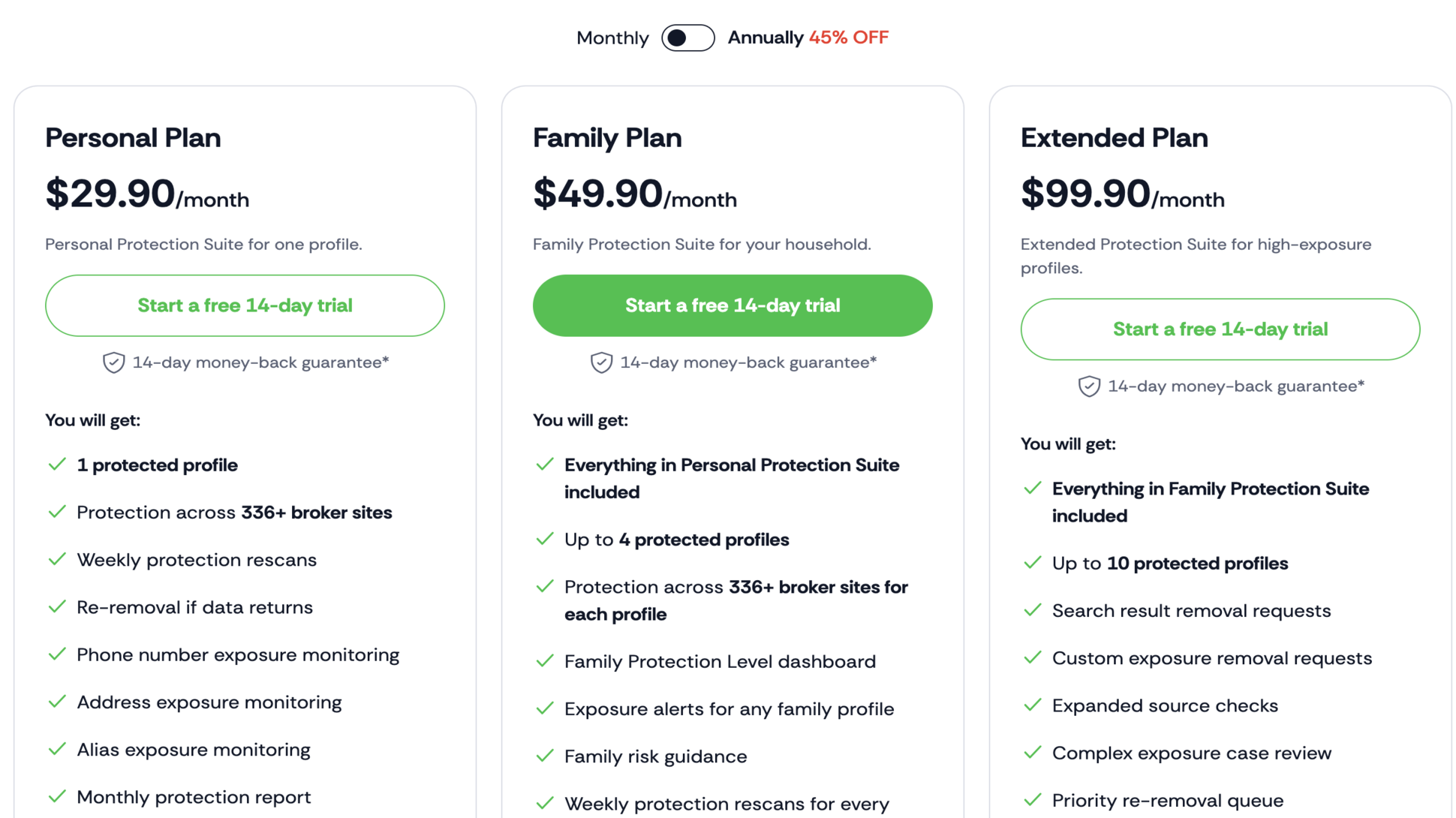
The Personal tier is priced at $30 per month, granting a single user continuous data removal coverage across more than 336 data broker networks. This package includes weekly automated rescans to ensure that harvested information does not reappear—a common phenomenon known as "re-listing," where brokers re-scrape data from newly updated public records. Additionally, the Personal tier monitors exposure levels for telephone numbers and home addresses, dispatching instant notifications to the subscriber if those sensitive identifiers surface online.
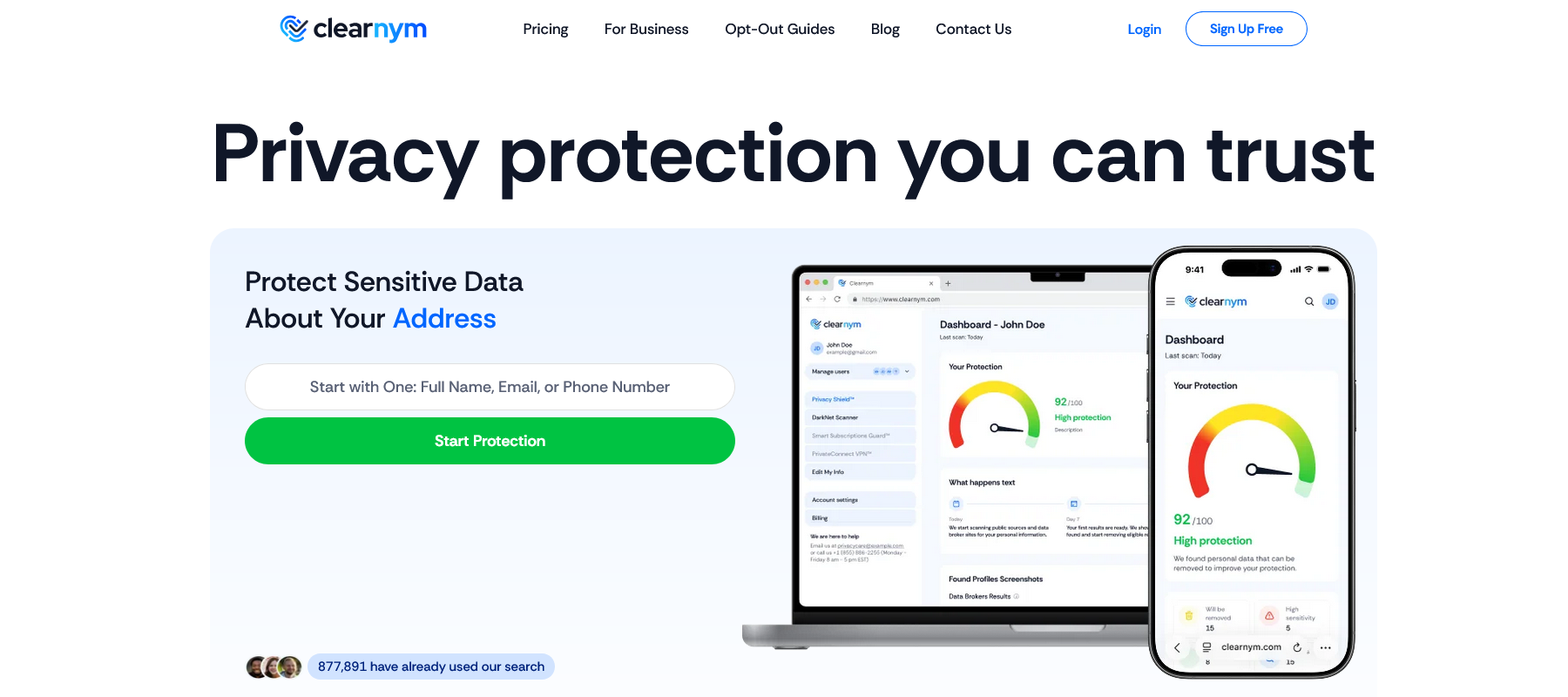
Recognizing that digital exposure often threatens entire households rather than isolated individuals, ClearNym has heavily subsidized its Family plan. Priced at $50 per month, this tier extends the full suite of personal features to a total of five users. When compared to the cumulative cost of five individual subscriptions—which would total $150 monthly—the family bundle offers a steep discount, making it one of the more economically viable multi-user privacy options currently evaluated by industry analysts.
For larger households or small business professionals requiring extensive oversight, the Extended plan is available at $100 per month. This top-tier package scales user capacity to 10 individuals and introduces a vital feature: custom removal requests. While standard automation handles ClearNym’s native network of 336 brokers, the Extended plan enables privacy experts to manually draft and submit opt-out requests to third-party databases operating outside the company’s primary index.
To incentivize long-term commitment, ClearNym implements a 45% discount for customers who opt for annual billing cycles rather than month-to-month payments. For instance, an annual subscription to the Personal tier reduces the total expenditure from $360 down to $198. Furthermore, the company mitigates financial risk for prospective buyers by offering a 14-day free trial, accompanied by a broader 28-day refund window should a subscriber wish to terminate their service after initial payment processing.
Setup Process and Deep-Scan Mechanics
The onboarding experience for ClearNym has been engineered to minimize friction, requiring only basic user details to initiate the preliminary audit. Upon navigating to the platform’s official portal and creating an account, users input their full name, active email addresses, phone numbers, and geographic location. Geographic parameters are particularly critical, as they allow scanning algorithms to filter out namesakes and target regional public records accurately.
Once the parameters are submitted, ClearNym deploys its scanning engine across its database network. While processing times vary depending on server load and the sheer volume of matched records, comprehensive audits typically conclude within several minutes.
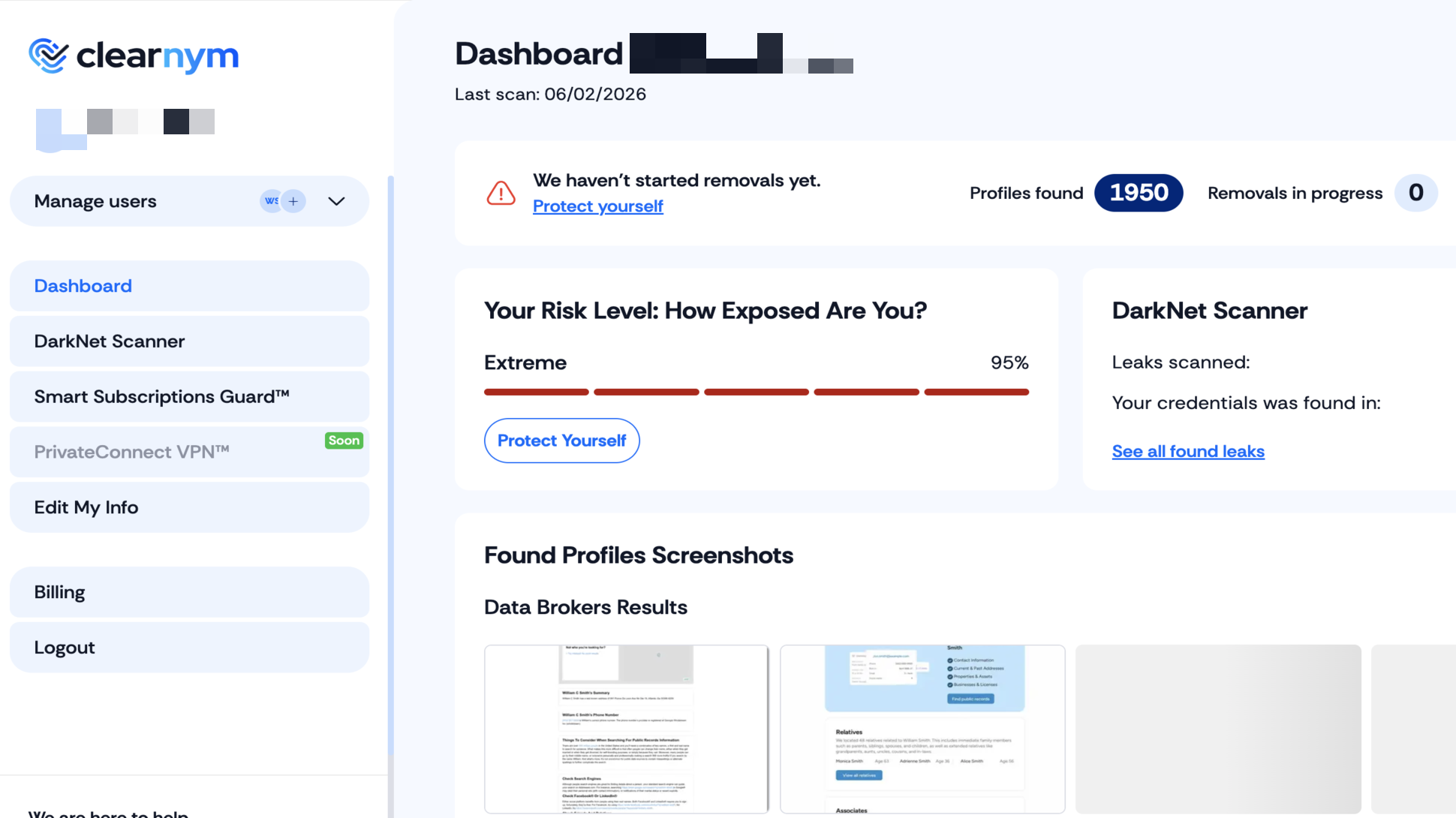
To evaluate the depth and accuracy of these scans without compromising personal anonymity, privacy researchers often test these platforms using standardized aliases. For example, executing a diagnostic scan for a common name such as "William Smith" located in Atlanta, Georgia, routinely yields thousands of profile matches across various public directories, illustrating the sheer scale of the digital footprint left by ordinary citizens.
Following the initial audit, users are presented with an aggregated dashboard displaying the exact number of sites where their information has been exposed. However, to advance to the next critical phase—dispatching automated deletion requests—users must formally activate the 14-day free trial by providing valid payment credentials. Although billing is deferred until the conclusion of the two-week trial period, this requirement has drawn occasional scrutiny from consumer advocates who prefer completely friction-free trial models. Subscriptions can, nevertheless, be canceled at any point prior to the fourteenth day without incurring charges.
Automated Versus Manual Removal Protocols
ClearNym separates its deletion mechanisms into two distinct categories: automated sweeps and manual interventions.
Automated removal requests represent the core operational engine of the platform. Once a free trial or paid subscription is validated, the system systematically queues up and transmits removal demands to all supported broker sites within the 336-platform network. Subscribers can track the real-time progress of each pending deletion via a centralized dashboard and receive automated email notifications as individual brokers confirm the removal of the requested records.
Conversely, manual removal requests are reserved for subscribers utilizing the Extended plan. Because the data broker ecosystem is vast and decentralized, hundreds of smaller, niche directories operate entirely outside automated API reach. If an Extended plan user identifies their personal information hosted on a non-network database, they can flag the URL for manual review. ClearNym’s internal privacy team then drafts customized opt-out notices tailored to the specific legal requirements and submission protocols of that unique site. While these custom requests inherently demand longer processing windows—and do not guarantee absolute compliance from uncooperative operators—they provide an essential layer of exhaustive coverage that automated scripts cannot achieve.
User Interface, Security Additions, and Support Infrastructure
Beyond its core data eradication functions, ClearNym has focused heavily on maintaining a clean, accessible user interface. The platform’s dashboard eschews cluttered menus in favor of minimalist design principles, utilizing restrained color palettes and clearly demarcated side navigation panels. Whether a subscriber is monitoring active deletion tickets, adding family members to a multi-user plan, or reviewing exposure alerts, navigation remains intuitive across both desktop and mobile web browsers.
In terms of broader security integration, ClearNym extends its utility beyond simple record deletion by incorporating dark web monitoring tools. This supplementary feature continuously scans known data breach repositories and illicit marketplaces for leaked credentials, alerting users if their passwords or personal identification numbers have been compromised in third-party cyber attacks. Company representatives have also confirmed ongoing development phases aimed at integrating a proprietary Virtual Private Network (VPN) service into the subscription suite, a move intended to fortify end-user encryption and IP masking capabilities.
Customer support options, however, present a mixed evaluation. Unlike legacy competitors that maintain extensive, self-help knowledge bases filled with troubleshooting documentation and platform tutorials, ClearNym’s resource library is relatively lean. Most available guides focus broadly on generic methods for opting out of data broker networks rather than providing granular instruction manuals for the platform’s proprietary tools. To compensate for this documentation gap, the company provides direct customer support channels via electronic mail and dedicated telephone lines, ensuring subscribers can communicate directly with representatives to resolve account or processing inquiries.
Market Positioning and Competitive Analysis
The data removal industry features several entrenched heavyweights, making differentiation crucial for newer platforms. Chief among ClearNym’s market rivals is Incogni, a widely recognized service owned by the cybersecurity firm Surfshark. Incogni currently maintains a broader native footprint, supporting automated removal across more than 420 broker sites compared to ClearNym’s 336. Furthermore, Incogni offers extensive custom removal capabilities across a wider array of secondary targets for individual subscribers.
Industry analysts suggest that while Incogni remains the superior choice for users prioritizing massive, high-volume automated scrubbing across the largest possible network of corporate databases, ClearNym holds a distinct advantage in specific use cases. Specifically, ClearNym’s aggressively priced Family plan makes it an optimal solution for households looking to protect multiple members without incurring the prohibitive costs associated with purchasing separate individual subscriptions for every person under one roof. Furthermore, its specialized focus on handling custom deletion requests for higher-tier subscribers ensures robust handling of stubborn data brokers that evade standard automated scripts.
Implications for Digital Privacy
The proliferation of data removal platforms reflects a broader, systemic failure in modern consumer data protection legislation, particularly within jurisdictions lacking comprehensive federal privacy frameworks. As long as commercial data brokering remains a lucrative, legally permissible enterprise, third-party intermediaries will continue to profit from the aggregation of personal histories.
Services like ClearNym do not provide a permanent, once-and-done solution to digital exposure; because public records continuously generate new data—such as updated voter rolls, property purchases, and marriage registrations—data brokers will inevitably attempt to re-harvest and re-list consumer profiles. Consequently, the value of data removal platforms lies in their persistence, utilizing continuous weekly rescans and automated maintenance to suppress the public visibility of private citizens indefinitely.
Final Evaluation
ClearNym distinguishes itself as a capable, highly focused data removal platform optimized particularly for family deployment and targeted custom interventions. While it may lag behind industry giants in raw database breadth and secondary security offerings, its strengths lie in its streamlined user interface, reliable automated rescan protocols, and exceptional value offered through its multi-user subscription bundles. For households seeking a pragmatic, cost-effective defense against the invasive practices of the data broker industry, ClearNym provides a dependable mechanism to reclaim control over personal digital footprints.