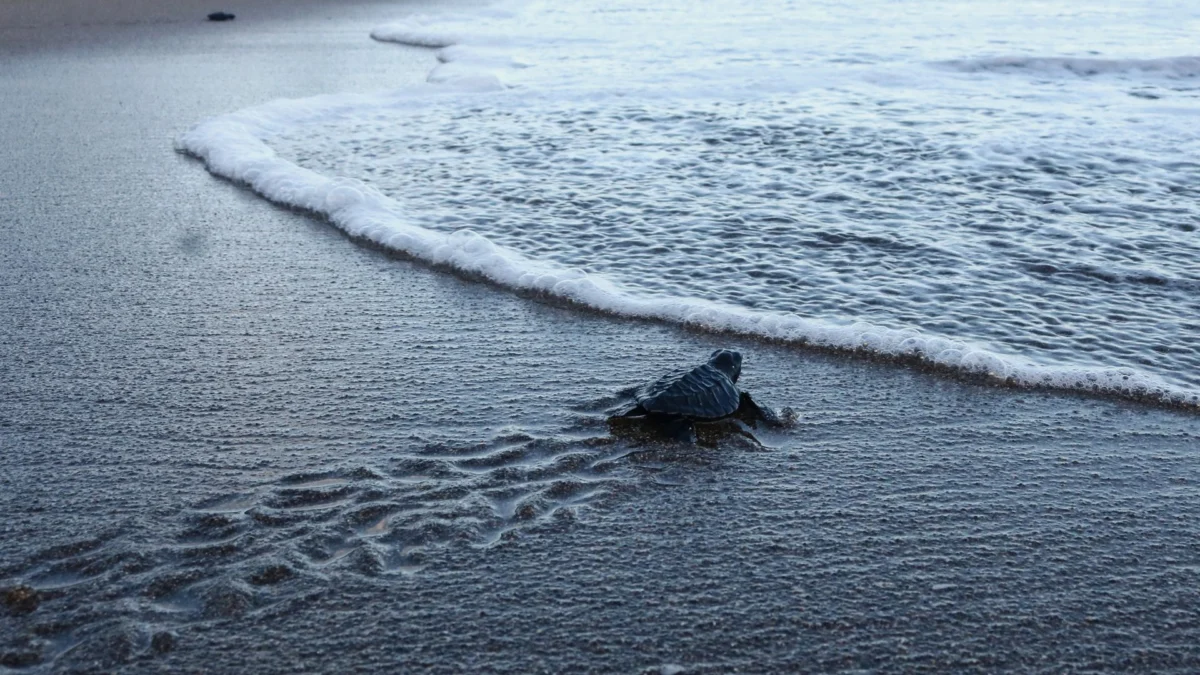
Coastal authorities and marine biologists along the southern California coastline are monitoring a truly unprecedented ecological phenomenon. In what federal agencies have confirmed as the first-ever documented natural sea turtle nesting event on the United States West Coast, two separate olive ridley sea turtles have successfully hauled themselves ashore in Orange County to dig nests and deposit their eggs.
The extraordinary occurrences, initially reported by startled beachgoers and swiftly secured by local lifeguards, have upended conventional understanding of marine reptile migratory habits and geographic breeding ranges. While individual olive ridley turtles (Lepidochelys olivacea) occasionally stray into the cooler waters of the Pacific Northwest or northern California, they typically confine their mass nesting rituals—known as arribadas—to the tropical and subtropical beaches of Central and South America, most notably in Costa Rica and Mexico.
The appearance of nesting females hundreds of miles north of their traditional territory has triggered intensive monitoring campaigns, urgent public protective measures, and rigorous scientific investigations into what environmental factors might be driving this radical behavioral shift.
The Chronology of Historic Encounters
The unfolding of this unprecedented event began on September 16, when beachgoers near Saal Beach in Orange County, California, noticed a large marine animal laboring across the sand. Fearing the creature was stranded, injured, or in distress, citizens immediately summoned a local lifeguard. Upon closer inspection, the on-duty personnel realized the animal was not in trouble; rather, she was actively engaged in the ancient, rhythmic process of digging a body pit, depositing eggs, and carefully camouflaging the nest before returning to the Pacific surf.
Local authorities immediately notified the National Oceanic and Atmospheric Administration (NOAA) Fisheries West Coast division. Within hours, wildlife officials designated the sighting as a milestone event in American marine biology. NOAA officials formally declared the observation the first recorded instance of natural nesting by any sea turtle species on the US West Coast.
Just as researchers and conservationists were coming to terms with the ecological significance of the Saal Beach event, a second extraordinary report emerged a few days later. Another olive ridley sea turtle was spotted ashore, this time several miles away, building a nest near the iconic Huntington Beach Pier.
Initially, marine authorities questioned whether the sightings represented a single, highly motivated turtle utilizing her capacity to lay multiple clutches within a single breeding season. Olive ridley females are well-documented to nest two to three times per season, typically returning to the same general region within a span of 14 to 28 days. However, the geographic proximity of the two locations, coupled with the rapid succession of the reports, necessitated a definitive scientific investigation.
Scientific Verification and Photographic Analysis
To determine whether a single traveler was responsible for both nests or if multiple animals had journeyed up the coast, researchers turned to forensic photographic analysis. Dr. Cali Turner Tomaszewicz, a prominent research biologist specializing in marine ecology and sea turtle conservation, spearheaded the examination.
Dr. Turner Tomaszewicz conducted a granular comparison of high-resolution photographs and video footage captured by eyewitnesses, press photographers, and lifeguards at both Saal Beach and Huntington Beach Pier. By analyzing the unique scute patterns—the distinct geometric plates comprising the turtles’ upper shells, or carapaces—along with facial scale configurations and overall morphological traits, the scientific team reached a definitive conclusion.
The analysis confirmed that the two nests were deposited by two distinct mother turtles. This confirmation elevated the event from an isolated biological anomaly to a broader trend indicating that multiple adult female olive ridley turtles had traveled north along the California current system and independently selected Orange County beaches for reproduction.
Environmental Context and the El Niño Factor
The burning question among marine scientists, conservationists, and government regulators is why these reptiles have chosen to nest so far north of their historical boundaries. While definitive answers remain elusive pending comprehensive physiological and environmental data collection, researchers have proposed several plausible hypotheses.
Foremost among the theories is the influence of shifting oceanographic conditions, specifically warmer coastal water temperatures driven by recurring climate patterns such as El Niño. Olive ridley sea turtles are ectothermic, meaning their body temperatures are heavily regulated by the ambient environment. As warm water masses expand northward along the Pacific seaboard, pelagic species frequently extend their geographic ranges accordingly.
Historically, warm-water anomalies off the California coast have coincided with increased sightings of marine life more commonly found in Mexican waters, including pelagic red crabs, hammerhead sharks, and various sea turtle species. However, traveling into cooler temperate zones to complete the physiologically demanding process of embryonic development and oviposition represents an entirely new threshold for the species.
Researchers are also examining broader indicators of climate change, alterations in major oceanic upwelling systems, and shifts in preferred marine food webs, such as the availability of pelagic crabs, shrimp, and jellyfish that form the staple of the olive ridley diet. Whether these nesting events represent a permanent expansion of the species’ breeding habitat or a temporary adaptation to anomalous climatic conditions remains a central debate within the marine science community.
Biology and Behavior of the Olive Ridley
Understanding the significance of the California nests requires a closer examination of the olive ridley sea turtle’s standard life history. Recognized as one of the smallest and most abundant species of sea turtles globally, adult olive ridleys typically weigh between 75 and 100 pounds and possess a heart-shaped carapace measuring roughly two feet in length.

The species is internationally renowned for its spectacular arribadas—synchronized mass nesting events where thousands of females converge on a single beach simultaneously to lay eggs over a period of several days. These mass events occur primarily in specific regions of the eastern Pacific, such as Playa Nancite and Ostional in Costa Rica, and La Escobilla in Mexico.
Outside of these concentrated rookeries, solitary nesting—known as solitaria—does occur, but it is typically restricted to tropical and subtropical latitudes where sand temperatures remain consistently high throughout the incubation period. An olive ridley female typically lays one to three clutches per season, with an average clutch size of approximately 100 leathery, ping-pong-ball-sized eggs. The incubation period generally ranges from 45 to 60 days, heavily dependent on sand temperature, which also dictates the sex ratios of the developing hatchlings.
Official Responses and Conservation Measures
Following the confirmation of the two distinct nests, a multi-agency coalition involving NOAA Fisheries, the California Department of Fish and Wildlife (CDFW), local municipal governments, and specialized wildlife rehabilitation centers mobilized to secure the sites.
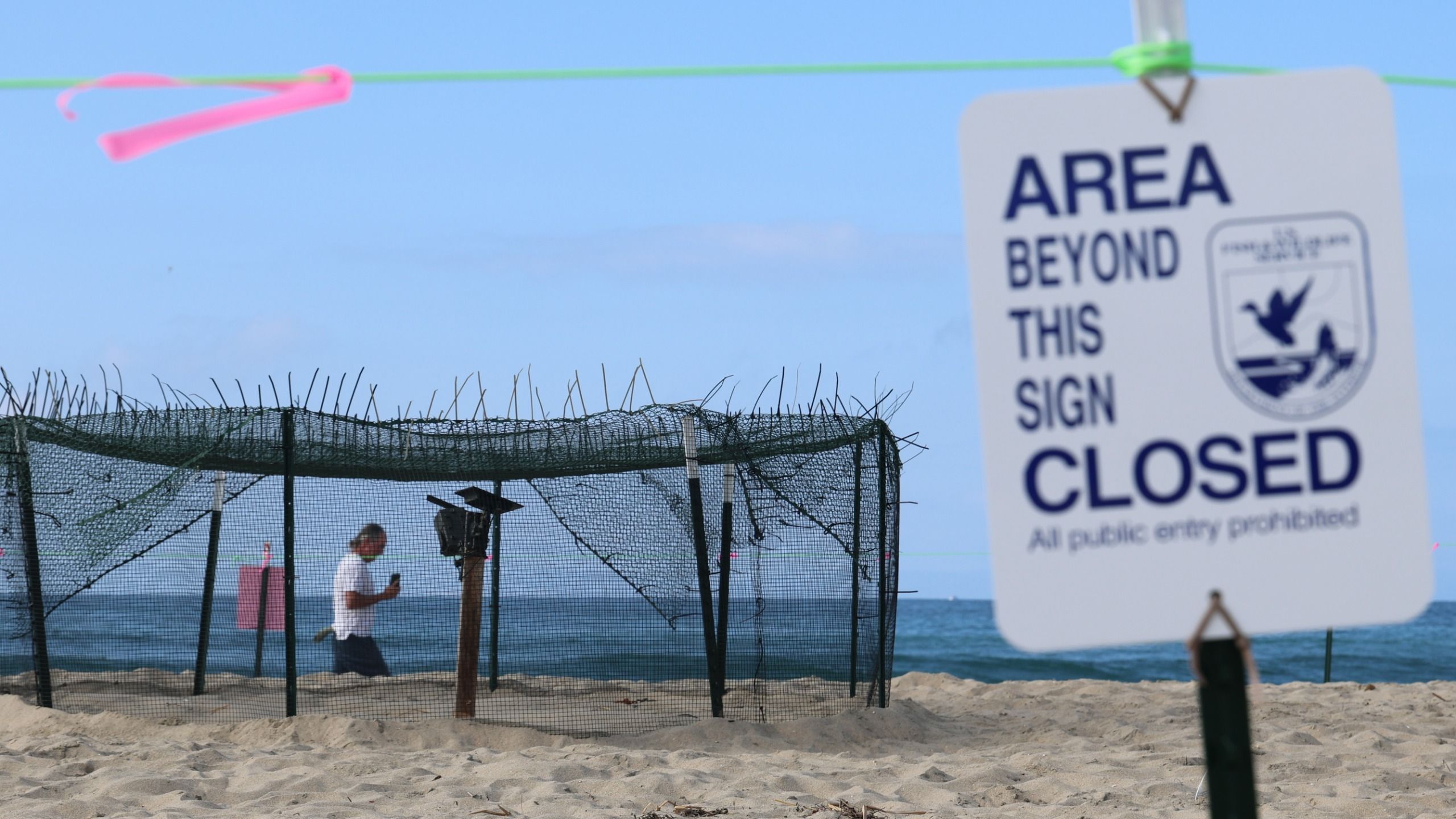
Recognizing the vulnerability of the incubating eggs to urban coastal pressures—including heavy foot traffic, municipal beach maintenance machinery, domestic pets, and tidal erosion—authorities took immediate protective action. Physical perimeters have been established around the Saal Beach and Huntington Beach nesting sites, blocking public access to the immediate sand areas. Specially trained lifeguards, such as Andrew Mackie—who originally observed one of the nesting events while on active patrol—have been tasked with daily monitoring protocols to ensure the perimeters remain secure.
Furthermore, state and federal wildlife officials are evaluating whether active intervention, such as temperature monitoring or relocation, will be necessary if ambient sand temperatures drop below the critical thresholds required for successful embryonic development. Natural incubation on southern California beaches poses significant challenges, as nighttime temperatures in September and October drop considerably lower than those in Oaxaca or Guanacaste, potentially stalling development or altering hatchling viability.
Public Involvement and Reporting Protocols
Federal regulators have emphasized that public awareness and cooperation are vital components of the ongoing conservation effort. NOAA Fisheries has reiterated guidelines for beachgoers and coastal residents throughout the region:
- Maintain Distance: Anyone encountering a marine turtle on the beach must maintain a respectful distance of at least 50 feet. Flash photography, loud noises, and touching the animal can induce severe stress and disrupt the delicate nesting process.
- Report Sightings Immediately: NOAA has deployed an active reporting portal and encourages citizens to document and report any unusual marine animal sightings along the West Coast via official state and federal channels.
- Respect Perimeters: The public is strictly instructed to honor all fenced or taped-off boundaries established around known nesting zones to protect the buried clutches from disturbance.
As the incubation clock ticks down toward the projected hatching window, the eyes of the global marine biology community remain fixed on Orange County. Whether these pioneering nests will successfully yield a cohort of California-born olive ridley hatchlings remains to be seen, but the event has fundamentally altered the documented geographic boundaries of marine reptile reproduction in North America.