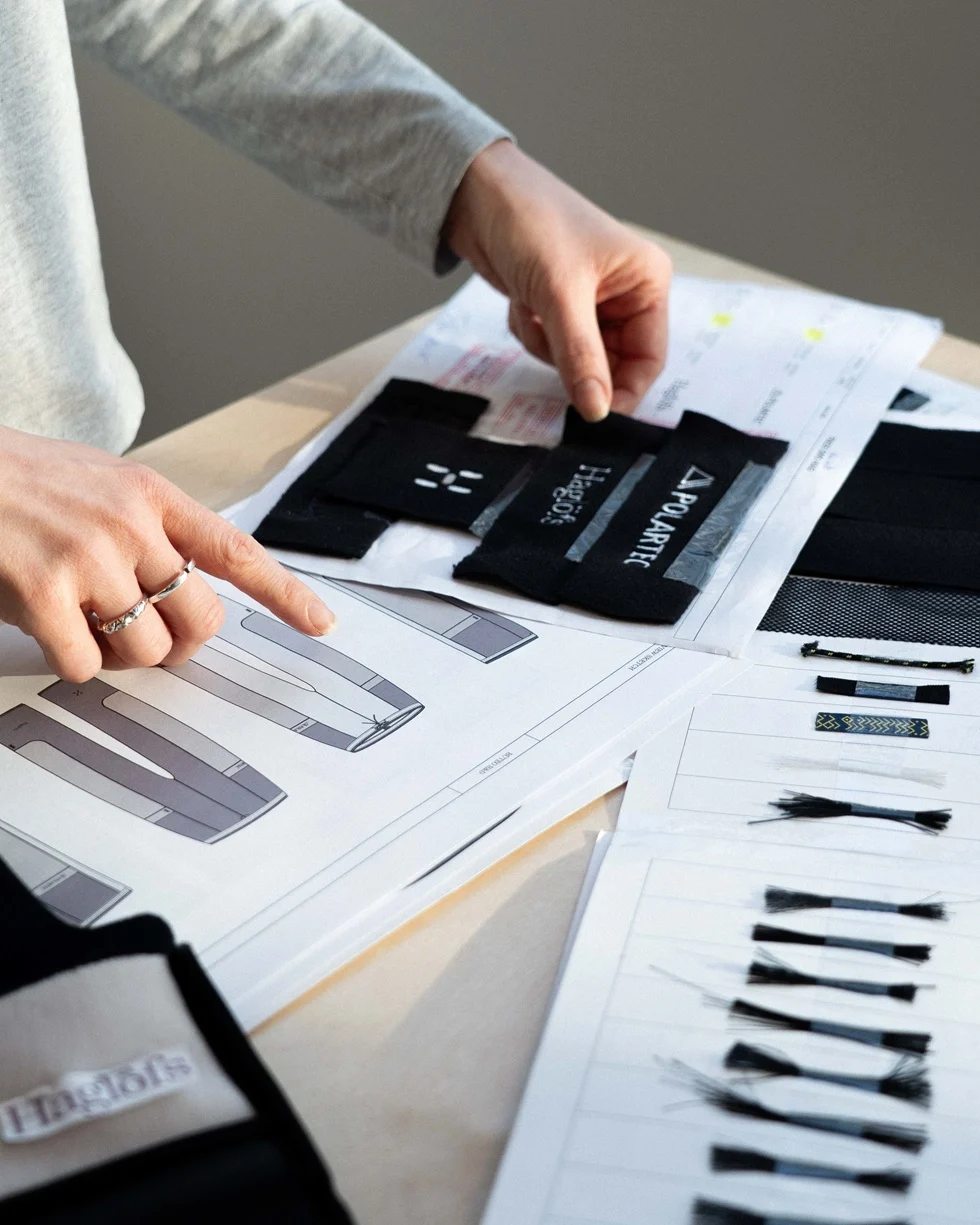
The global outdoor apparel industry has long championed a public-facing ethos of environmental stewardship, sustainability, and harmony with nature. Yet, walking down the fleece aisle of any major outfitter reveals a quiet, pervasive environmental contradiction hidden in plain sight: the ubiquity of black. Dozens of varying brands hang garments side by side, featuring what appears to be the exact same shade of black. However, when held under rigorous lighting, subtle variances emerge. These garments are made from the same synthetic materials, produced in the same calendar seasons, yet they possess distinct chemical origins.
This paradox has inspired a radical collaborative initiative. Swedish outdoor brand Haglöfs, in partnership with heritage textile innovator Polartec, has launched a movement aimed at rewriting how the industry handles its most fundamental color. Known as the "Standard Issue Black" project, this initiative seeks to dismantle decades of redundant chemical processing, massive water consumption, and industrial waste. By challenging the necessity of proprietary black dye lots, Haglöfs and Polartec are prompting a profound industry-wide conversation regarding efficiency, operational inertia, and the true cost of aesthetic uniformity.
The Anatomy of a Synthetic Dye Crisis
To fully grasp the magnitude of the black dye problem, one must examine the complex chemistry of synthetic textiles. Unlike natural fibers such as cotton and wool, which readily accept water-based dyes at relatively low temperatures through simple ionic bonding, polyester is inherently hydrophobic. It repels moisture, necessitating a completely different class of chemistry to achieve permanent coloration.
Polyester dyeing relies on disperse dyes—small, non-ionic molecules that must be applied under extreme conditions. Typically, the process requires high-temperature pressure vessels operating at 130 degrees Celsius or higher. In this boiling aqueous bath, the thermal energy swells the polymer structure of the synthetic fiber, forcing the dye molecules deep into the core of the material.
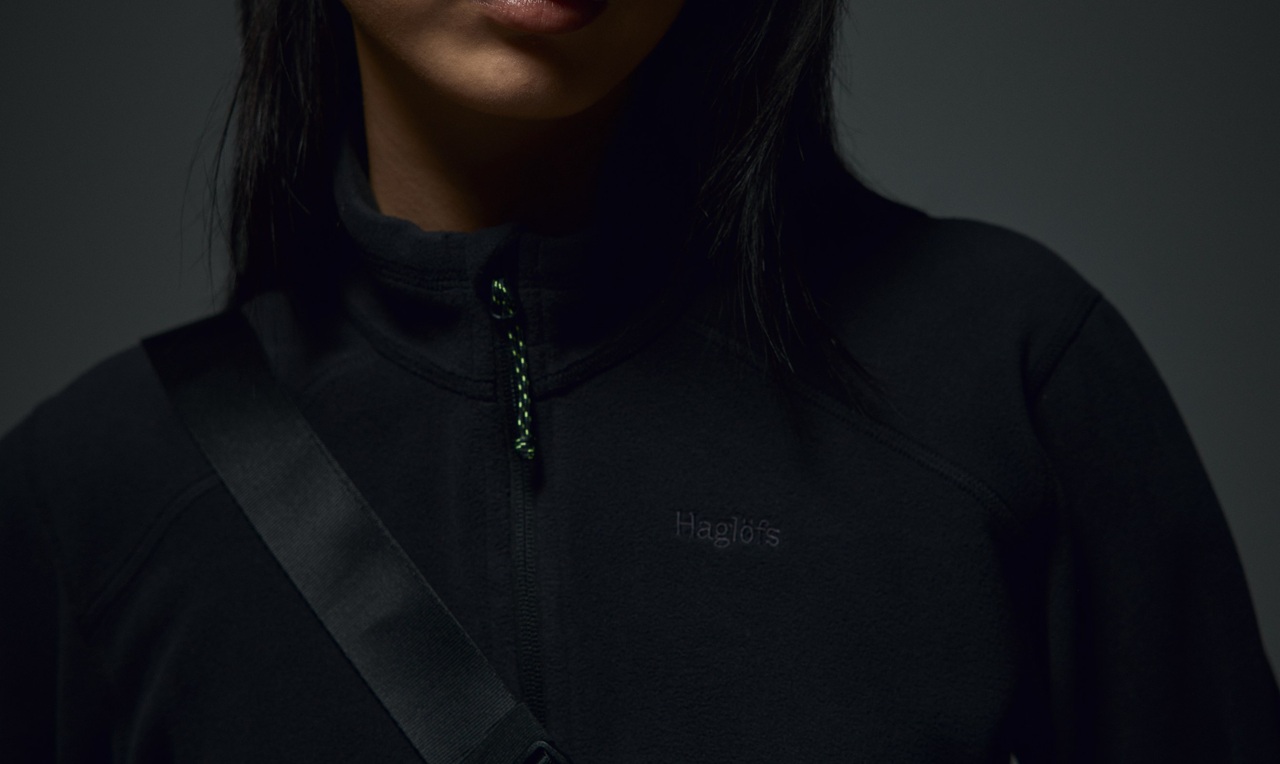
Among all colors in the textile spectrum, black demands the most intensive processing. Achieving a deep, lightfast, and consistent neutral black requires layering multiple disperse dye molecules simultaneously. This multi-step process demands higher concentrations of chemical auxiliaries, extended fixation cycles, increased thermal energy, and massive volumes of water. According to global textile manufacturing data, the fashion and textile industry is responsible for roughly 20 percent of worldwide industrial water pollution, with wet processing and dyeing operations generating the lion’s share of that impact. Depending on the efficiency of the facility and the depth of the shade, a single kilogram of dyed polyester fabric requires anywhere from 30 to 150 liters of water. Because black sits at the absolute limit of depth and saturation, it routinely occupies the highest end of this resource-consumption spectrum.
The Minimum Order Quantity Dilemma
The environmental toll of black synthetic fleece is compounded by commercial realities, specifically the economics of minimum order quantities (MOQs). Dye houses operate on strict industrial scales. To execute a profitable and efficient dye cycle, facilities require substantial minimum volumes of fabric, often measuring in the hundreds of kilograms per run.
When an outdoor brand commissions a specific seasonal collection, its design team frequently develops a proprietary shade of black—a minute tonal variation intended to align with the brand’s unique seasonal palette. Because these individual volume requirements rarely meet the threshold of massive industrial dye runs independently, brands end up commissioning smaller, bespoke batches.
This creates a systemic inefficiency. Dozens of competing brands concurrently contract separate dye houses to formulate marginally different shades of black. Each brand’s custom black requires its own distinct recipe development, laboratory dips, chemical mixing, quality approval phases, and energy-intensive batch runs. While each individual brand’s decision is commercially rational within the current market framework, the aggregate result is deeply irrational: an immense duplication of water usage, energy consumption, and chemical waste deployed to produce shades of black that are functionally indistinguishable to the end consumer.
The Genesis of the Black Capsule Project
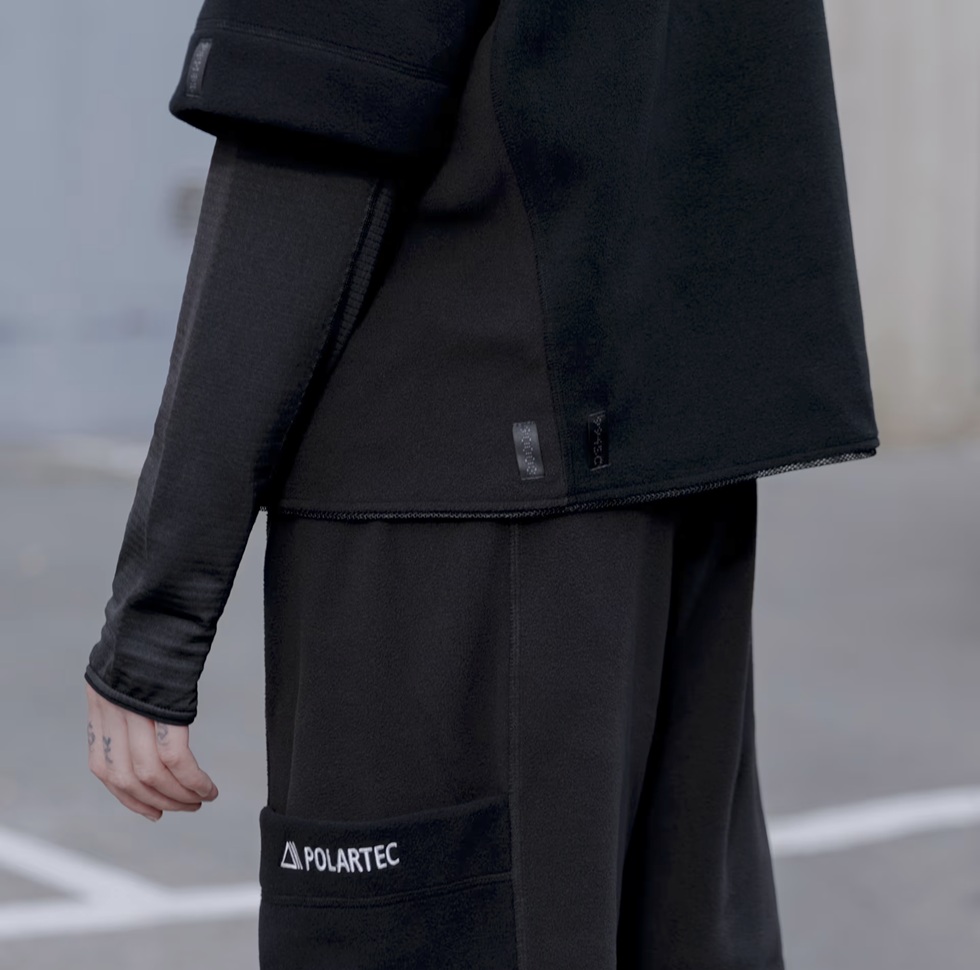
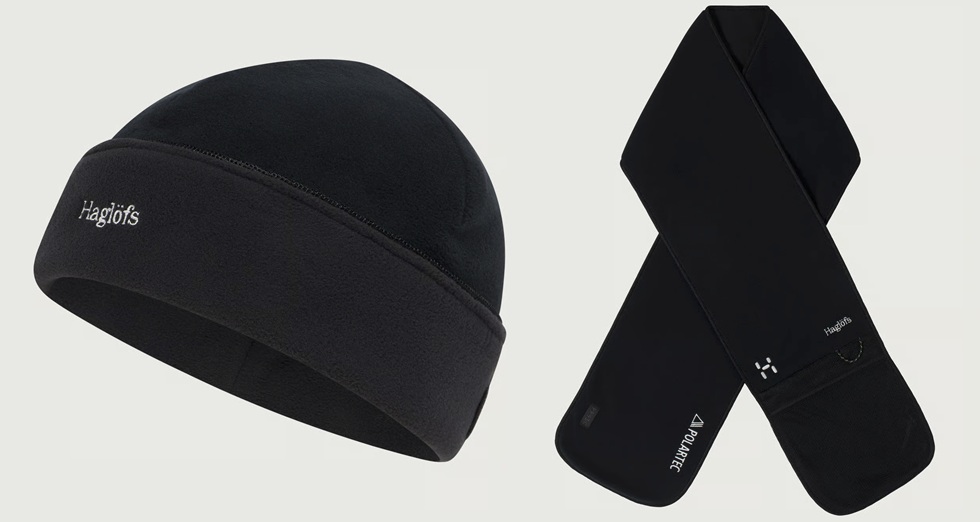
Before formally introducing their commercial remedy to the market, Haglöfs utilized conceptual art to communicate the absurdity of the status quo. The brand introduced the Black Capsule collection—a limited-release capsule featuring a Project Tee, a beanie, a scarf, and a pair of pants.
Constructed entirely from leftover black Polartec fleece fragments sourced from various historical production runs, the garments serve as physical data visualizations. Every individual panel on a Black Capsule garment features an exposed woven label stamped with its original color batch number. When viewed collectively, a single garment reveals three or four distinct shades of black sewn together. The accompanying labels make the underlying thesis explicit: these panels originated from separate dye lots, separate chemical formulations, and separate industrial cycles, proving that the market’s obsession with proprietary black variations is visually negligible yet environmentally burdensome.
The Black Capsule served as an ideological warning shot. It translated abstract industrial data into a tangible consumer product, preparing the ground for a systemic operational shift.
Standard Issue Black: A Unified Industry Standard
Following the conceptual statement of the Black Capsule, Haglöfs and Polartec engineered a practical, scalable solution: Standard Issue Black.
The premise is straightforward. Haglöfs and Polartec collaborated to establish a single, optimized, high-performance shade of black. Polartec integrated this specific shade into its standard, large-scale production cycles, making the fabric openly accessible to the entire outdoor apparel market. There are no restrictive licensing fees, no proprietary legal protections, and no competitive advantages withheld. Any brand that wishes to utilize the standard is free to do so.
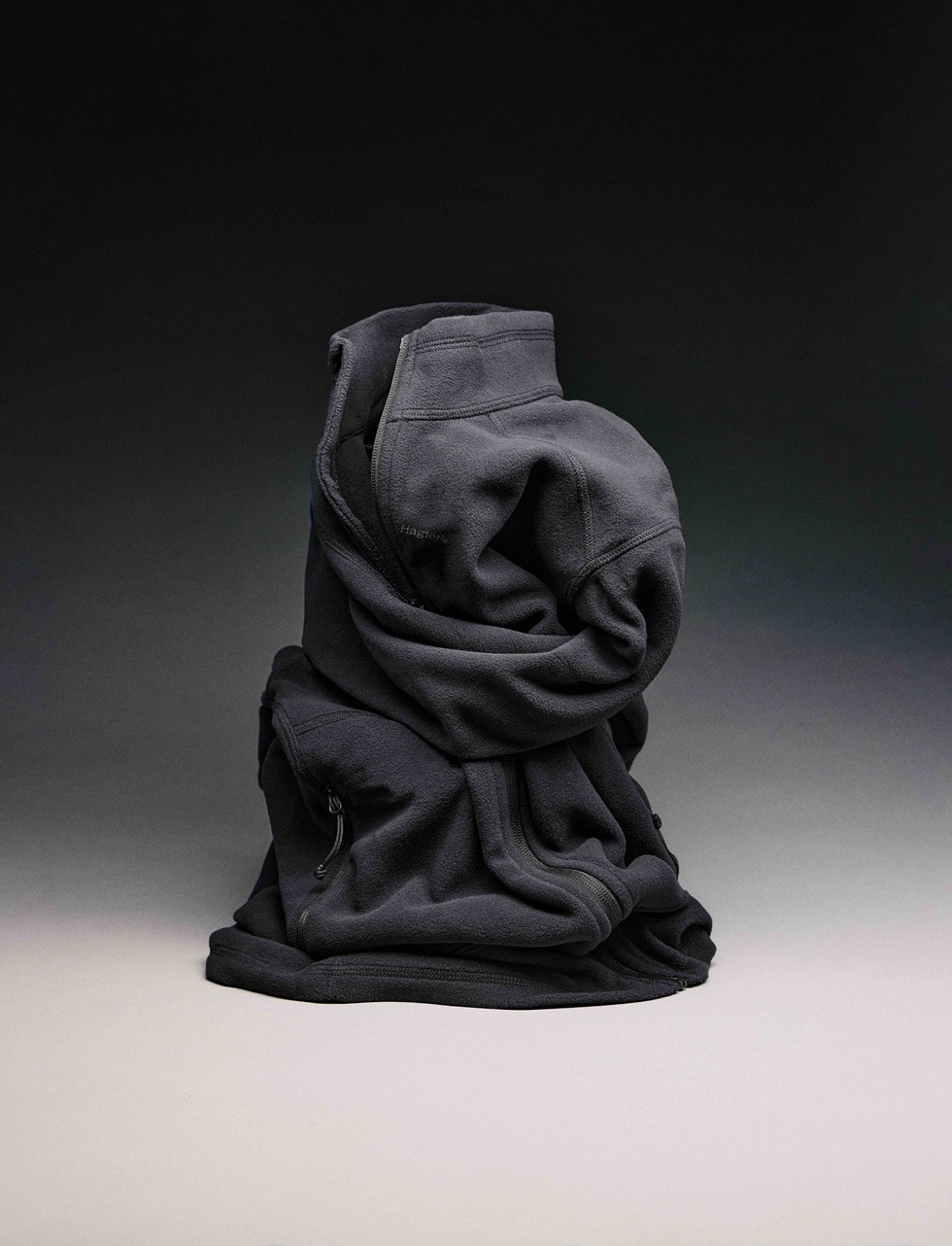
The environmental calculations underpinning this consolidation are rooted in established chemical engineering principles. By merging dozens of fragmented, small-scale dye lots into massive, consolidated production runs, the efficiency curves improve dramatically. According to internal production assessments provided by Haglöfs, adopting Standard Issue Black yields greater than a 50 percent reduction in water utilization and at least a 20 percent decrease in energy consumption compared to traditional piece-dyed black synthetic fabrics. While these figures originate from corporate assessments rather than third-party independent audits, the underlying mechanical logic remains undisputed within textile manufacturing: bulk processing exponentially reduces resource waste per unit of output.
Transitioning from Concept to Commercial Reality
The true test of any sustainability initiative lies in its transition from limited-edition marketing campaigns to high-volume commercial adoption. Standard Issue Black officially enters full commercial production during Haglöfs’ Fall/Winter 2026 apparel cycle.
Rather than relegating the standard to an experimental eco-line, Haglöfs integrated the fabric into one of its core, highest-volume commercial products: the Buteo Mid II Jacket. Eva Weiss, Head of Design and Research & Development at Haglöfs, emphasized the strategic importance of choosing a bestseller as the launch vehicle. By anchoring the initiative in a high-volume commercial staple rather than a niche collector’s item, the brand ensures that the environmental savings translate into meaningful, measurable metrics.
Addressing the Creativity Counterargument
The most common pushback from apparel designers regarding material and color standardization concerns creative limitation. The prevailing fear within the design community is that standardizing foundational colors will result in aesthetic homogeneity across competing outdoor brands.
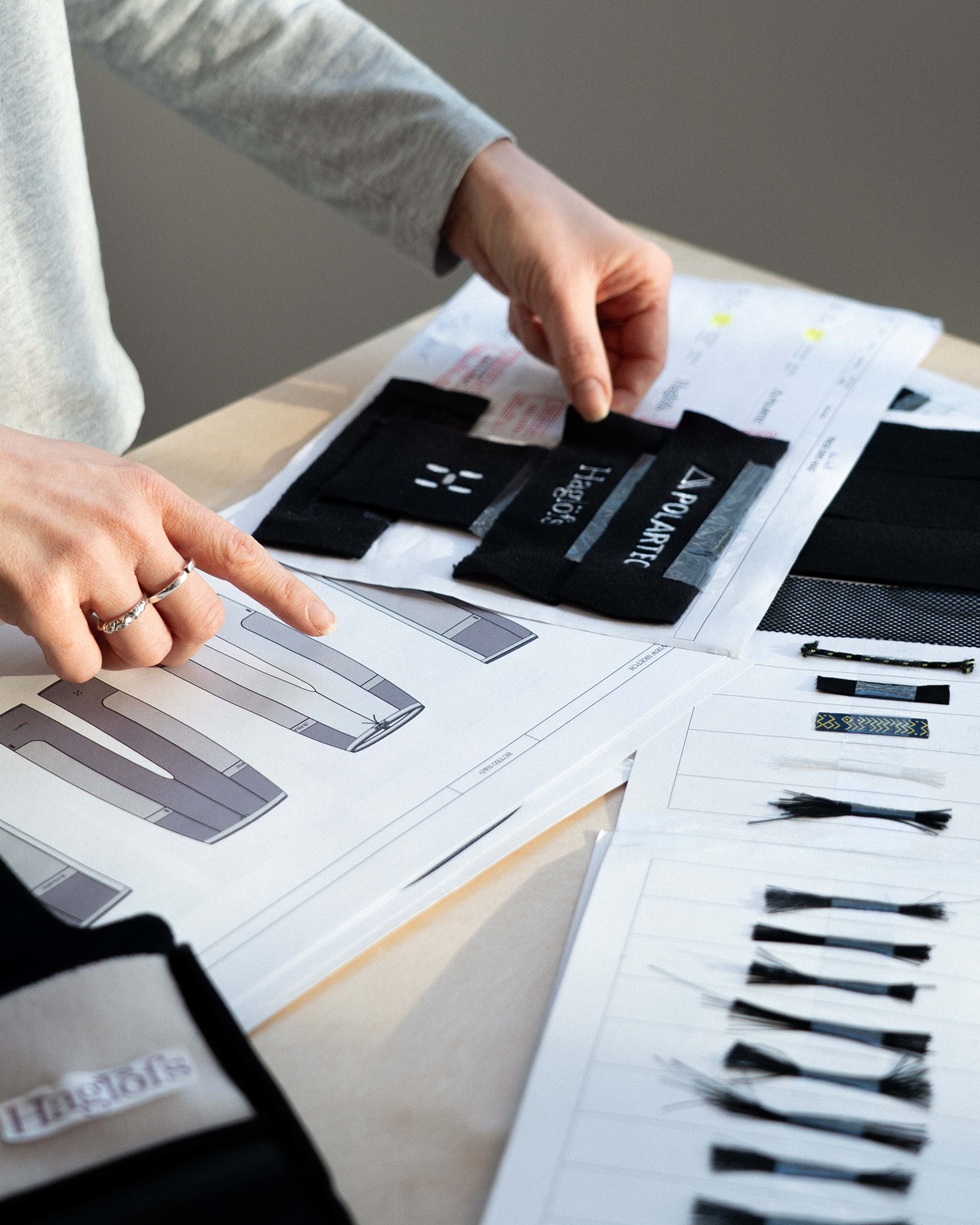
Industry leaders, however, argue that this perspective fundamentally misunderstands where true product differentiation occurs. Black has never been the primary vehicle for brand distinction in technical outdoor gear. Differentiation is achieved through garment architecture, ergonomic patterning, technical hardware, specialized trims, functional pocket layouts, silhouette engineering, and seasonal accent colorways. Black serves as the neutral, reliable constant in technical apparel.
Eva Weiss addressed this operational anxiety directly during the launch phase, noting that standardization does not suppress design innovation. Instead, by establishing a pre-approved, environmentally optimized baseline for foundational colors, design teams are liberated to focus their creative energy on structural performance and innovative utility.
Industry veterans frequently draw parallels to other foundational components within the apparel space. Decades ago, the outdoor and technical apparel industries largely standardized around a select few hardware suppliers, most notably YKK for zippers. The ubiquity of standardized fasteners across competing brands did not stifle design creativity; rather, it established a baseline of reliable functionality that allowed designers to innovate elsewhere. Standard Issue Black applies this exact philosophical framework to textile coloration.
Broader Implications and Market Outlook
Despite the clear environmental and economic logic supporting Standard Issue Black, the broader outdoor industry’s reaction remains the ultimate variable. The apparel sector has a long history of well-intentioned sustainability frameworks that garner industry praise before being quietly marginalized by competing market pressures.
Furthermore, the perennial challenge of the "green premium"—the historical disconnect between consumer sustainability values and actual purchasing behavior—has stalled numerous eco-friendly innovations. Standard Issue Black effectively bypasses this hurdle because its economic structure is neutral to positive; it relies on supply chain consolidation rather than expensive novel chemistry.
The primary obstacle moving forward is institutional inertia. Decades of entrenched manufacturing habits, established supplier relationships, and risk-averse supply chain management have kept brands locked into redundant dyeing practices. Disrupting these workflows, even to achieve significant resource savings, requires a collective willingness to alter long-standing operational habits.
Initiatives like Standard Issue Black do not demand that brands halt their production pipelines; rather, they ask the industry to execute standard manufacturing processes with greater collective intelligence. As Haglöfs rolls out the Buteo Mid II Jacket and other brands evaluate the viability of the open-source color standard, the market will soon discover whether the outdoor industry is genuinely prepared to correct one of its oldest, most visible, and most easily solvable environmental oversights.