Recent drone footage captured by long-time site observer Joe Tegtmeyer reveals that the structural steel frame for Tesla’s dedicated Optimus humanoid robot manufacturing plant at Gigafactory Texas is rapidly approaching completion. Situated within the facility’s North Campus expansion, the construction milestone places the primary skeleton roughly five column grids away from the northern perimeter beam. This rapid progress unfolds approximately six months after earthmoving and initial groundbreaking activities commenced in late March 2026.
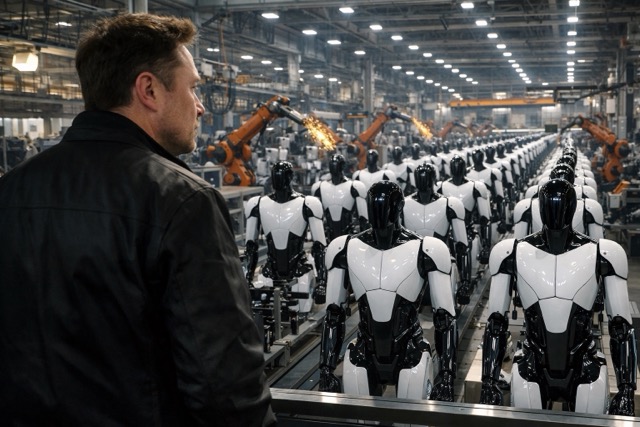
The visual evidence from the site highlights a sophisticated parallel construction methodology reminiscent of the techniques Tesla successfully deployed during the initial buildout of its primary vehicle assembly plant in Austin. While structural steel erection nears its northern terminus, concrete pours are simultaneously underway across three upper levels. Construction crews are concurrently laying rebar and finalizing grade-beam footings at ground level. This overlapping schedule is explicitly designed to compress timelines, ensuring the facility meets its targeted high-volume production window in the summer of 2027.
Chronology and Expansion Context
The evolution of the dedicated Optimus factory traces back to early spring 2026, when Tesla confirmed official construction activity on reclaimed land at the North Campus. Teslarati has documented the site’s rapid evolution since May 2026, when the very first steel columns were erected. The facility represents a massive footprint expansion, contributing to a broader 5.2 million square foot development initiative at Giga Texas.
Once fully realized, the North Campus expansion will stretch more than 4,000 feet, roughly matching the linear length of the existing vehicle manufacturing building while maintaining a narrower profile. Chief Executive Officer Elon Musk has outlined ambitious long-term output projections for the site, anticipating a staggering capacity of 10 million Optimus units annually at full maturity. This scale completely dwarfs the capacity of the pilot manufacturing line currently operating in Fremont, California, which is designed for a preliminary output of one million units per year.
The Ecosystem: Proximity to the Terafab Initiative
The strategic positioning of the Optimus factory is deeply intertwined with broader corporate developments on the same Texan soil. Adjacent to the robotics plant lies the "Terafab" project—a massive semiconductor fabrication facility developed jointly by Tesla and SpaceX. Designed to supply advanced silicon chips directly to Optimus units and Tesla’s broader autonomous driving computing architecture, as well as SpaceX’s orbital data center initiatives, the physical colocation of chip manufacturing and robotics assembly is a deliberate supply chain optimization. By housing semiconductor production steps yards away from final robot assembly, Tesla and SpaceX intend to drastically reduce logistical lead times, minimize transportation friction, and insulate the manufacturing pipeline from external supply chain shocks.

While high-volume manufacturing at the Giga Texas facility is slated for mid-2027, the preceding period relies heavily on the Fremont pilot line. Initiating mass production of the Gen 3 Optimus design in January 2026, the California facility is expected to yield tens of thousands of units throughout the year. The primary objective of this pilot phase is not immediate commercial saturation, but rather the rapid accumulation of real-world operational data. Tesla engineers are leveraging telemetry and behavioral data captured by these early units to refine neural network software, iron out mechanical liabilities, and ensure the Gen 4 and subsequent iterations introduced at Giga Texas launch with robust, field-tested intelligence.
Corporate Intersections and Market Implications
The intensive construction at Giga Texas unfolds against a backdrop of intensifying corporate speculation and strategic alignment between Tesla, SpaceX, and xAI. Wall Street analysts have increasingly scrutinized the deep operational synergies binding Musk’s portfolio companies. Prominent institutional figures, such as Baron Capital founder and CEO Ron Baron, continue to voice unwavering support for Tesla’s trajectory, emphasizing the long-term value proposition of software monetization models like Full Self-Driving (FSD). Baron recently reiterated his bullish stance on television, pointing to strong subscription adoption metrics as evidence that autonomous driving technologies are rapidly transitioning from niche enthusiast features to industry-wide consumer expectations.

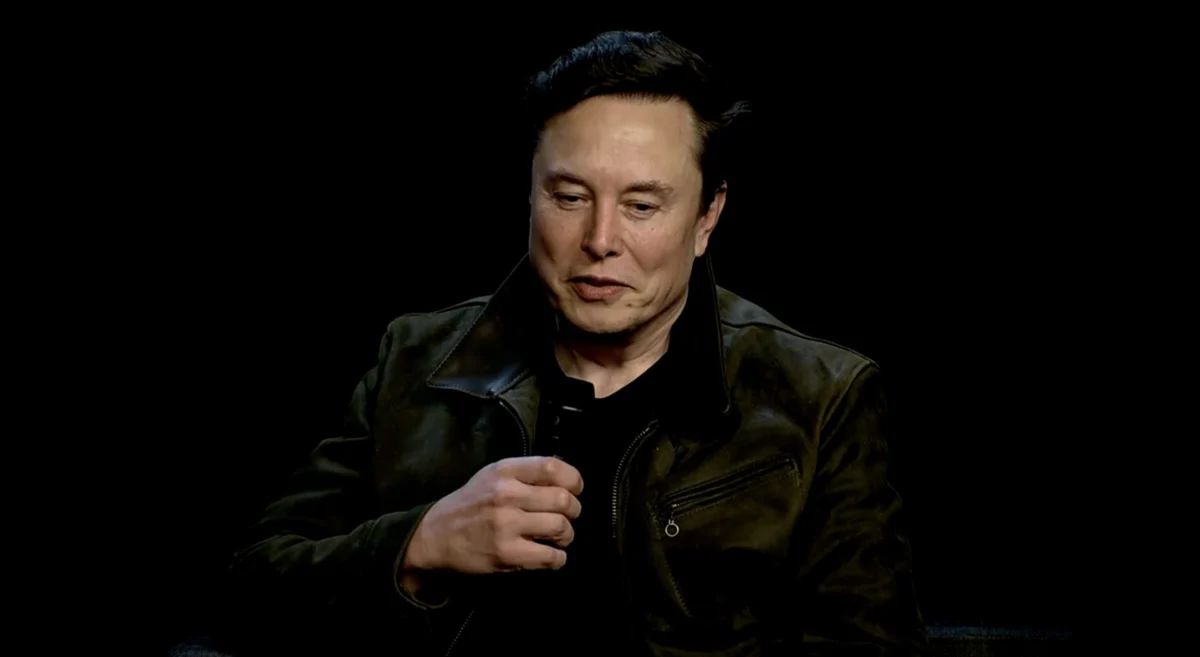
Simultaneously, conversations regarding potential corporate restructuring or integration between Tesla and SpaceX have gained traction across financial markets. During appearances at major economic summits, Musk addressed the dense web of inter-company collaborations—spanning artificial intelligence development, propulsion, chip architecture, and robotics—noting that the ongoing convergence naturally prompts questions regarding corporate consolidation. While no formal merger has been announced, key executives, including SpaceX President Gwynne Shotwell, have confirmed that cross-company technical deployments and resource sharing are occurring at an unprecedented pace.
Trademark Disputes and Legal Hurdles
As physical infrastructure rises in Austin, the broader Terafab initiative has encountered legal friction on the intellectual property front. Tesla and SpaceX recently filed a declaratory judgment in the U.S. District Court for the Western District of Texas. The legal action seeks a federal ruling affirming that the "Terafab" moniker does not infringe upon existing trademarks held by TERA-print LLC, a nanotechnology firm based in Illinois.

The dispute stems from trademark applications filed by Tesla in May 2026 for "Terafab" and "Tesla Terafab" in connection with semiconductor chips and manufacturing services. TERA-print responded with cease-and-desist warnings, citing potential consumer confusion with its own "Tera-Fab" mark, registered in 2021 for desktop photolithography printers used in bioengineering research. Legal filings reveal that following months of breakdown in direct settlement negotiations, Tesla and SpaceX elected to proactively seek judicial clarity to shield their multi-billion-dollar semiconductor infrastructure project from protracted litigation risks.
Outlook and Future Milestones
With structural steel framing nearing its northern boundary and interior concrete floors rapidly curing, the Giga Texas Optimus facility stands as a testament to Tesla’s aggressive infrastructure expansion pace. As recurring aerial observations demonstrate, the speed of execution matches the ambitious scale outlined by company leadership. Over the coming months, exterior cladding, mechanical, electrical, and plumbing (MEP) installations will dominate the site as Tesla prepares to transition the massive real estate asset from a civil engineering project into the world’s most advanced humanoid robotics manufacturing plant ahead of its 2027 operational deadline.