The concept of "Everyday Carry" (EDC)—the collection of tools, gadgets, and personal items carried by an individual on a daily basis—has evolved from a niche hobby into a functional study of professional preparedness. For Stephen, a full-time professional cook based in Minnesota, the EDC kit is not merely a collection of aesthetic accessories but a deliberate assembly of high-performance tools designed to bridge the gap between heavy-duty workplace demands and personal utility. This profile examines how the rigorous environment of a professional kitchen influences the selection of personal equipment, emphasizing the intersection of safety, durability, and logistical efficiency.
The Professional Kitchen and the Burden of Specialized Tooling
In the high-stakes environment of a commercial kitchen, the distinction between food-grade equipment and general-purpose utility tools is critical. Stephen’s approach to his daily kit is defined by a strict adherence to cross-contamination protocols. Because he manages a diverse array of culinary blades during his shifts, he maintains a clear boundary between his professional culinary instruments and his personal everyday carry items.
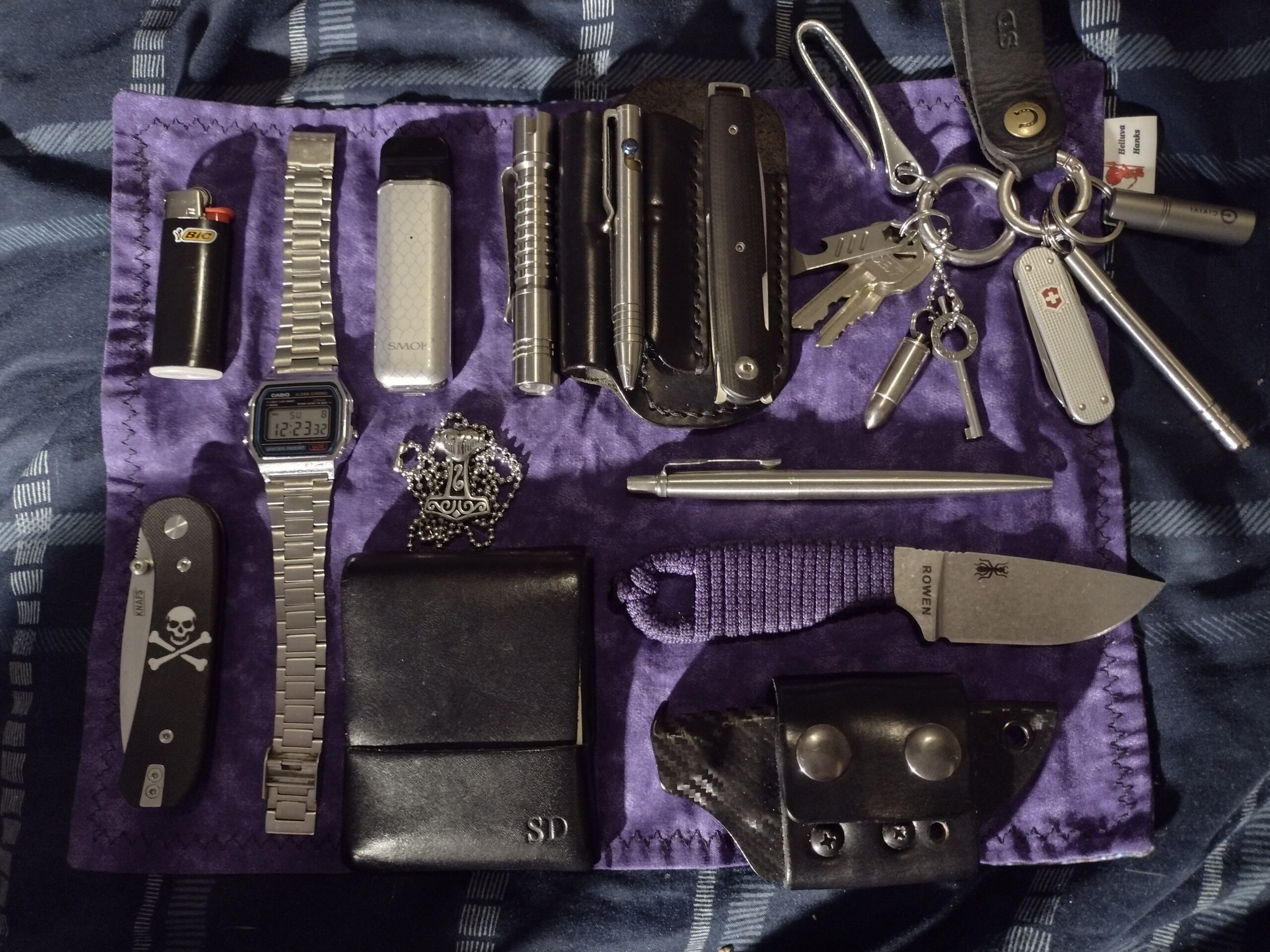
"As a cook, I literally have a different knife for every occasion," Stephen explains. "There are blades for cooking and blades that shouldn’t be used for that, since cross-contamination is a reality. On any given day, I am packing four knives: three folders and my ESEE."
This practice of separating tools is a standard operating procedure for many professionals who work in regulated food environments. The necessity of having a reliable blade for non-culinary tasks—such as opening shipping containers, breaking down cardboard boxes, or performing light facility maintenance—requires a kit that functions independently of the kitchen’s internal inventory.
Chronology of Gear Selection: From Utility to Aesthetic
The selection process for a professional EDC kit typically follows a trajectory of necessity followed by optimization. For someone like Stephen, the process began with the basic requirement of a workhorse tool. Over time, as he became more familiar with the ergonomics and steel quality required for daily abuse, his kit expanded to include specialized knives, writing implements, and organizational systems like leather sheaths and keychain attachments.
The current kit reflects a deliberate "two-tier" strategy. In the writing category, for instance, Stephen utilizes a Parker Jotter, an icon of industrial design known for its reliable stainless-steel construction and affordability. This is paired with a premium titanium bolt-action pen. By carrying both, he ensures that he has a "beater" pen for rapid note-taking in the kitchen and a high-end tool for more significant documentation or personal use.
Technical Analysis: The Role of Materials and Ergonomics
The choice of knives in Stephen’s kit reveals a sophisticated understanding of blade geometry and steel metallurgy. His selection includes:
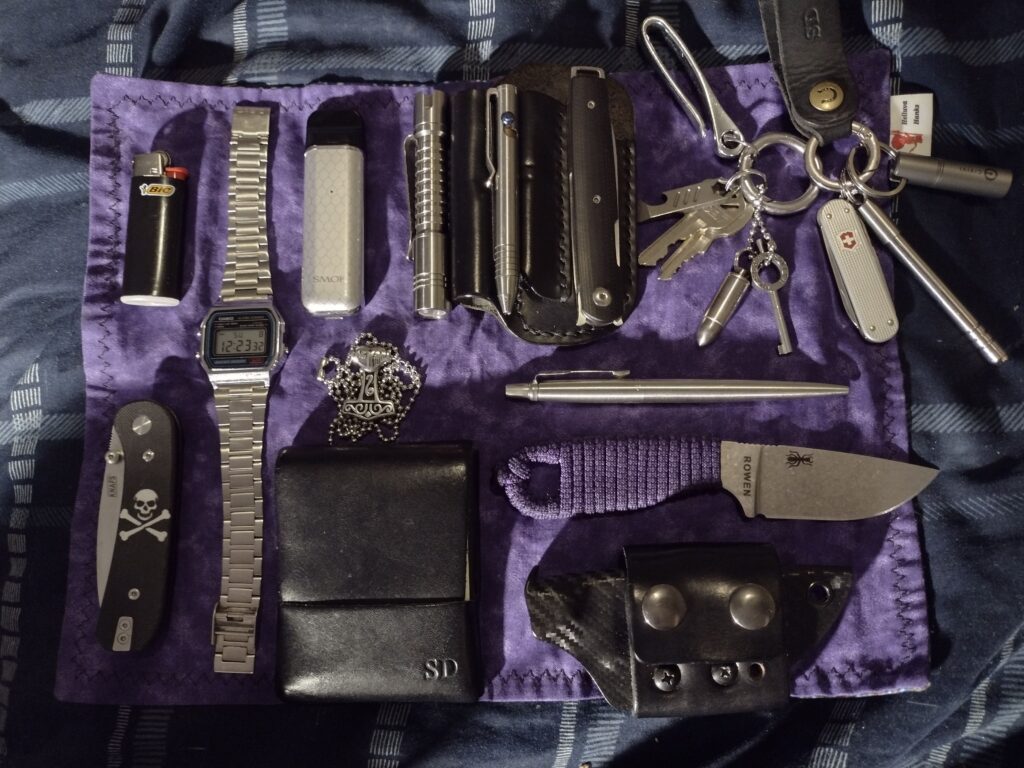
- The Knafs Folder: Serving as a primary general-purpose EDC, these knives are favored for their modularity and ease of maintenance.
- The Boker Gent’s Knife: A slim, lightweight option intended for tasks requiring precision and a lower profile, demonstrating the need for versatility in a pocket-based kit.
- The ESEE Izula (S35VN): This fixed-blade knife serves as the "workhorse" of the collection. The use of S35VN steel—a high-end martensitic stainless steel designed for superior edge retention and toughness—highlights the professional-grade requirements of the user.
From a logistics perspective, the use of leather sheaths and integrated keychain systems is a strategic design choice. In a fast-paced environment, keeping tools off the desk and off the body’s internal pocket space reduces clutter. By utilizing a "hang-off-the-body" organizational method, the user maximizes mobility and accessibility, which is vital when moving between workstations.
Market Context and the Rise of the EDC Industry
The market for EDC gear has seen significant growth over the past decade, fueled by online communities and a renewed public interest in "preparedness." According to consumer goods research, the global market for multi-tools and pocket knives has expanded as consumers prioritize products that offer long-term durability over disposable, low-cost alternatives.
This trend is reflected in the diverse price points of Stephen’s kit. By mixing entry-level, high-value items like the Parker Jotter with premium, investment-grade tools like his titanium bolt-action pen, the user demonstrates a balanced approach to consumer spending. This strategy is common among professional tradespeople who recognize that while some tools are subject to frequent loss or damage (justifying a lower price point), others are designed to last a lifetime, justifying a higher initial expenditure.
Official Perspectives on Professional Preparedness
Experts in the field of workplace ergonomics often emphasize that the tools one carries are an extension of their professional identity. For a cook, the ability to maintain a sharp, clean, and reliable tool set is a marker of discipline. When asked about the implications of such heavy-duty carry, industry observers note that the psychological benefit of being "prepared for anything" often leads to higher efficiency in the workplace.

The inclusion of the ESEE Izula, a fixed-blade knife often associated with bushcraft and survivalist communities, suggests that the user values reliability above all else. When a tool is carried in a professional setting, its failure is not just an inconvenience—it is a disruption to the workflow. Consequently, professional users tend to gravitate toward brands with strong warranties and proven track records in high-stress environments.
Broader Implications: The "Kit" as an Organizational Tool
The broader impact of maintaining a curated EDC kit extends beyond the utility of the individual items. It represents an organizational framework for the professional life. For Stephen, the act of selecting, cleaning, and maintaining these tools is part of a daily ritual that prepares him for the demands of a high-pressure, labor-intensive career.
As the industry continues to move toward more specialized and modular equipment, we can expect to see an increase in demand for "hybrid" tools—devices that combine the durability of outdoor survival gear with the refined aesthetics of urban daily wear. The trend of using leather sheaths and titanium hardware is part of a larger shift toward sustainable, repairable, and high-quality gear that stands in contrast to the "throwaway" culture of modern consumerism.
Conclusion: A Synthesis of Form and Function
Stephen’s EDC kit serves as a compelling case study for how professionals across different industries are increasingly looking toward specialized gear to solve the challenges of their daily lives. By maintaining a clear distinction between his culinary tools and his utility kit, he ensures safety and compliance while retaining the ability to perform a variety of tasks efficiently.
His collection is not just a random assortment of items; it is a carefully calibrated array of tools that reflect the realities of his profession. Whether it is the requirement for a rust-resistant stainless-steel pen for kitchen documentation or a high-performance S35VN blade for rugged utility tasks, the items chosen are all serving a specific, functional purpose.
As the EDC movement continues to evolve, the focus will likely remain on this balance of form and function. For the modern professional, the goal is to carry less weight while maintaining the same level of capability. Through the strategic use of modular organizers and high-performance materials, individuals like Stephen are setting a standard for how to be prepared in an increasingly complex and demanding world. Future submissions of similar professional kits will continue to provide insights into how different trades utilize personal equipment to manage their daily workflows, further cementing the role of EDC as a legitimate field of study for professional efficiency.