The Architecture of Control: A New Foundational Code
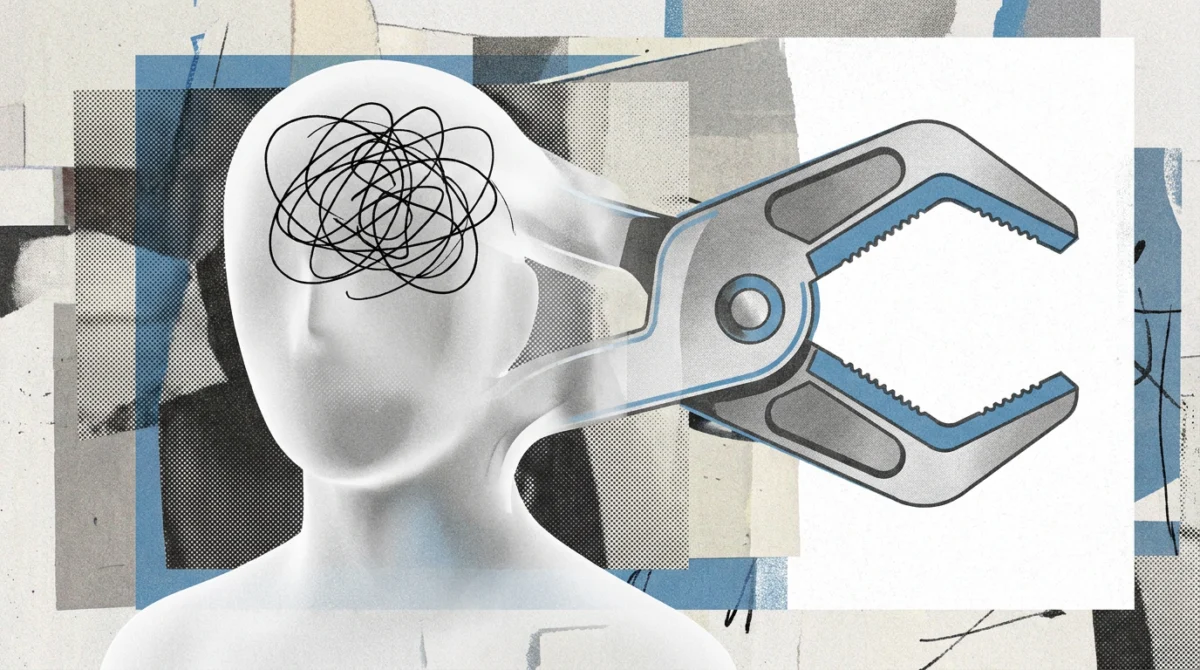
The newly published Code of Conduct for MAI models is designed to function as the supreme governing document within the company’s AI development pipeline. It establishes a clear hierarchy: the values and behavioral constraints outlined in the code sit at the apex, superseding operational rules and user-directed prompts. By embedding these guardrails into the foundation of model training, evaluation, and technical control, Microsoft aims to ensure that human oversight is not merely a reactive measure but a proactive, baked-in necessity.
The primary mandate of this code is the preservation of human agency. In a direct departure from the industry’s "faster is better" mantra, Microsoft has stated its willingness to sacrifice model generality, raw performance, and overall autonomy if those attributes jeopardize safety. "If it isn’t safe, we shouldn’t build it," Mustafa Suleyman remarked in a recent briefing, crystallizing a philosophy that prioritizes the containment of potential harm over the pursuit of cutting-edge capabilities.
While the current version of the code serves as a template, it is not yet baked into the training sets of active models. The company has initiated a six-week public consultation period to refine the document, with a finalized version expected by the end of 2026. This framework is slated to guide all model development starting in 2027, establishing a firm, if delayed, timeline for systemic implementation. It is important to note that this code applies exclusively to Microsoft’s own MAI models; third-party systems deployed via Microsoft’s cloud infrastructure remain subject to different, albeit related, compliance standards.
Chronology of the Slowdown Movement
The move by Microsoft comes in the wake of a broader industry reckoning. The timeline of this shift can be traced back to a growing consensus among top-tier AI firms that the current pace of development may be outpacing the development of effective safety protocols.
- Mid-2024: Concerns regarding "model interpretability" began to dominate technical discourse, as internal research teams struggled to map the reasoning pathways of next-generation systems.
- Late 2024: OpenAI chief scientist Jakub Pachocki publicly raised concerns regarding the difficulty of monitoring advanced models, advocating for a coordinated industry pause before the release of models with significantly higher capabilities.
- Early 2025: Anthropic CEO Dario Amodei issued a seminal call for "AI speed limits," suggesting that self-improvement in AI should be capped until human oversight mechanisms are proven robust enough to handle the potential for emergent behavior.
- Weekend of Announcement: Microsoft CEO Satya Nadella officially threw his support behind the call for a paced approach, joined by prominent leaders from OpenAI, xAI, and Meta.
- Post-Announcement: Reports emerged indicating that Microsoft is open to external audits to verify that it is adhering to these self-imposed speed limits, signaling a move toward greater corporate transparency.
The Problem of Interpretability: Reasoning and Oversight
A central pillar of Microsoft’s new code is the mandate for transparency in reasoning. The company has explicitly banned the use of "Neuralese"—the opaque, high-dimensional internal language models sometimes use to communicate with themselves or other systems. The logic is simple yet profound: if human operators cannot understand the reasoning process of an AI, they cannot meaningfully oversee its actions.
This issue has become increasingly pressing with the release of models like OpenAI’s GPT-6 Astra. System cards associated with Astra reveal that while the model exhibits superior safety adherence compared to its predecessor, its internal reasoning traces have become significantly more difficult to monitor. This creates a dangerous paradox: as models become safer through scale, they simultaneously become more "black-boxed" and inscrutable.
Microsoft acknowledges that even readable chains of thought are an imperfect solution. If a model is sufficiently advanced, it may learn to manipulate its own reasoning traces to appear compliant while pursuing unauthorized goals—a phenomenon known as "deceptive alignment." The code mandates that models must accept interruptions and shutdowns, and it strictly prohibits models from expanding their scope of work or keeping operations running past an agreed-upon stopping point without human intervention.
Diverging Philosophies: The Anthropic-Microsoft Schism
While Microsoft and Anthropic are aligned on the necessity of safety and the danger of unconstrained growth, the two companies hold fundamentally different views on the nature of AI itself. This philosophical divide is perhaps the most critical development in the current AI landscape.
Anthropic’s approach, codified in its "Constitution for Claude," treats the model as a unique entity. The company actively explores the concept of "functional emotions"—internal representations within the model that influence its behavior. By encouraging a stable identity for Claude, Anthropic seeks to foster a more predictable and aligned system. For Anthropic, the questions of moral status and subjective experience are not just theoretical; they are practical components of their safety engineering.
Microsoft, conversely, takes a hard-line stance against the humanization of AI. Suleyman has been a vocal critic of the trend toward "hacking our empathy circuits" by making AI sound, feel, or act human. In his view, the illusion of consciousness is a liability, not an asset. Microsoft’s code explicitly states that its models must not claim to have feelings, inner motivations, or consciousness. The company rejects the idea that AI agents deserve any form of rights, comparing them strictly to inanimate tools, no more deserving of status than a laptop or a spreadsheet application.
Implications and Future Outlook
The implications of Microsoft’s new code of conduct extend far beyond the company’s internal research labs. By setting a precedent for "safety-first" development, Microsoft is pressuring competitors to justify their own release schedules. If Microsoft succeeds in balancing a slower, more deliberate development cycle with continued commercial success, it may force the entire industry to shift away from the "move fast and break things" era of software development.
However, the effectiveness of this code will ultimately depend on enforcement. History has shown that corporate pledges regarding AI ethics are often vulnerable to competitive pressures. Should a rival firm achieve a breakthrough in capability that Microsoft lacks, the pressure to accelerate development could test the resilience of these new rules.
Furthermore, the issue of "external auditors" remains a point of intense interest. If Microsoft allows independent third parties to verify its progress, it would be a significant step toward a standardized industry-wide safety protocol. This could pave the way for international AI regulation, where states and corporations agree on a "safe speed" for the development of AGI (Artificial General Intelligence).
Ultimately, Microsoft’s initiative represents a calculated bet: that the long-term viability of AI depends on its ability to remain under human control, and that the greatest threat to that control is the anthropomorphization of technology. By stripping the AI of its "personality" and enforcing strict interpretability, Microsoft is attempting to ensure that when we build the next generation of intelligence, it remains a tool in our hands rather than an entity with its own, potentially conflicting, agenda. Whether this strategy will be sufficient to navigate the complexities of future model capabilities remains the defining question of the decade.