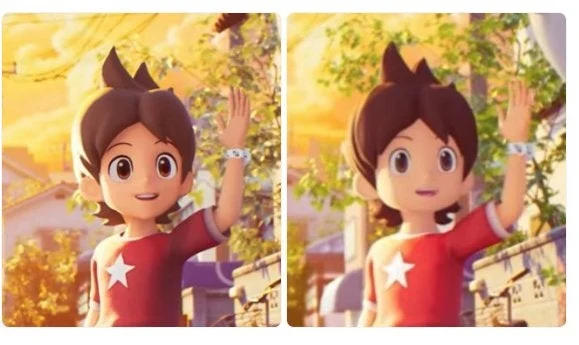
Level-5 president and CEO Akihiro Hino has formally addressed public concerns regarding the use of generative artificial intelligence in the studio’s recent digital showcase, an event intended to reinvigorate interest in flagship franchises including Professor Layton, Yo-Kai Watch, and Decapolice. The controversy began shortly after the broadcast, as sharp-eyed fans and industry observers identified what appeared to be procedurally generated assets within the promotional footage. The ensuing backlash prompted Hino to issue a public apology and a detailed clarification regarding the studio’s internal policies on AI development.
The digital event, intended as a celebration of the company’s return to the spotlight, instead became a flashpoint for a broader industry debate concerning the ethics of AI implementation in creative fields. While Hino emphasized that the studio remains committed to human-led design, the incident underscores the growing friction between corporate desires for development efficiency and a player base increasingly wary of synthetic creative output.
Chronology of the Controversy
The sequence of events unfolded rapidly throughout the week of September 2026. The initial "Level-5 Vision 2026" digital showcase, designed to provide updates on several high-profile titles, aired to a global audience. Within hours, social media platforms—particularly X (formerly Twitter)—became flooded with screenshots and video clips highlighting visual anomalies consistent with common generative AI artifacts. Fans noted inconsistencies in character models, background textures, and animation frames that deviated from the studio’s established artistic standards.
By the following day, prominent gaming news outlets, including VGC, had synthesized these community reports, formalizing the allegation that Level-5 had utilized undisclosed AI tools to produce their promotional materials. As the sentiment shifted from excitement to disappointment, the conversation gained enough momentum to force a direct response from executive leadership. On September 12, 2026, Akihiro Hino issued a statement in Japanese, which was subsequently translated and disseminated across international gaming communities, clarifying the intent behind the usage and offering an apology for the discomfort caused to the studio’s supporters.
Official Statements and Internal Policy
In his public address, Hino characterized the use of AI as an experimental venture intended to heighten the "spectacular" nature of the presentation. He explicitly stated that the decision was driven by a desire to modernize the studio’s marketing assets but acknowledged that the execution lacked transparency, leading to the current public outcry.
Crucially, Hino drew a hard line between promotional content and the actual development of software titles. "At our company, the parts that relate to the charm and individuality of the released works—such as scenarios, character designs, and basic settings—are all created by human hands," Hino stated. He further sought to reassure the player base by explaining that Level-5’s internal AI strategy focuses on digitizing human-made work—such as converting original 2D artwork into 3D polygon structures—rather than allowing generative models to author the core creative substance of their games.
The CEO also highlighted the logistical pressures facing the studio. Level-5 has set an ambitious internal goal of reducing development cycles from approximately five years to two years. Hino framed the use of AI as a necessary "trial and error" process aimed at meeting these aggressive production timelines. Despite these efficiency goals, he reiterated that no "simplistic" AI-generated output would be present in the final, commercially released versions of the games.

The Broader Industry Landscape
Level-5’s experience is far from an isolated incident. The gaming industry is currently navigating a period of profound transition as major publishers race to integrate artificial intelligence into their workflows. A report released in conjunction with the Tokyo Games Show noted that over half of Japanese game development companies are now actively experimenting with AI in some capacity.
This trend is not limited to Japan. Large-scale Western publishers have similarly signaled their intent to adopt these technologies:
- Krafton: The publisher behind PUBG and inZOI has officially declared itself an "AI-first" company, aiming to place synthetic intelligence at the center of its problem-solving and content generation pipelines.
- Square Enix: Following forays into NFTs and the metaverse, the company has pivoted toward generative AI, with public statements indicating a goal for AI to handle up to 70% of its Quality Assurance (QA) processes by 2027.
- Electronic Arts (EA): CEO Andrew Wilson has explicitly stated that AI is the "very core" of the company’s business model, predicting significant acceleration in content production speeds.
The common justification across these organizations is the increasing cost and complexity of modern game development. With budgets for AAA titles regularly exceeding $200 million and development teams numbering in the hundreds or thousands, executives argue that AI is the only viable path to maintaining profitability without sacrificing technical fidelity.
Fact-Based Analysis of Implications
The backlash against Level-5 serves as a case study in the "transparency gap" that currently defines the AI era in gaming. While corporations view AI as an operational efficiency tool, the audience perceives it as a potential dilution of the "soul" of artistic products.
The primary concern for consumers is the potential degradation of artistic intent. When a studio utilizes generative models, even for promotional materials, it risks signaling to the audience that the brand values the speed of delivery over the intentionality of the design. In Level-5’s case, the "charm and individuality" that Hino references are the specific assets that fans feel are at risk. If a studio uses AI to "flash up" a trailer, consumers naturally fear that the same logic will eventually bleed into the core narrative or character design, leading to generic, "soulless" experiences.
Furthermore, the legal and ethical landscape regarding AI-generated assets remains unsettled. Questions regarding copyright, the training of models on unlicensed artistic data, and the displacement of human labor continue to fuel skepticism. By framing the usage as a "lesson" and promising a different approach in the future, Level-5 is attempting to navigate this minefield. Whether they can regain the full trust of their player base depends on their ability to demonstrate, through future products, that their human-centric development philosophy is more than just a public relations safeguard.
Conclusion and Future Outlook
The incident concludes with a promise from Hino that the company will carry these lessons into their next major presentation. For the gaming industry, the Level-5 controversy serves as a stark reminder that while technology may offer a path to rapid expansion and operational efficiency, it does not operate in a vacuum. Brand equity in the creative industries is deeply tied to the perception of human effort. As studios continue to adopt AI, they must balance the drive for technical innovation with the necessity of communicating transparently with the audience that ultimately sustains their business. As of the current date, the industry remains in a state of flux, with companies testing the limits of public acceptance while attempting to secure their place in an increasingly automated future.