
SpaceX successfully executed a Falcon 9 launch from Cape Canaveral Space Force Station in Florida, delivering the final three satellites for SES’s O3b mPower medium Earth orbit (MEO) communications constellation. Liftoff occurred during an 87-minute launch window that opened at 2:49 p.m. Eastern Time on Sunday, marking the culmination of a multi-year project that began over a decade ago when satellite operator SES and Boeing first contracted SpaceX for the deployment.
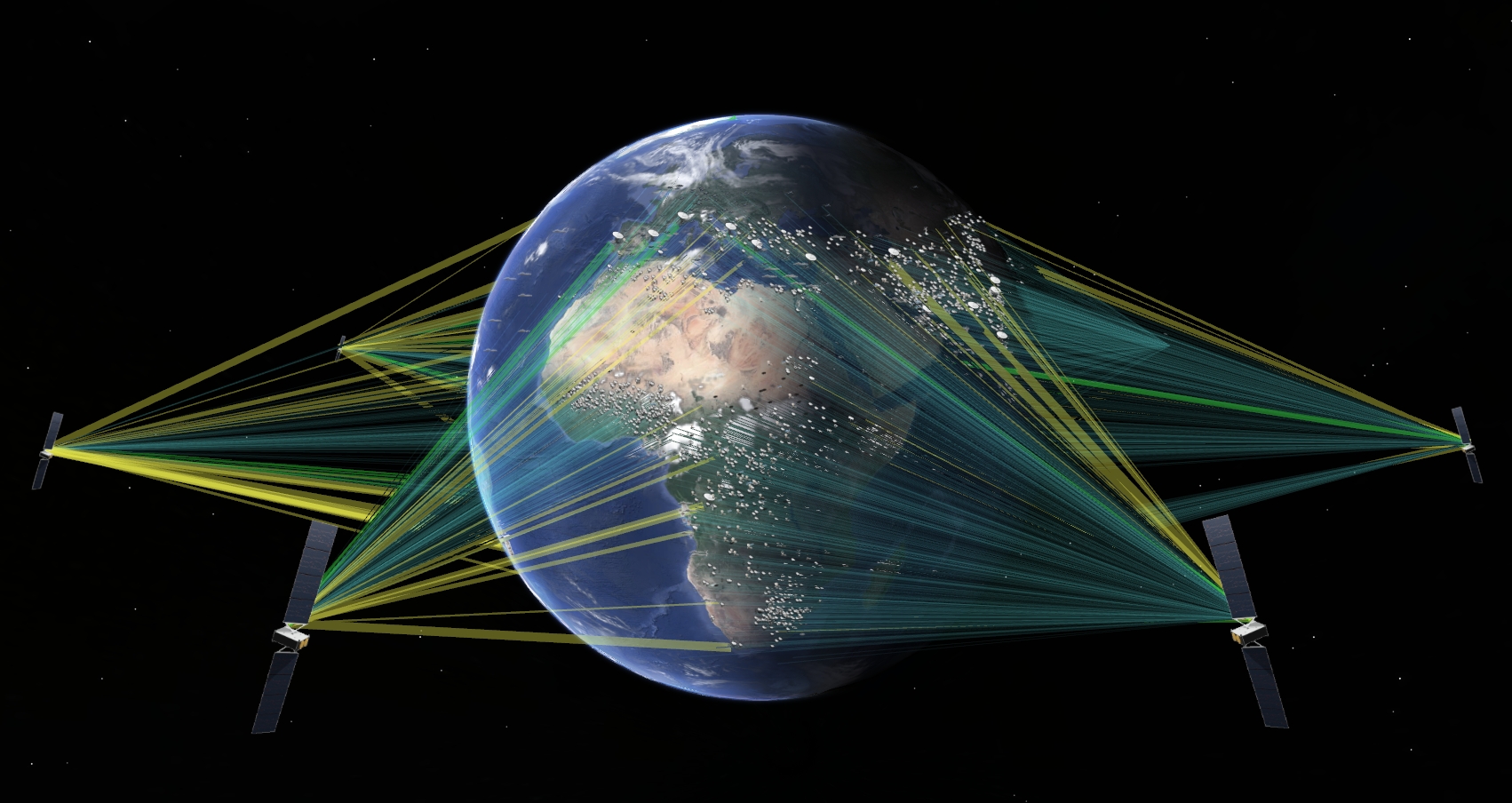
The mission successfully deployed the F11, F12, and F13 satellites into medium Earth orbit, positioning them approximately 5,000 miles above the Earth’s surface. This altitude places the O3b mPower network significantly higher than low Earth orbit (LEO) constellations like SpaceX’s Starlink—which typically operate around 340 miles up—while remaining well below the 22,000-mile altitude of traditional geostationary (GEO) satellites. With this final delivery, the completed 13-satellite constellation achieves global coverage, enabling high-throughput, low-latency telecommunications services without requiring the massive satellite counts characteristic of LEO networks.
A Decade-Long Vision Realized
The journey toward completing the O3b mPower constellation spans over ten years of engineering, manufacturing, and regulatory milestones. Following initial agreements between SES and Boeing to design and build the next-generation communications system, SpaceX was selected to provide the heavy-lift launch capabilities necessary to place the advanced spacecraft into their specific MEO slots.
Deploying satellites into medium Earth orbit presents distinct orbital mechanics challenges compared to standard LEO or GEO missions. The spacecraft require precise trajectory insertion to establish operational synchronization across the constellation. Over successive campaigns, Falcon 9 launch vehicles have methodically lifted the heavy, high-capacity satellites, overcoming various industry-wide supply chain hurdles and technical validations to reach Sunday’s final deployment phase.
Orbital Architecture and Market Positioning
While SpaceX’s Starlink is optimized for mass-market consumer broadband, RVs, small businesses, and mobile applications with an inventory exceeding 11,000 operational satellites, the O3b mPower network serves an entirely different operational segment. SES targets enterprise-grade connectivity, bypassing individual consumers to provide dedicated, high-performance bandwidth to commercial airlines, luxury cruise lines, offshore energy installations, telecommunications backhaul providers, and government agencies.

Because MEO satellites sit further out than LEO constellations, a much smaller fleet can provide comprehensive global coverage. The 13-satellite O3b mPower network delivers fiber-like speeds and consistent throughput that previously required thousands of spacecraft or stationary geostationary setups.
The two networks are not strictly competitive; rather, they increasingly complement one another. A prominent partnership established in 2023 allows major cruise liners and enterprise maritime customers to dynamically combine Starlink’s high-volume speeds with O3b mPower’s steady, guaranteed capacity. This hybrid approach ensures seamless connectivity even in remote oceanic regions where bandwidth demands fluctuate heavily.

Falcon 9 Reliability and Booster Milestones
Sunday’s mission further extended the unprecedented flight heritage of the Falcon 9 rocket used for the deployment. Marking its 29th trip to orbit, the first-stage booster carried a storied manifest that included two crewed Axiom missions, the European Space Agency’s Euclid space telescope, and 22 distinct Starlink batches.
Following stage separation, the booster successfully descended and executed a pinpoint landing on SpaceX’s autonomous droneship, A Shortfall of Gravitas. This landing represents another benchmark in SpaceX’s reusable rocket program, reinforcing the cost-efficiency and reliability metrics that have transformed commercial launch operations globally.

Broader Industry Implications
The completion of the O3b mPower network highlights the maturation of multi-orbit satellite strategies within the global telecommunications sector. As demand for resilient, high-speed data connectivity surges across aviation, maritime, and defense sectors, operators are increasingly moving toward hybridized architectures that integrate LEO, MEO, and GEO assets.
For SES, a fully operational 13-satellite MEO constellation provides the commercial certainty required to secure long-term enterprise contracts and expand its digital infrastructure footprint worldwide. For SpaceX, the mission underscores its ongoing role as a vital launch provider not only for its own internal constellation ambitions, but for institutional and commercial satellite operators worldwide.