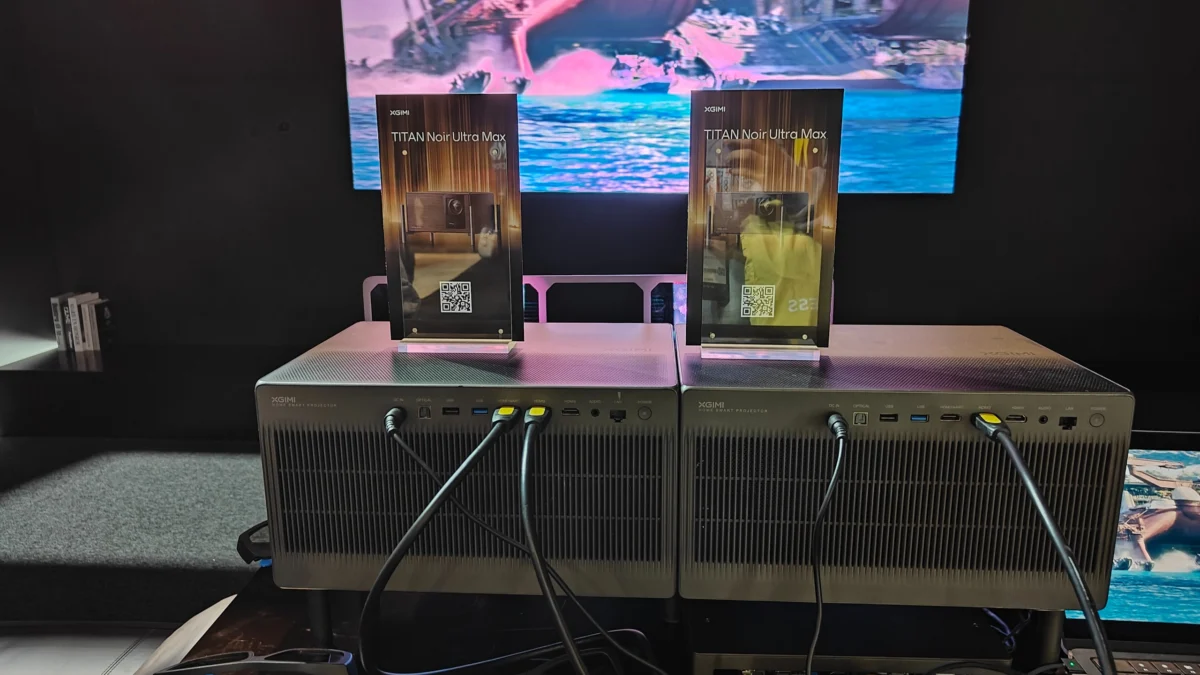
The IFA 2026 convention in Berlin served as a global stage for the latest innovations in home cinema technology, drawing thousands of industry professionals and technology enthusiasts to the Messe Berlin exhibition grounds. Among the myriad of high-definition displays and audio systems, one particular exhibit stood out for its unconventional approach to spatial imaging. Xgimi, a leader in the projector market, presented a sophisticated prototype system that utilized dual Titan Noir Ultra Max projectors to deliver a high-fidelity 3D cinematic experience, reigniting a long-dormant conversation about the viability of 3D home entertainment.
The Technical Anatomy of the Prototype
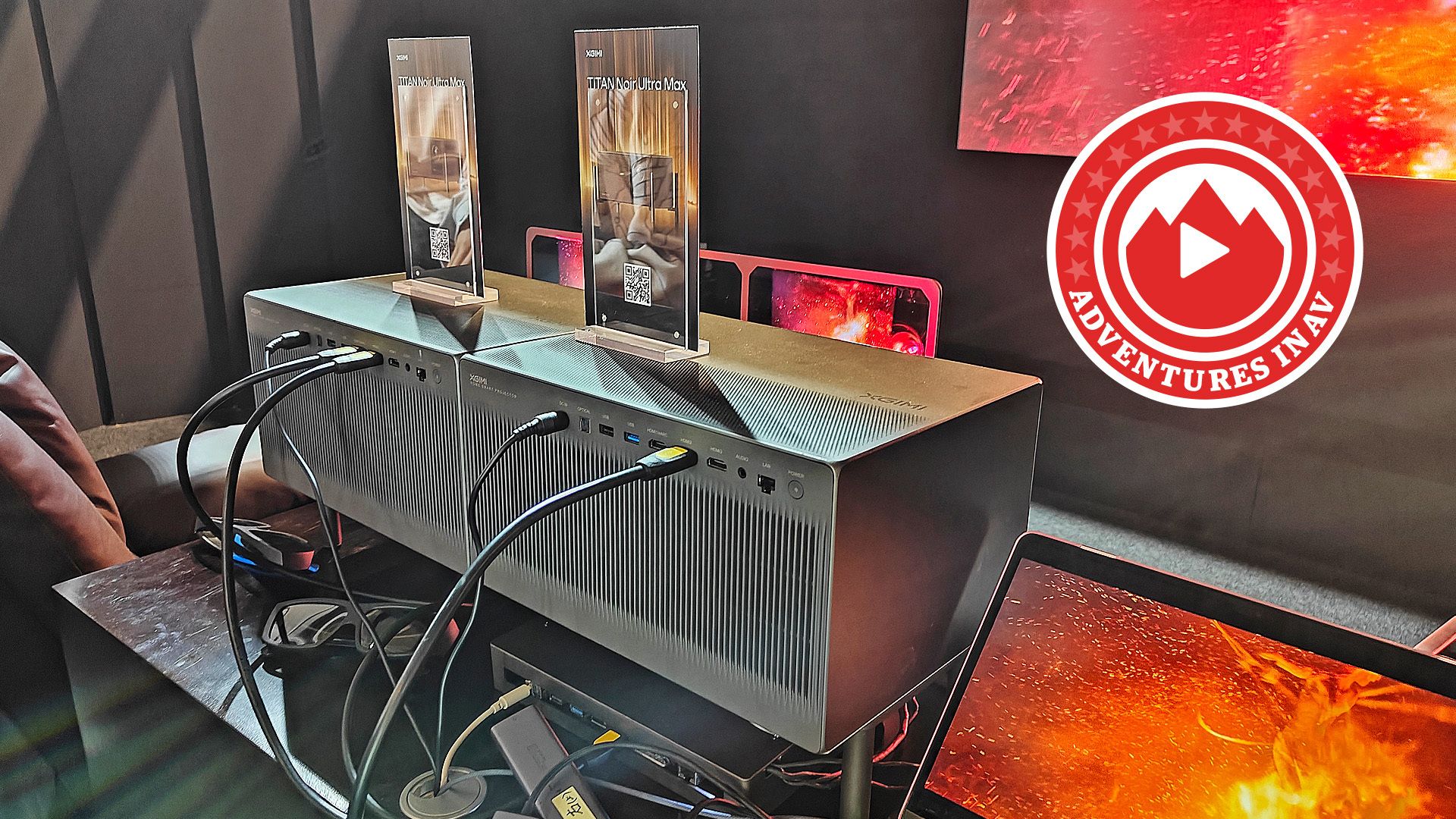
The demonstration was a masterclass in engineering ingenuity. Rather than relying on traditional single-lens 3D technology—which often suffers from diminished brightness and resolution—Xgimi configured two of its newly announced flagship Titan Noir Ultra Max projectors in a side-by-side array. Both units were synced to a single source, a high-performance laptop, to ensure frame-perfect synchronization.
The secret to the immersion lay in the application of specialized polarizing filters positioned in front of each projector lens. By projecting distinct, polarized images for the left and right eyes simultaneously, the system allowed viewers wearing passive polarized glasses to experience a flicker-free, full-resolution 3D effect. This dual-projector approach bypassed the common pitfalls of active shutter glasses, such as reduced brightness and visual fatigue, resulting in a display that felt remarkably more stable and immersive than the 3D home cinema solutions of the early 2010s.
The Titan Noir Ultra Max: A Performance Benchmark
The backbone of this experiment is the Titan Noir Ultra Max, a high-end projector that represents a significant leap forward in display hardware. Priced at £4,799 (approximately $5,000 / AU$9,040), the unit is designed for the premium home theater segment.
According to official specifications, the projector achieves a peak brightness of 8,000 ISO lumens. This figure is critical, as high brightness is essential to counteract the light-absorption characteristics of 3D glasses. Furthermore, the unit boasts a native contrast ratio of 12,000:1. The integration of high-end optical components allows the projector to maintain deep black levels, ensuring that the "bioluminescent" and high-contrast sequences typical of modern blockbusters remain vibrant and clear.
Beyond visual fidelity, the hardware includes advanced gaming features that set it apart from conventional home cinema projectors. Xgimi reports an input latency of 1ms, a metric that, if verified, places this projector in direct competition with high-end gaming monitors. Coupled with Variable Refresh Rate (VRR) and Auto Low Latency Mode (ALLM) support, the projector is positioned as a versatile centerpiece for both cinematic viewing and high-frame-rate gaming.
The Return of 3D: A Contextual Shift
The decision to showcase a 3D demo at a major trade show in 2026 is inherently provocative. The consumer market largely abandoned 3D television technology around 2016-2017, as manufacturers moved toward 4K resolution and High Dynamic Range (HDR) as the primary drivers of consumer interest.
However, the industry has seen a subtle shift in the premium cinema space. With the release of major franchise entries like Avatar: Fire and Ash, high-budget 3D production remains a cornerstone of the premium "theatrical experience." By recreating that experience in a controlled demo environment at IFA, Xgimi is effectively testing whether current display hardware is finally capable of delivering on the original promise of 3D without the hardware compromises that marred its initial rollout.
During the demonstration, the system was used to play a loop of the Avatar: Fire and Ash trailer. Observers noted that the sense of depth was significantly superior to standard 3D televisions. Objects such as floating islands and flying creatures appeared to break the boundaries of the physical screen, creating a "pop-up book" effect that is difficult to achieve with flat-panel displays. Even in the brightly lit conditions of the trade show floor, the image remained punchy and clear, suggesting that the dual-projector setup provides a level of luminance rarely seen in consumer-grade 3D setups.
Industry Implications and Future Prospects
While Xgimi has emphasized that this specific configuration is a "prototype" and not a retail product, the demonstration carries broader implications for the AV industry. The primary barrier to a 3D renaissance has never been the content—major studios continue to produce 3D masters for cinema—but rather the lack of high-quality hardware capable of rendering that content in the home.
If companies can produce affordable, high-brightness projectors that utilize passive 3D technology, there is a potential market among enthusiasts who seek the "true" theatrical experience. However, analysts point out that mass adoption remains unlikely unless there is a resurgence in 3D content distribution, such as a shift in how streaming platforms handle 3D masters.

From a manufacturing standpoint, the success of the Titan Noir Ultra Max in this context proves that current light-source technology—specifically high-output LED and laser configurations—has reached a level of maturity where 3D is no longer a technical burden on the hardware.
Expert Reaction and Technical Considerations
The audio performance of the prototype, however, provided a point of critique. While the visual performance was exemplary, the built-in speakers were insufficient to overcome the ambient noise of the convention hall. This served as a reminder that a system of this caliber requires a dedicated surround sound setup to achieve true immersion. Industry experts suggest that for the home user, the Titan Noir Ultra Max would function best as part of a integrated system involving a high-fidelity soundbar or a full 7.1.4 Dolby Atmos speaker array.
Furthermore, the longevity of such a setup—running two projectors in tandem—poses questions regarding heat management and bulb or laser life. As the industry moves toward more sustainable and energy-efficient tech, the power draw of a dual-projector setup will be a key factor for potential high-end buyers to consider.
Conclusion: A Potential Renaissance
The IFA 2026 demo by Xgimi serves as a reminder that hardware innovation is rarely linear. While 3D as a standard consumer feature may have faltered, the underlying technology has continued to evolve. By pushing the boundaries of what is possible with brightness and contrast, Xgimi has successfully demonstrated that the primary reason 3D failed in the past was hardware limitation, not a lack of audience interest.
Whether this experiment leads to a commercial 3D-ready projector remains to be seen. However, for those who experienced the demo in Berlin, it was a compelling argument that the "cinematic depth" of 3D, when executed with high-end, modern optical hardware, remains one of the most immersive experiences in home entertainment. As the market for home cinema continues to grow, such prototypes serve as a valuable indicator of where the high-end display industry may be heading in the coming years.