The United States District Court for the Central District of California has dealt a significant blow to Apple Inc. by denying the tech giant’s motion to overturn a $634 million jury verdict. U.S. District Judge James V. Selna rejected Apple’s request for judgment as a matter of law or a new trial, effectively solidifying a massive financial penalty in a long-standing dispute over health-monitoring technology. The ruling marks a critical turning point in a multi-year legal saga between Apple and Masimo Corporation, a global leader in non-invasive monitoring technologies, centering on the pulse oximetry features found in the Apple Watch.
The court’s decision, finalized in mid-2026, follows a November 2025 jury verdict that found Apple had infringed on a specific Masimo patent related to heart-rate monitoring and notification systems. While Apple argued that the verdict was flawed based on technical definitions and procedural errors, Judge Selna upheld the jury’s findings, maintaining that the evidence presented during the trial was sufficient to support the massive damages award.
The Core of the Dispute: Defining a Patient Monitor
A central pillar of Apple’s defense rested on the linguistic and technical interpretation of the term "patient monitor." The Masimo patent in question describes technology designed for a "patient monitor," a term Apple argued should be restricted to professional-grade medical equipment used in clinical settings. Apple’s legal team contended that the Apple Watch, as a consumer-facing wearable device, did not fall under this classification and therefore could not infringe upon a patent specifically tailored for medical environments.
However, Judge Selna sided with the jury’s interpretation, noting that the "ordinary meaning" of the term could reasonably encompass a device like the Apple Watch, which monitors physiological data and alerts users to potential health issues. The judge found that the patent’s language was broad enough to cover the wearable’s functions, particularly its ability to measure heart rates and provide notifications—features that mimic the primary utility of traditional bedside patient monitors.

In addition to the definitional dispute, Apple sought a new trial on the grounds that the court had improperly excluded testimony from one of its key experts and provided flawed instructions to the jury. Judge Selna dismissed these concerns, stating that any alleged errors were not of a magnitude that would have unfairly prejudiced the outcome of the trial.
A Decade of Conflict: The Chronology of Apple vs. Masimo
The legal friction between the two companies dates back more than a decade, illustrating the high stakes of the health-tech market. The relationship began with a potential partnership that quickly soured into allegations of intellectual property theft and predatory hiring practices.
- 2013: Apple reportedly contacted Masimo to discuss a potential collaboration. Masimo, founded by Joe Kiani, was known for its "Signal Extraction Technology" (SET), which allowed for accurate pulse oximetry readings even during patient movement or low perfusion.
- 2014: Shortly after the meetings, Apple began hiring key personnel from Masimo and its spinoff, Cercacor. Among the hires were Masimo’s Chief Medical Officer and Cercacor’s Chief Technology Officer. Masimo later alleged these hires were a "targeted effort" to obtain trade secrets.
- 2020: Masimo filed its first major lawsuit against Apple, accusing the company of stealing trade secrets and infringing 10 patents. This lawsuit focused on the optical sensors used in the Apple Watch to measure blood oxygen levels and heart rate.
- 2023: Masimo secured a significant victory through the International Trade Commission (ITC). The ITC ruled that Apple had infringed on Masimo’s pulse oximetry patents, leading to an import ban on Apple Watch models with blood oxygen sensors (Series 9 and Ultra 2).
- 2024: To circumvent the import ban, Apple temporarily halted sales before resuming them with the blood oxygen feature disabled via software for the U.S. market.
- 2025: Apple introduced a redesign for the blood oxygen feature, shifting the data processing and calculation from the watch itself to the paired iPhone, displaying results in the Health app. Despite this, a jury in a separate California federal case awarded Masimo $634 million for infringement of a different heart-rate monitoring patent.
- 2026: Judge Selna upholds the $634 million verdict, denying Apple’s post-trial motions for reversal.
Technical Context: The Evolution of Pulse Oximetry
Pulse oximetry has become a cornerstone feature of modern smartwatches, but the technology is rooted in complex medical science. Traditional pulse oximeters work by emitting red and infrared light through a translucent part of the body, usually a fingertip or earlobe. The device measures how much light is absorbed by oxygenated versus deoxygenated hemoglobin.
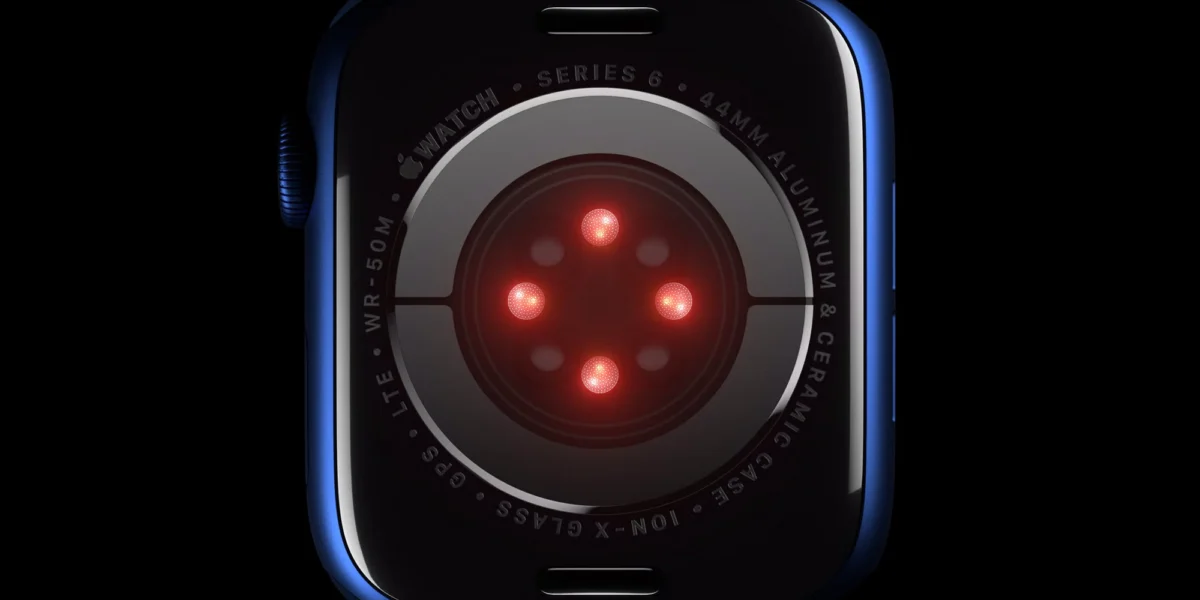
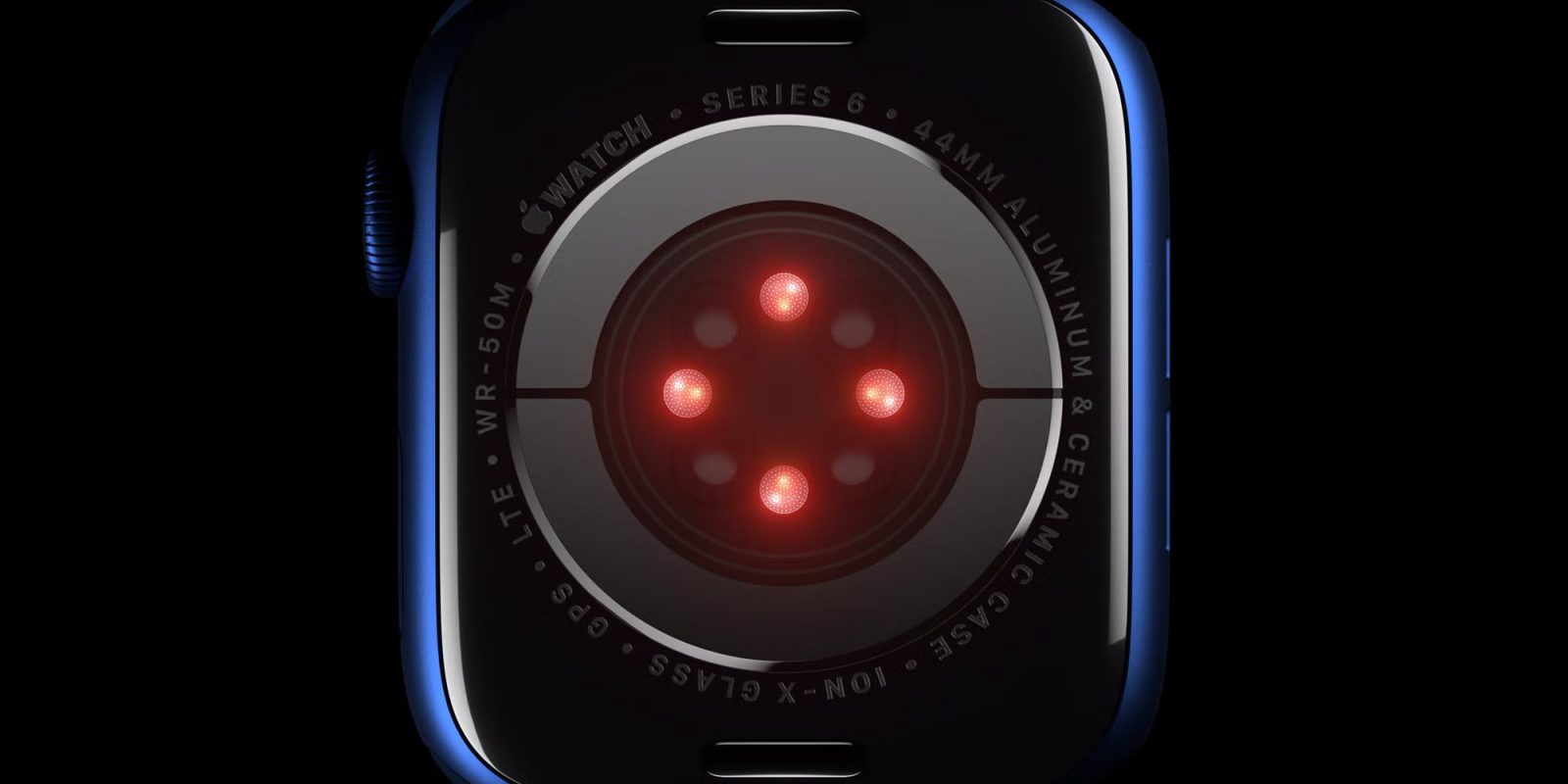
Apple’s implementation in the Apple Watch uses a "reflectance" method, where LEDs on the back of the watch shine light into the wrist and sensors measure the light reflected back. Masimo argued that its patented innovations were essential to making this technology work accurately on a wrist-worn device, where motion and skin tone often interfere with readings. The $634 million verdict specifically targeted the "historic" patient monitoring technology that Masimo claims Apple integrated into its notification systems for heart rate irregularities.
Financial and Market Implications
For Apple, a $634 million penalty represents a relatively small fraction of its annual revenue—which exceeded $380 billion in recent fiscal years—but the legal precedent is more concerning. The ruling validates the claims of a smaller specialized firm against a tech behemoth, potentially emboldening other medical technology companies to challenge "Big Tech" over the integration of health sensors.
For Masimo, the verdict is a major vindication of its intellectual property strategy. Under the leadership of Joe Kiani, Masimo has spent millions in legal fees to protect its R&D investments. Kiani has been a vocal critic of what he calls Apple’s "sherlocking" practices—the act of observing a third-party developer’s feature and then building it directly into the operating system or hardware, often rendering the original company’s product obsolete.
Official Responses and Next Steps
Following the judge’s refusal to toss the verdict, Apple reiterated its intent to fight the decision in higher courts. In a statement provided to legal news outlets, Apple characterized Masimo’s legal strategy as opportunistic, noting that many of Masimo’s initial patent claims had been invalidated in other proceedings.
"Masimo is a medical device company that does not sell any products to consumers," Apple stated. "The single patent in this case expired in 2022 and is specific to historic patient monitoring technology from decades ago. We plan to appeal."
Apple’s defense emphasizes that by the time the jury reached its verdict in 2025, the patent in question was no longer in force. However, patent law allows for damages to be collected for the period during which the patent was active and being infringed upon.
Masimo, meanwhile, has maintained that its goal is to ensure that innovation is respected and that large corporations cannot simply absorb the work of others without fair compensation. While Masimo has recently faced internal pressures from activist investors regarding its consumer health strategy, this legal victory provides a significant cash cushion and strengthens its position in future licensing negotiations.

Broader Impact on the Wearables Industry
The persistence of this legal battle highlights the "gray area" between consumer electronics and medical devices. As companies like Apple, Samsung, and Google (via Fitbit) continue to add sophisticated health features—such as EKG, sleep apnea detection, and glucose monitoring—they increasingly collide with the established medical device industry.
Regulatory bodies like the FDA and the ITC are becoming the ultimate arbiters of these disputes. The Apple-Masimo case serves as a warning to tech companies that software workarounds and redesigns may not always be enough to escape the reach of well-established medical patents.
As the case moves toward the U.S. Court of Appeals for the Federal Circuit, the industry will be watching closely. A reversal could set a high bar for what constitutes a "patient monitor," while an affirmation would confirm that smartwatches are now legally viewed as medical-adjacent devices, subject to the same intellectual property protections as clinical equipment. For now, the $634 million judgment stands as one of the largest patent-related penalties in the history of the consumer electronics sector.