The release of macOS 27 beta 3 has revealed a significant shift in Apple’s monetization strategy for its smart home ecosystem, specifically regarding the integration of Apple Intelligence within the Home app. Technical documentation and release notes discovered within the latest developer build indicate that users wishing to access advanced artificial intelligence-driven security camera features will be required to maintain a 2TB iCloud+ subscription. This requirement effectively sets a $9.99 monthly entry price for the most sophisticated elements of Apple’s revamped HomeKit Secure Video (HKSV) platform, marking a transition in how the company bundles hardware-adjacent software services.
The discovery, initially noted by developers testing the third beta of macOS 27, applies across the Apple ecosystem, including iOS 27 and iPadOS 27. While Apple has historically linked HomeKit Secure Video features to paid iCloud tiers, the move to gate specific AI functionalities behind the highest consumer storage tier represents a new precedent. This decision comes as Apple seeks to leverage its "Apple Intelligence" suite to differentiate its smart home offerings from competitors like Google’s Nest and Amazon’s Ring, both of which have long utilized subscription models for cloud-based video analytics.
Advanced AI Features in the Home App
The suite of features necessitating the 2TB plan includes several high-profile upgrades announced during Apple’s Worldwide Developers Conference (WWDC). Central to these is the "Intelligent Home Notifications" system. Currently, users with smart doorbells or security cameras often receive a fragmented stream of alerts. For instance, a single arrival might trigger separate notifications for motion detection in the driveway, the garage door opening, motion at the front door, and the eventual unlocking of a smart lock.
Under the new system powered by Apple Intelligence, these disparate events are synthesized into a single, cohesive summary. Instead of six distinct pings, a user receives a single notification stating that a specific family member has arrived home and entered the premises. This "notification condensation" relies on complex temporal and spatial analysis of sensor data and video feeds, a process Apple is now tethering to its premium subscription tier.

Beyond notification management, the 2TB requirement extends to new video analysis tools. These include:
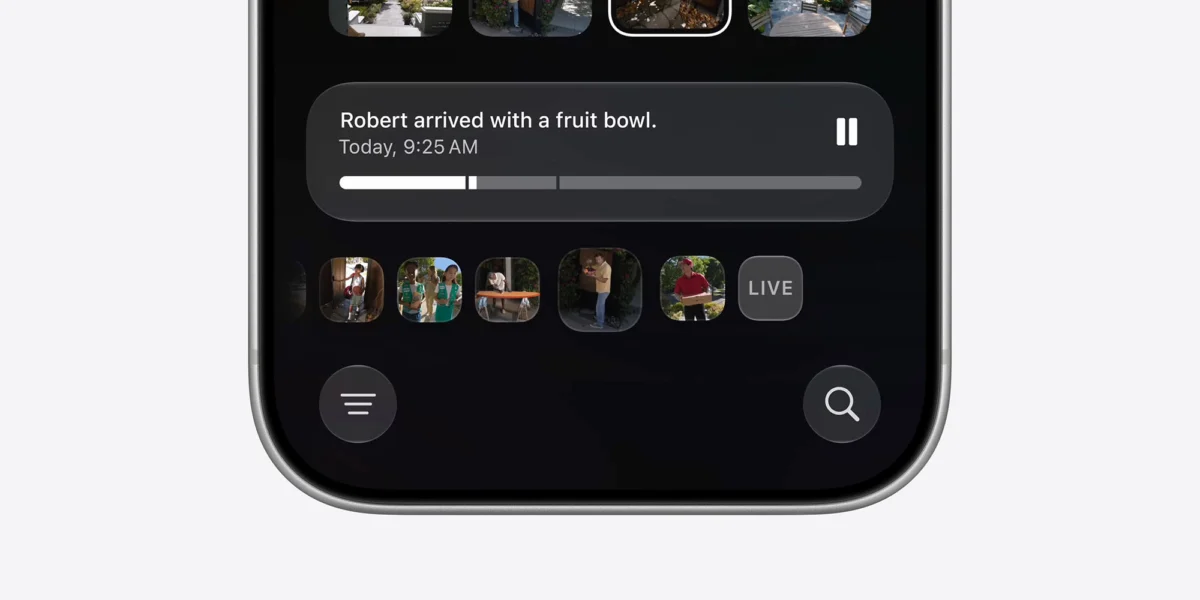
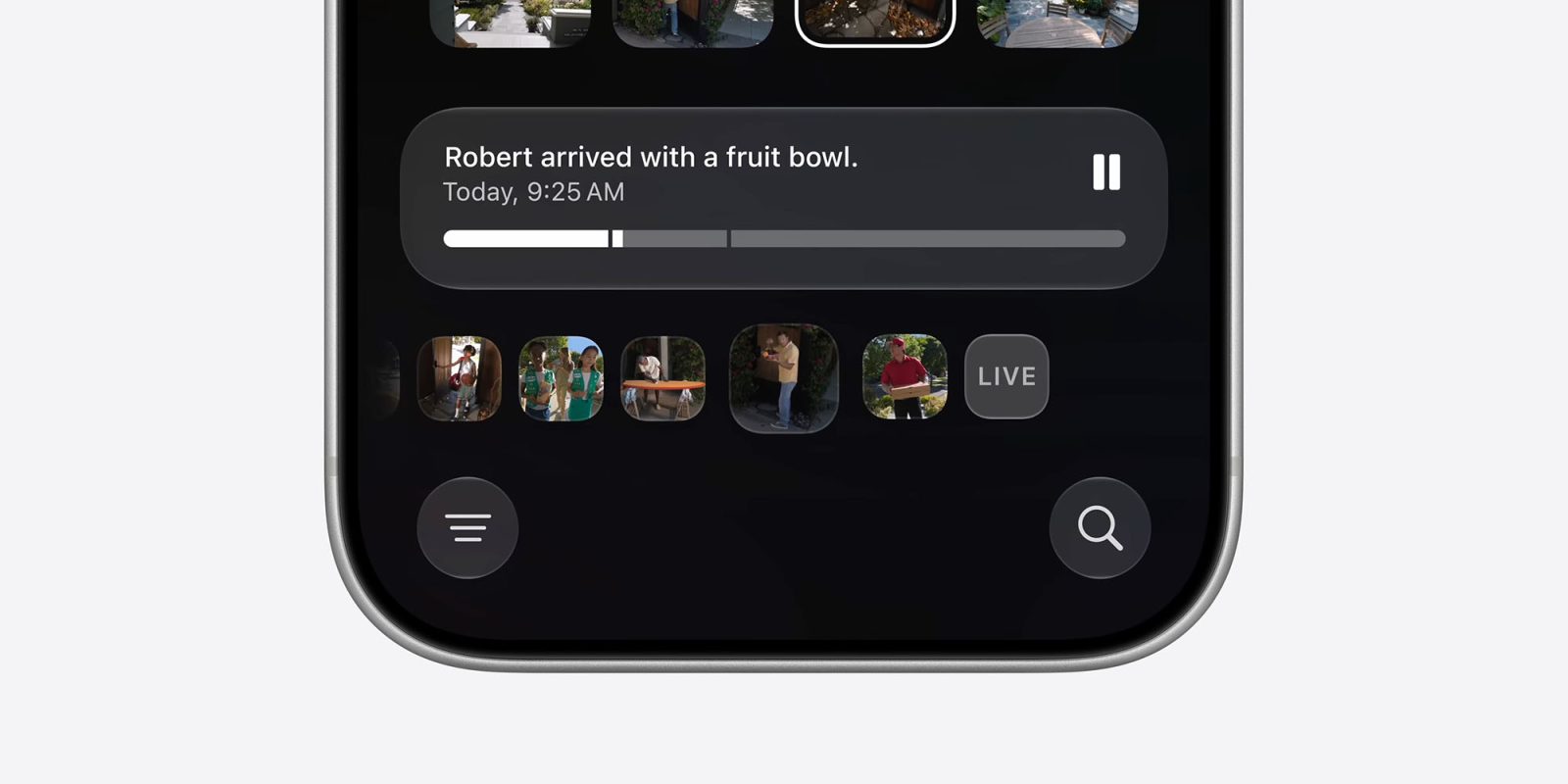
- Generated Video Descriptions: Apple Intelligence will provide text-based summaries of recorded events, allowing users to understand the context of a clip without manually reviewing the footage.
- Natural Language Search: Users can query their video history using specific terms, such as "Find the video of the UPS delivery" or "Show me when the cat was on the counter."
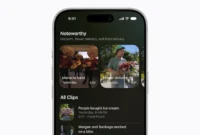
- Intelligent Highlights: The Home app will automatically elevate "noteworthy" clips to the top of the search page, using machine learning to identify significant moments like a friend dropping off a package or an unrecognized person lingering near a doorway.
Furthermore, Apple is upgrading the baseline resolution for HomeKit Secure Video from 1080p to 4K. While the increased resolution significantly improves forensic detail, it also necessitates substantially higher bandwidth and storage overhead, which Apple appears to be offsetting through the 2TB iCloud+ mandate.
The Evolution of HomeKit Secure Video
To understand the context of this move, it is necessary to examine the chronology of Apple’s home security offerings. HomeKit Secure Video was introduced at WWDC 2019 as a privacy-focused alternative to third-party cloud storage. The primary selling point was end-to-end encryption and the fact that video analysis (detecting people, pets, or vehicles) was performed locally on a "Home Hub" such as an iPad, Apple TV, or HomePod.
Initially, the subscription requirements were tiered based on the number of cameras. A 200GB iCloud plan supported a single camera, while the 2TB plan was required for up to five cameras. In subsequent updates, Apple removed the camera limit for the 2TB plan, allowing for an unlimited number of HKSV-enabled devices.
The transition to macOS 27 and iOS 27 marks the first time Apple has restricted specific software capabilities—rather than just the number of devices or amount of storage—to a specific iCloud tier. This suggests a strategic shift where "Apple Intelligence" is treated as a premium service layer on top of the existing hardware and storage infrastructure.
Technical and Economic Implications
The requirement of a 2TB plan carries both technical justifications and economic motivations. From a technical standpoint, 4K video streams and the metadata generated by Apple Intelligence require robust server-side infrastructure for synchronization and encrypted storage. While Apple emphasizes on-device processing, the "Apple Intelligence" framework often utilizes Private Cloud Compute (PCC) for tasks that exceed the local processing power of a Home Hub. Maintaining these secure, high-performance cloud nodes incurs significant operational costs.
Economically, the move aligns with Apple’s broader objective to grow its Services division. In the second quarter of 2024, Apple reported Services revenue of $23.9 billion, a record high. By moving "must-have" AI features to the $9.99/month tier, Apple incentivizes users who may currently be on the $2.99 (200GB) plan to upgrade. For a user with only one or two cameras, the jump from $2.99 to $9.99 represents a 234% increase in monthly costs to access features that were previously marketed as core components of the Apple ecosystem experience.
Market Comparison and Competitive Landscape
Apple’s decision places it in direct competition with established players in the smart home security market, most of whom have already normalized the subscription-for-AI model.
- Google Nest: The Nest Aware subscription starts at $8 per month (or $80 annually) for basic features, with a "Plus" tier at $15 per month that includes 10 days of 24/7 video history. Google uses AI to distinguish between familiar faces, package deliveries, and glass breaking.
- Amazon Ring: The Ring Protect Basic plan costs $4.99 per month per device, while the Pro plan, which includes professional monitoring and advanced AI alerts, costs $20 per month.
- Arlo: Arlo Secure plans start at $7.99 per month for a single camera or $12.99 for unlimited cameras, offering 4K cloud recording and AI object detection.
While Apple’s $9.99 price point is competitive—especially considering it includes 2TB of general-purpose cloud storage for photos, device backups, and files—the lack of a "middle ground" for users with only one or two cameras is a point of contention among early testers. Unlike competitors, Apple does not offer a "Home-only" subscription; the features are inextricably linked to the 2TB storage product.
Reaction and Industry Analysis
Industry analysts have noted that this move could potentially alienate a segment of the "prosumer" market that invested in HomeKit specifically to avoid the "subscription creep" prevalent in the tech industry. One of the original appeals of HomeKit Secure Video was that it leveraged storage many users were already paying for. By mandating the highest tier for AI features, Apple is effectively ending the "free rider" era of advanced home automation.

"Apple is clearly signaling that Apple Intelligence is a premium product," says market analyst Sarah Miller. "By bundling it with the 2TB iCloud tier, they are targeting their highest-value customers. However, the risk is that they create a two-tiered experience in the Home app where the ‘standard’ user feels they are using an obsolete product unless they commit to a $120 annual subscription."
Privacy advocates, however, remain focused on the implementation. Apple’s commitment to end-to-end encryption for HKSV remains a significant differentiator. Even with the move to the cloud for certain AI summaries via Private Cloud Compute, Apple maintains that the data is inaccessible to the company itself. For privacy-conscious consumers, the $9.99 monthly fee may be viewed as a "privacy tax" worth paying to avoid the data-mining practices associated with other smart home platforms.
Looking Ahead
As macOS 27 and iOS 27 move toward a general release, likely in the fall, it remains to be seen if Apple will adjust these requirements based on developer feedback. Historically, Apple has been firm on its iCloud+ tiering, but the backlash against "subscription fatigue" has led other companies to reconsider aggressive gating.
For now, the roadmap is clear: the future of the Apple smart home is intelligent, high-definition, and high-cost. Users looking to take advantage of the seamless, AI-synthesized notifications and 4K clarity promised at WWDC should begin budgeting for the 2TB iCloud+ plan. The integration of Apple Intelligence into the Home app is not merely a software update; it is a repositioning of the smart home as a premium service-driven experience. This shift underscores the growing reality that in the modern tech ecosystem, hardware ownership is only the first step in a long-term financial relationship between the consumer and the provider.