Hasbro, the global toy and entertainment giant and parent company to Wizards of the Coast (the intellectual property holders for Baldur’s Gate and Dungeons & Dragons) and backer of Archetype Entertainment, recently announced a significant $56 million impairment charge as part of its latest financial results. This substantial write-down reflects a decrease in the theoretical value of certain assets, directly attributed by the company to the cancellation of "several games scheduled for release in 2028 and beyond." The announcement signals a notable strategic realignment within Hasbro’s digital gaming division, prioritizing a more focused portfolio and emphasizing projects with clearer paths to long-term success and strong franchise potential.
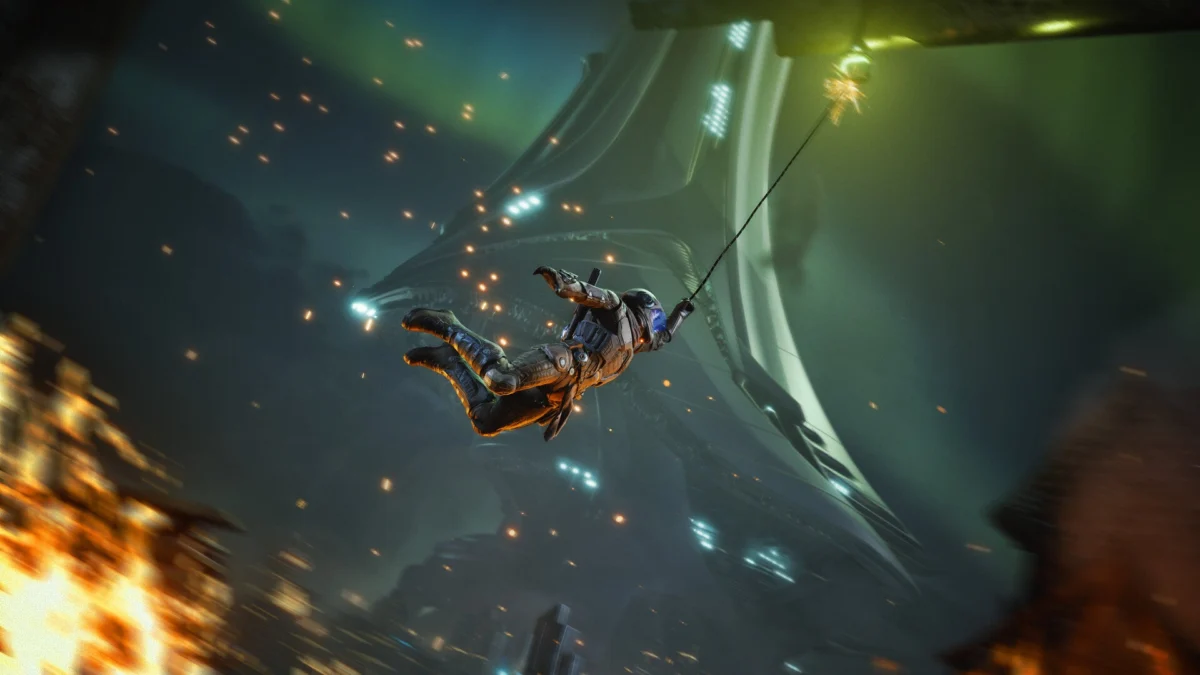
Despite this financial adjustment and the pruning of its future development pipeline, Hasbro asserts its ongoing commitment to its core digital gaming initiatives. Projects slated for a 2027 release, such as the highly anticipated science-fiction RPG Exodus from Archetype Entertainment and the as-yet-unspecified Warlock: Dungeons & Dragons title, remain firmly on track. This dual approach of strategic divestment in some areas while maintaining confidence in others underscores a broader recalibration of Hasbro’s investment strategy in the increasingly competitive and capital-intensive video game industry.
Hasbro’s Strategic Realignment and Financial Implications
An impairment charge, in financial accounting, occurs when the fair value of an asset is less than its carrying value on the company’s balance sheet. For Hasbro, this $56 million charge signifies that the expected future economic benefits from the cancelled game projects are no longer sufficient to justify their recorded value. This isn’t necessarily a sign of immediate financial distress but rather a pragmatic adjustment reflecting a change in strategic outlook and a re-evaluation of investment priorities. It’s a mechanism for companies to accurately represent the value of their assets, preventing overestimation and providing a clearer picture of their financial health.
The decision to cancel projects slated for 2028 and beyond indicates a forward-looking strategy. Rather than continuing to pour resources into projects deemed less viable or misaligned with current market trends, Hasbro has opted to cut losses and redirect focus. This move is consistent with a broader industry trend where publishers and developers are increasingly scrutinizing their pipelines, often leading to project cancellations and studio closures in a bid to streamline operations and concentrate on core strengths. The video game industry, after a period of rapid expansion fueled by pandemic-era lockdowns, has recently experienced a significant slowdown, marked by widespread layoffs, reduced investment, and heightened competition, making such strategic adjustments more common.
The Shifting Landscape of Internal Development
Hasbro’s current strategy marks a departure from its earlier, more ambitious push into internal video game development. Only a few years ago, Wizards of the Coast, under Hasbro’s umbrella, had publicly expressed intentions to invest significantly—reportedly up to $1 billion—in developing its own video games. The goal was to ensure "quality and authenticity" for its beloved IPs, hoping to replicate the success of titles like Baldur’s Gate 3, albeit under a more direct, in-house development model. This vision aimed to bring more of the creative control and financial upside of its digital adaptations under its direct purview.
However, the recent impairment charge and accompanying project cancellations reveal a recalibration of this strategy. The focus has shifted from broad internal expansion to a more selective approach. Hasbro is now "refocused [its] portfolio for 2028 and beyond" to invest only "behind the titles and platforms with the clearest path to long-term success." This means a more stringent evaluation process for new projects and a greater emphasis on established strengths and proven market potential.
Specific Cancellations and Studio Fates
While Hasbro did not explicitly detail every cancelled project contributing to the $56 million impairment, industry reports and prior announcements shed light on some likely candidates.
One significant casualty is almost certainly the Dungeons & Dragons action-adventure game that was being developed by Giant Skull. Led by Stig Asmussen, the acclaimed director behind Star Wars Jedi: Fallen Order and Star Wars Jedi: Survivor, Giant Skull’s D&D project was a high-profile endeavor. Hasbro confirmed in May that it had "nixed a deal for them to publish that game." This cancellation meant Giant Skull, a studio with considerable talent and pedigree, was left to seek a new publishing partner for their ambitious D&D title. The decision to withdraw from such a prominent project, especially one helmed by a renowned director, underscores the severity of Hasbro’s strategic re-evaluation. It suggests that even projects with strong creative leadership might not meet Hasbro’s newly stringent criteria for "clearest path to long-term success" or alignment with the company’s refocused vision.
Adding to the list of changes, Hasbro also shuttered Atomic Arcade earlier this year. Atomic Arcade, known for its work on a GI Joe game, was an internal video game studio operating under Hasbro’s purview. While Hasbro initially stated that the GI Joe game itself had not been cancelled as a direct result of the studio’s closure, its fate now remains uncertain. The closure of an internal studio like Atomic Arcade further highlights Hasbro’s shift away from a broad-based internal development strategy. Such closures are often indicative of a company streamlining its operations, consolidating resources, or exiting areas that are no longer considered core to its future growth. The lack of clarity around the GI Joe game’s status suggests it may either be shelved indefinitely, transferred to another developer, or subject to future re-evaluation under the new, stricter investment guidelines.
These specific events, occurring within a relatively short timeframe, paint a clear picture of a company actively reshaping its digital gaming footprint. The impairment charge effectively consolidates the financial impact of these strategic decisions, clearing the deck for a more focused future.
Hasbro’s Reaffirmed Digital Games Strategy
In a statement provided to Kotaku, Hasbro articulated its refined strategy: "We regularly evaluate our digital games portfolio to ensure we’re investing behind the titles and platforms with the clearest path to long-term success. As part of that ongoing work, we’ve made the decision to no longer proceed with select Digital Games projects, reflecting our refocused portfolio for 2028 and beyond."
The company reiterated its confidence in the remaining projects: "We remain highly confident in our digital games portfolio. Exodus and Warlock, slated for 2027, both meet the bar we are setting for owned publishing: big audience potential, strong genre fit, franchise potential and meaningful opportunities beyond the initial game."
This statement outlines a clear set of criteria for future internal publishing endeavors. "Big audience potential" speaks to the desire for mass-market appeal and significant player engagement. "Strong genre fit" implies selecting genres where Hasbro’s IPs can genuinely shine and resonate with existing fanbases, minimizing development risks associated with unfamiliar territory. "Franchise potential" indicates a long-term vision, seeking games that can evolve into successful series or expand into other media. Finally, "meaningful opportunities beyond the initial game" points towards post-launch content, live-service models, or cross-media synergies that can extend a game’s lifespan and revenue generation.
Hasbro CEO Chris Cocks, who previously served as the President of Wizards of the Coast, is a key architect of this new direction. His strategy appears to lean heavily into a hybrid model: continuing to rely on successful partnership and licensing deals for certain games while selectively backing major internal projects that unequivocally meet the high bar of "clearest upside." This approach has already yielded massive successes like Monopoly Go!, a mobile game developed by Scopely, and the critically acclaimed Baldur’s Gate 3 by Larian Studios. Both titles leveraged Hasbro/Wizards of the Coast IPs through licensing agreements, demonstrating that external development can deliver extraordinary results without the direct financial and operational overhead of internal studios. This strategy mirrors similar shifts seen across the industry, notably Xbox’s recent narrowing of internal focus around its biggest tentpole franchises, often accompanied by layoffs and project cancellations. The underlying principle is to de-risk investments by focusing resources on fewer, higher-potential projects, and leveraging external expertise where it makes strategic sense.
The Baldur’s Gate Legacy and Future
The elephant in the room concerning Wizards of the Coast’s digital strategy is undoubtedly the future of the Baldur’s Gate franchise. Baldur’s Gate 3, developed by the Belgian studio Larian, achieved unprecedented critical and commercial success, earning numerous Game of the Year awards and revitalizing the CRPG genre. Its triumph served as a powerful testament to the enduring appeal of the Dungeons & Dragons universe when translated into a meticulously crafted video game.
However, despite its monumental success, Larian Studios made the surprising decision not to pursue further development on Baldur’s Gate 4 or any related DLC. Citing a desire to work on new, original IPs and to avoid being creatively constrained by existing frameworks, Larian’s departure leaves Wizards of the Coast with a significant void. The success of Baldur’s Gate 3 set an incredibly high bar, making the prospect of a direct sequel a daunting task for any new developer.
Reports have circulated that Wizards of the Coast might be exploring remakes of older Baldur’s Gate entries, potentially modernizing the original Baldur’s Gate and Baldur’s Gate 2. While these projects would undoubtedly appeal to nostalgic fans and offer a chance to introduce the classics to a new generation, the "most potential upside" and significant market impact would likely come from a fresh, new entry in the series—a true Baldur’s Gate 4.
The challenge for Wizards of the Coast, and by extension Hasbro, is now to find a studio capable of honoring Larian’s legacy while forging a new path for the franchise. This search is made more complex by Hasbro’s refined, risk-averse strategy. Any potential developer for Baldur’s Gate 4 would need to demonstrate not only immense creative talent but also a clear vision that aligns with Hasbro’s new criteria of "big audience potential, strong genre fit, franchise potential and meaningful opportunities beyond the initial game." It’s understood that Hasbro has already attempted to engage other developers for a potential sequel, but as one former Exodus lead reportedly stated, the prospect of following Baldur’s Gate 3 can be "at least half a decade of horror" for a new studio. This highlights the immense pressure and creative challenge associated with taking on such a revered franchise after a groundbreaking success.
The strategic shift to prioritize licensing and external partnerships, exemplified by the Monopoly Go! and Baldur’s Gate 3 successes, may also influence the approach to Baldur’s Gate 4. Instead of trying to develop it internally, Hasbro might actively seek another top-tier external studio to carry the torch, offering the IP as a highly attractive licensing opportunity. This would align with the new model of backing only "big games under their own roof where they ‘see the clearest upside’," suggesting that a Baldur’s Gate 4 could be a prime candidate for a partnership, rather than an internal development project, given the complexity and scale required.
Conclusion: A Calculated Path Forward
Hasbro’s $56 million impairment charge and the associated project cancellations are not merely a financial adjustment; they represent a significant strategic pivot in the company’s approach to digital entertainment. By streamlining its development pipeline and focusing on a more curated portfolio, Hasbro aims to mitigate risks and maximize returns in a challenging market. The company’s continued confidence in projects like Exodus and Warlock, alongside a renewed emphasis on lucrative licensing partnerships, illustrates a calculated path forward. The ultimate success of this strategy will depend on the performance of its remaining internal projects and its ability to effectively leverage its iconic intellectual properties, particularly the globally renowned Dungeons & Dragons and Baldur’s Gate, through strategic collaborations that can meet the exceptionally high standards now expected by both players and investors. The industry will be watching closely to see how this refined vision translates into tangible hits and sustained growth for the entertainment powerhouse.