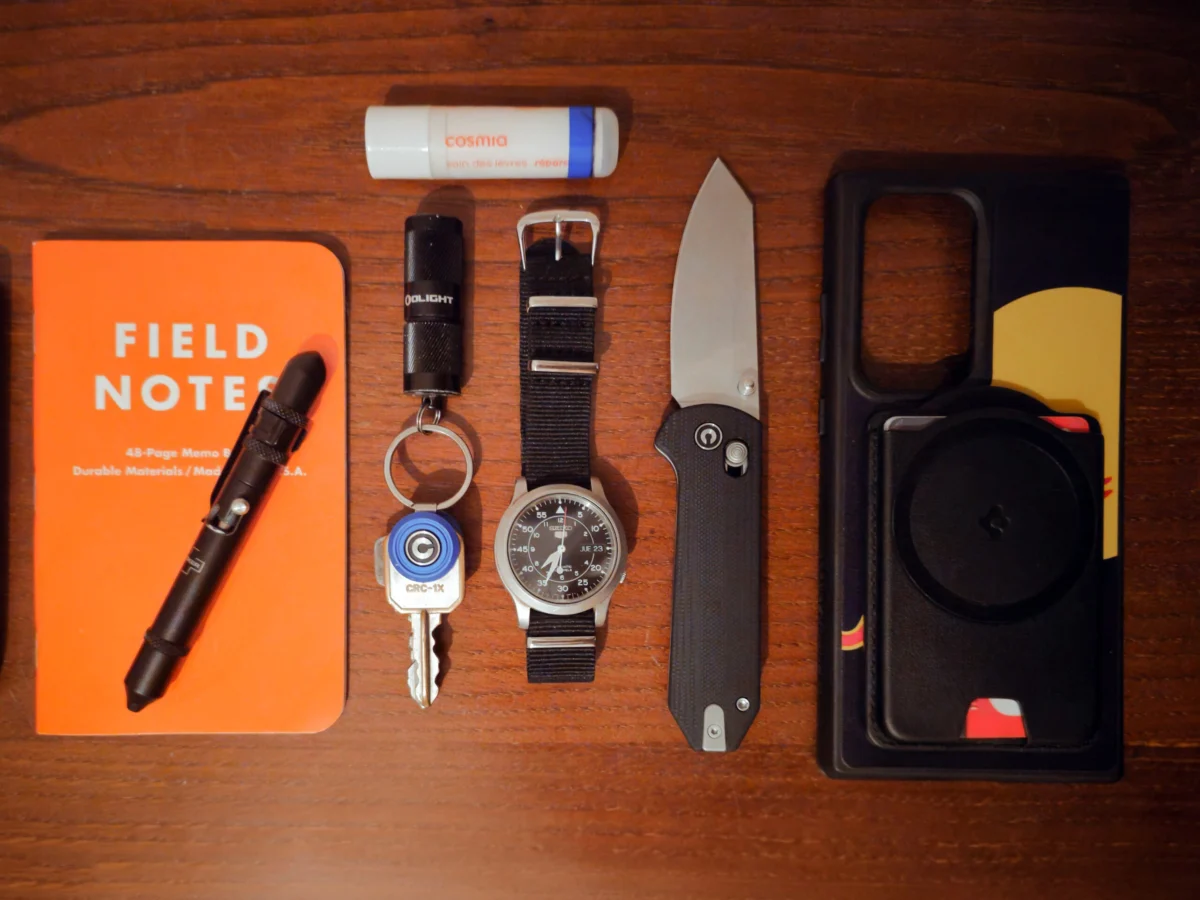
The professional landscape for an aeronautical automation operator requires a meticulous balance between technical expertise and the physical tools necessary to maintain complex systems. Ruben, a specialist based in Portugal, recently provided a comprehensive overview of his refined "Everyday Carry" (EDC) kit, a collection of tools designed to facilitate both his high-stakes professional duties and his personal transitions. This selection of gear highlights a broader trend within the technical sectors of the workforce: a shift toward high-value, minimalist equipment that prioritizes functionality and reliability without the excessive bulk traditionally associated with industrial maintenance.
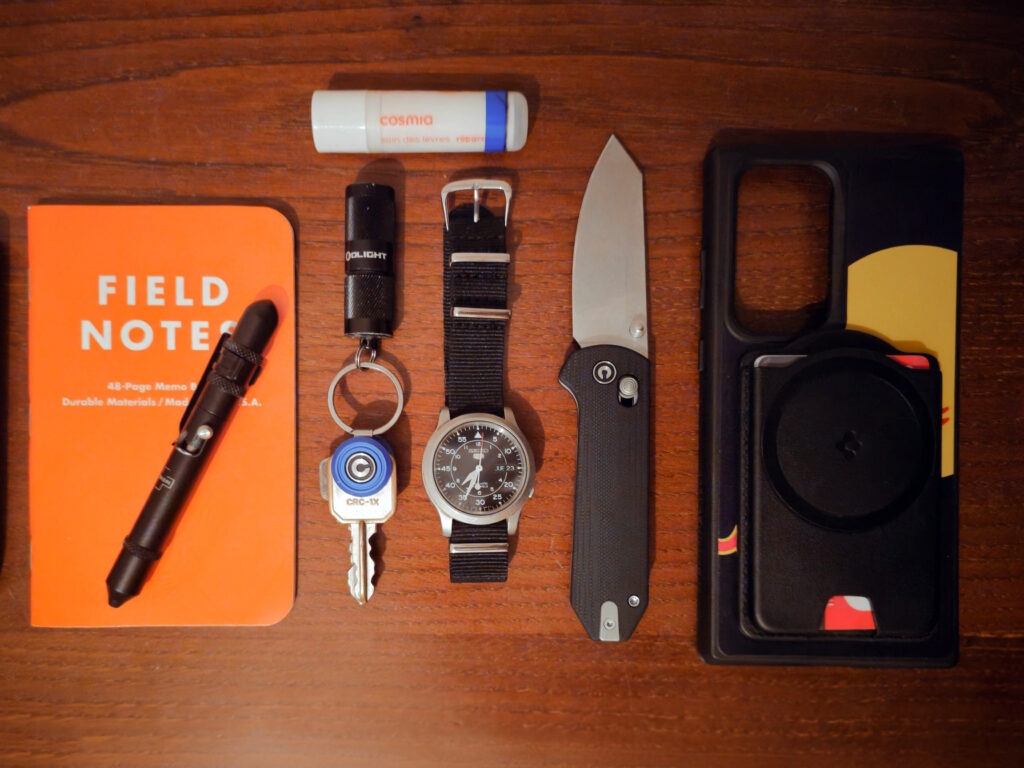
The core of Ruben’s current setup is defined by a recent evolution in his hardware, specifically the integration of the CIVIVI Yonder and a Field Notes memo book. These additions represent a deliberate move toward standardized, award-winning utility. The CIVIVI Yonder, designed by Zac Whitmore, has gained significant traction in the tool community, recently securing the "Best Buy of the Year" award at Blade Show 2024. For a professional operating in the aeronautical sector, where precision and safety are paramount, the inclusion of a crossbar-lock folding knife offers an ambidextrous, secure, and easily deployable cutting tool that meets the rigorous demands of a technical environment.
Professional Context and the Philosophy of Minimalism
Aeronautical automation involves the oversight, maintenance, and troubleshooting of sophisticated electronic and mechanical systems that manage airport operations, air traffic control interfaces, and ground-based navigation. In such an environment, an operator’s physical loadout must be streamlined to prevent snagging on sensitive equipment or adding unnecessary weight during long shifts. Ruben’s kit reflects this necessity through the use of consolidated items, such as a magnetic MagSafe wallet attached to his smartphone and an ultra-compact key organizer.
By minimizing the footprint of his essential items, Ruben creates "pocket space" for tools that offer higher utility, such as a mini bolt-action pen and a keychain-mounted flashlight. The bolt-action mechanism is particularly favored in technical fields due to its mechanical reliability; unlike click-top pens, which can accidentally deploy and leak ink in a pocket, or capped pens, which require two hands to operate, the bolt-action design is robust and can be used one-handed while the other hand is occupied with technical manuals or equipment interfaces.
Technical Analysis of the CIVIVI Yonder and Tool Evolution
The recent acquisition of the CIVIVI Yonder marks a specific chronological update to Ruben’s gear. Industry analysts point to the Yonder as a benchmark for the "value" segment of the EDC market. Its design utilizes a crossbar lock—a mechanism once protected by patents and found only on premium knives—now available in a more accessible price bracket. The knife features a drop-point blade shape, which is widely regarded as the most versatile geometry for general utility tasks, ranging from opening heavy-duty shipping crates to stripping wire in emergency scenarios.
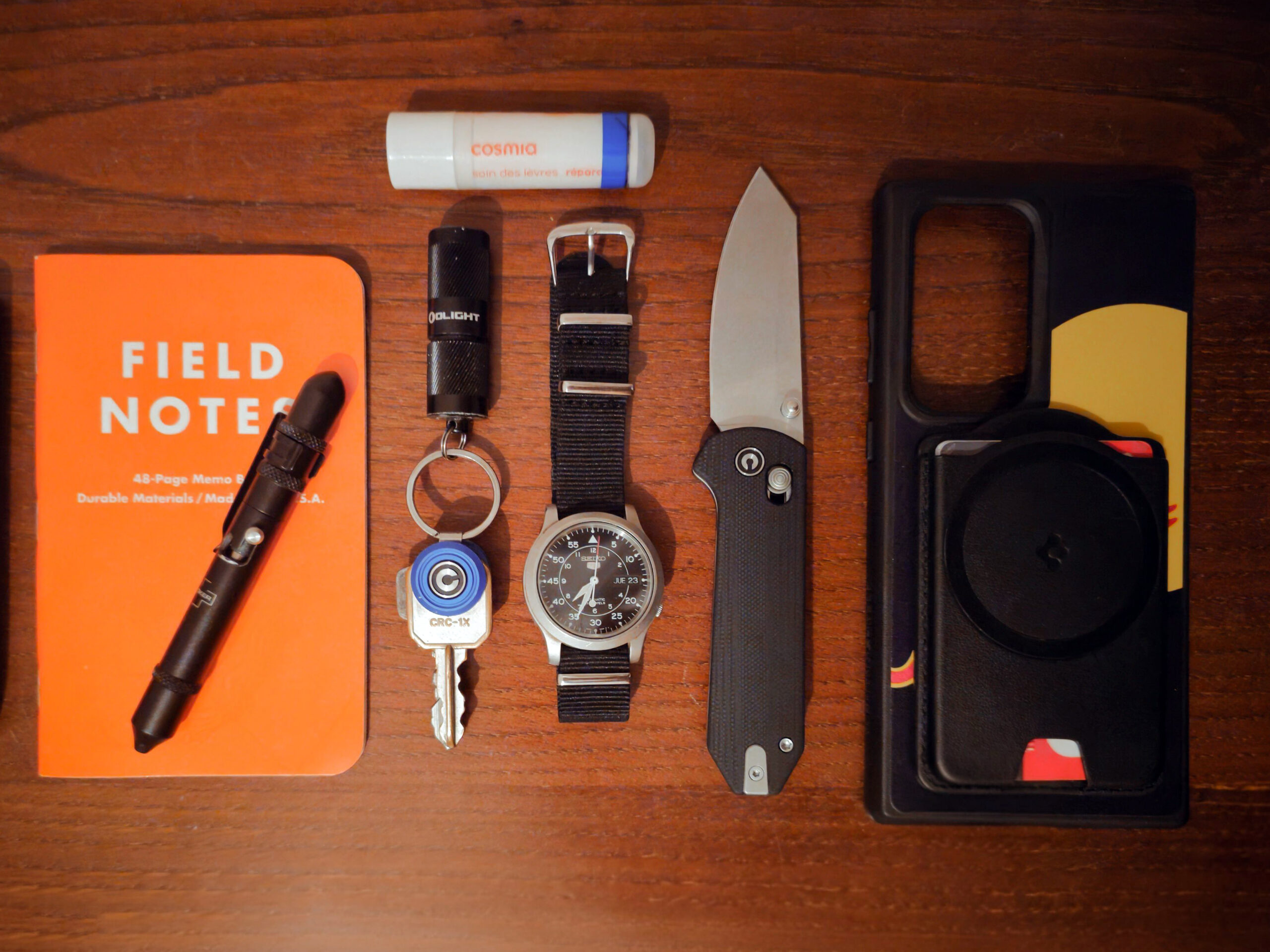
Ruben’s transition to this specific tool coincides with a larger market movement where professionals are moving away from "tactical" gear in favor of "utilitarian" gear. The Yonder’s non-threatening aesthetic and high-performance ergonomics make it suitable for a professional setting where the appearance of tools can impact the perception of workplace safety and professionalism.
The Role of Analog Documentation in Automated Systems
Despite working in a field defined by automation and digital interfaces, Ruben’s inclusion of Field Notes highlights the persistent importance of analog documentation. In aeronautical maintenance and automation, the ability to quickly jot down error codes, coordinates, or system statuses is vital. While digital devices are ubiquitous, the speed and reliability of a physical notebook remain unmatched in environments where electronic interference or battery life might be a concern.
Field Notes, a brand founded on the tradition of agricultural memo books, has become a staple for engineers and technicians. The 3.5-by-5.5-inch format allows the notebook to disappear into a pocket, yet it provides a permanent record of daily operations that can be archived. This "first-acquisition" of the notebook by Ruben suggests a move toward a more disciplined approach to logging professional observations and personal reminders.
Off-Duty Transitions: The Kizer Feist and Casio Edifice
A notable aspect of Ruben’s profile is his strategy for "off-duty" carry. He indicates that when he is not on the job, he frequently swaps his primary tools for a more refined duo: the Kizer Feist and the Casio Edifice. This transition illustrates the "gentleman’s carry" concept, where tools are selected for their aesthetic integration with formal or casual attire while maintaining high performance.
The Kizer Feist, designed by Justin Lundquist, is a front-flipper knife known for its sleek, symmetrical lines and lack of protruding tabs. It represents a more "dressier" alternative to the work-oriented CIVIVI. Similarly, Ruben’s choice of the Casio Edifice with a "Tiffany" blue dial reflects a significant trend in the horological world. The "Tiffany" or turquoise dial color has seen a surge in popularity following the release of high-end luxury watches with similar aesthetics. By choosing the Casio Edifice (specifically models like the EFB-108D), Ruben opts for a watch that offers a sapphire crystal and 100-meter water resistance—features typically reserved for luxury timepieces—at a fraction of the cost.
Market Data and Regional Regulatory Context
The EDC market in Europe, and specifically in Portugal, is governed by stricter regulations regarding the carry of "white arms" (knives) compared to the United States. In Portugal, the legality of carrying a folding knife is often determined by the blade length (generally under 10 centimeters) and the "just cause" for carrying it. As an aeronautical automation operator, Ruben’s carry is justified by his professional requirements, but his preference for smaller, non-aggressive designs like the CIVIVI Yonder and Kizer Feist ensures compliance with local norms and minimizes legal friction.
According to market reports from 2023 and 2024, the "budget premium" segment of the EDC industry—which includes brands like CIVIVI and Kizer—has grown by approximately 15% annually. This growth is driven by professionals who demand high-quality materials, such as D2 or S35VN steel and G10 or carbon fiber handles, but who are unwilling to pay the "collector" premiums associated with bespoke brands.
Broader Implications for Professional Preparedness
The profile of Ruben’s gear offers a snapshot into the modern professional’s mindset: one that values preparedness, efficiency, and the intelligent allocation of resources. The "balance of minimalism and value" mentioned by industry observers is not merely an aesthetic choice; it is a functional strategy. By consolidating essential items and choosing multi-functional tools, professionals in high-tech industries can ensure they are never without the means to address a mechanical or logistical problem.
Furthermore, the practice of sharing these "carries" on platforms like Instagram (where Ruben is active as @ruben_b_caeiro) serves a communal purpose. It allows technicians across the globe to compare notes on tool durability and ergonomics. In the aeronautical sector, where "lessons learned" are a fundamental part of the safety culture, this exchange of information regarding the physical tools of the trade is a natural extension of professional development.
Summary of the Carry Configuration
To summarize the technical components of Ruben’s loadout:
- Primary Cutting Tool: CIVIVI Yonder (Crossbar lock, Zac Whitmore design, Blade Show 2024 award winner).
- Documentation: Field Notes (Analog memo book for rapid data entry).
- Writing Instrument: Mini Bolt Action Pen (High reliability, compact form factor).
- Illumination: Keychain Flashlight (Immediate access to light for inspecting dark equipment bays).
- Organization: Compact Key Organizer and MagSafe Wallet (Space-saving consolidation).
- Alternative/Dress Configuration: Kizer Feist (Front-flipper) and Casio Edifice (Tiffany dial, sapphire crystal).
As automation continues to redefine the boundaries of the aeronautical industry, the physical requirements of the human operator remain constant. The need for a reliable blade, a consistent writing instrument, and a dependable light source ensures that the tradition of the "Everyday Carry" will remain a vital component of the technician’s life. Ruben’s kit stands as a testament to the fact that in a world of complex software and automated systems, the simplest tools are often the most indispensable.