






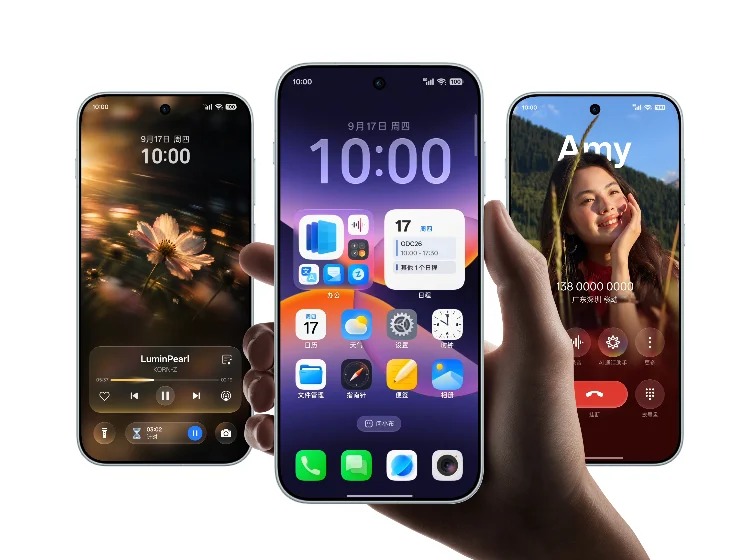




Over the past several years, Motorola has steadily elevated its brand positioning through a series of ambitious, premium hardware releases across global markets. While the North American consumer base was previously introduced to high-end foldables and flagship slabs, regions such as India and select European markets recently witnessed the company’s broader hardware diversification—exemplified by the striking Moto Book laptop series and the flagship Motorola Signature smartphone. Building directly on this momentum, Motorola has officially introduced its most advanced smartphone to date, the Motorola Signature 27, accompanied by its most feature-packed audio peripheral yet: the Moto Buds Ultra 27.
Positioned squarely to challenge established market dominators like Apple and Samsung, these new flagship earbuds merge high-fidelity acoustics tuned by Bose with sophisticated adaptive noise cancellation and an array of generative and utility-driven artificial intelligence capabilities. As the competition within the premium personal audio sector intensifies, Motorola is attempting to carve out a distinct identity by pairing legacy audio engineering with cutting-edge mobile processing features.

Premium Acoustic Architecture Engineered with Bose
At the core of the Moto Buds Ultra 27 lies a sophisticated acoustic engineering partnership with Bose, a legendary name in high-end sound reproduction. Motorola’s official product disclosures reveal that the earbuds utilize a hybrid dual-driver configuration. This setup pairs an 11mm dynamic driver—responsible for delivering deep, resonant bass and a wide soundstage—with a dedicated balanced armature driver engineered to handle crisp mid-range frequencies and shimmering highs with minimal distortion.
Bose’s proprietary SoundDesign tuning aims to deliver a balanced, rich, and highly detailed listening profile capable of satisfying audiophiles and casual listeners alike. To combat environmental disturbances, the earbuds incorporate Bose QuietControl Active Noise Cancellation (ANC), a dynamic system that automatically adjusts its cancellation intensity based on real-time acoustic analysis of the user’s surroundings. For situations requiring situational awareness, an integrated Transparency Mode seamlessly routes external sounds into the user’s ears without requiring them to remove the hardware.
In addition to hardware-level acoustic tuning, the Moto Buds Ultra 27 support high-resolution audio codecs, Dolby Atmos, and dynamic Dolby Head Tracking. However, utilizing the full suite of immersive spatial audio capabilities requires pairing the earbuds with a compatible Motorola smartphone. Call quality and voice clarity have also received significant upgrades; each individual earbud houses a three-microphone array featuring high Signal-to-Noise Ratio (SNR) technology, supported by a dedicated Voice Pickup Unit (VPU) designed to isolate human speech from chaotic background noise during phone calls or voice recordings.

Endurance, Durability, and Connectivity Specifications
Beyond sound reproduction, Motorola has ensured that the physical specifications of the Moto Buds Ultra 27 meet the rigorous standards expected of modern flagship peripherals. On a single charge, the earbuds are rated to deliver up to eight hours of continuous playback with ANC enabled. Combined with the auxiliary power stored in the accompanying wireless-charging case, total listening endurance reaches an impressive 37 hours, placing the device near the top of its class for battery longevity.
Durability is addressed through an IP57 water and dust resistance rating, ensuring that the earbuds can withstand rigorous physical workouts, accidental spills, and exposure to inclement weather conditions. Furthermore, integration with Google’s Find Hub network allows users to easily track and locate misplaced charging cases or individual earbuds, matching a vital utility feature standard among contemporary ecosystem competitors.
Artificial Intelligence Integration and Smart Ecosystem Features
While the hardware foundation is robust, Motorola’s strategic push against Apple and Samsung relies heavily on software differentiation and on-device intelligence. The Moto Buds Ultra 27 introduce AI Live Translate, a novel feature that enables users to hear real-time translated conversations directly through the earbuds during multilingual interactions. Similar to competing ecosystem features, this capability relies on a paired, compatible Motorola smartphone running the native translation software, with supported languages rolling out incrementally.

The earbuds also serve as a gateway for Motorola Qira, the company’s proprietary assistant ecosystem. Users can instantly invoke Qira by performing a long-press gesture on the left earbud to ask complex questions, retrieve information, or manage daily tasks. Motorola has confirmed that hands-free wake-word activation utilizing the phrase “Hey Qira” will be deployed via a software update in the coming months.
To streamline user interaction, Motorola has implemented innovative Head Gestures. This functionality allows wearers to physically nod or shake their head to accept or reject incoming telephone calls without lifting a finger. Additional smart conveniences include advanced Wear Detection, seamless Dual Connection multi-pairing, and Audio Share capabilities, making the ecosystem experience cohesive for multi-device users.
Market Context and Competitive Implications
The launch of the Moto Buds Ultra 27 arrives during a period of fierce competition within the global true wireless stereo (TWS) market. Established tech giants like Apple, Samsung, and Sony continue to dominate market share by deeply integrating proprietary audio gear into their respective hardware ecosystems. Samsung recently expanded its own portfolio with the release of the Galaxy Buds On, while specialized audio and gaming brands continue to push niche boundaries with products like Razer’s RGB-lit Hammerhead V3 Chroma and Sony’s nostalgic MDR-3R revival.

By partnering with Bose, Motorola has smartly bypassed the multi-year R&D curve required to build a world-class acoustic profile from scratch. Instead, the company has married Bose’s acoustic prestige with its own growing ecosystem software, effectively positioning the Moto Buds Ultra 27 as a compelling alternative for consumers who are invested in Android but seeking an audio experience that rivals the AirPods Pro or Galaxy Buds series.
Pricing, Availability, and Future Outlook
As of the initial announcement, Motorola has confirmed that the Moto Buds Ultra 27 will launch in the United States in the coming months. However, official pricing details and an exact retail release date have not yet been finalized by the manufacturer. Industry analysts anticipate that the pricing strategy will need to be aggressive to successfully peel market share away from entrenched competitors, especially considering the premium price tag attached to the companion Motorola Signature 27 smartphone.
As Motorola continues its global pivot toward higher-end, margin-rich product tiers, the success of peripherals like the Moto Buds Ultra 27 will serve as a vital litmus test for the brand’s long-term viability in the premium consumer electronics space. If the company can successfully deliver seamless software integration alongside Bose-backed audio quality, Motorola may finally secure a lasting foothold among the upper echelon of mobile audio manufacturers.