





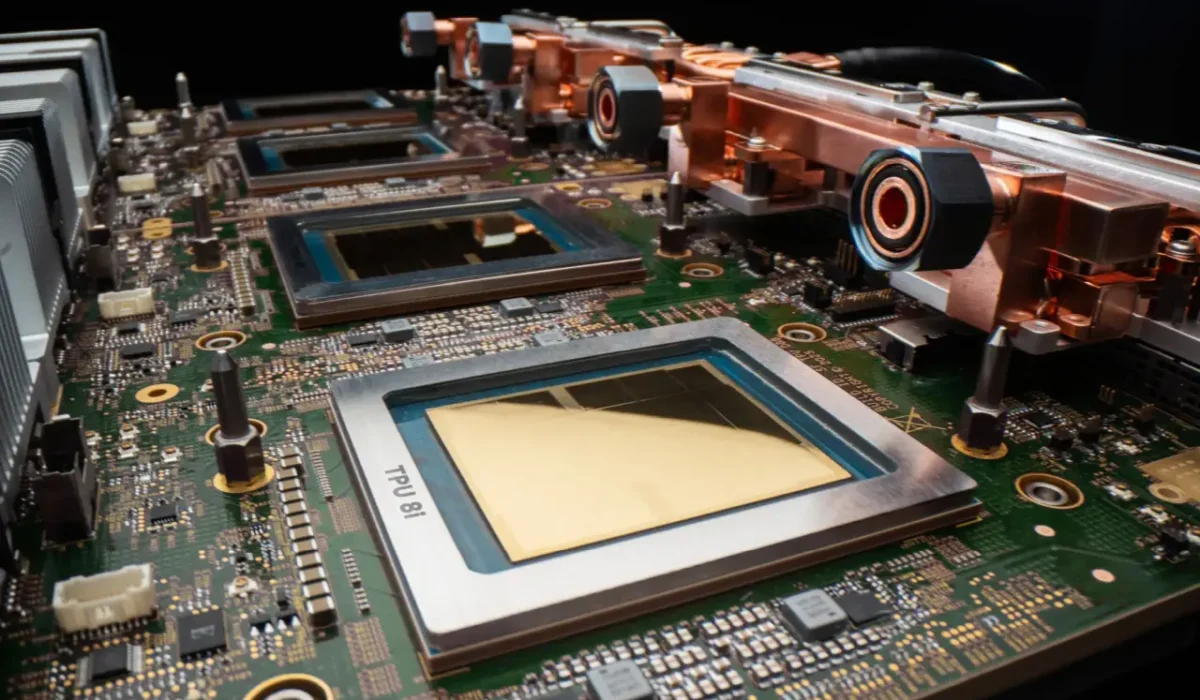
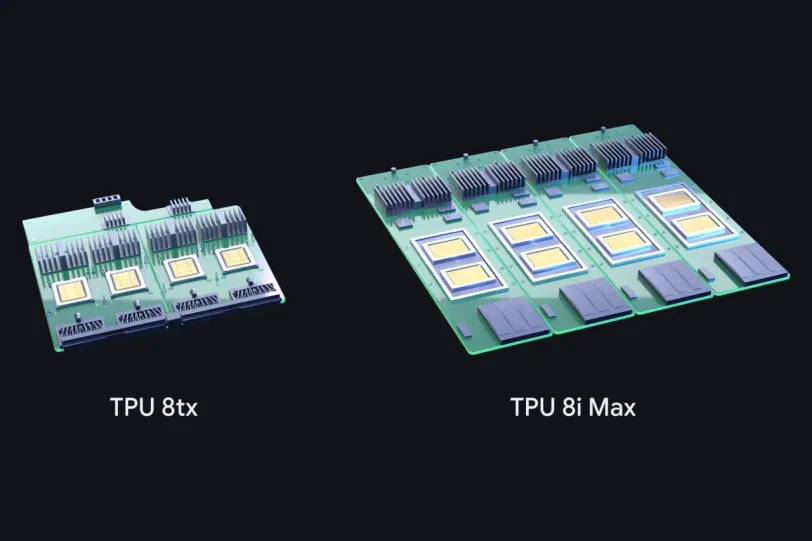
Google has officially announced a significant expansion of its custom artificial intelligence hardware lineup with the introduction of two new specialized processors: the TPU 8tx and the TPU 8i Max. This strategic hardware rollout builds directly upon the foundation laid by the eighth-generation TPU 8t and TPU 8i architecture, aiming to address critical bottlenecks in modern machine learning operations, data center efficiency, and high-performance computing workloads. As the global demand for generative AI training and inference continues to skyrocket, tech giants are increasingly relying on custom silicon to reduce their dependence on traditional GPU manufacturers and optimize operational costs.
Background Context and Evolution of Google’s TPU Ecosystem
The development of Google’s Tensor Processing Unit (TPU) traces back over a decade, originating as an internal project designed to accelerate machine learning workloads for products like Google Search, Photos, and Translate. Over the years, Google transitioned from proprietary internal infrastructure to offering these powerful accelerators externally through Google Cloud, enabling enterprise customers, academic researchers, and startups to train massive foundational models.
The introduction of the eighth-generation TPU family represents a major leap forward in performance-per-watt metrics, interconnect bandwidth, and software integration. While the initial TPU 8 generation focused heavily on balancing power efficiency and scaling capabilities for large language models (LLMs), the newly unveiled TPU 8tx and TPU 8i Max variants are tailored for hyper-specific industrial demands. These include ultra-fast inference deployment, massive parameter scaling, and overcoming the persistent hardware hurdles that constrain modern neural network execution.
TPU 8tx: Blending High-Performance AI with Advanced CPU Integration
At the forefront of Google’s new hardware offerings is the TPU 8tx, a specialized accelerator designed to streamline complex AI pipelines by tightly integrating with high-end host processors. The TPU 8tx pairs Google’s custom AI architecture with AMD EPYC server processors, establishing a robust hybrid system optimized for demanding distributed training scenarios.
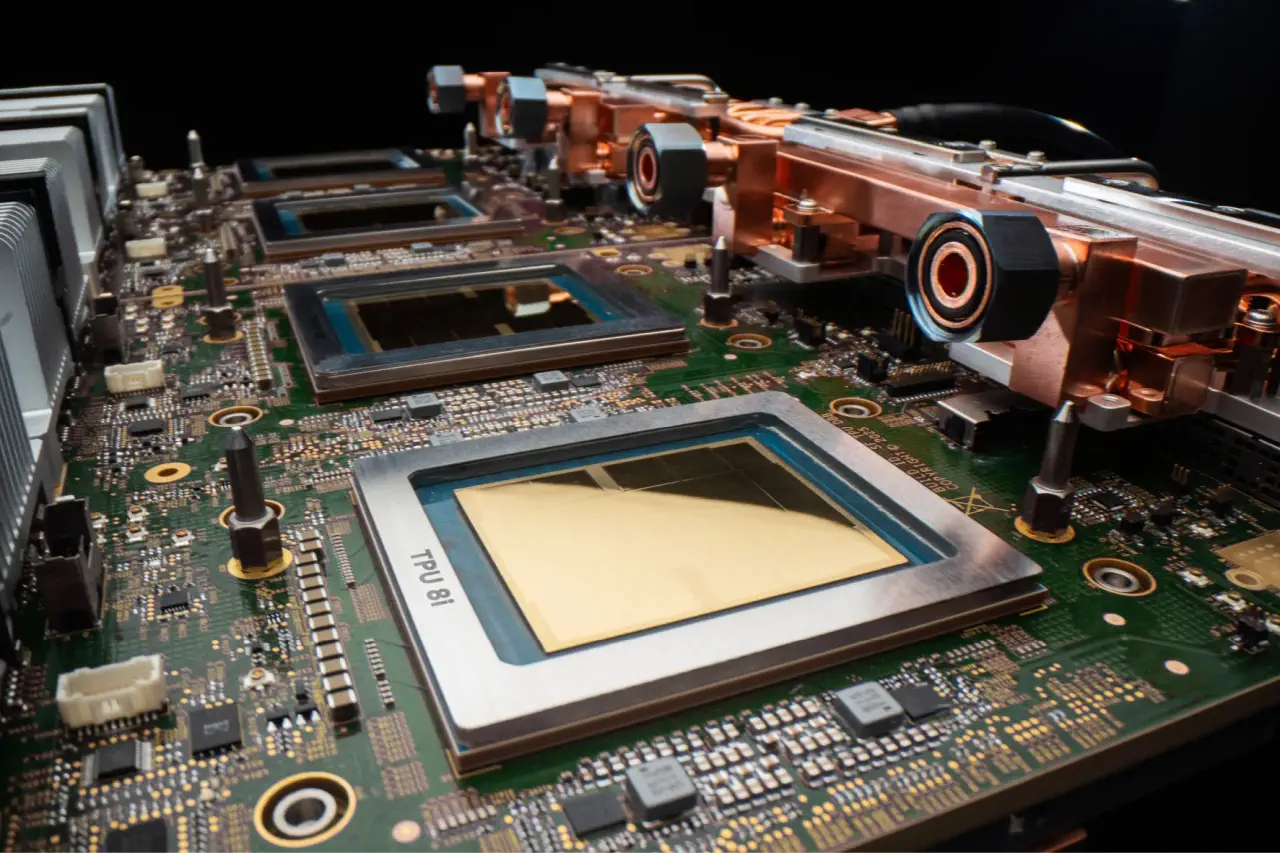
A key architectural highlight of the TPU 8tx is its utilization of the Boardfly topology, a high-density networking and board layout configuration that drastically reduces latency between interconnected nodes. By facilitating faster communication paths across multiple TPU chips, the system minimizes the communication overhead that typically plagues distributed training clusters. This optimization allows machine learning engineers to scale large models across hundreds or thousands of nodes with minimal performance degradation, making the TPU 8tx particularly attractive for enterprises training frontier-class foundation models.
Furthermore, the integration of AMD EPYC processors provides the host system with superior PCIe throughput, ample memory channels, and robust virtualization support. This synergy ensures that data preprocessing, tokenization, and input/output bottlenecks—which frequently starve AI accelerators of data—are effectively mitigated, allowing the TPU cores to operate at peak theoretical efficiency.
TPU 8i Max: Overcoming the Memory Wall in AI Inference
While training large language models captures much of the industry’s attention, inference—the process of deploying trained models to generate responses in real time—accounts for the vast majority of day-to-day operational costs and computing cycles in commercial AI applications. To tackle this challenge, Google has introduced the TPU 8i Max, an accelerator engineered specifically to conquer the infamous "Memory Wall" in high-throughput inference scenarios.
The Memory Wall refers to the growing performance gap between processor speeds and memory bandwidth, a critical limitation when dealing with large language models that must load billions of weights from memory for every single generated token. The TPU 8i Max addresses this bottleneck by significantly expanding on-chip SRAM capacity and optimizing high-bandwidth memory (HBM) integration compared to its predecessor, the standard TPU 8i.
By increasing localized high-speed memory pools, the TPU 8i Max reduces the frequency with which the processor must fetch data from external system memory. This architectural enhancement yields dramatically lower latency and higher query-per-second (QPS) throughput, enabling cloud-based AI services to respond to user requests near-instantly while supporting larger context windows and more complex multimodal inputs.
Software Ecosystem and Developer Integration
Hardware power is ultimately dictated by software accessibility, and Google has made substantial investments to ensure that developers can seamlessly adopt the new TPU 8tx and TPU 8i Max chips without rewriting their existing codebases. Central to this strategy is TorchTPU, Google’s specialized hardware-acceleration backend designed to offer native, frictionless support for PyTorch—the most widely adopted deep learning framework in the research community.
In addition to PyTorch integration, Google has expanded compatibility with popular model repositories such as Hugging Face, allowing developers to deploy pre-trained transformers and generative models directly onto TPU infrastructure with minimal friction. To further optimize inference workflows, the new hardware supports industry-standard serving engines including vLLM and SGLang. These frameworks maximize memory utilization and batching efficiency, translating to tangible cost savings for companies deploying large-scale AI agents.
Google has also introduced the Agent Compute Engine, a specialized software layer tailored for autonomous AI agents and complex multi-step workflows. By integrating these engines with Google Cloud’s broader ecosystem, enterprise clients can orchestrate distributed agentic applications with enterprise-grade security and reliability.
Market Implications and Competitive Landscape
The launch of the TPU 8tx and TPU 8i Max arrives at a pivotal moment in the semiconductor and cloud computing industries. With global demand for AI infrastructure drastically outpacing supply, chip designers are racing to capture market share by offering alternatives to mainstream hardware providers. Google’s vertically integrated approach—controlling everything from the silicon design to the cloud deployment layer—gives the company a distinct advantage in cost optimization and time-to-market.
Industry analysts note that while third-party GPUs remain the dominant force for general-purpose AI development, hyperscale cloud providers like Google, Amazon, and Microsoft are increasingly turning to custom application-specific integrated circuits (ASICs) to optimize specific workloads. By tailoring chips like the TPU 8i Max specifically for inference and the TPU 8tx for large-scale distributed training, Google is positioning its cloud infrastructure as a cost-effective, high-performance destination for enterprises seeking refuge from high hardware acquisition costs.
Looking ahead, Google Cloud plans to roll out these new processors across its global data center regions, making them immediately accessible to enterprise customers through specialized virtual machine instances. As organizations continue to scale their artificial intelligence deployments from experimental pilots to core business operations, the success of architectures like the TPU 8tx and TPU 8i Max will play a crucial role in shaping the economic and technical viability of the next generation of AI services.