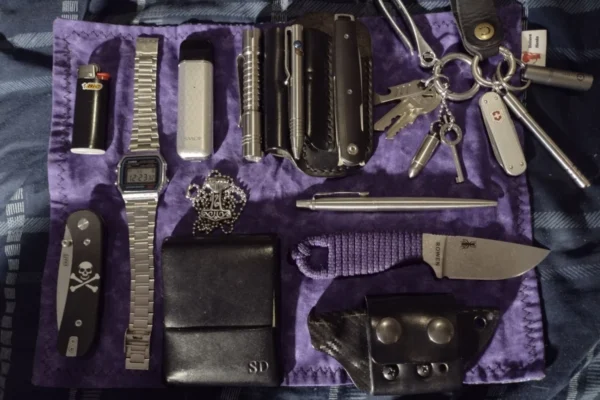









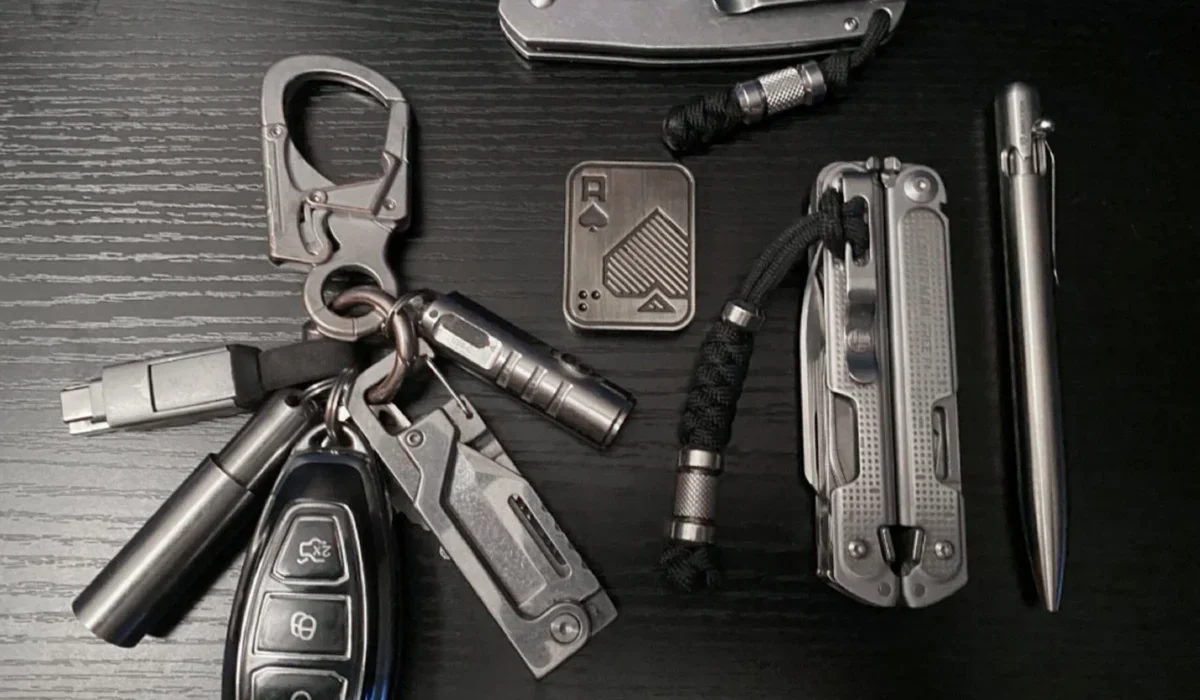
The intersection of industrial labor requirements and the spontaneous demands of parenthood requires a highly specialized approach to everyday carry (EDC) gear. For professionals operating in manufacturing environments—where the daily routine involves precision pipe cutting, machinery maintenance, and rapid troubleshooting—the tools selected must prioritize durability, multi-functionality, and accessibility. Recent insights into the gear configurations of industrial workers, such as the kit utilized by factory operator Kamren, highlight a shifting trend toward "monochrome utility," where aesthetic cohesion meets rugged, high-performance engineering.
The Anatomy of Industrial EDC
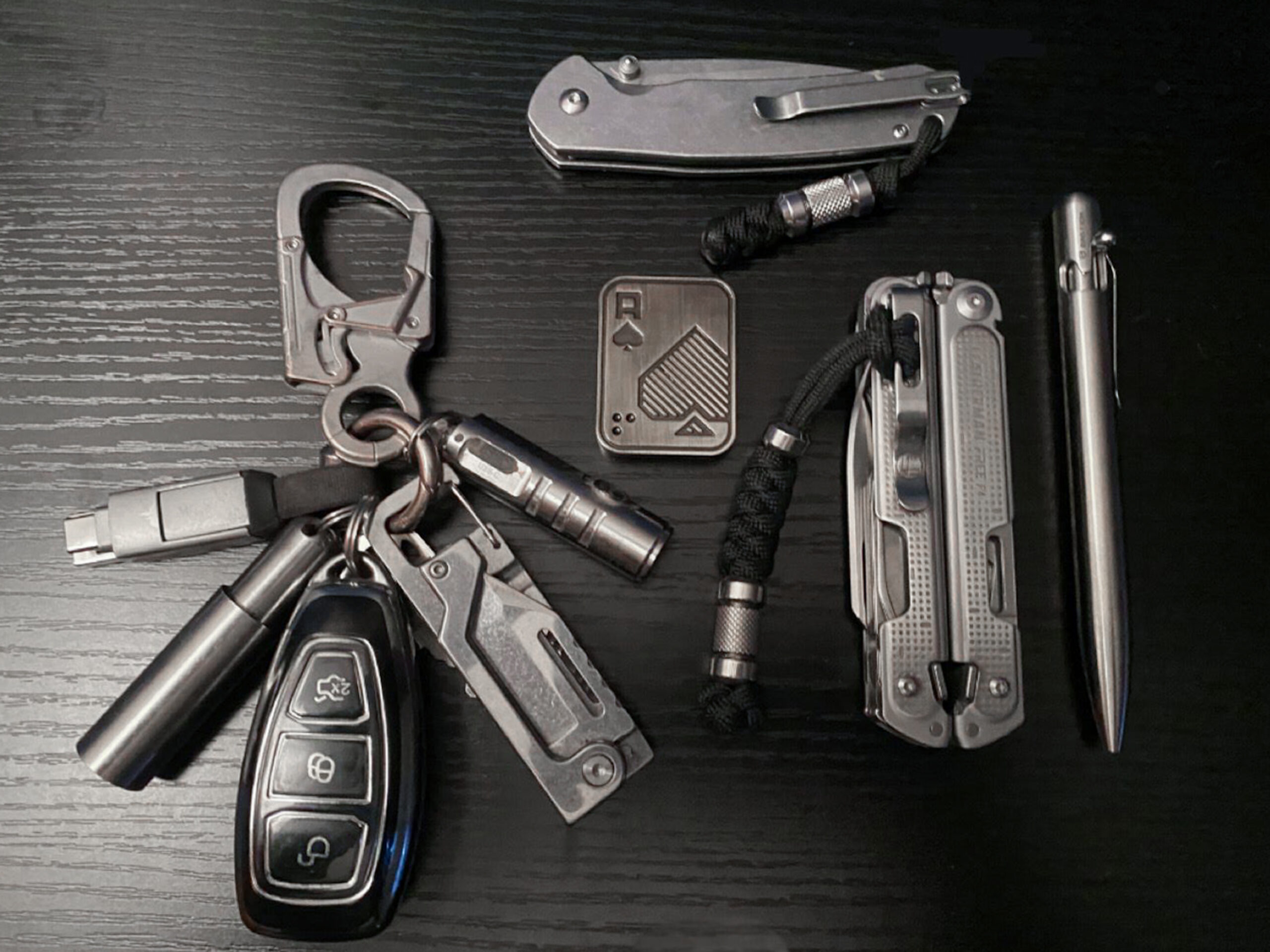
For workers in sectors involving plastics and piping, the primary requirement is a reliable cutting edge and a versatile multi-tool. The standard industrial kit typically centers on a locking folding knife, such as the CJRB Pyrite, which has gained significant traction in the professional community for its ergonomic handle and dependable locking mechanism. Unlike recreational knives, these tools are subjected to high-frequency use, often requiring daily maintenance and sharpening.
Complementing the primary blade, the inclusion of a compact multi-tool, specifically the Leatherman FREE series, provides the leverage and precision necessary for mid-shift machine repairs. According to maintenance engineering standards, having a one-handed deployment system is critical when working in confined spaces or while holding a component in place. The transition toward tools that utilize magnetic architecture—a hallmark of the FREE series—reduces wear and tear on internal components while ensuring that the tool remains functional even in environments saturated with industrial lubricants and plastic debris.
Maximizing Utility Through Keychains
A central debate in the EDC community concerns the balance between pocket capacity and modularity. In industrial settings, where pocket space is often limited by protective coveralls or restrictive clothing, the keychain has evolved from a simple ring into a primary platform for auxiliary gear. By offloading specialized items to a durable, paracord-reinforced keychain, users can maintain a streamlined pocket profile without sacrificing preparedness.
Data regarding gear optimization suggests that the most effective keychain setups incorporate three distinct categories:
- Utility Connectivity: Compact charging cables that allow for data transfer and power access during breaks.
- Personal Maintenance: Portable atomizers, such as the Mordeco Nanosprayer, which enable personal hygiene management in environments where such facilities might be otherwise inaccessible.
- Emergency Illumination: High-lumen, micro-LED flashlights like the RovyVon A4, which provide essential visibility for inspecting internal machine housings or dark corners of a factory floor.
The "Girl Dad" Factor: Balancing Work and Home
Beyond the factory floor, the "girl dad" demographic represents a growing subset of the EDC community that requires gear capable of bridging the gap between professional labor and childcare responsibilities. While the primary tools address the physical rigors of pipe cutting and machine repair, the secondary, concealed items—often stored on a keychain or in an organizer—are frequently repurposed for domestic tasks.
From a sociological perspective, the modern father’s EDC is increasingly characterized by a hybrid functionality. A portable cologne atomizer is not merely an accessory; it represents the need for a professional appearance before transitioning from a grimy manufacturing shift to family-oriented activities. This dual-purpose gear selection is indicative of a broader trend where the "worker" identity and the "provider" identity are integrated into a single, efficient carry system.
Chronology of Gear Integration
The evolution of modern industrial carry has occurred in three distinct phases over the last decade:
- 2015–2018 (The Tactical Era): Gear was characterized by heavy, black-coated steel, high-intensity tactical flashlights, and oversized multi-tools. The focus was on "over-preparedness" rather than efficiency.
- 2019–2022 (The Minimalist Shift): A market correction occurred where users prioritized weight reduction. This saw the rise of titanium components and the "less is more" philosophy, with many users shedding non-essential weight to favor slim-profile carry options.
- 2023–Present (The Integrated Functionalist Era): Current trends favor "monochrome utility." The focus has shifted to tools that blend into a professional, non-tactical aesthetic while providing high-end industrial capabilities. The use of paracord for rapid retrieval and the integration of small-scale tech (like Nanosprayers) marks the current state of the industry.
Technical Analysis: Performance in Harsh Environments
The performance of tools in a factory environment is heavily dependent on the material science involved. For instance, the CJRB Pyrite’s use of AR-RPM9 steel—a proprietary powder-metallurgy steel—is specifically designed to offer high corrosion resistance and ease of sharpening, both of which are critical for an employee dealing with plastics and synthetic materials.
Furthermore, the integration of paracord is not merely an aesthetic choice. In an environment where grip is often compromised by oils or plastic dust, the texture and friction provided by high-tensile paracord allows for faster deployment of gear. This simple addition improves the ergonomic interface between the user and their tools, effectively reducing the "fumble time" during critical repair tasks.
Implications for Future Gear Design
As manufacturing processes become more automated and the nature of industrial work continues to shift toward oversight rather than manual labor, the EDC requirements of the worker are also evolving. We are observing a move away from heavy-duty prying tools toward precision instruments that allow for the calibration and digital maintenance of machinery.

Industry experts suggest that future EDC designs will likely focus on:
- Weight-to-Strength Ratios: Continued adoption of aerospace-grade aluminum and carbon fiber.
- Digital Integration: Modular tools that can house micro-storage devices or diagnostic sensors.
- Personalized Modularity: Increased demand for user-configurable attachment points, allowing workers to swap out specific tools based on their daily assignment.
Official Perspectives and Community Consensus
The consensus among professional gear reviewers and veteran factory workers is that there is no "perfect" carry, only the "optimized" carry. The value of an EDC kit is measured by its ability to resolve unforeseen problems without requiring a trip to a toolbox. By utilizing the keychain as a secondary utility hub, the factory worker ensures that even when their hands are busy with primary tasks, they remain capable of addressing secondary needs.
While some critics argue that the inclusion of items like cologne atomizers on a keychain is excessive, the counter-argument is one of efficiency. In a fast-paced environment where the boundary between professional and private life is increasingly blurred, the ability to maintain personal standards with minimal extra weight is a legitimate functional advantage.
Conclusion
The setup described—centered on the CJRB Pyrite, Leatherman FREE, RovyVon A4, and Mordeco Nanosprayer—serves as a template for the modern industrial professional. It is a configuration that values precision, durability, and a seamless transition between the factory and home. By leveraging intelligent organization and high-quality, task-specific tools, the modern worker can maintain a standard of performance that is both highly effective and personal. As the EDC movement continues to mature, it is likely that we will see further refinements in this area, emphasizing a more integrated, thoughtful approach to the items we choose to keep on our persons.