










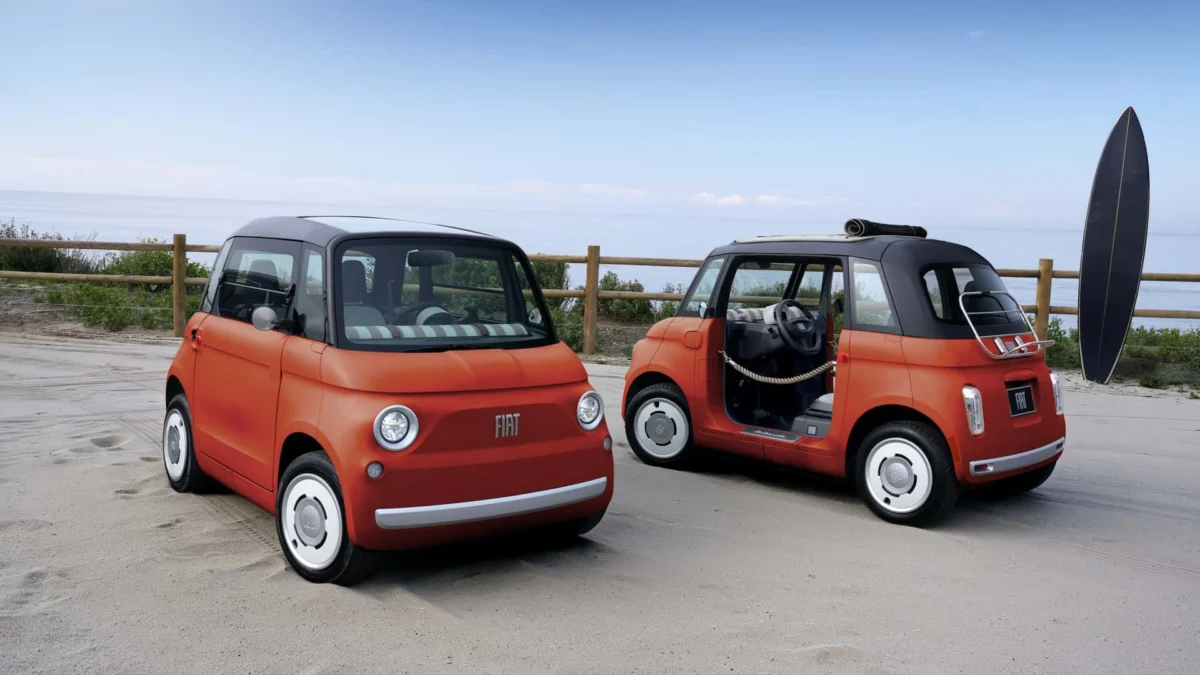
The automotive landscape in the United States is undergoing a subtle but significant transformation with the official street-legal debut of the 2027 Fiat Topolino. Originally introduced to the North American market as a non-homologated curiosity restricted to private property, the “little mouse” has now secured its classification as a Low-Speed Vehicle (LSV). This transition marks a departure from its previous status as an off-road-only novelty, enabling owners to navigate public thoroughfares with speed limits up to 35 mph, provided local jurisdictions permit LSV traffic.
The Evolution of the Topolino in North America
Fiat’s decision to reintroduce the Topolino moniker—a nameplate steeped in history from the 1930s—was initially met with enthusiasm by urban commuters and aesthetic-driven buyers. However, the initial iteration faced significant regulatory hurdles. Limited to a top speed of 19 mph, the vehicle failed to meet the federal safety standards required for the National Highway Traffic Safety Administration (NHTSA) to classify it as an LSV.
For the 2027 model year, Fiat has successfully adjusted the powertrain and safety parameters to align with LSV regulations, which require a maximum speed capability of at least 20 mph but not more than 25 mph. This engineering pivot is the cornerstone of the 2027 refresh. By capping the speed at 25 mph, the Topolino now fulfills the legal criteria for roadway use, allowing it to compete directly with other neighborhood electric vehicles (NEVs) and high-end street-legal golf carts that have gained popularity in planned communities, gated resorts, and dense metropolitan areas.
Model Lineup and Customization
For the 2027 model year, Fiat has diversified its offerings to cater to varying consumer preferences, introducing a three-tier model structure. Each version maintains a consistent MSRP of $13,995, a price point intended to position the vehicle as an accessible entry point into the electric mobility market.
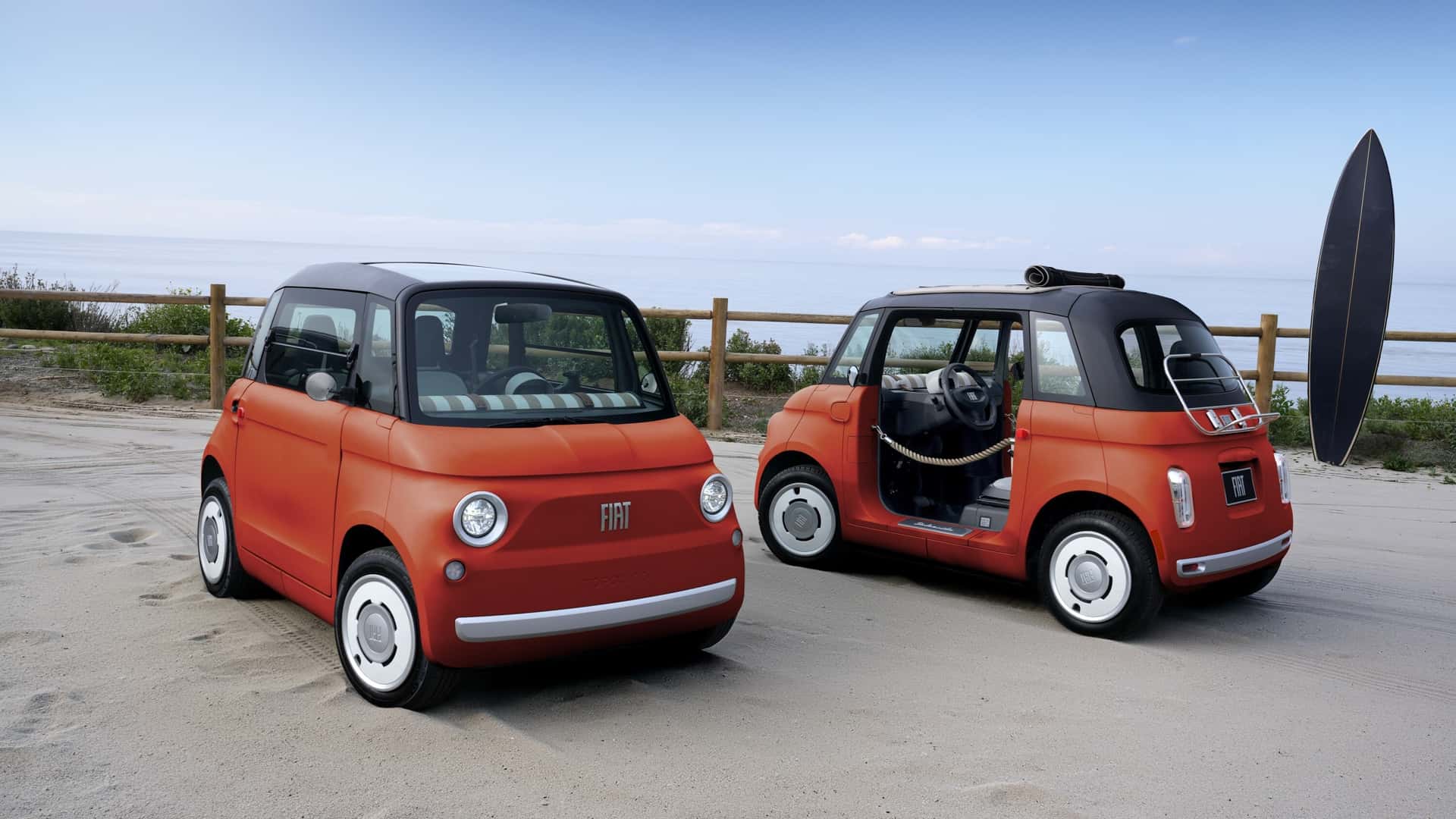
The entry-level model is the standard Topolino, a two-door hardtop configuration that emphasizes utility and simplicity. Moving up the range, the "Dolce Vita" model leans into the vehicle’s Mediterranean inspiration, featuring a roll-off soft-top roof and decorative side stanchions in lieu of traditional doors—an aesthetic choice reminiscent of vintage coastal runabouts. Finally, the "Open Air" model serves as a hybrid of the two, combining the retractable soft-top of the Dolce Vita with the conventional door structure of the base model.
Standard across all configurations is an upgraded full-color digital gauge cluster. This integration reflects a move toward modernizing the user interface, ensuring that while the vehicle remains mechanically rudimentary, the driver-facing technology remains competitive with contemporary standards. Color options remain limited but curated: Verde Vita Mint is offered at no additional cost, while Luna Greige and Corallo Orange command a $295 premium. A rear luggage rack is the sole factory-authorized accessory, available for $395.
Technical Specifications and Performance Constraints
The Topolino is not designed for highway commuting or high-speed transit. It is powered by a minimalist electric powertrain delivering approximately 8 horsepower. With a total range of 46 miles on a single charge, the vehicle is strictly confined to short-range, “last-mile” transport.
Analysts suggest that judging the Topolino by traditional automotive metrics—such as acceleration, top speed, or range—is an analytical error. Instead, the vehicle should be viewed as a specialized mobility tool. Its dimensions allow for parking in spaces too small for standard subcompacts, and its charging requirements are modest enough to be managed via standard household electrical outlets. The shift to LSV status effectively pivots the Topolino from a recreational toy to a functional, albeit limited, transport solution for specific micro-environments.
Supporting Existing Customers
Recognizing the frustration of early adopters who purchased the 19-mph non-street-legal versions, Fiat has implemented a complimentary upgrade program. Owners of the original model can visit authorized service centers to have their vehicles recalibrated to meet the 25-mph LSV standard. This move is viewed by industry observers as a critical effort to maintain brand loyalty and ensure the long-term viability of the Topolino community in the United States. It mitigates the risk of customer churn and validates the company’s commitment to the evolving regulatory status of its products.
The Broader Impact on the NEV Market
The formal entry of a major automaker like Fiat into the LSV segment carries implications for the broader NEV market. Historically, the neighborhood electric vehicle space has been dominated by niche manufacturers and golf cart specialists such as Club Car, E-Z-GO, and various startup brands. Fiat’s involvement brings the backing of a global distribution network, standardized service protocols, and the cachet of an established automotive heritage.
This competition could drive higher quality standards within the LSV sector. As legacy manufacturers enter the space, expectations for build quality, safety features, and dealership support rise. The Topolino’s success—or lack thereof—will serve as a case study for whether consumers prefer the “big brand” reliability of a legacy automaker or the customized, often aftermarket-heavy culture of traditional golf cart manufacturers.
Regulatory and Urban Planning Considerations
The adoption of vehicles like the Topolino highlights an ongoing debate regarding urban planning and roadway safety. As municipalities look to reduce traffic congestion and carbon emissions, there is increasing pressure to create "low-speed zones" in urban cores. The Topolino is perfectly suited for these environments, as it minimizes the footprint of private transportation.
However, safety remains a point of concern for urban planners. LSVs lack the crash-test ratings and advanced safety systems found in full-size passenger vehicles. Consequently, the reliance on these vehicles is limited to areas where speed differentials between the Topolino and other traffic remain low. The 25-mph cap ensures the vehicle can keep pace with local traffic in residential zones, but it also necessitates that infrastructure be designed with speed management in mind.
Future Outlook and Market Positioning
As the 2027 model year reaches showrooms, the industry will monitor the Topolino’s sales volume to gauge the appetite for micro-mobility solutions in the U.S. Current market data suggests that the demand for NEVs is growing, driven by a combination of fuel-conscious consumers and residents of master-planned communities who seek a more refined experience than a traditional golf cart can provide.
Fiat has effectively carved out a niche that sits between the bicycle and the entry-level subcompact car. By stripping away the complexity of modern automotive requirements and focusing on charm, efficiency, and now, street-legal utility, the brand has created a product that serves as a lifestyle statement as much as a vehicle. Whether the Topolino will achieve mass-market success remains to be seen, but its transition to an LSV is a definitive step toward integrating micro-electric vehicles into the American suburban and urban fabric.
As the regulatory environment continues to adapt to the electrification of transport, vehicles like the Topolino are likely to become a more common sight on local roads, representing a shift toward more intentional, localized, and efficient personal mobility. Through this strategic pivot, Fiat has secured a foothold in a growing segment, offering a pragmatic, low-cost answer to the challenges of short-distance navigation.