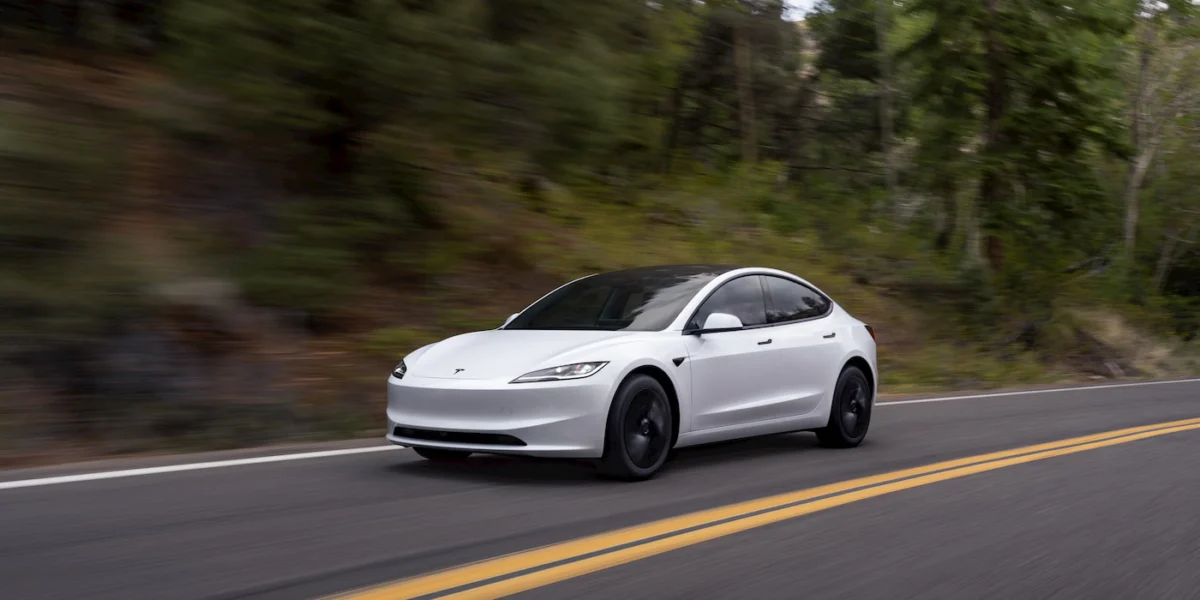
Tesla Canada has quietly revised the specifications for its Model 3 Premium Rear-Wheel Drive (RWD) on its official website, signaling a potential shift back to vehicles manufactured at its Fremont, California facility. The updated digital spec sheet now indicates a driving range of 584 kilometers on a single charge and a 0-100 km/h acceleration time of 5.2 seconds. These figures match the exact performance metrics of the Fremont-built Long Range RWD variant that Tesla previously retailed in the Canadian market two years prior.
This unexpected update contrasts sharply with the specifications of the vehicle Canadian consumers have been purchasing throughout most of 2026. Prior to the recent update, the Model 3 Premium RWD listed on the Canadian configurator was imported from Tesla’s Giga Shanghai factory in China. That variant, which carried an aggressive entry-level price point of $39,490 CAD before orders were temporarily halted in early October, was officially rated at a lower range of 463 kilometers and a 0-100 km/h sprint time of 6.2 seconds. The sudden alignment with Fremont manufacturing metrics suggests that Tesla is preparing to alter its supply chain strategy for the Canadian market amid ongoing regulatory and geopolitical shifts.
The discrepancy was first identified and shared to social media by observant Canadian Tesla owner and enthusiast RJ, highlighting how quickly adjustments to online configurators can signal major operational pivots. While the specific numerical changes now populate the "Model 3 Premium Specs" section of the Canadian portal—complete with a listed curb weight of 1,745 kg and marketing text promising up to 584 km of EPA-estimated range—other corners of the Tesla website have yet to catch up. As of late afternoon, separate comparison tools and historical pricing pages still displayed the lower-range Shanghai figures, pointing to a rolling update process typical of abrupt internal inventory and logistical reallocations.
A Chronology of Supply Chain Disruptions and Import Shifts
To understand the weight of Tesla’s recent website modification, it is necessary to examine the tumultuous timeline of the Model 3 lineup in Canada over the past twenty-four months. The Canadian electric vehicle market has found itself repeatedly caught in the crosshairs of shifting international trade policies, government subsidies, and manufacturing relocations.
In October 2024, Tesla Canada formally offered a Fremont-built Model 3 Long Range RWD rated at 584 kilometers of range with a 5.2-second 0-100 km/h time, retailing for a base price of $54,990 CAD and qualifying for the federal iZEV rebate. However, the regulatory landscape shifted dramatically in April 2025 when the Canadian government implemented a series of 25% counter-tariffs targeting various imported automotive goods, specifically impacting vehicles manufactured in the United States.
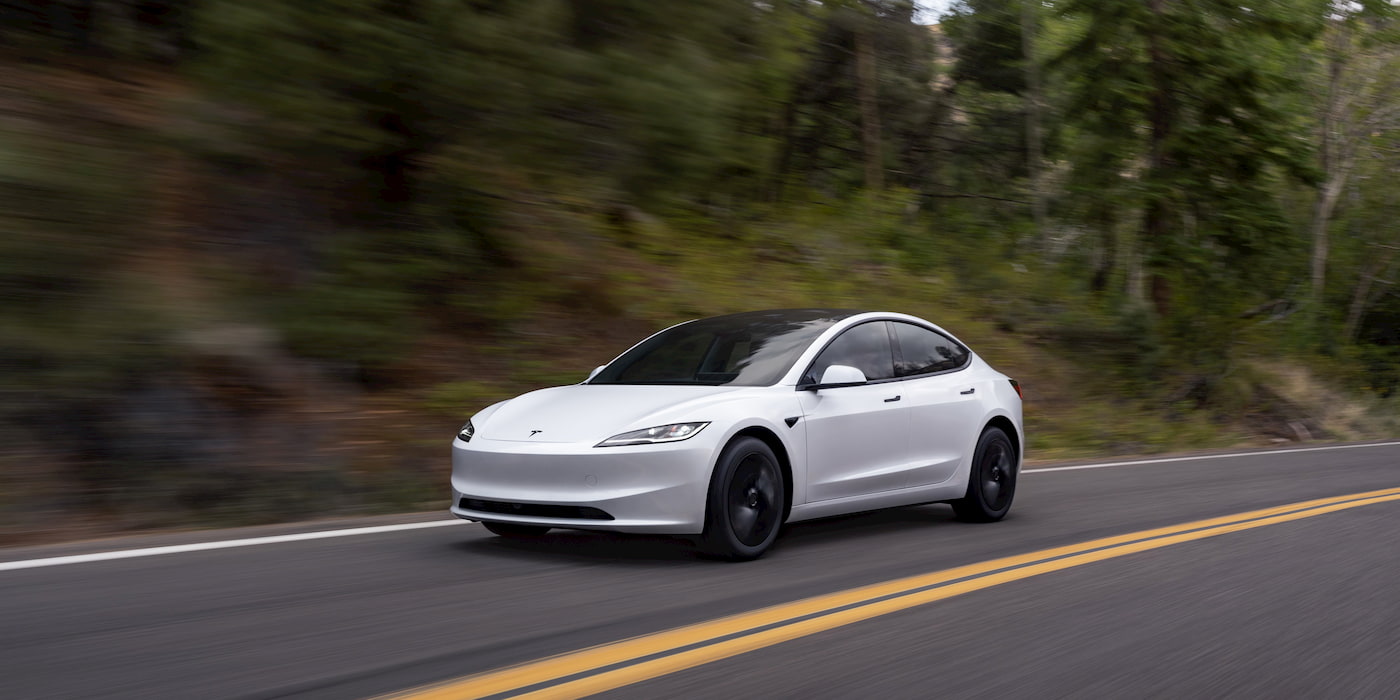
The financial pressure of these counter-tariffs forced significant pricing and logistical adjustments. Tesla initially responded by increasing the price of the dual-motor Model 3 Long Range AWD by $11,000, bringing it to $79,990 CAD, while temporarily withdrawing the lower-cost Fremont-built RWD variant from the market entirely. By March 2026, Tesla cleared out its remaining inventory of US-built Model 3 units by shipping them back across the border to the United States. This paved the way for a major strategic pivot toward Giga Shanghai as the primary source for Canadian-bound entry-level vehicles, bypassing the specific tariff pressures affecting North American cross-border movements at the time.
This pivot yielded the launch of the heavily discounted, Shanghai-built Model 3 Premium RWD in May 2026, which captured consumer attention with its record-low price tag of $39,490 CAD. The offering proved to be an immediate commercial success, driving a surge in local adoption. However, this success was short-lived due to strict regulatory limits governing vehicle imports from China. By early October 2026, Tesla officially exhausted its allocated import quota for Chinese-built vehicles, forcing a sudden and indefinite pause on new Model 3 Premium RWD orders across Canada. According to notices on Tesla’s digital ordering platform, order placement cannot resume unless the federal government issues supplementary import quotas, an administrative decision not anticipated until March 2027.
Evaluating Manufacturing Origins: Fremont Versus Shanghai
The newly published specifications clearly point away from Giga Shanghai and back toward North American production lines. While Giga Shanghai does manufacture a Long Range RWD Model 3 variant for domestic consumption in China—utilizing a 78.4 kWh battery pack capable of delivering extensive CLTC-rated range and matching the 5.2-second acceleration metric—importing that vehicle into Canada remains restricted by the aforementioned quota limitations. With regulatory caps halting Chinese imports until next spring, Tesla faces a stark inventory void if it wishes to supply long-range single-motor sedans to Canadian buyers in the interim.
Conversely, sourcing vehicles from the Fremont factory circumvents Chinese import restrictions entirely, but it immediately reintroduces the complex challenge of Canada’s existing tariff structures. Department of Finance updates confirm that 25% counter-tariffs on select US-made automotive products remain fully active.
When applied to a Fremont-built Model 3 Premium RWD, these tariffs threaten to severely inflate the final retail price. Industry analysts estimate that a North American-sourced iteration of the vehicle would likely command a retail price between $65,000 and $67,000 CAD. Such a pricing structure would push the vehicle well past the $50,000 transaction cap enforced by newer federal clean vehicle incentive frameworks, such as the $5,000 EV Affordability Program. While vehicles manufactured in the US technically qualify for trade exemptions under the Canada-United States-Mexico Agreement (CUSMA), the cumulative impact of production costs, currency exchanges, and retaliatory tariffs creates a formidable pricing hurdle.
Currently, consumers wishing to purchase a brand-new Model 3 in Canada face a starkly polarized lineup. With standard and premium rear-wheel-drive options paused or subject to transition, the only readily available Model 3 variant on the Canadian configurator is the high-performance dual-motor variant, which Tesla priced at $74,990 CAD following adjustments earlier in the year.

Broader Economic and Market Implications
The stealth update to Tesla’s Canadian website highlights the acute agility—and occasional friction—required for global automakers to navigate fragmented regional trade policies. For Canadian automotive consumers, the prospect of a Fremont-built Long Range RWD returning to the market presents a mixed financial proposition.
On one hand, reintroducing a vehicle with 584 kilometers of driving range would provide a vital stopgap for buyers who require extended battery range and refuse to purchase the higher-priced Performance model while waiting for the Chinese import quotas to reset in March 2027. On the other hand, the expected price escalation driven by North American manufacturing costs and lingering counter-tariffs means that any interim Fremont-built vehicle would sacrifice the aggressive affordability that made the Shanghai-built variant a record-setting bestseller earlier in the year.
Furthermore, market analysts suggest that Canadian consumers may adopt a cautious "wait-and-see" approach. With competitive offerings from traditional legacy automakers and expanding options from emerging Chinese EV brands slated to enter or expand within the Canadian market throughout the coming year, buyers are increasingly weighing whether to absorb a higher price point for an immediate Tesla delivery or hold out for shifting geopolitical and regulatory landscapes.
As the automotive sector continues to adapt to overlapping trade disputes, carbon reduction mandates, and shifting global supply chains, Tesla’s silent spec-sheet alteration serves as a reminder of how quickly the commercial realities of electric vehicle distribution can pivot. While Tesla has yet to issue a formal press release or update its primary marketing comparison landing pages to reflect the new pricing and availability timeline, the digital footprints left on its configuration portal strongly indicate that significant operational changes are underway north of the border.