The political landscape surrounding the American automotive industry has intensified following a statement from U.S. Senator Elissa Slotkin, who recently alleged that the Trump administration may be preparing to facilitate the entry of Chinese electric vehicles (EVs) into the domestic market. The assertion, shared via social media, suggests that such a move could be part of a broader diplomatic or economic arrangement expected to be finalized during an upcoming summit between President Trump and Chinese President Xi Jinping. However, the claim remains unsubstantiated, lacking official confirmation from the White House or evidence of a shift in current trade policy.
The Origin of the Rumor and Political Context
Senator Slotkin’s public comments, issued this past Wednesday, linked the potential policy reversal to the high-stakes meeting between the two world leaders scheduled for September 24. While the Senator described the prospect of allowing Chinese-manufactured cars into the United States as a "strategic mistake," the lack of cited sources or official documentation has invited skepticism from political analysts and industry observers.
The timing of these claims is significant, given Slotkin’s role as a primary architect of the Connected Vehicle Security Act. This bipartisan legislation, which received unanimous support in the Senate earlier this year, seeks to impose a comprehensive prohibition on the import and sale of vehicles designed, manufactured, or sourced from "covered entities"—a list that includes China, Russia, Iran, and North Korea. By highlighting the potential for a regulatory loophole, Slotkin has successfully refocused public discourse on the protectionist measures she has championed, though critics note the absence of a direct link between the administration’s current agenda and her allegations.
Historical Stance and the Complexity of Trump’s Rhetoric
The uncertainty surrounding the administration’s policy stems, in part, from the President’s own inconsistent rhetoric regarding foreign investment in the U.S. automotive sector. During an address at the Detroit Economic Club earlier this year, President Trump expressed a conditional openness to foreign manufacturers, stating, "If they want to come in and build a plant and hire you and hire your friends and your neighbors, that’s great, I love that. Let China come in, let Japan come in."
This sentiment contrasts sharply with the administration’s recent, aggressive actions against Chinese-affiliated automotive entities. The current executive strategy has focused heavily on decoupling critical supply chains and mitigating the influence of Chinese technology within the American infrastructure. A primary example of this trajectory is the effective exclusion of Polestar—a brand backed by the Chinese automotive giant Geely—from the U.S. market earlier this year, a move that forced the brand to cease operations following strict regulatory pressure.
The Conflict Over Chinese Technology and Supply Chains
The friction between the U.S. government and domestic automakers over their ties to Chinese innovation has reached a boiling point. On Tuesday, the U.S. Department of Transportation issued a critical brief regarding Ford Motor Company, explicitly questioning the company’s collaboration with Chinese technology providers.
The government’s scrutiny centers on Ford’s licensing agreements with CATL, a Chinese battery manufacturer, for technology intended for use in Michigan-based facilities. Additionally, federal regulators have voiced concern over Ford’s manufacturing partnerships in Spain involving Geely-owned entities. Transportation Secretary Sean Duffy has been particularly vocal, urging the automotive sector to sever ties with Chinese technology, citing broad national security concerns related to data privacy and the potential for embedded software vulnerabilities in connected vehicles.
Ford CEO Jim Farley has navigated a complex position in this debate. While he has publicly praised the engineering capabilities of certain Chinese EVs, he has been equally emphatic about the need to protect the domestic market. In previous statements, Farley has stressed the necessity of keeping the U.S. competitive while arguing that, in the current geopolitical climate, "we should not let them into our country."
Legislative Landscape: The Connected Vehicle Security Act
The legislative framework currently under consideration in Congress represents the most tangible effort to codify the exclusion of Chinese automotive technology. The Connected Vehicle Security Act, spearheaded by Senator Slotkin, is designed to be a comprehensive barrier to foreign influence.
If enacted, the bill would:
- Prohibit the sale or import of vehicles with significant ties to the aforementioned "covered entities" starting in 2027.
- Mandate the removal or restriction of Chinese-sourced hardware and software in connected vehicles by the end of the decade.
- Establish strict audit requirements for automakers to prove that their supply chains are free from prohibited foreign influence.
The unanimous passage of this bill through the Senate highlights a rare moment of consensus in Washington regarding the perceived threat of foreign-made connected technologies. The debate now shifts to how such a law might reconcile with existing trade deals and the administration’s desire to leverage foreign capital for domestic job creation.
Implications of the Upcoming U.S.-China Summit
The scheduled meeting between President Trump and President Xi on September 24 is expected to cover a wide array of topics, including energy policy, trade tariffs, and global security. While the automotive sector is only one piece of a much larger economic puzzle, it is arguably the most visible battlefield for the ongoing trade competition.
Analysts suggest that the administration is facing a "trilemma" of conflicting goals:
- Economic Growth: The desire to increase manufacturing jobs by attracting foreign direct investment (FDI).
- National Security: The necessity of preventing potential surveillance or data collection through "connected" vehicle features.
- Market Protection: The goal of shielding domestic automakers—who are still struggling to achieve profitability in the EV transition—from lower-cost, high-volume Chinese competitors.
If the administration were to "crack the door" open to Chinese investment, it would likely come with stringent conditions, such as requirements for 100% domestic assembly, locally sourced materials, and complete transparency regarding software architecture. However, such a move would likely face intense backlash from domestic manufacturers and labor unions, who argue that the cost advantage of Chinese EVs is subsidized by the state and cannot be countered through fair competition alone.
Market Outlook and Future Scenarios
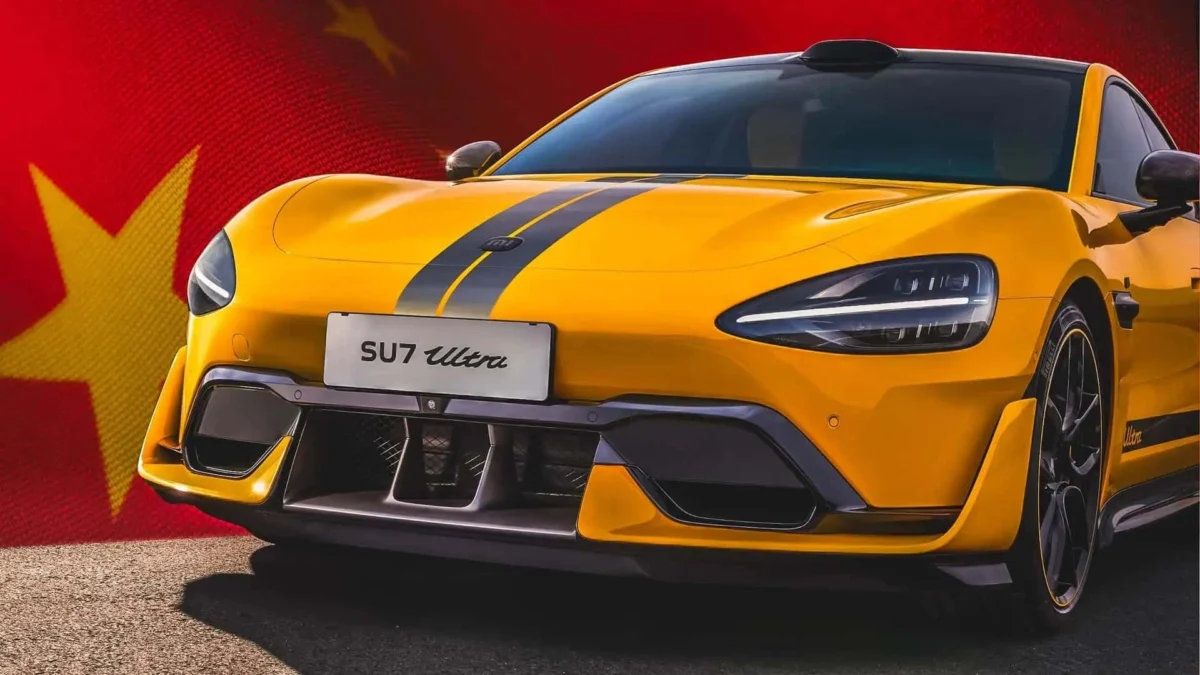
As the industry awaits the outcome of the upcoming summit, the market remains in a state of high volatility. For consumers, the implications are significant. The Chinese EV market, currently dominated by brands like BYD and Xiaomi, has seen explosive growth, producing vehicles that are often lauded for their advanced software, rapid charging capabilities, and competitive pricing.
Should the U.S. maintain its restrictive stance, the barrier to entry for these high-tech vehicles will remain impenetrable for the foreseeable future. If the administration chooses to pivot toward a policy of "conditional integration," the American automotive landscape could undergo a fundamental shift, forcing legacy automakers to accelerate their own innovation cycles to remain relevant.
For now, the claims made by Senator Slotkin remain within the realm of political speculation. Without official policy drafts or executive orders to validate these concerns, the automotive industry continues to operate under the assumption that the current, protectionist status quo is the baseline for the next several years.
Conclusion: A Critical Juncture for Automotive Policy
The tension between global trade integration and national security represents one of the most complex policy challenges of the modern era. As the U.S. and China prepare for high-level dialogue, the automotive sector remains a focal point of this tension. While the rumors of a market opening persist, the weight of legislative momentum—represented by the Connected Vehicle Security Act—and the administration’s stated focus on national security suggest that any significant change to current import restrictions would face substantial hurdles.
As the September 24 meeting approaches, industry participants and policymakers alike will be watching for any indication of whether the administration intends to maintain its aggressive stance on Chinese automotive technology or if a new, more nuanced approach is in development. Until then, the promise of affordable, high-tech EVs from abroad remains, for the American consumer, a distant prospect governed by the shifting tides of international relations and domestic political pressure.