
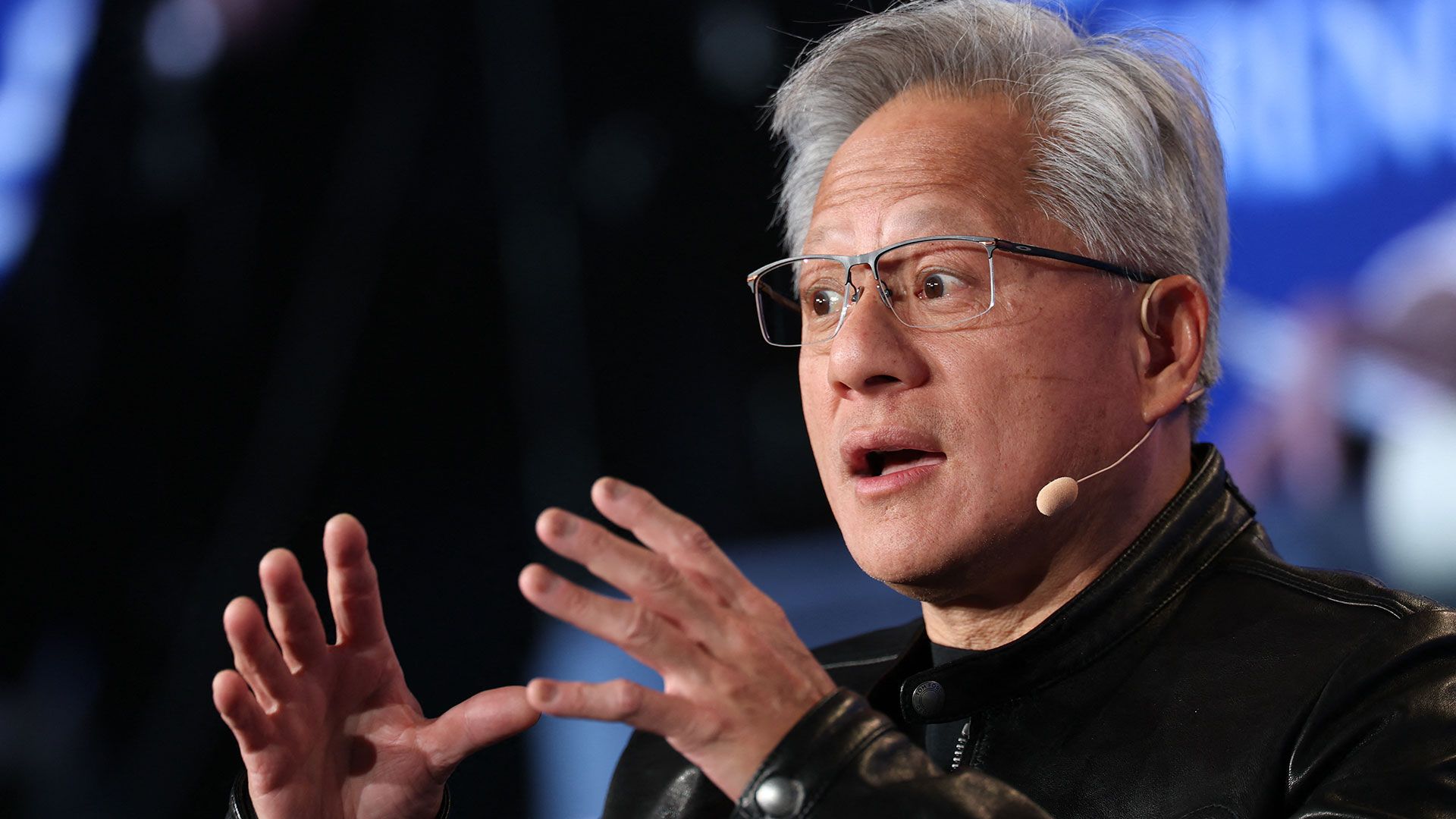
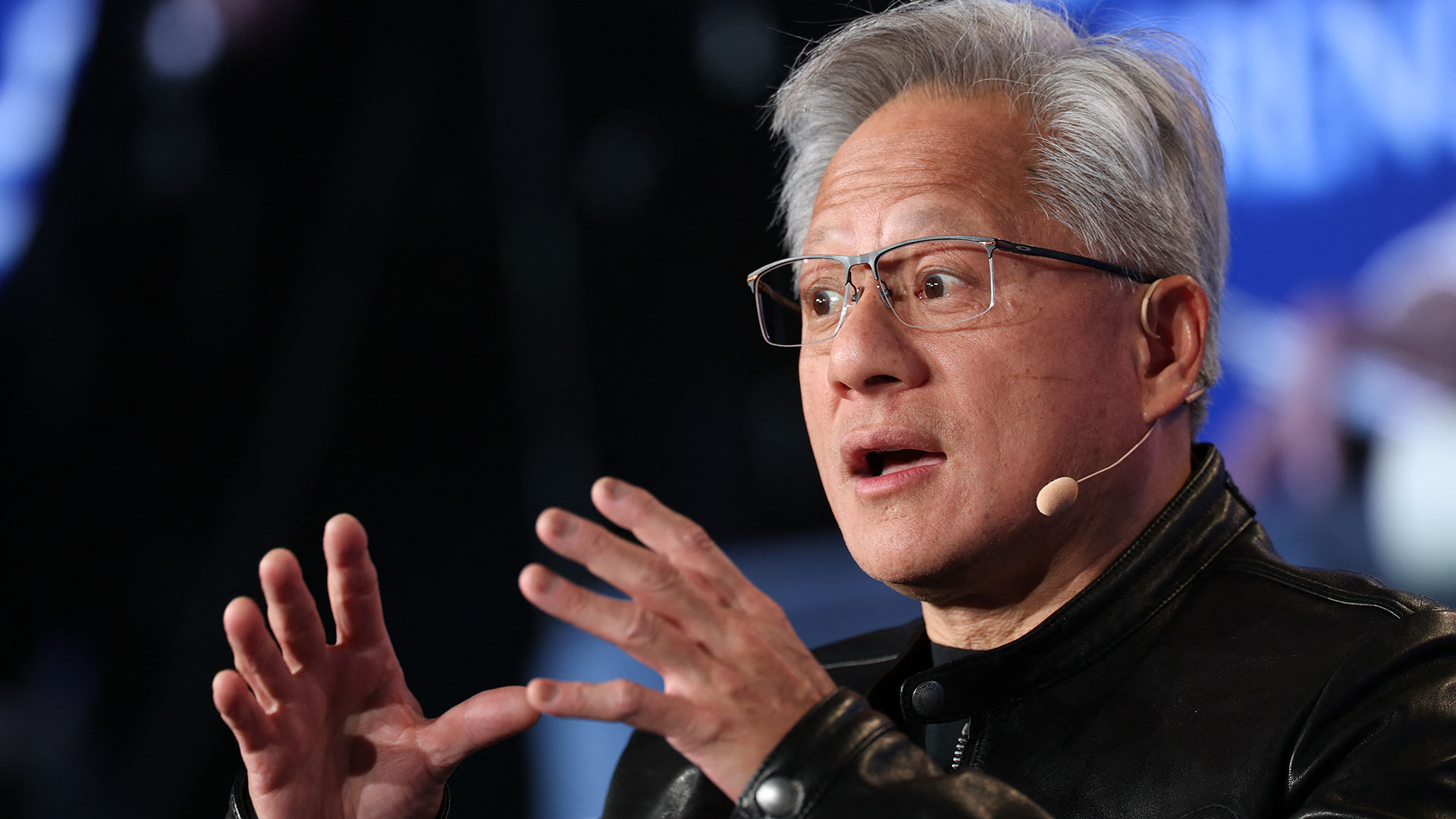
Nvidia CEO Jensen Huang, a prominent figure in the artificial intelligence revolution, utilized his inaugural post on X last Friday to advocate for "Open Weights and American AI Leadership," a comprehensive three-page policy letter. This pivotal document, published concurrently with Huang’s social media debut, garnered the collective endorsement of 25 influential companies, including industry giants such as Nvidia, Microsoft, Meta, IBM, Dell Technologies, Palantir, and Hugging Face. The letter’s release arrives at a critical juncture, just four days after reports surfaced detailing the Trump administration’s renewed efforts to impose restrictions on Chinese AI models, citing pressing cybersecurity concerns. While the document refrains from explicitly naming China, Moonshot AI, or DeepSeek, its timing and content unmistakably align with the escalating global discourse surrounding AI governance, national security, and technological sovereignty. Notably absent from the list of co-signatories are major developers of proprietary AI models, including OpenAI, Anthropic, and Google, underscoring a growing divergence in industry perspectives on the future of AI development and deployment.
The Core Mandate: Protecting Open AI Innovation
The "Open Weights and American AI Leadership" letter serves as a direct appeal to Washington, urging policymakers to exercise caution and avoid what it terms "premature restrictions on downloadable AI models." This plea is fundamentally rooted in the belief that open-source AI, characterized by publicly available model weights, is crucial for fostering innovation, ensuring competitive markets, and bolstering cybersecurity. The signatories represent a diverse ecosystem within the tech industry, encompassing leading chipmakers (Nvidia), server vendors (Dell Technologies), cloud operators (Microsoft, IBM), enterprise software firms (Box, ServiceNow), security companies (CrowdStrike, Palantir), and venture capital funds (Andreessen Horowitz, Y Combinator, Emergence Capital). Significantly, the list also includes several prominent model developers—Meta, Mistral, Black Forest Labs, Arcee AI, and Reflection—all of whom have already embraced the practice of publishing their model weights.
The Linux Foundation, a key steward of open-source initiatives and the organization behind the OpenMDW-1.1 license used by Nvidia for its Nemotron 3 Ultra model, also stands among the signatories. Nemotron 3 Ultra, a colossal 550-billion-parameter model released in June, exemplifies the frontier of open-weight AI development. For context, Artificial Analysis recently benchmarked Nemotron 3 Ultra at 47.7 on its intelligence index, placing it slightly behind Moonshot’s Kimi K2.6, which scored 53.9, highlighting the sophisticated capabilities achievable through open models.
Jensen Huang’s Vision for AI Sovereignty and Innovation
In his X post, Jensen Huang articulated a clear vision: "The world needs both frontier closed models and frontier open models." He emphasized that "AI will transform every industry, power every company, and be built by every country," asserting that "Open models strengthen safety and cybersecurity, accelerate innovation and diffusion, and enable sovereignty." This statement encapsulates the multifaceted arguments presented in the policy letter.
Huang has consistently championed the role of open models. Earlier this year, during Nvidia’s CES 2026 press Q&A, he provided a tangible measure of their impact, estimating that one in every four tokens generated today originates from an open model. This statistic underscores the pervasive adoption and utility of open-source AI, moving beyond the confines of a few hyperscale API endpoints to be served from diverse infrastructure, including enterprise clusters, regional clouds, and on-premises racks. The letter directly addresses this decentralization, advocating for expanded compute access for startups and researchers, alongside increased public investment in shared datasets and robust evaluation frameworks. These measures are designed to democratize AI development, prevent market concentration, and ensure that the benefits of AI are widely distributed across the American economy and beyond.
Geopolitical Undercurrents: The US-China AI Rivalry
The release of the "Open Weights and American AI Leadership" letter is intricately linked to the escalating geopolitical tensions surrounding AI, particularly the rivalry between the United States and China. Just days prior to the letter’s publication, reports indicated that the Trump administration was considering a revival of its push to ban Chinese AI models, spurred by concerns over cybersecurity and potential intellectual property theft. This move follows the launch of advanced Chinese models like Moonshot AI’s Kimi K3, which has intensified scrutiny from Washington.
Treasury Secretary Scott Bessent publicly reinforced these concerns earlier this week on Fox Business, stating that the administration would scrutinize Chinese open-source models for evidence of intellectual property theft and could impose sanctions on the companies responsible. Bessent specifically mentioned that officials had identified "watermarks" from U.S. large language models embedded within Chinese AI systems, suggesting direct appropriation of American innovation.
However, Jensen Huang offers a contrasting perspective. Two days after Bessent’s remarks, Huang told Axios that American firms should be permitted to utilize Chinese AI models, dismissing claims of "Chinese backdoors" as misconceptions. This divergence of opinion highlights the complex balancing act policymakers face: safeguarding national security and intellectual property while simultaneously fostering an environment conducive to global innovation and technological exchange. The letter’s emphasis on open weights, in this context, can be seen as a strategic push to ensure that American innovation in AI remains robust and competitive, even as geopolitical pressures mount.
The Nuance of Distillation and Intellectual Property
Beyond the debate on open weights, the policy letter delves into the contentious issue of "distillation." In the realm of AI, distillation refers to the practice of training a smaller, simpler "student" model on the outputs generated by a larger, more complex "teacher" model. This technique is widely used to create more efficient and deployable AI systems, often by leveraging the knowledge embedded in powerful but computationally intensive frontier models.
The letter urges policymakers not to classify distillation as "misappropriation," arguing that any unlawful extraction of intellectual property from closed models should be addressed through "targeted legal frameworks" rather than broad prohibitions on the technique itself. This stance directly confronts the concerns raised by officials like Secretary Bessent regarding intellectual property theft. The signatories contend that penalizing distillation broadly would stifle innovation, as it is a fundamental technique for improving model efficiency and accessibility. Instead, they advocate for a more precise legal approach that differentiates between legitimate knowledge transfer and outright theft, ensuring that ethical AI development is not inadvertently hampered by overly broad regulations. This particular passage is the only section of the letter that does not directly concern open weights, underscoring its distinct but equally critical importance to the future of AI development.
The Industry Divide: Open vs. Closed Models
The notable absence of OpenAI, Anthropic, and Google from the list of co-signatories underscores a significant ideological and business model split within the AI industry. These companies are leaders in developing and deploying highly advanced, proprietary "closed" AI models, often accessed via APIs rather than through downloadable weights. Their business models are predicated on controlling access to their foundational models and the data used to train them, allowing them to monetize their cutting-edge research and maintain a competitive advantage.
While these companies have also contributed to open-source initiatives in other areas, their core AI model strategy leans towards closed development. This approach is often justified by arguments related to safety, control, and the immense investment required to train frontier models. Proponents of closed models argue that retaining control over these powerful systems allows for better risk management, prevents misuse, and ensures that complex ethical considerations can be meticulously addressed before wide deployment. The letter, by advocating for open weights, implicitly challenges this closed-ecosystem approach, arguing that the benefits of transparency, community-driven development, and decentralized deployment outweigh the perceived risks and offer a more robust path to American AI leadership and security.
Broader Impact and Implications for AI Policy
The "Open Weights and American AI Leadership" letter and the surrounding debate carry profound implications for the future trajectory of AI policy and innovation.
Economic Implications:
The letter’s call for expanded compute access and public investment aims to level the playing field for startups and researchers. In a landscape increasingly dominated by companies with vast computational resources, open models and shared infrastructure can lower barriers to entry, fostering a more dynamic and competitive ecosystem. This could lead to a proliferation of specialized AI applications and accelerate the diffusion of AI capabilities across various industries, preventing a monopolistic concentration of AI power.
National Security and Cybersecurity:
Jensen Huang’s argument that "open models strengthen safety and cybersecurity" posits that transparency allows for broader scrutiny, identification of vulnerabilities, and collective defense against threats. Conversely, government concerns about Chinese models often revolve around the potential for embedded backdoors, data exfiltration, or intellectual property theft that could compromise national security. The debate highlights a fundamental tension: does openness enhance security through transparency, or does it create new vectors for exploitation? Resolving this will be central to future policy.
Regulatory Challenges and IP Law:
The request for targeted legal frameworks for distillation rather than broad prohibitions signals a recognition of the complexities involved in regulating AI. Existing intellectual property laws, designed for traditional creative works, are often ill-suited to the unique challenges posed by AI models that learn from vast datasets and other models. Policymakers will need to navigate how to protect innovation and prevent unfair appropriation without stifling legitimate research and development practices like distillation, which are vital for progress.
Global AI Leadership:
The letter positions open weights as critical for "American AI Leadership" and "sovereignty." By encouraging an open ecosystem, the signatories argue that the U.S. can maintain its competitive edge, attract global talent, and ensure that AI development aligns with democratic values. This strategy contrasts with a protectionist approach that might isolate the U.S. from global innovation and slow down its own progress.
Conclusion: A Crossroads for AI Governance
Jensen Huang’s prominent advocacy for open AI models, backed by a formidable coalition of tech companies, marks a significant moment in the ongoing debate over AI governance. This concerted effort to influence Washington’s approach to AI regulation comes amidst heightened geopolitical tensions and a burgeoning discussion about national security, intellectual property, and the very structure of AI development. The arguments presented in the "Open Weights and American AI Leadership" letter—championing innovation, cybersecurity, and economic decentralization through open models—stand in contrast to governmental concerns about potential misuse and IP theft, and the business models of leading closed-source AI developers. As AI continues its rapid evolution, the decisions made by policymakers today, informed by these divergent perspectives, will profoundly shape the future landscape of artificial intelligence, determining whether it remains a collaborative, open frontier or becomes a more controlled and fragmented domain. The industry and government are at a crossroads, where the balance between fostering innovation and safeguarding national interests will define the trajectory of the AI era.