The modern landscape of emergency medical services (EMS) demands a delicate balance between preparedness and agility. For professionals working in high-stress, physically demanding environments like those found in California, the weight and accessibility of daily carry (EDC) equipment can be the difference between operational efficiency and fatigue. Recent trends among frontline workers, exemplified by the gear choices of a California-based EMT identified as Mando, highlight a shift toward "minimalist performance"—a strategy of selecting high-utility, low-mass tools that maximize output without compromising mobility.
The Philosophy of Weight Reduction in Field Medicine
In the field of emergency medicine, the physical burden on the practitioner is significant. An EMT on a 12-hour shift may carry a radio, trauma shears, gloves, pulse oximeters, and personal protective equipment. Consequently, the items carried in their pockets—often referred to as personal EDC—must be highly specialized to avoid adding unnecessary bulk.
The current trend toward lightweight, high-performance tools is rooted in ergonomic science. Reducing the "pocket weight" of a first responder helps mitigate long-term issues related to hip and back strain, which are statistically high among EMS personnel. By opting for carbon fiber, titanium, and advanced polymer composites, professionals are able to maintain the utility of a full-sized toolset while shedding ounces that compound over the course of a shift.

Chronology of the Gear Evolution
The transition to specialized, ultra-light EDC equipment did not happen overnight. It is the result of years of refinement in manufacturing technologies that have trickled down from aerospace and tactical sectors.
- 2010–2015: The rise of the multi-tool era. During this period, heavy, multi-functional steel tools became the industry standard. While durable, these tools were often criticized for their significant heft.
- 2016–2020: The emergence of specialized polymers and lightweight metals. Manufacturers began experimenting with carbon fiber scales and high-strength aluminum alloys, allowing for a 30% reduction in average knife and tool weight.
- 2021–Present: The "Flat and Fast" movement. The focus shifted toward slim-profile illumination and storage solutions, such as the Nitecore EDC23 and minimalist leather wallets. The integration of USB-C rapid charging into EDC tools has further reduced the need for bulky spare batteries and charging cables.
Key Components of the Optimized Kit
The kit utilized by the California-based responder serves as a case study for modern equipment optimization. Each item serves a specific purpose, adhering to the principle that every gram must provide a functional return on investment.
1. The Cutting Edge: Benchmade Bugout Carbon Fiber
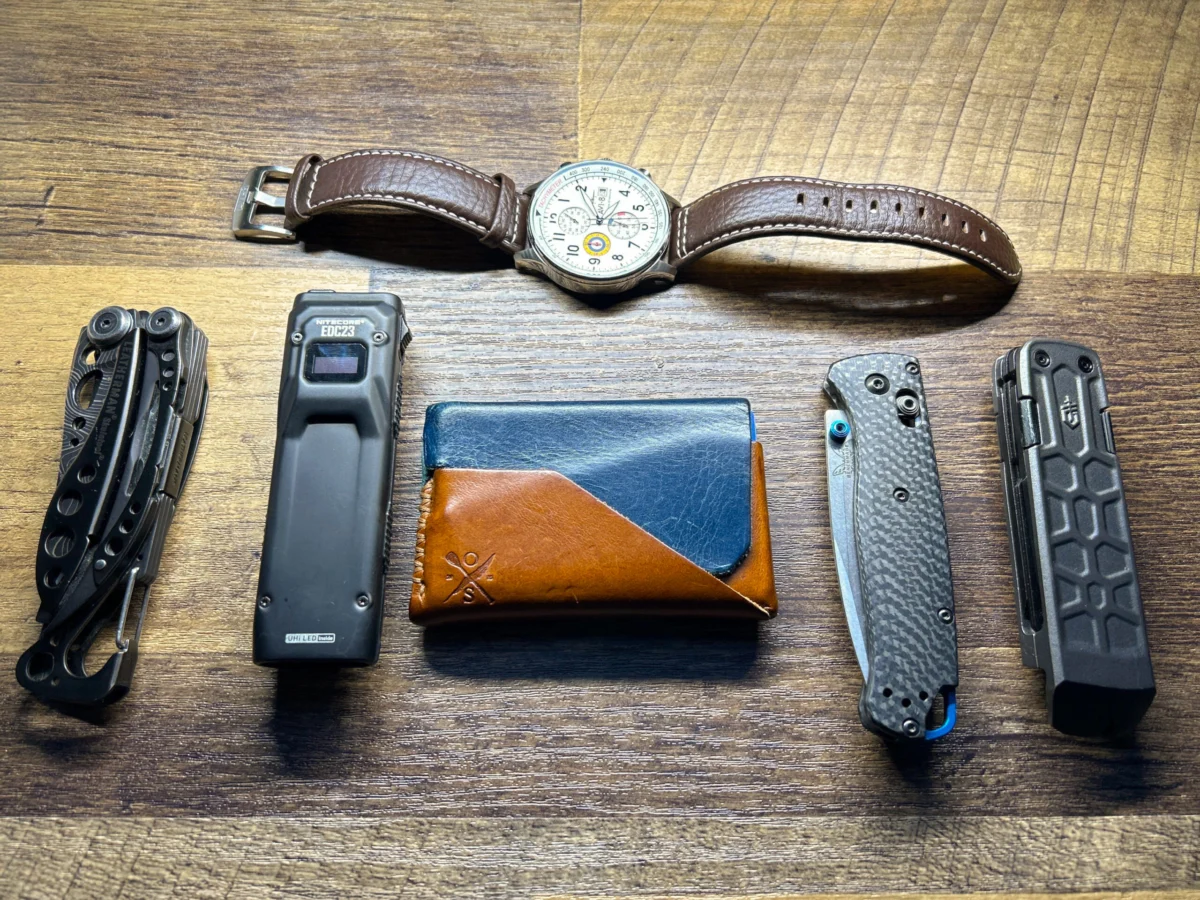
The Benchmade Bugout has become a hallmark of the lightweight movement. By utilizing a carbon fiber handle, the knife achieves an exceptional strength-to-weight ratio. For an EMT, this is not merely a hobbyist’s choice; it is a tool for cutting seatbelts, medical packaging, or cordage in emergency scenarios. Its deployment speed and reliability under stress make it a primary choice for those who cannot afford equipment failure.
2. Illumination: The Nitecore EDC23
The Nitecore EDC23 represents the latest in lighting technology. At 2,500 lumens, it provides high-intensity output in an "ultra-slim flat shape." Traditional flashlights were often cylindrical, causing discomfort when stored in uniform pockets. The flat design allows for seamless integration into a pocket or MOLLE webbing, ensuring that the light is always accessible during night calls or in poorly lit residential environments without creating a snag hazard.
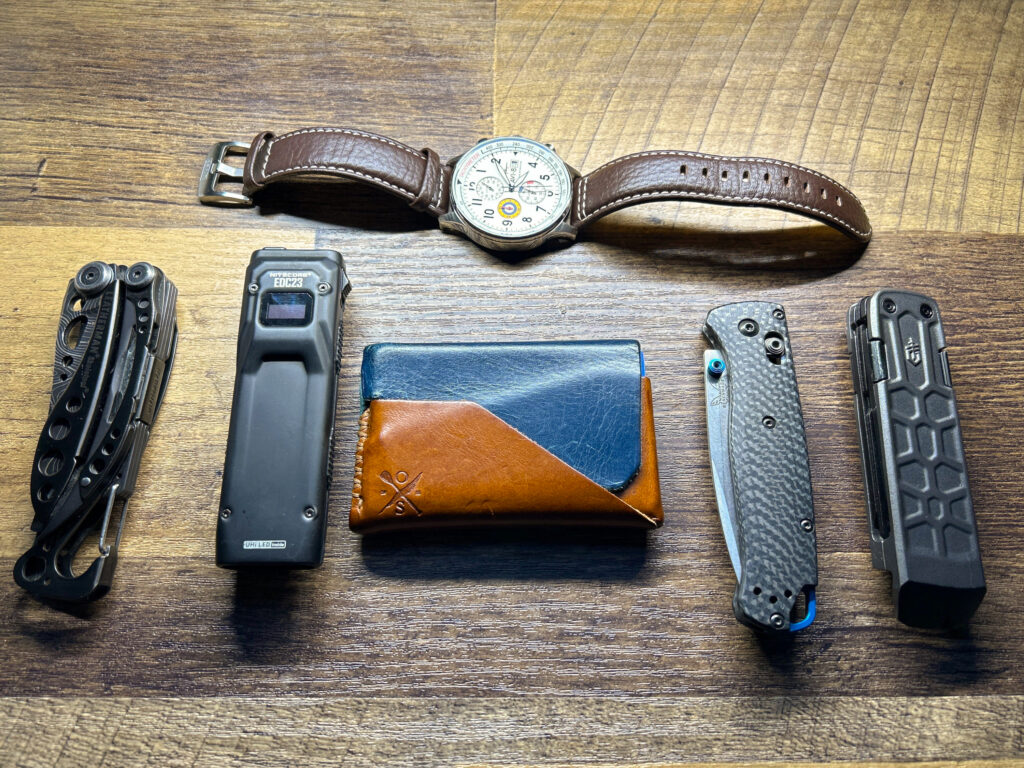
3. Versatility: The Leatherman Skeletool
The Skeletool remains a staple because it strips the multi-tool down to its essentials: pliers, a wire cutter, a knife, and a bit driver. By removing secondary functions that are rarely used in the field, Leatherman created a tool that is significantly lighter than their flagship models like the Wave or Surge, yet remains robust enough for minor equipment repairs or battery changes on medical devices.
4. Organic Integration: OSL Leather
The inclusion of leather wallets and watch straps provides a necessary "organic contrast" to the industrial nature of tactical gear. Leather is prized for its longevity and the way it molds to the user’s body over time, offering a level of comfort that synthetic, rigid alternatives often lack.
Data and Efficiency Metrics
Statistical analysis of gear performance suggests that when users reduce their EDC weight by at least 15%, they report a higher frequency of daily tool usage. This is attributed to the "accessibility paradox": if a tool is heavy or cumbersome, the user is less likely to carry it consistently. Conversely, when the kit is integrated into the uniform in a way that feels invisible, the tool is available the moment a problem arises.
According to industry surveys of first responders, the most requested features in new equipment include:

- USB-C Rechargeability: 82% of respondents prioritize this over proprietary charging ports.
- Profile Consistency: 74% prefer gear that maintains a slim, non-bulky profile for pocket concealment.
- Corrosion Resistance: Given the frequent use of cleaning agents and exposure to bodily fluids, 90% of responders require materials that can withstand rigorous sanitation.
Broader Implications for Industry Standards
The shift toward these specific, lightweight models indicates a broader trend in the manufacturing industry. Companies are no longer solely focused on "overbuilding" gear for extreme survival; they are focusing on "precision engineering" for daily professional use.
This evolution has significant implications for how EMS departments may eventually procure gear. If individual providers are proving that minimalist, lightweight tools are more effective in the field, departments may look to standardize these items in their official kit requirements. The use of carbon fiber and high-lumen, flat-profile lighting is likely to become the new baseline for professional responders across the United States.
Expert Analysis: Why Form Follows Function
Industry experts note that the "minimalist" approach is not about owning less, but about owning better. By curating a selection of tools that are individually best-in-class for their specific weight-to-performance category, users create a "system" rather than a collection of random items.
The editor’s note regarding this specific kit highlights the synergy of the items: the Skeletool provides the mechanical advantage, the Bugout provides the cutting edge, the EDC23 provides the visual clarity, and the leather goods provide the durability and tactile comfort. This holistic approach ensures that the EMT is prepared for the unexpected, whether it is a technical malfunction in the ambulance or a domestic repair task while off-duty.
Conclusion: The Future of Everyday Carry
As technology continues to advance, we can expect to see even more integration of smart features into ultra-lightweight designs. The current standard—demonstrated by the California EMT’s kit—serves as a blueprint for the modern professional. It is a testament to the fact that in high-pressure environments, the most effective tool is often the one you don’t realize you’re carrying until the exact moment you need it. By prioritizing ergonomics and high-performance materials, the next generation of first responders is better equipped than ever to handle the demands of their challenging profession.