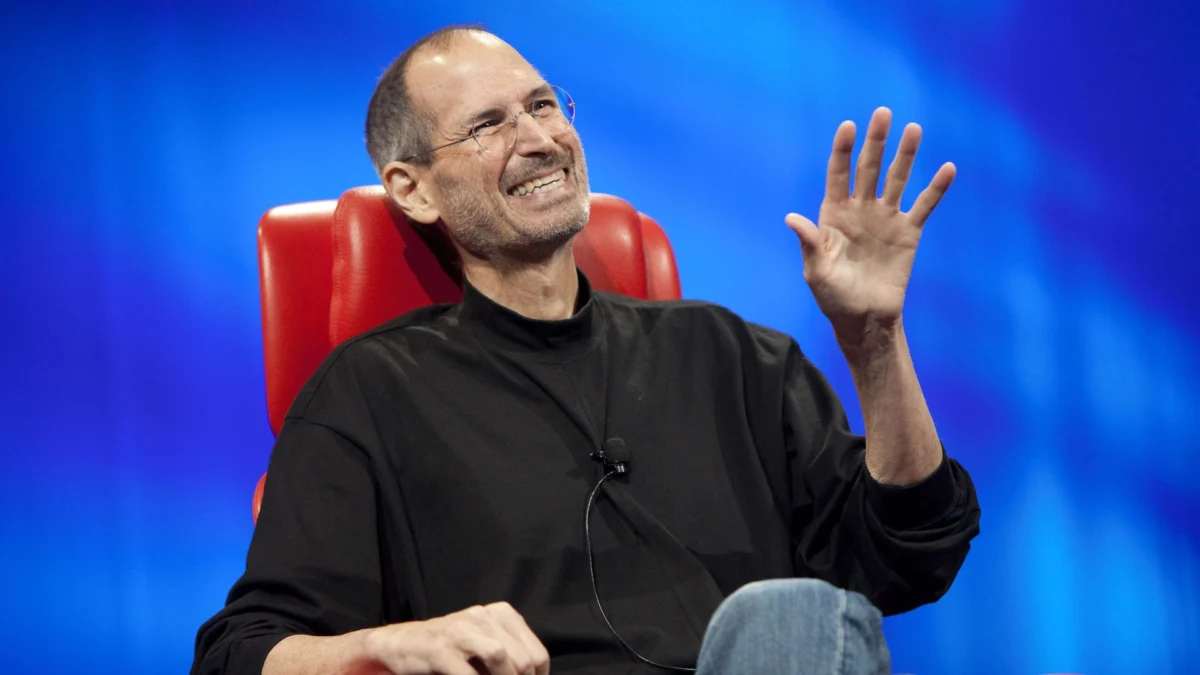
The debate over the ergonomics of human-computer interaction has defined personal computing for decades. Long before convertibles, detachable keyboards, and touch-enabled desktop displays became commonplace, the technology sector experienced a profound ideological split over how users should physically interface with their machines. At the center of this philosophical battle stood Steve Jobs, the visionary co-founder and former CEO of Apple, whose staunch refusal to incorporate touchscreens into Macintosh computers became one of the most famous product design stances in tech history.
While competitors like Microsoft, HP, and various Windows-based original equipment manufacturers raced to flood the market with touchscreen laptops and hybrid 2-in-1 devices, Jobs firmly dug his heels in. He argued that vertical touchscreens on traditional laptops were fundamentally flawed, ergonomically disastrous, and contrary to the principles of efficient computing. Yet, as the tech industry evolves and consumer expectations shift, new reports indicate that Apple is finally poised to break its decades-long taboo, preparing to launch a touchscreen MacBook Pro featuring an advanced OLED display. Examining this trajectory offers a fascinating window into how corporate dogma collides with commercial reality over time.
The Genesis of the Anti-Touchstand: Back to the Mac
The definitive statement on Apple’s aversion to laptop touchscreens was delivered by Steve Jobs in October 2010 during the "Back to the Mac" media event held at the company’s Cupertino headquarters. The event was primarily called to unveil Mac OS X 10.7 Lion, introducing elements from iOS—Apple’s wildly successful mobile operating system—to the desktop environment.
However, anticipation was high regarding whether Apple would bring the touch-based interaction model of the iPhone and iPad to its laptop lineup. Jobs decisively extinguished those rumors. Addressing the audience, he explained that touch surfaces do not belong on vertical displays, categorizing them as a usability failure.
"We’ve done tons of user testing on this, and it turns out it doesn’t work," Jobs stated bluntly. "Touch surfaces don’t want to be vertical. After a long period of time, you start to fatigue, and after some amount of time, your arm wants to fall off."
Instead of embedding touch sensors directly into the glass of the display, Apple chose to double down on horizontal multi-touch surfaces, pioneering advanced glass trackpads and sophisticated gesture controls within macOS. Jobs emphasized that vertical touchscreens caused excessive physical strain and lacked the microscopic precision required for prolonged desktop productivity work. For Apple at the time, the division between mobile devices—where touch was natural—and desktop computers—where mice, keyboards, and trackpads ruled—was absolute.
Industry Pressures and the Windows Counter-Offensive
Jobs’ dismissal of laptop touchscreens did not happen in a vacuum. During the late 2000s and early 2010s, the PC industry was desperately seeking a new paradigm to revitalize stagnant laptop sales following the rise of smartphones and tablets. Microsoft Windows recognized touch as the future of computing, culminating in the release of Windows 8 in 2012, an operating system explicitly designed to bridge traditional desktop workflows with touch-first tablet interfaces.
Manufacturers enthusiastically answered the call. Companies like Hewlett-Packard introduced lines such as the HP TouchSmart series, while Lenovo revolutionized the form factor with the Yoga line, allowing laptops to fold entirely backward into tablets. Consumers were offered an array of hybrid choices where poking, swiping, and pinching the display became standard operating procedure.
Despite immense market pressure and criticism that Apple was falling behind the curve, the company held its ground. Under the leadership of Tim Cook, who succeeded Jobs as CEO in 2011, Apple maintained the ideological boundary between macOS and iOS devices. The company did, however, experiment with intermediate bridge technologies. In 2016, Apple introduced the Touch Bar—a narrow OLED strip embedded above the keyboard that replaced traditional function keys with context-sensitive touch controls.
Far from a full touchscreen, the Touch Bar was Apple’s compromise: an attempt to bring direct touch interaction to the workspace without forcing users to reach up and smudge their primary displays. Ultimately, the experiment proved divisive among professional users and developers. After years of lukewarm reception, Apple quietly phased out the Touch Bar, returning to full-sized physical function keys on MacBook Pro models in 2021.
The Shifting Landscape and the Inevitable U-Turn
For years following the death of Steve Jobs, Apple executives maintained the company’s official line against touchscreen Macs. As recently as several years ago, senior Apple hardware engineering executives publicly reiterated that the company viewed iPads as the premier touch-first computing devices, while Macs were optimized for indirect manipulation via keyboards and mice. Mixing the two, they argued, created a compromised user experience.
However, the technology landscape has shifted inexorably. A generation of consumers has now grown up entirely fluent in touch-based interfaces, viewing non-touch screens as antiquated. Furthermore, the proliferation of high-end Windows laptops boasting vibrant OLED touch panels has narrowed the hardware advantages that MacBooks historically enjoyed.
Industry insiders and supply chain analysts now report that Apple’s engineering and product design teams are actively developing the first-ever touchscreen MacBooks. According to widespread leaks, this paradigm shift is slated to arrive alongside the adoption of advanced OLED display technology, which offers superior contrast, deeper blacks, and higher energy efficiency compared to traditional LCD panels.
While these upcoming devices will reportedly retain traditional macOS keyboard and trackpad configurations to preserve ergonomics, the inclusion of a touch-sensitive layer will officially close the chapter on Jobs’ absolute prohibition.
Economic and Market Implications
The decision to incorporate touchscreens into MacBooks carries significant strategic implications for Apple. From a hardware perspective, integrating touch layers into OLED panels requires sophisticated manufacturing techniques, which could initially drive up production costs and retail prices. However, it also removes a key differentiator that has historically allowed Windows OEMs to capture market share among creative professionals and enterprise users who prefer hybrid workflows.
For software developers, a touchscreen Mac necessitates a re-evaluation of macOS user interface guidelines. Apple will need to ensure that interface elements—such as menu bars, close buttons, and file directories—are accessible via touch without disrupting the precision required for mouse-and-keyboard navigation. This builds upon years of convergence between iPadOS and macOS, particularly following the transition to Apple Silicon (M-series processors), which allowed Mac computers to natively run mobile applications.
Conclusion: Pragmatism Over Dogma
Steve Jobs’ resistance to touchscreen laptops was rooted in the ergonomic limitations of early 2010s hardware and a deeply held design philosophy that prioritized physical comfort and operational precision. In its historical context, his skepticism shielded Apple from shipping gimmicky, fatiguing products just to chase a fleeting industry trend.
Yet, technology does not stand still. Material sciences have advanced, panel designs have become thinner and lighter, and user habits have solidified around touch interactions as an expected baseline. By allegedly preparing to cross the Rubicon into touchscreen MacBooks, Apple is demonstrating a pragmatic willingness to adapt. While it marks the dismantling of one of Jobs’ most famous edicts, it also signals that the company’s ultimate loyalty is not to past dogma, but to the future of consumer utility.