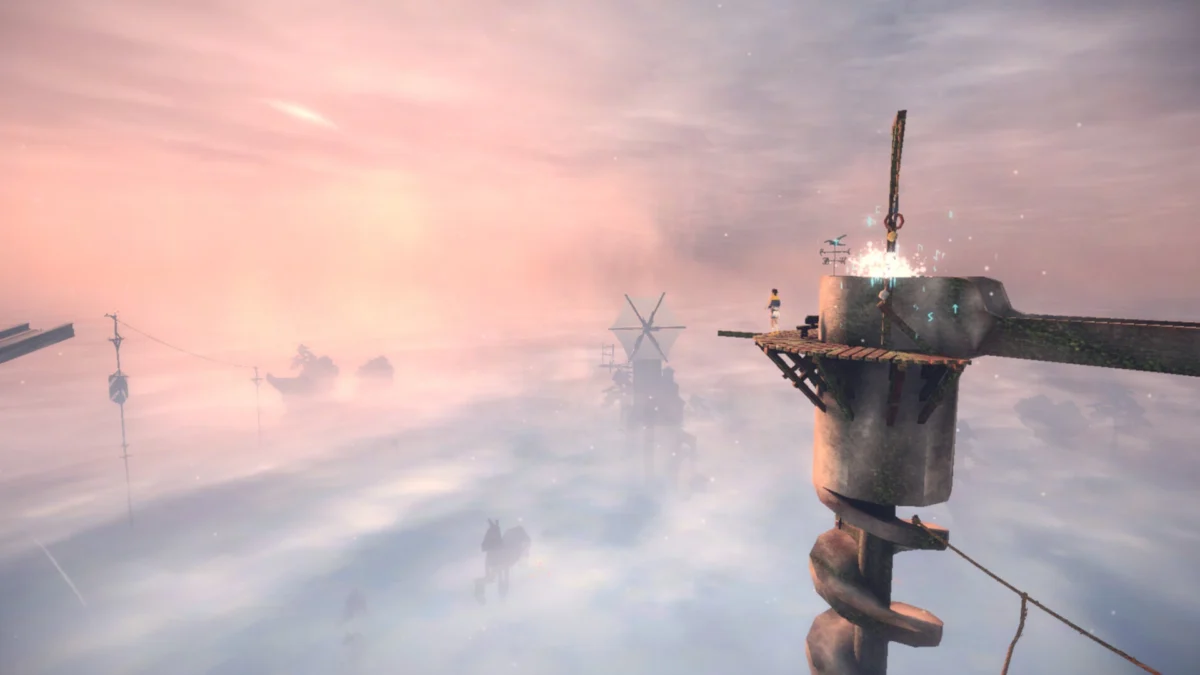
Developmental Context and Provenance
The announcement of Talon Towers marks a strategic pivot for Jan Malitschek, who established a reputation in the indie gaming community with the release of Beton Brutal. That title, a first-person platformer focused on uncompromising, brutalist architecture and punishing, precise jumping mechanics, served as the mechanical foundation for Malitschek’s current project. However, Talon Towers introduces a more refined sense of scale and verticality, drawing comparisons to the "environmental storytelling" genre popularized by titles such as Ico, Shadow of the Colossus, and The Last Guardian.
To achieve the technical and artistic goals for this new title, Malitschek has expanded the project’s scope by enlisting the expertise of industry collaborators. The development team now includes Quinn K., recognized for their work on the roguelike RPG Blanksword, and Hyphinett, who contributed to the critically acclaimed narrative game If Found…. This multidisciplinary collaboration suggests that while the core gameplay remains rooted in precision platforming, the game is being designed with a stronger emphasis on world-building and atmospheric cohesion than previous titles from the lead developer.
Mechanical Framework and Gameplay Dynamics
Talon Towers centers on a high-dexterity movement system designed to challenge player coordination. Based on the recently released gameplay footage, the title incorporates a comprehensive suite of traversal mechanics, including:
- Standard Locomotion: Sprinting, crouching, and crawling to navigate narrow passages.
- Verticality and Agility: Wall-running, wall-kicking, and high-precision climbing.
- Dynamic Traversal: The use of monkey bars, tightropes, and environmental gaps that necessitate rhythmic timing.
- Unique Abilities: Experimental mechanics, such as sections where the player assumes the form of a bird, offering a shift in both perspective and control.
The difficulty curve is expected to be steep, as the level design focuses on narrow platforms and dizzying vertical drops. The "fail state" in these types of games is typically a return to the start of a segment, emphasizing the mastery of movement patterns over traditional combat or power-up acquisition. The inclusion of chase sequences—reminiscent of the tension-filled encounters in Celeste or the protective, stealth-oriented segments of Ico—indicates that the game will balance its meditative, atmospheric exploration with moments of high-stakes, reactive gameplay.
Chronology of the Project
While the game is in the early stages of public disclosure, the project’s trajectory reflects a steady refinement of Malitschek’s design philosophy:
- Initial Prototyping (Pre-2023): Malitschek focused on the physics-based movement engine, testing the limits of first-person platforming within minimalist environments.
- The Beton Brutal Era (2023–2024): The release of Beton Brutal served as a public proof-of-concept for the developer’s capability to create high-skill-ceiling platforming experiences.
- Expansion and Collaboration (Early 2024): The recruitment of Quinn K. and Hyphinett shifted the project toward a more polished, narrative-conscious production.
- Public Reveal (Late 2024): The official announcement and gameplay showcase provided the first concrete look at the game’s visual identity and core mechanics.
- Steam Integration: The title is currently available for wishlisting on the Steam platform, with no firm release date provided, signaling a "when it’s done" development cycle typical of independent titles prioritizing polish over rigid deadlines.
Comparative Analysis: The "Ueda" Aesthetic
The influence of Fumito Ueda on modern independent game design cannot be overstated. Ueda’s work is characterized by "design by subtraction," a philosophy where features, dialogue, and UI elements are stripped away to focus on the emotional resonance of the relationship between the player, the environment, and the objective.
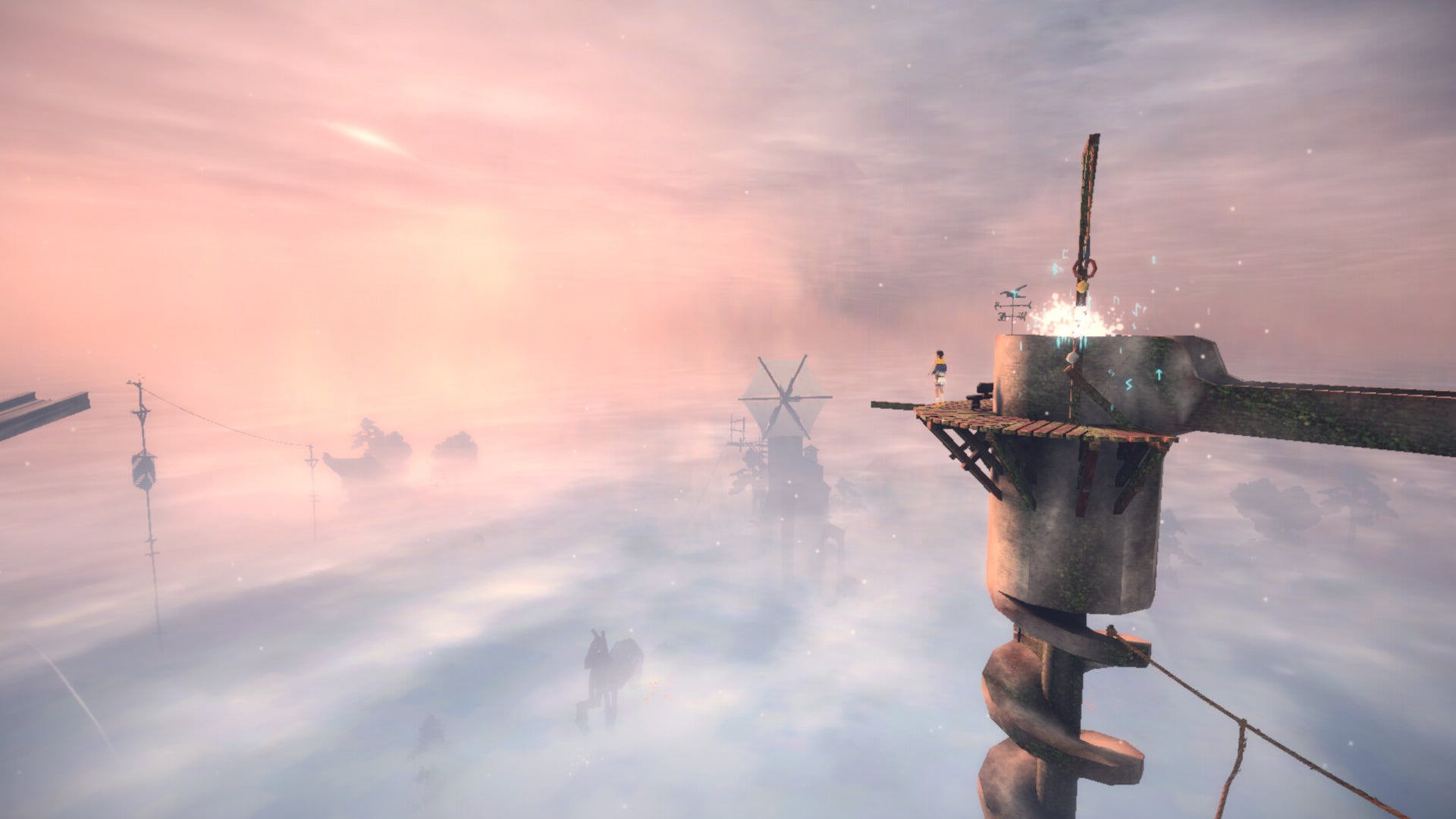
Talon Towers appears to be positioning itself within this tradition. The "storied history" mentioned by observers—the sense that these towers serve a forgotten purpose—is a hallmark of this genre. By placing the player in a world that feels both ancient and indifferent, the game forces the user to find meaning through interaction rather than exposition. This creates an immersive quality that differentiates the title from traditional 3D platformers that rely on quest markers or explicit storytelling.
Market Implications and Industry Standing
The indie platformer market remains highly competitive, with titles ranging from the hyper-speed, physics-defying Neon White to the methodical, contemplative Jusant. Talon Towers occupies a middle ground, offering the high-precision demands of a speedrunning-adjacent game while maintaining the visual weight and narrative intrigue of an atmospheric adventure.
From an analytical standpoint, the success of such titles often hinges on the "feel" of the movement. If the player feels in control, even during the most complex maneuvers, the game will likely find a dedicated audience. If the controls are perceived as "floaty" or unresponsive, the aesthetic value may not be enough to sustain engagement. Given the success of Malitschek’s previous work, the technical foundation for the movement system is likely to be robust, potentially positioning Talon Towers as a standout in the 2025-2026 indie landscape.
Potential Challenges
The primary challenge for the development team will be maintaining a balance between the punishing difficulty of the platforming and the atmospheric, "Uedan" pacing. If the difficulty spikes too aggressively, it may alienate players who are drawn to the game primarily for its visual aesthetic. Conversely, if the atmosphere is too detached, the gameplay may struggle to maintain a sense of urgency.
Furthermore, the game’s reliance on "criss-crossing" architecture suggests that level design will be the most significant technical hurdle. Creating environments that are visually coherent while also serving as viable, readable, and functional traversal routes requires a level of architectural precision that few independent developers manage to achieve.
Broader Industry Impact
Talon Towers represents a growing trend in the industry: the synthesis of "extreme" platforming mechanics with "high-art" environmental design. As developers move away from the "collect-a-thon" tropes of the early 2000s, there is a clear appetite for games that treat movement as a primary language. By embracing a minimalist aesthetic, the team behind Talon Towers is signaling that they are not interested in competing with the visual fidelity of triple-A giants, but rather in creating a unique, singular experience that prioritizes the player’s agency within a vast, silent, and potentially dangerous world.
The inclusion of diverse talent from projects like If Found…—a game lauded for its emotional, non-linear narrative—suggests that Talon Towers may harbor a deeper, more subtle story than the gameplay trailers currently reveal. As the game moves through its development cycle, the focus for the community will shift from the initial reveal to the refinement of its mechanics and the eventual confirmation of its narrative scope. For now, the project remains one of the most anticipated, albeit mysterious, entries in the indie platformer space, promising an experience that is as intellectually stimulating as it is physically demanding.