The global technology market has turned its analytical lens toward Apple’s latest flagship release, the iPhone 18 Pro series, which officially arrived on retail shelves last week. While early consumer reception has largely centered around processing speed, display advancements, and camera system refinements, hardware analysts and benchmarking channels have begun dissecting the internal components powering the device’s higher-tier storage configurations. Testing performed by the prominent hardware evaluation channel Homolab on Bilibili has revealed that the 1TB iteration of the iPhone 18 Pro Max exhibits notable performance limitations when subjected to sustained, heavy data transfer workloads.
At the center of this performance discussion is Apple’s strategic architectural shift toward Quad-Level Cell (QLC) NAND flash memory for its high-capacity storage variants. While QLC technology successfully facilitates the manufacturing of denser, more cost-effective storage solutions within the constrained physical dimensions of a smartphone chassis, it introduces inherent physical trade-offs regarding sustained read and write speeds. As the industry parses the implications of this component shift, questions are emerging regarding how everyday power users, mobile content creators, and enterprise consumers will experience these performance ceilings during intensive operational tasks.
The Evolution of NAND Flash Architecture in Mobile Devices
To comprehend the significance of Apple’s transition to QLC NAND, it is essential to examine the underlying physics and engineering evolution of solid-state storage. For years, the smartphone industry relied predominantly on Triple-Level Cell (TLC) NAND technology, which stores three bits of data per memory cell. TLC has long been the gold standard for balancing high-speed data access, structural durability, and manufacturing costs.
However, as consumer demands for local storage expand—spurred by the ubiquity of 4K and 8K video recording, high-resolution ProRAW photography, and increasingly massive mobile gaming titles—manufacturers face severe spatial limitations. Packing terabytes of data into a device merely millimeters thick requires maximizing storage density.
This necessity drove the industry toward QLC NAND technology, which increases the bit density per cell from three to four. By accommodating four bits of data within the same physical memory cell, manufacturers can dramatically increase overall storage capacity without expanding the physical footprint of the storage module or requiring additional internal volume. Despite these clear advantages in volumetric efficiency, the physics of QLC introduce distinct technical hurdles. Storing four distinct voltage states rather than three requires far greater precision, which inherently slows down write operations and reduces endurance thresholds under punishing workloads, particularly when the temporary high-speed cache is exhausted.
Chronology of the iPhone 18 Pro Launch and Testing Phase
The discovery of the QLC performance profile is the latest milestone in a carefully orchestrated product lifecycle that began months prior to the device’s retail debut.
The timeline of the iPhone 18 Pro series development and rollout highlights the intersection of aggressive supply chain optimization and immediate post-launch technical scrutiny:
- Early Supply Chain Indications (Q1–Q2): Industry analysts report initial whispers within the global semiconductor supply chain regarding Apple’s intent to diversify its flash memory procurement, shifting higher-density tiers toward QLC configurations to manage escalating component costs and supply constraints.
- Official Product Announcement (September): Apple officially unveils the iPhone 18 Pro and iPhone 18 Pro Max during its annual autumn keynote event, emphasizing groundbreaking performance metrics, enhanced thermal management, and massive available capacities scaling up to 1TB and 2TB.
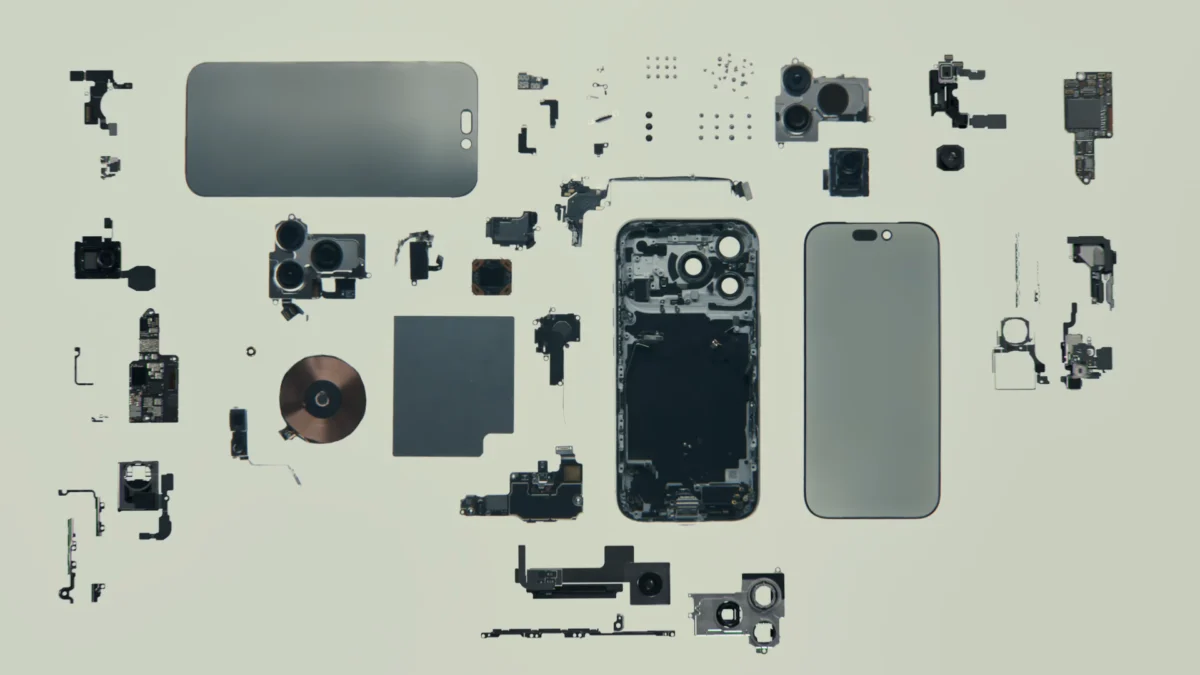
- Global Retail Launch (Last Week): The iPhone 18 Pro series officially hits shelves worldwide, prompting immediate teardowns and rigorous performance evaluations by independent reviewers and hardware laboratories.
- Homolab Benchmarking Discovery (Post-Launch): Bilibili hardware channel Homolab publishes detailed performance benchmarks of the 1TB iPhone 18 Pro Max, revealing a pronounced drop in sustained write speeds during extended file transfers, directly linking the behavior to QLC NAND limitations.
Technical Analysis of the Homolab Benchmark Findings
The testing methodology deployed by Homolab sought to evaluate the real-world endurance and throughput of the iPhone 18 Pro Max’s 1TB storage subsystem under extreme conditions. Under standard, short-burst file transfers—such as launching applications, loading locally stored media, or capturing standard photographs—the device performed on par with expectations, leveraging its high-speed SLC cache to mask underlying memory characteristics.
However, when subjected to sustained, large-scale data transfers mimicking professional workflows—such as dumping hundreds of gigabytes of raw video footage directly from the device or executing continuous write operations—the performance metrics shifted dramatically. Once the high-speed caching layer filled to capacity, the underlying QLC NAND was forced to write data directly to the four-bit cells without the aid of the buffer. This transition resulted in a measurable decline in sustained write speeds.
From an engineering perspective, this behavior is entirely consistent with the fundamental nature of QLC flash memory across the broader consumer electronics industry, affecting everything from enterprise solid-state drives (SSDs) to PC storage solutions. Yet, its manifestation in a premium flagship smartphone marketed heavily toward mobile cinematographers and enterprise power users has sparked vigorous debate among tech enthusiasts.
Broader Implications for Pro Users and Mobile Content Creation
The implementation of QLC NAND in Apple’s premier mobile devices carries several distinct implications for specific segments of the consumer base.
For the average consumer utilizing streaming services, cloud storage, and standard messaging applications, the architectural differences between TLC and QLC flash memory will likely remain imperceptible. Day-to-day operations, application launch times, and web browsing speeds rely heavily on processor performance, RAM bandwidth, and short-burst storage reads—all areas where the iPhone 18 Pro continues to excel.
Conversely, professional content creators, mobile journalists, and independent filmmakers who rely on the iPhone 18 Pro Max as a primary production tool may need to alter their operational habits. The device’s capability to record directly to external drives via USB-C has long served as a workaround for heavy data management, but internal offloading and large file management will require greater awareness of sustained transfer bottlenecks. Furthermore, the longevity and write-cycle endurance of QLC cells, while rated for years of typical consumer use, face stricter thresholds when continuously battered by heavy professional workloads compared to their TLC predecessors.
Industry Context and Market Comparisons
Apple’s adoption of high-density flash memory aligns with broader industry trends. As consumer storage requirements skyrocket into the terabyte scale, traditional TLC NAND pricing and manufacturing yields present significant financial and logistical challenges for OEMs aiming to maintain competitive profit margins without pricing consumer devices out of the market.
Competitors in the Android ecosystem have similarly explored various memory configurations to balance cost, capacity, and performance. However, because Apple tightly controls both the hardware specifications and the vertically integrated iOS software ecosystem, changes to internal storage sub-components often receive intense public scrutiny. The company’s architectural choices frequently set de facto standards or touch off industry-wide discussions regarding the acceptable compromise between hardware cost-efficiency and peak performance.
Looking Ahead: Consumer Guidance and Purchasing Considerations
As the dust settles on the initial launch week of the iPhone 18 Pro series, prospective buyers evaluating high-capacity variants are advised to weigh their specific use cases against these newly documented performance characteristics.
Consumers prioritizing maximum local storage for vast offline media libraries, massive application portfolios, and occasional content capture will find the 1TB and higher tiers fully adequate for their daily needs. However, professionals who routinely push mobile hardware to its absolute limits with continuous, terabyte-scale data ingestion and write-heavy tasks must consider whether utilizing external high-speed storage accessories or opting for alternative workflow strategies is necessary to bypass the inherent physical limitations of QLC NAND technology.
As hardware analysts continue to unpack the full scope of the iPhone 18 Pro internals, Apple has yet to issue a formal technical statement addressing specific NAND vendor configurations or performance thresholds, maintaining its standard policy regarding internal component specifications. Nonetheless, the findings underscore the perpetual engineering balancing act between physical miniaturization, cost management, and uncompromised professional performance in modern smartphone design.