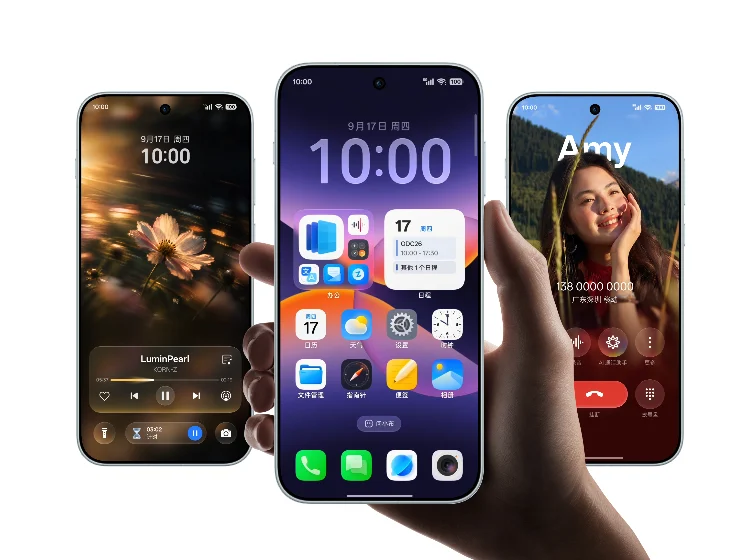
OPPO has officially unveiled ColorOS 17, its latest iteration of the Android-based operating system, at a major launch event in China. This significant update, built upon the foundation of Android 17, introduces a comprehensive redesign of the user interface, substantial performance architecture upgrades, and a suite of sophisticated artificial intelligence features. The update is slated for a staggered rollout across a broad ecosystem of devices, including flagship models from OPPO, OnePlus, and realme, marking a strategic pivot toward more seamless, AI-driven mobile computing.
The Foundation of Fluid Design
At the core of the ColorOS 17 experience is the new "Fluid Design" language. OPPO has focused on creating a visual ecosystem that feels more responsive and intuitive to the end user. By integrating advanced motion physics and refined UI transitions, the company aims to minimize the cognitive load associated with navigating complex menus and multi-layered applications. This design philosophy is not merely aesthetic; it is deeply integrated into the system’s backend to ensure that visual effects do not compromise hardware efficiency.
According to internal benchmarks released by the company, the implementation of these new visual effects places 30% less strain on the CPU and GPU compared to previous iterations, effectively lowering the barrier to high-fidelity interface animations on mid-range and legacy hardware.
Aurora Engine: The Performance Paradigm Shift
Central to the operational efficiency of ColorOS 17 is the introduction of the Aurora Engine. This proprietary performance framework is designed to optimize memory management and task scheduling. OPPO’s internal testing data suggests that the Aurora Engine represents a generational leap in system responsiveness.
The technical specifications provided by the manufacturer are noteworthy: ColorOS 17 reportedly maintains 55% more applications in active RAM, preventing the common "reload" behavior that plagues many Android devices during heavy multitasking. Furthermore, app launch stability has seen a 35% improvement, and overall launch speeds have been accelerated by 15%. For media consumption enthusiasts, the gallery application has received a dedicated optimization, resulting in 50% faster image loading and browsing speeds, even within libraries containing tens of thousands of high-resolution files.
AI-Driven Assistance and Contextual Awareness
The evolution of the Heytap assistant, formerly branded as Breeno, serves as the most prominent indicator of OPPO’s AI strategy. The new Heytap assistant is designed to function as an intelligent agent capable of understanding daily context rather than simply responding to static commands. It can track complex task lists, provide proactive reminders for appointments, and manage sensitive information like payment deadlines and event tickets.
Integration is a key pillar of this AI advancement. By connecting with over 700 local services in China, the assistant can provide real-time status updates via dynamic progress indicators in the notification center. This allows users to monitor the status of ongoing tasks—such as food deliveries or ride-sharing progress—without needing to manually toggle between multiple applications.
Furthermore, the operating system introduces a sophisticated camera-based recognition mode. By leveraging on-device AI, the camera can identify objects, improve the clarity of photographed documents, and even perform nutritional analysis by estimating calories in food. The system also introduces location-aware intelligence, automatically surfacing boarding passes, concert tickets, or digital receipts when the user enters a relevant environment, such as an airport or a concert venue.

Multimedia and Ecosystem Synergy
Content creation and management have also received a significant overhaul. The native gallery now includes the "DaVinci editor," a tool that supports natural-language commands for complex photo and video editing tasks. Users can describe the desired result, and the AI will perform the corresponding edits, streamlining the post-production workflow for mobile creators.
Ecosystem connectivity has been significantly simplified. OPPO has moved toward a unified connectivity protocol that allows for frictionless pairing and interaction between smartphones, smartwatches, automotive infotainment systems, and audio peripherals. A notable addition for health-conscious users is the "FatMax" feature on compatible smartwatches. This utility analyzes heart-rate zones during exercise, providing real-time voice coaching and a specialized "Super Fat Burning Mode" designed specifically for aerobic training.
Additionally, "Air Gestures" have been expanded, allowing users to control playback and camera shutters on connected ColorOS 17 devices without physical contact—a feature that holds particular utility in hands-free scenarios such as cooking or gym workouts.
Security and Fraud Prevention
In response to the rising global challenge of digital fraud, OPPO has integrated advanced security measures directly into the kernel of ColorOS 17. The system now features an intelligent fraud detection engine that monitors for malicious links and unauthorized app installations in real-time.
Perhaps most significantly, the OS introduces defensive mechanisms against AI-generated threats. The software is capable of detecting deepfakes and AI-generated voices during video calls, providing a critical layer of protection against social engineering attacks. It also scans incoming messages for suspicious scripts and patterns commonly associated with phishing scams, alerting users before they interact with potentially harmful content.
Implementation and Rollout Chronology
The transition to ColorOS 17 follows a strictly defined, multi-phase rollout schedule. The initial release focuses on the company’s current flagship tier, with subsequent waves expanding to mid-range devices and older models.
- Launch Phase: The update is immediately available for the OPPO Find X10 series, OnePlus 16, and the OPPO Watch S2.
- October 8 Wave: This phase includes a wide range of premium devices, such as the OPPO Find N6, Find X9 series, OnePlus 15/15T, and realme’s GT 8 Pro models.
- October 16 Wave: The update expands to the Find N5, Find X8 series, OnePlus 13/13T, and realme GT 7 Pro variants.
- Late October (Oct 20–30): This period focuses on the Reno 16 series, additional Watch models, and the OnePlus Ace 6 series.
- November & December Rollouts: The final phases cover the Find N3/N3 Flip, various Reno 14/15 models, OnePlus 11/12/Ace 3 series, and a comprehensive list of realme GT and V-series devices.
Industry Implications and Analysis
The launch of ColorOS 17 signals a broader trend within the smartphone industry: the shift from hardware-centric competition to software and ecosystem-based value propositions. By unifying the experience across OPPO, OnePlus, and realme devices, the company is attempting to create a "moat" that encourages brand loyalty through ecosystem synergy.
The heavy emphasis on AI-driven security and contextual assistance suggests that OPPO is positioning its software to address the specific pain points of the modern smartphone user—namely, information overload, security anxiety, and the need for seamless device interoperability. While these features are currently optimized for the Chinese market, the global release of ColorOS 17 will likely serve as a litmus test for how effectively these AI-centric tools translate across different linguistic and cultural landscapes.
Ultimately, the technical improvements—specifically the 55% increase in active RAM retention and the 30% reduction in rendering load—demonstrate that OPPO is not abandoning the foundational aspects of mobile performance. By balancing high-end AI features with deep-level kernel optimizations, ColorOS 17 aims to provide a competitive edge in a crowded market, catering to both the power user who demands hardware performance and the average consumer seeking a smarter, safer digital assistant. As the rollout progresses, the real-world performance of these features will be the final arbiter of the update’s success in maintaining the brand’s competitive standing against rival Android manufacturers and their respective OS skins.