The Boring Company has announced an ambitious infrastructure expansion plan for the Las Vegas Loop, confirming that the total number of operational passenger stations will double before the close of the calendar year. The announcement, shared directly via the company’s official channels alongside an aggressive recruitment drive for specialized operations staff and drivers in Nevada, marks a critical turning point for the subterranean transit system. With infrastructure already largely constructed across multiple key commercial and hospitality hubs, the subterranean network is entering a phase of rapid scaling designed to meet soaring visitor demand and integrate crucial transportation arteries across the Las Vegas Valley.
Chronology of the Expansion and Regulatory Approvals
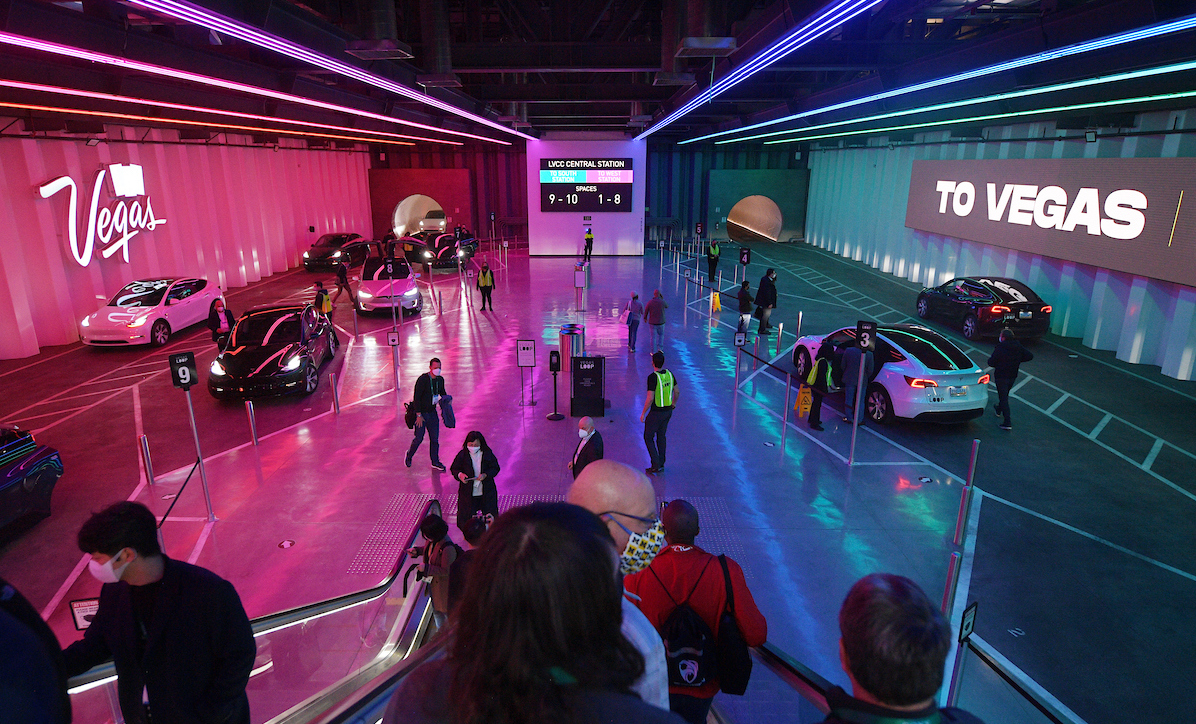
The roots of the Vegas Loop trace back to initial developmental phases and pilot implementations beneath the Las Vegas Convention Center (LVCC). Following the successful proof-of-concept for convention attendees, local authorities steadily expanded the operational scope. In 2023, Clark County regulators approved an initial batch of 18 additional stations, which structurally paved the way for a network architecture projected to encompass roughly 69 stations spread across a 65-mile underground footprint.
Over the subsequent years, municipal approvals outpaced immediate physical construction schedules. As administrative entitlements grew, the overarching targets climbed progressively—moving from roughly 93 projected stations to 104, before a significant Clark County vote in August of this year officially entitled the Vegas Loop for an expanded total of 123 stations.
Despite the broad scope of these municipal approvals, the upcoming milestone represents the first instance where the company has explicitly tied a doubling metric to actively running, passenger-service stations rather than blueprinted concepts on a county zoning map. Currently, the system operates 14 active stations. Doubling this figure requires bringing approximately 14 additional facilities online by December, a target that aligns precisely with the 28 operational stations outlined in the company’s internal project schedules for the end of the year.
Infrastructure Readiness and Upcoming Hubs
Much of the hardware required to achieve this year-end goal is already physically in place, awaiting final bureaucratic clearances, safety inspections, and system integration. A primary driver of this imminent growth is a two-mile dual tunnel system running beneath Paradise Road. This critical subterranean artery connects the Westgate Las Vegas Resort & Casino to a strategically positioned station at 4744 Paradise Road.
According to public updates provided by Las Vegas Convention and Visitors Authority (LVCVA) Chief Executive Steve Hill, the Paradise Road corridor is slated for a staged rollout over the coming weeks. Alongside this opening, several highly anticipated transit nodes will finally welcome the public, including stations at Virgin Hotels Las Vegas and the former site of the Gordon Biersch brewery.

These specific stations have been prioritized due to their capacity to streamline passenger transit toward Harry Reid International Airport. Transport officials anticipate that optimizing direct routes to and from the airport terminal will significantly alleviate surface-street congestion, particularly in anticipation of high-volume international events such as the Formula 1 Las Vegas Grand Prix.
Ridership Metrics and Operational Capacity
To evaluate the operational significance of the impending station expansion, analysts look closely at the system’s current passenger throughput. During peak convention days, executive leadership from The Boring Company, including operations figures like Mike Baier, have reported that the Vegas Loop moves approximately 40,000 passengers daily. This volume is particularly notable given that the network currently operates on only a fraction of its total authorized underground mileage, routinely outperforming traditional light rail systems in terms of point-to-point transit times and passenger satisfaction during major events.

Industry analysts project that tripling or quadrupling current ridership numbers is entirely feasible once the airport connector tunnels are fully integrated into the active dispatch rotation. Because the system utilizes an all-electric fleet of Tesla vehicles operating in dedicated single-lane tunnels without intermediate stops, expanding the number of access stations directly decreases passenger wait times and disperses traffic load more efficiently across the entire grid.
Workforce Scaling and Operational Demands
To support this physical and logistical expansion, The Boring Company’s leadership has initiated an urgent recruitment campaign aimed at securing specialized talent in the Las Vegas metropolitan area. The company’s public notices emphasize the search for qualified Loop Drivers and Senior Loop Operations Managers.
Managing an autonomous-capable, high-frequency underground transportation network requires precise coordination, robust safety protocols, and real-time fleet management. The simultaneous push for infrastructure readiness and administrative staffing underscores a transition from a localized novelty transit system into a foundational municipal utility for the region. While executive management has not yet disclosed the exact sequence in which individual stations beyond the Paradise Road corridor will open, the active hiring push suggests that a corresponding expansion of the active vehicle fleet is underway to match the expanded geographic footprint.
Broader Implications for Urban Mobility
The accelerated development of the Vegas Loop serves as a real-world stress test for high-density, low-cost subterranean tunneling models. Traditional urban rail infrastructure projects frequently encounter multi-year delays and budget overruns driven by complex surface-level disruptions and extensive surface station construction. By utilizing tunnel-boring techniques designed to reduce excavation costs and minimizing the spatial footprint of surface stations—often integrating them directly into existing parking structures or hotel port-cochères—The Boring Company has demonstrated an alternative framework for municipal transit development.
As the network approaches its year-end target of doubling its active stations, the success of the Vegas Loop will likely influence similar infrastructural proposals in other major metropolitan areas evaluating grade-separated, point-to-point transport solutions. For Las Vegas, the immediate priority remains clearing final regulatory hurdles, integrating the newly constructed tunnels beneath Paradise Road, and onboarding the necessary operational personnel to ensure seamless execution as the city prepares for its busiest tourism quarters of the year.