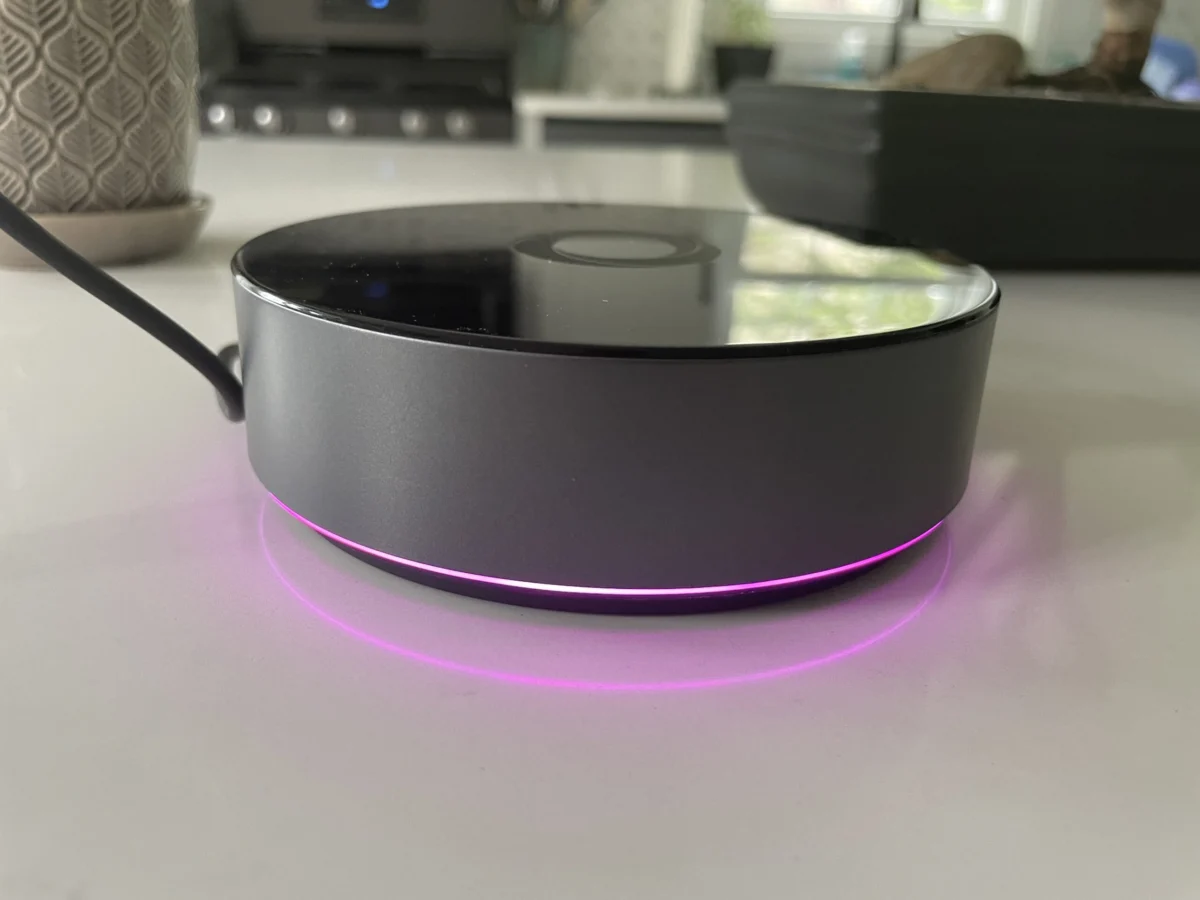
Following the successful introduction of the $69 Homey Bridge in early 2023, the smart home market has seen the arrival of the more robust, high-performance Homey Pro in the United States. Priced at $399, this flagship hub positions itself as a premium, privacy-focused alternative to the increasingly common cloud-dependent smart home controllers. While the Homey Bridge was designed as an entry-level gateway, the Pro model is engineered for power users and enthusiasts, offering significantly enhanced hardware specifications and a shift toward local-first automation control.
The transition from cloud-based ecosystems to localized hardware represents a significant pivot in the consumer IoT landscape. For years, major tech conglomerates have pushed users toward cloud-reliant systems that offer ease of use but sacrifice privacy and functionality during internet outages. The Homey Pro attempts to reclaim that ground by processing data locally, ensuring that smart home routines remain operational even when the external network fails.
Evolution of the Homey Ecosystem: From Bridge to Pro
The development of the Homey Pro serves as an evolution of the brand’s 2019 hardware iteration. The latest version boasts a CPU with 3.5 times the processing power of its predecessor, alongside 8GB of storage and 2GB of memory. These hardware improvements are critical, as they provide the necessary overhead to manage complex, multi-device logic without relying on external server pings.
Chronologically, the company’s expansion into the U.S. market began in March 2023 with the launch of the Bridge. That device was met with a generally positive reception, particularly for its user-friendly interface. However, the Bridge was limited by a five-device connection cap and a subscription-based model for expanded functionality. The Homey Pro effectively removes these barriers. By eliminating most subscription requirements—save for an optional $0.99 monthly fee for cloud-based backups—the Pro model adopts a "buy-it-once" philosophy that appeals to long-term smart home hobbyists.
Hardware Radios and Connectivity Standards
A standout feature of the Homey Pro is its comprehensive array of communication protocols. The U.S. version of the hub comes equipped with Wi-Fi (2.4 and 5 GHz), Bluetooth, infrared (IR), Zigbee, and Z-Wave. Furthermore, the inclusion of a dedicated Thread radio positions the device to support the burgeoning Matter smart home standard, including Matter-over-Thread capabilities.

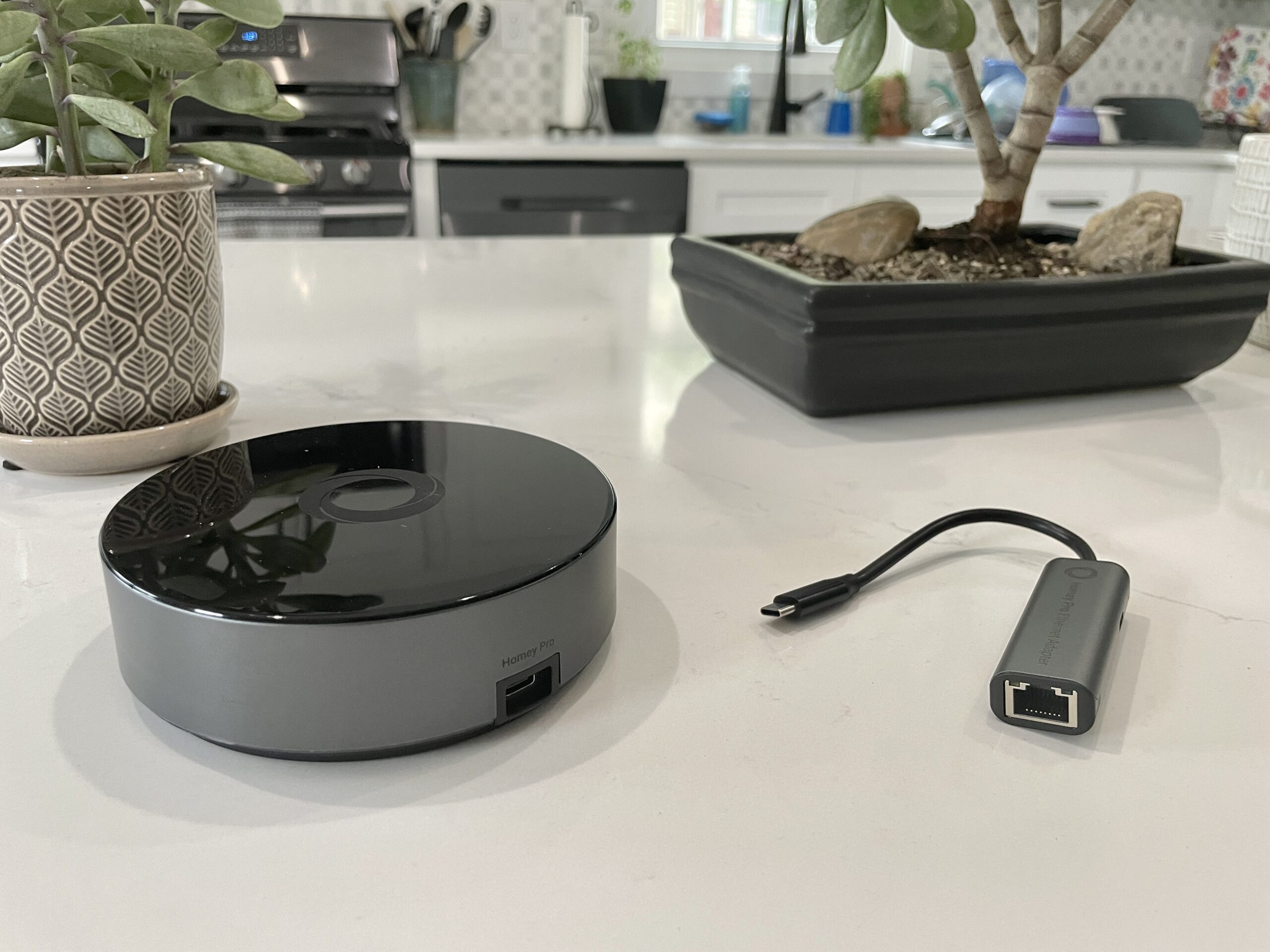
The addition of an optional $29 ethernet adapter is a notable inclusion for users seeking the stability of a wired connection. By leveraging these varied radios, the Homey Pro aims to act as a universal translator, bridging the gap between legacy devices that rely on IR or older Z-Wave signals and modern, standards-compliant hardware.
The Setup Experience: A User-Centric Approach
From an installation perspective, the Homey Pro maintains the high standards set by its predecessor. The setup process is facilitated through the Homey smartphone application, which guides users through a series of logical steps, including the identification of home floor plans and room layouts. This organizational approach is a departure from many competing platforms, which often require users to retroactively categorize devices.
The application itself is noted for its modern, clean aesthetic. It effectively balances accessibility for casual users with the depth required for advanced configurations. Despite this, the process is not without its friction points. During initial deployment, users are required to perform secondary configuration steps to assign devices to specific rooms, an action that many expect to be integrated into the primary onboarding flow.

The Compatibility Challenge: Integration and Limitations
While the hardware potential is high, the practical utility of the Homey Pro is fundamentally tied to its device integration database. Homey claims support for over 50,000 individual devices; however, the real-world application reveals a more nuanced reality. Compatibility often hinges on the specific firmware and implementation of third-party manufacturers.
During testing, the Pro model demonstrated seamless integration with popular hardware like Lutron Caseta switches, Philips Hue lighting, and Sonos audio systems. Conversely, it encountered significant hurdles with other common brands. For instance, specific models of Schlage smart locks, Ecobee thermostats, and various Nanoleaf light strips failed to pair or showed as unsupported, despite the brands themselves appearing within the Homey app ecosystem.
The issue of Matter support remains a critical focal point. While the platform is actively working to integrate Matter, many existing devices—particularly those utilizing Thread—did not function as expected during the initial rollout. A representative for Homey clarified that while Wi-Fi-based Matter devices are generally compatible, Thread-based implementations are still undergoing refinement. This highlights a broader industry challenge: as the smart home market transitions toward a unified standard, the fragmentation of early-adopter hardware remains a hurdle for even the most sophisticated hubs.

Energy Management and Automation Logic
Beyond simple device control, the Homey Pro offers an advanced energy management suite. By allowing users to input the wattage of their connected appliances, the hub can provide real-time and historical power consumption data. When devices are dimmed or adjusted, the system updates its energy estimates accordingly. This feature is further enhanced if the connected hardware supports native power reporting, allowing the hub to pull precise usage data rather than relying on manual estimations.
The "Flow" system represents the core of the hub’s automation capabilities. Unlike the rigid "If This, Then That" routines found in consumer-grade voice assistants, Homey Flows utilize a "When… and… then" logic structure. This allows for conditional programming (the "else" clause) and the ability for one flow to trigger another. For power users, the web-based interface provides an advanced mode that enables even greater complexity, bridging the gap between commercial consumer hubs and open-source platforms like Home Assistant.
Technical Implications and Developer Accessibility
For those with coding experience, the Homey Pro is highly flexible. The platform provides access to API keys and documentation for creating custom integrations using JavaScript and Node.js. This architecture suggests that the hub is essentially a dedicated, localized server designed to handle persistent Node.js operations. While this is a significant benefit for developers, it is a feature that will remain largely invisible to the mainstream consumer base.

Strategic Analysis: Who is the Homey Pro For?
The $399 price point places the Homey Pro in direct competition with high-end, enthusiast-grade automation hardware. For the average consumer, the cost may be difficult to justify, especially if their existing device collection is not fully supported. The lack of a centralized, exhaustive compatibility list on the primary product page remains a point of concern, though the company has directed users to a searchable "Apps" page on their website to verify support prior to purchase.
The primary value proposition of the Homey Pro lies in its promise of privacy and local control. In an era where data harvesting and cloud-server shutdowns are constant concerns for smart home owners, the ability to maintain a functional, independent system is invaluable. The device effectively acts as a bridge between the convenience of modern apps and the reliability of local, non-cloud-dependent hardware.
Conclusion
The Homey Pro is a powerful, well-designed piece of hardware that represents a significant step forward for the smart home industry. Its focus on local control, advanced automation flows, and broad radio support makes it a compelling choice for users who are weary of cloud-reliant ecosystems. However, the path to widespread adoption will depend on the continued expansion of its device integration library and the successful maturation of its Matter support.

Potential buyers are advised to exercise due diligence. Before committing to a $399 investment, users should audit their current smart home inventory against the Homey app’s supported integrations. For those whose devices are supported, the Homey Pro offers a sophisticated and reliable foundation for an automated home. For others, particularly those with a wide variety of niche or newer Matter-over-Thread devices, it may be prudent to wait for further software updates and wider platform support. As the smart home market continues to iterate, the Homey Pro stands as a strong example of the potential for high-performance, privacy-first local automation.