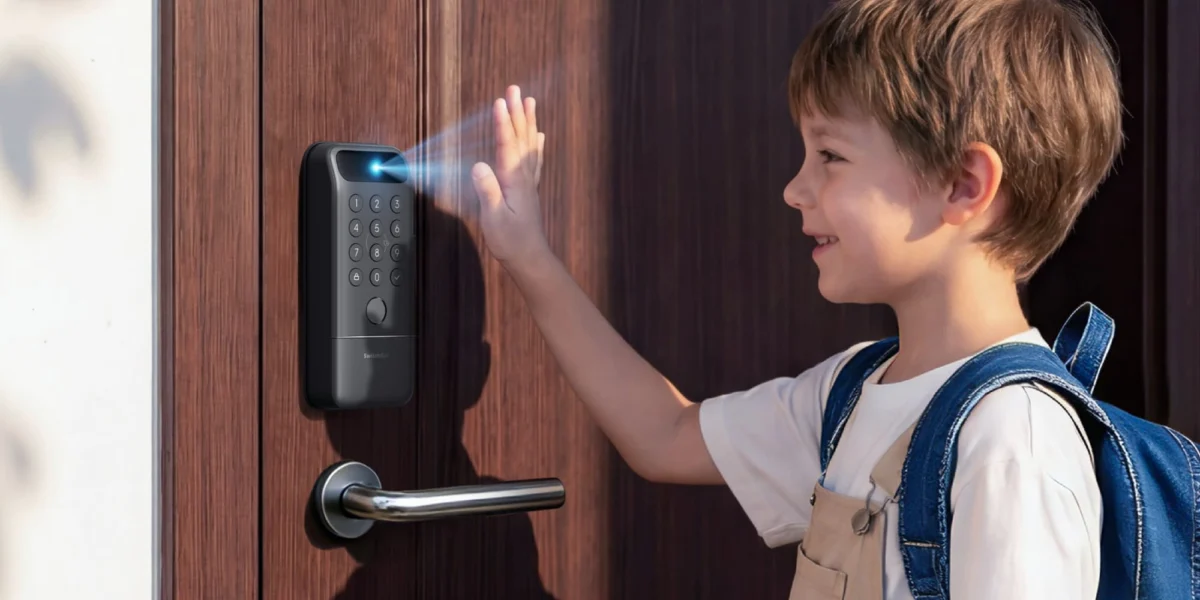
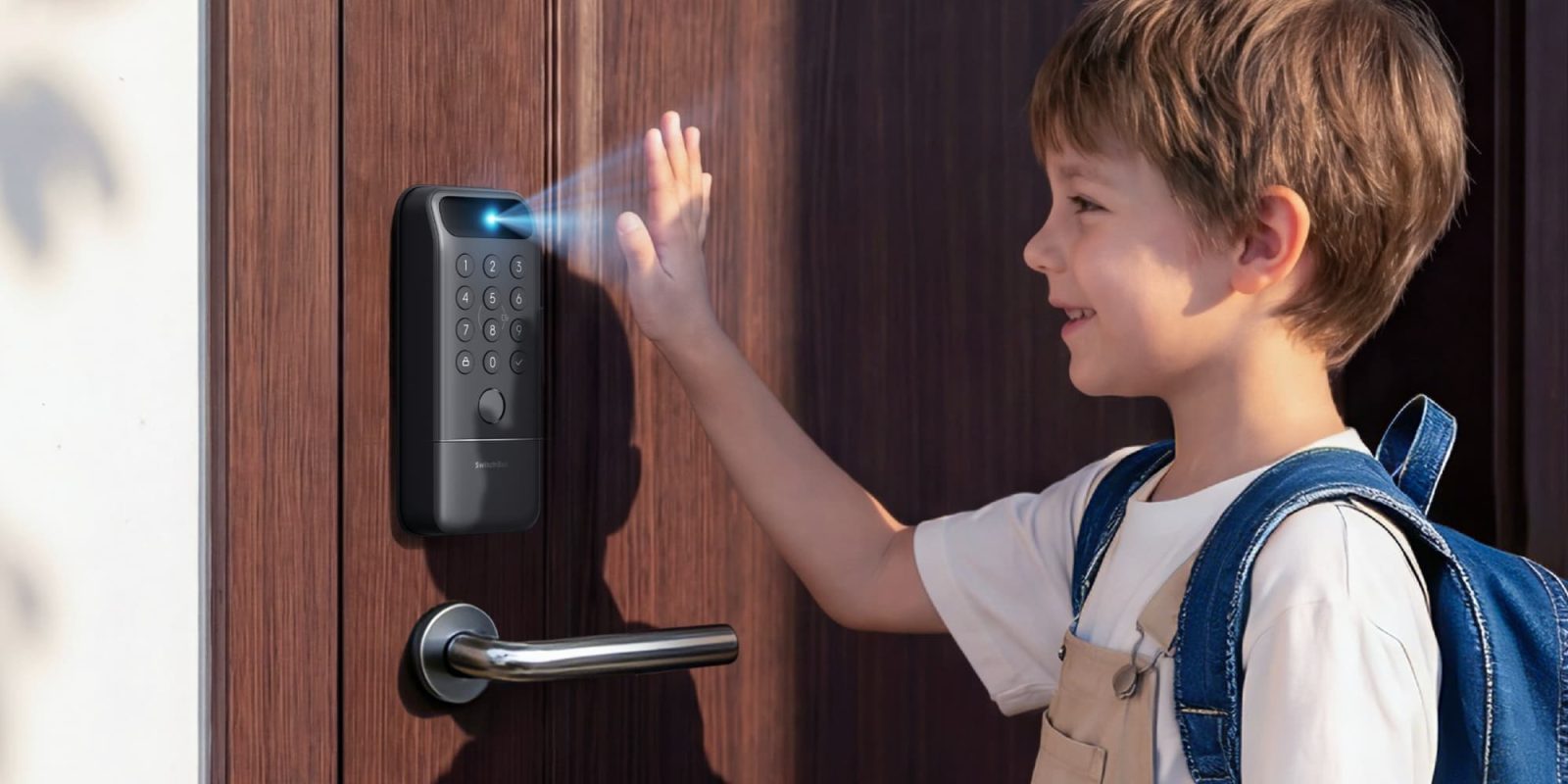
SwitchBot has officially expanded its smart home security portfolio with the release of the SwitchBot Lock Vision and the Lock Vision Pro, two sophisticated door-locking solutions that integrate advanced biometric authentication with universal smart home compatibility. Available starting today, these devices represent a significant shift in the company’s hardware strategy, moving away from proprietary hub requirements toward the industry-standard Matter protocol, while simultaneously introducing high-end features typically reserved for enterprise-grade security systems.
The standard SwitchBot Lock Vision is priced at $169.99, while the premium Lock Vision Pro, which adds additional biometric authentication layers, enters the market at $229.99. Both units are currently available via major online retailers, with promotional pricing coinciding with the product launch.
Evolution of the Smart Lock Landscape
The introduction of the Lock Vision series arrives at a pivotal moment in the smart home industry. Over the past decade, the market has transitioned from basic Bluetooth-enabled deadbolt retrofits to highly integrated, multi-modal security hubs. SwitchBot, which initially gained traction by creating mechanical "button pushers" to retrofit existing hardware, has now fully pivoted toward integrated smart security.
The timeline of this shift reflects broader industry trends:
- 2020–2021: The rise of app-controlled retrofitted locks that required dedicated proprietary hubs to connect to Wi-Fi.
- 2022–2023: The adoption of Matter, the cross-industry standard developed by the Connectivity Standards Alliance (CSA), aimed at reducing fragmentation between Apple Home, Google Home, and Amazon Alexa.
- 2024–2025: The integration of advanced sensors—specifically mmWave radar and 3D depth-mapping—into consumer-grade hardware.
By launching these devices with Matter over Wi-Fi, SwitchBot is addressing one of the most frequent consumer complaints regarding their previous hardware: the reliance on a secondary bridge device. Users now only require a Matter-enabled controller, such as an Apple TV or HomePod, to integrate the lock into their existing ecosystem.
Technical Specifications: Biometrics and Facial Recognition
The headline feature of the Lock Vision series is the inclusion of 3D facial recognition. Unlike standard 2D camera-based recognition, which can be fooled by high-resolution photographs or digital displays, the SwitchBot system utilizes infrared projection. By casting over 20,000 infrared points onto a subject’s face, the lock generates a precise depth map.
According to technical specifications provided by the manufacturer, the system is designed to process this data in under one second. Furthermore, the algorithm has been trained to account for environmental variables and personal changes in appearance, including the use of prescription glasses, hats, headwear, or cosmetics. To address privacy concerns, SwitchBot has confirmed that all biometric data remains encrypted and stored locally on the device, adhering to AES-128 encryption standards. This local-only storage model is an increasingly vital selling point for consumers wary of cloud-based surveillance and data harvesting.
The Lock Vision Pro further expands on these capabilities by incorporating semiconductor fingerprint recognition and contactless palm scanning. The palm vein scanner is particularly notable for its use of near-infrared sensors. By reading the unique vascular patterns beneath the skin of the user’s hand, the device can verify identity without requiring physical contact, a feature that enhances hygiene and reliability in scenarios where fingerprints might be obscured by moisture or debris.
Power Management and Energy Efficiency
Smart locks are inherently limited by their power source, as a dead battery represents a significant security and accessibility risk. The SwitchBot Lock Vision series addresses this with a dual-layer power architecture. The primary power source is a 10,000mAh rechargeable battery pack, rated for up to 12 months of operation under typical residential conditions.
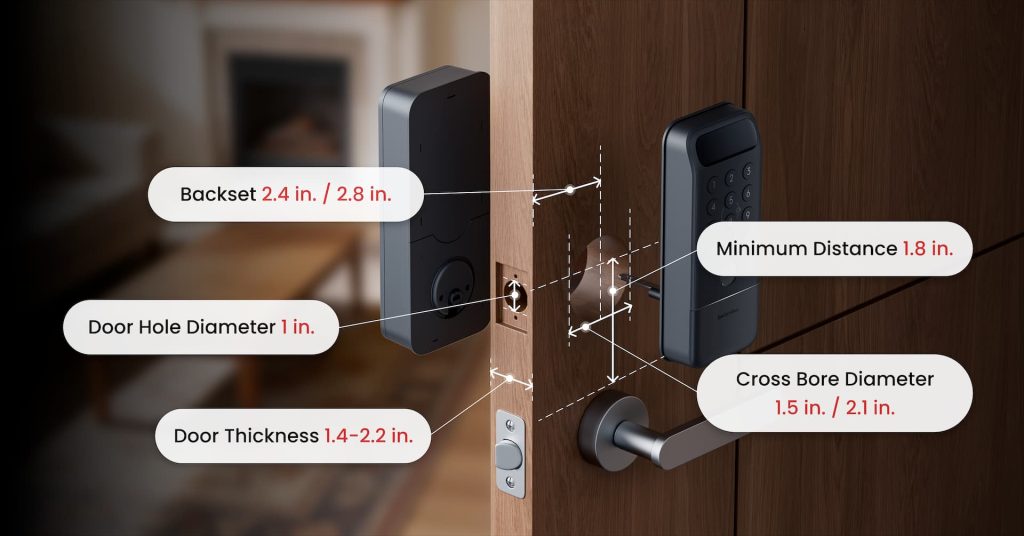
For backup, the engineers included a secondary CR123A battery compartment. This fail-safe mechanism is designed to trigger automatically if the primary battery is depleted, providing the user with up to 500 additional emergency unlock operations. In the unlikely event that both power sources are exhausted, the exterior housing features a concealed USB-C port, allowing users to provide temporary power using an external power bank to operate the lock and gain entry.
To manage power consumption effectively, the locks employ integrated mmWave (millimeter wave) radar technology. Traditional motion sensors are often triggered by ambient movement, such as wind-blown foliage or passing traffic, which can lead to excessive battery drain. The mmWave radar, however, is capable of detecting the presence and proximity of a human being with high specificity. The device remains in a low-power state until it detects a human subject approaching the door, at which point it activates the biometric scanners.
Industry Implications and Market Positioning
The arrival of the Lock Vision series marks a strategic challenge to incumbents in the smart lock space. By opting for Matter over Wi-Fi, SwitchBot has effectively eliminated the "walled garden" approach that has historically hampered consumer adoption of smart home devices.
Analysts suggest that the lack of Apple Home Key support—the ability to tap an iPhone or Apple Watch against a lock to gain entry—is the most significant omission in the current feature set. While Matter support offers broad compatibility, Home Key remains a highly sought-after feature for the Apple-centric segment of the market. However, the inclusion of NFC card support, passcodes, and geo-fencing auto-unlock functions provides a robust alternative for users who prefer proximity-based access.
From a broader perspective, the move toward biometric-heavy locks indicates a maturation of the consumer security market. As consumers become more comfortable with facial recognition on their smartphones, the expectation that their home security hardware should offer the same level of seamless, "frictionless" access has grown. SwitchBot’s aggressive pricing for these features suggests they intend to capture a significant share of the mid-to-high-end market, putting pressure on established brands to justify their own price points.

Security and Data Privacy Considerations
The security of smart locks is under constant scrutiny by cybersecurity researchers. The industry has seen numerous vulnerabilities in the past, ranging from replay attacks on Bluetooth signals to insecure cloud API endpoints. By utilizing Matter, SwitchBot is leveraging a protocol that mandates end-to-end encryption for all commands sent to the device.
Furthermore, the decision to process biometric data locally—rather than transmitting face or palm templates to a company server—is a critical component of the product’s security posture. By ensuring that the "digital key" to a user’s home never leaves the physical device, the risk of a centralized data breach resulting in unauthorized home access is significantly mitigated.
Future Outlook
As the smart home ecosystem continues to consolidate around the Matter standard, consumers are likely to prioritize devices that offer interoperability. The SwitchBot Lock Vision and Lock Vision Pro are well-positioned to benefit from this trend. By offering a product that requires no additional hub, features advanced biometric sensors, and provides a multi-tiered battery solution, the company is addressing the primary barriers to smart lock adoption: complexity, reliability, and security.
While the competitive landscape remains crowded with offerings from companies like August, Yale, and Level, the integration of 3D facial recognition at the sub-$250 price point sets a new benchmark. The success of these devices will likely hinge on their real-world performance, specifically the reliability of the mmWave sensor and the long-term stability of the Matter firmware. For now, the launch of the Lock Vision series signifies a major milestone in making high-security biometric hardware accessible to the average homeowner, signaling a transition toward a future where keys and PIN codes may eventually become obsolete.