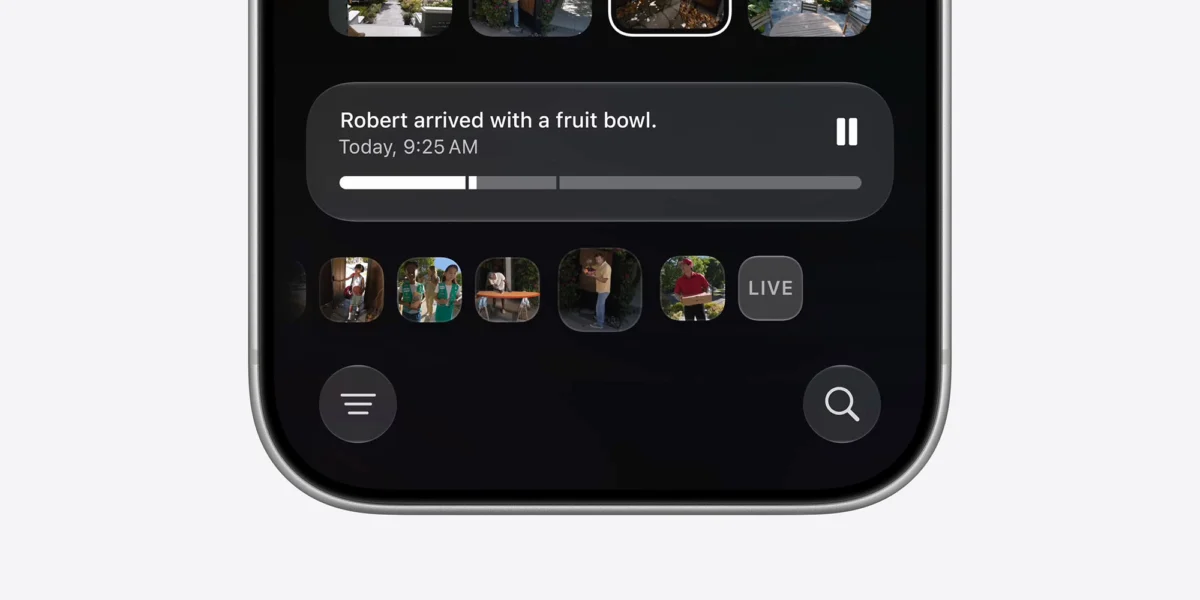
The discovery was first noted in the developer release notes for macOS 27, though the implications extend across the entire Apple ecosystem, including iOS 27 and iPadOS 27. To utilize the newly announced Apple Intelligence features within the Home app—specifically those designed to enhance the utility of home security cameras—users must subscribe to the $9.99 per month iCloud+ plan. This move places advanced features like 4K video support and AI-driven video summaries behind a specific financial barrier, regardless of how many cameras a user actually operates.
The Evolution of Apple Intelligence in the Home Ecosystem
During the 2026 Worldwide Developers Conference (WWDC), Apple unveiled a suite of upgrades for the Home app, leveraging the power of "Apple Intelligence." These features were designed to solve a long-standing issue with smart home security: notification fatigue. In the current iteration of the Home app, a single event, such as a resident returning home, can trigger a deluge of individual alerts. A user might receive separate notifications for motion detected in the driveway, the garage door opening, the garage door closing, motion at the front door, and finally, the smart lock engaging.
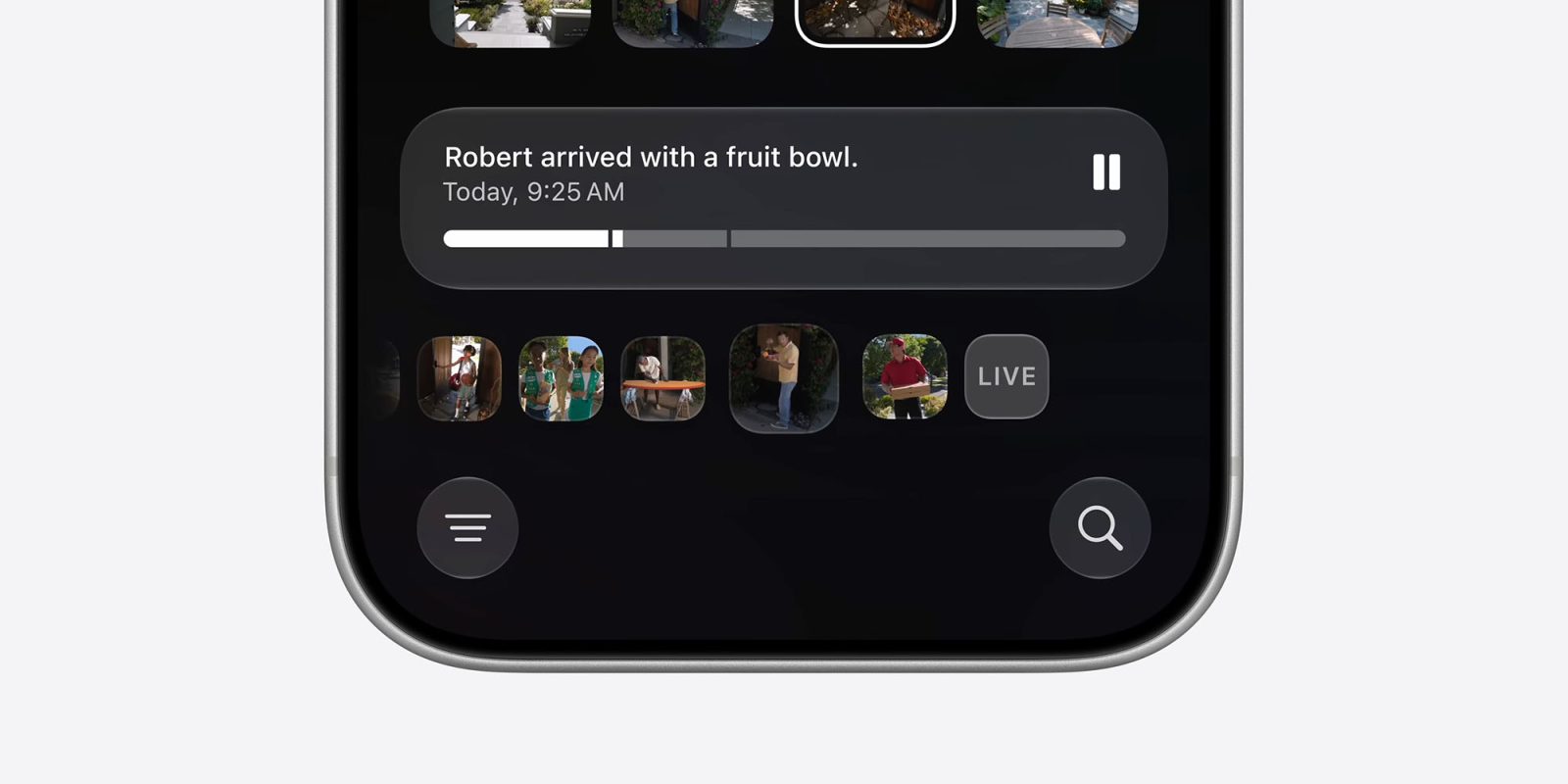
The new AI-driven system aims to streamline this experience by synthesizing these data points into a single, coherent notification. Instead of six pings, a user receives one: "Robert arrived home with a fruit bowl." This level of contextual awareness represents a significant leap in the utility of the Home app, transforming it from a passive monitor into an intelligent assistant.
Beyond notification summaries, Apple introduced three primary intelligent capabilities for camera footage:

- Generated Video Descriptions: The system uses natural language processing to describe events in video clips, allowing users to understand what occurred without manually reviewing the footage.
- Intelligent Search: Users can search their history for specific events, such as "when was the package delivered?" or "show me the cat in the backyard."
- Featured Moments: The Home app automatically highlights noteworthy clips at the top of the search interface, ensuring that important events—like a friend dropping off a gift—are not buried in hours of routine footage.
Furthermore, Apple announced a technical milestone: HomeKit Secure Video (HKSV) is moving from 1080p HD to 4K resolution. This upgrade provides the clarity needed for more accurate AI analysis and better identification of subjects, but it also significantly increases the data requirements for cloud storage and processing.
The Financial Framework: iCloud+ and the 2TB Requirement
The integration of these features into the 2TB iCloud+ tier represents a departure from the previous scaling model of HomeKit Secure Video. Historically, Apple’s cloud storage plans have been tiered based on the number of cameras supported:
- 50GB Plan ($0.99/mo): Supported one camera with 10 days of recorded history.
- 200GB Plan ($2.99/mo): Supported up to five cameras.
- 2TB Plan ($9.99/mo): Supported an unlimited number of cameras.
By mandating the 2TB plan for Apple Intelligence features, Apple is effectively setting a $9.99 monthly "entry fee" for AI-enhanced security, even for a user who only owns a single camera. For many consumers, this represents a 230% price increase over the 200GB plan previously used for multi-camera setups, or a nearly 1,000% increase for those currently on the 50GB plan.
Industry analysts suggest this move is part of Apple’s broader strategy to bolster its Services division revenue. As hardware upgrade cycles for iPhones and Macs lengthen, recurring revenue from iCloud+, Apple Music, and Apple TV+ has become vital to the company’s financial growth. However, the decision to gate security features—which are often viewed as a utility rather than an entertainment luxury—behind a premium subscription may face pushback from privacy-conscious users who chose Apple specifically to avoid the aggressive monetization seen in the Ring (Amazon) and Nest (Google) ecosystems.
Technical Justification and Data Demands
From a technical standpoint, the requirement for a higher-tier plan is not without logic. Processing 4K video streams through machine learning models requires substantial computational power and bandwidth. Unlike basic motion detection, which can often be handled on-device by a HomePod or Apple TV acting as a home hub, generating complex natural language descriptions and maintaining a searchable index of video content likely involves a hybrid approach using Apple’s "Private Cloud Compute."
Private Cloud Compute is Apple’s solution for AI tasks that are too intensive for local hardware but require the same level of end-to-end encryption and privacy as on-device processing. Running these models on Apple’s servers incurs significant operational costs. Furthermore, 4K video files are exponentially larger than 1080p files. Storing 10 days of 4K footage from multiple cameras requires the vast storage overhead that the 2TB plan provides.
However, critics argue that if the AI processing is the primary cost driver, Apple could have offered a smaller storage tier with AI capabilities for users with fewer cameras. The decision to bundle these features exclusively with the 2TB plan suggests a desire to simplify the product lineup at the expense of consumer flexibility.
Comparative Market Analysis: Apple vs. The Competition
To understand the impact of this pricing, it is necessary to look at the broader smart home security market. Apple’s primary competitors have long relied on subscription models:
- Google Nest: The Nest Aware plan starts at $8 per month for 30 days of event video history across all cameras, with a $15 per month tier for 60 days of history and 10 days of 24/7 continuous recording.
- Amazon Ring: The Ring Protect Basic plan costs $4.99 per month per device, while the Plus plan covers all devices at a single location for $10 per month.
- Arlo: Arlo Secure plans typically start at $7.99 per month for a single camera or $12.99 for unlimited cameras, focusing heavily on AI object detection.
Apple’s $9.99 price point is competitive with the "unlimited" tiers of these rivals. The distinction, however, lies in the hardware. Users buy HomeKit-compatible cameras—often at a premium—under the impression that the integration into the Apple ecosystem provides a superior, more integrated experience. By mirroring the subscription models of third-party manufacturers, Apple risks eroding the unique selling proposition of HomeKit Secure Video: the idea that once you buy the hardware and a modest storage plan, the intelligence is included.
A Chronology of Apple Home Developments
The journey to this AI-integrated Home app has been a decade in the making.

- 2014: Apple announces HomeKit at WWDC, providing a framework for developers to make smart home devices communicate.
- 2016: The dedicated "Home" app is released with iOS 10, giving users a central interface for control.
- 2019: HomeKit Secure Video is introduced, offering end-to-end encrypted video storage in iCloud.
- 2021: Apple rebrands paid iCloud as iCloud+, adding features like Private Relay and removing the camera limit on the 2TB plan.
- 2022: Apple helps lead the launch of Matter, a new industry standard for smart home compatibility, intended to make HomeKit more accessible.
- 2024: Apple Intelligence is announced, promising to bring generative AI to every corner of the OS, including the Home app.
- 2026: Beta releases of macOS 27 and iOS 27 confirm the 2TB iCloud+ requirement for these AI features.
This timeline shows a clear trajectory toward more sophisticated, data-heavy services. The transition from a simple remote control for lightbulbs to a 4K, AI-monitored security system reflects the broader evolution of the "Smart Home" into the "Intelligent Home."
Implications for the Future of Smart Homes
The decision to link AI features to high-capacity storage plans may set a precedent for other Apple Intelligence services. As Apple rolls out more advanced features across its apps, consumers may find that the "intelligence" of their devices is increasingly tied to the level of their monthly cloud contribution.
For the smart home industry, this move might inadvertently drive users toward local-storage solutions. Systems like Ubiquiti’s UniFi Protect or Eufy’s local-storage options allow for AI detection and high-resolution video without recurring monthly fees. For the "prosumer" segment—users who are tech-savvy enough to set up their own servers—Apple’s new requirement might be the catalyst to move away from HKSV entirely.
For the average consumer, however, the choice is more complex. The convenience of having security footage integrated directly into the iPhone lock screen, Apple Watch, and Apple TV remains a powerful draw. The question remains whether the utility of knowing "Robert arrived with a fruit bowl" is worth an annual investment of $120.
As macOS 27 and iOS 27 move toward their public release, the community’s reaction to this pricing structure will likely influence how Apple markets these features. While the technology is undeniably impressive, the cost of entry suggests that for Apple, "Intelligence" is a premium service, not a standard feature. This development marks a pivotal moment in the smart home wars, where the battle is no longer about who has the best camera, but who has the most affordable and capable brain behind it.