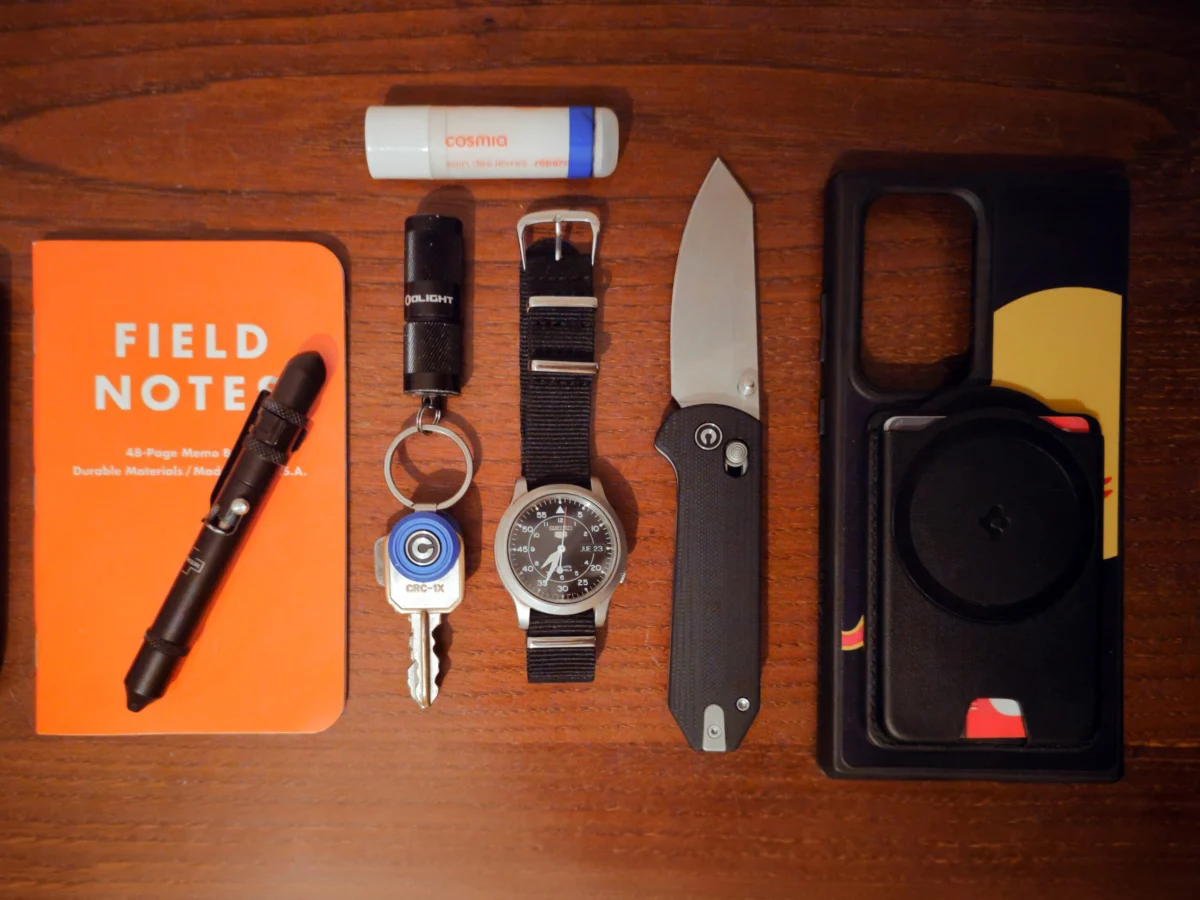
In the high-stakes environment of aeronautical automation, where precision, reliability, and efficiency are the primary metrics of success, the tools an operator carries must reflect those same values. Ruben, a professional operating within the aeronautical automation sector in Portugal, has curated an everyday carry (EDC) loadout that exemplifies a modern shift toward high-performance minimalism. By balancing technical utility with pocket-friendly dimensions, his kit serves as a case study in how modern professionals are optimizing their daily gear for both specialized work environments and general utility.
The core of this loadout centers on a philosophy of "value-driven minimalism." Rather than carrying oversized or overly aggressive "tactical" equipment, the selection focuses on streamlined tools that offer maximum functionality per square inch of pocket space. This approach is particularly relevant in the aeronautical industry, where debris control and the prevention of Foreign Object Damage (FOD) are critical; having secure, well-organized, and reliable tools is not just a matter of convenience, but a professional requirement.
The Evolution of the Toolset: The CIVIVI Yonder and Blade Show Excellence
A recent and significant addition to Ruben’s rotation is the CIVIVI Yonder. To understand the significance of this choice, one must look at the broader context of the knife industry in 2024. Designed by Zac Whitmore, a recognized figure in the EDC community and a Blade HQ alumnus, the Yonder was developed with a specific focus on utility and ergonomics. The design’s impact was immediate, earning the prestigious "Best Buy of the Year" award at Blade Show 2024 in Atlanta, Georgia.
The Yonder features a crossbar lock mechanism, a design that has seen a massive surge in popularity following the expiration of original patents on similar locking systems. This mechanism allows for completely ambidextrous operation and ensures that the user’s fingers never cross the path of the blade when closing the knife—a critical safety feature in fast-paced work environments. The blade geometry is optimized for slicing tasks, which are common in automation maintenance, from opening heavy-duty packaging to trimming materials. By selecting the Yonder, Ruben has integrated a tool that represents the current pinnacle of "budget-premium" engineering, where high-end design meets accessible price points.
Professional Context: Aeronautical Automation in Portugal
The role of an Aeronautical Automation Operator involves the management, maintenance, and troubleshooting of complex robotic and computerized systems used in the manufacture or maintenance of aircraft. Portugal has emerged as a significant hub for aerospace engineering and manufacturing in Southern Europe, with major clusters in regions like Évora and Alverca. Companies operating in this space demand rigorous standards of precision.
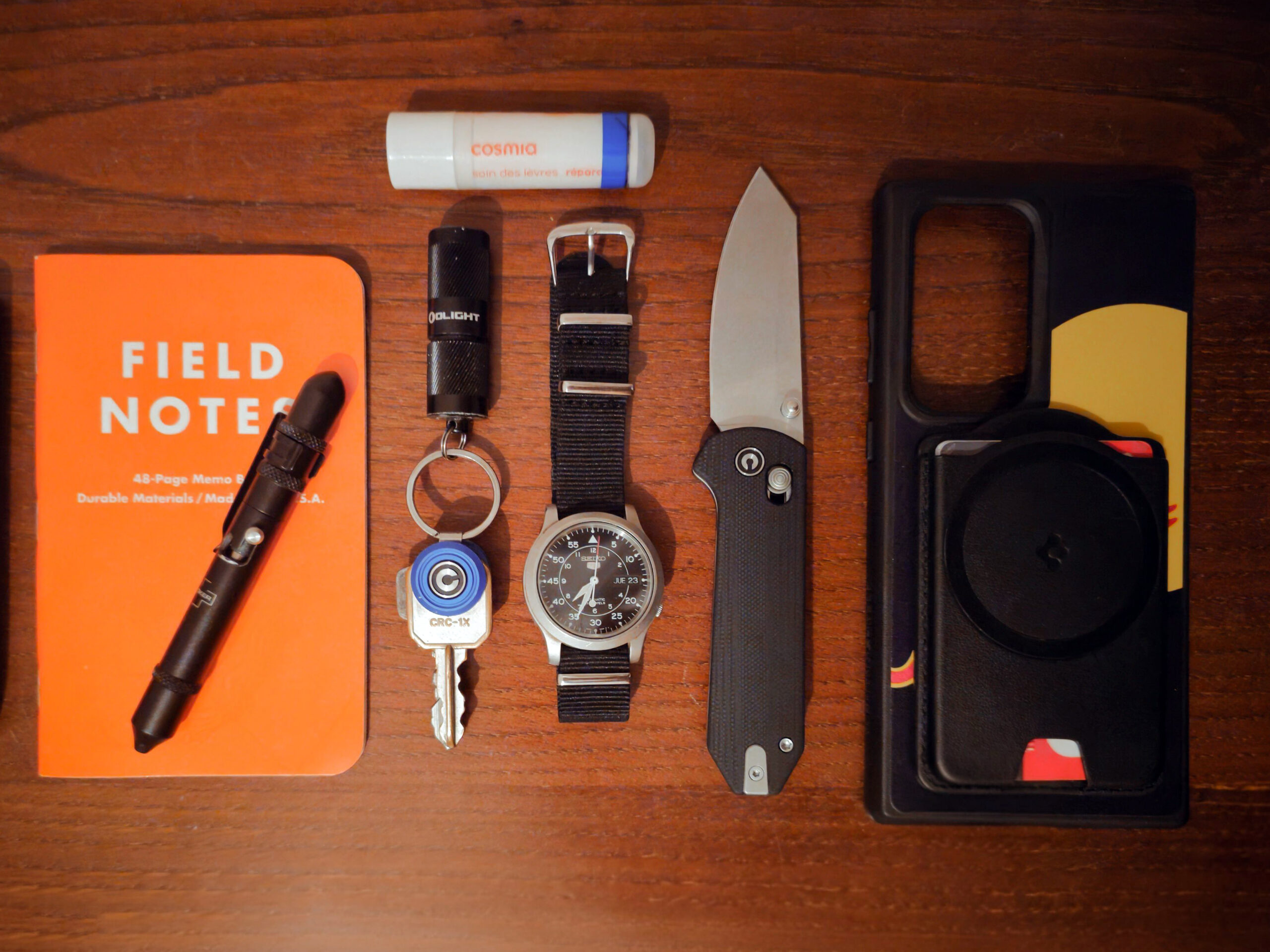
In such an environment, an operator’s gear must be non-obtrusive. Heavy or bulky items can snag on sensitive equipment or become a hindrance when working in the confined spaces of an aircraft fuselage or within the intricate wiring of an automated assembly line. Ruben’s choice to utilize a magnetic wallet consolidated with his smartphone and an ultra-compact key organizer demonstrates an awareness of "pocket real estate." By minimizing the footprint of his secondary items, he ensures that his primary tools—like the mini bolt-action pen and his knife—are always within reach without causing physical discomfort during long shifts.
The Intersection of Analog and Digital Tools
Despite working in a field defined by advanced digital automation, Ruben has recently incorporated a Field Notes pocket notebook into his daily carry. This reflects a growing trend among engineers and technicians who find that the tactile nature of paper is superior for rapid brainstorming, technical sketching, or recording temporary data points that do not require permanent digital logging.
In the context of automation, where software interfaces are the norm, the ability to quickly jot down a sequence of sensor readings or a mechanical schematic can be invaluable. Field Notes, a brand that revitalized the agricultural memo book aesthetic for the modern professional, provides a durable yet slim profile that fits easily into a back pocket or a technician’s vest. This "analog backup" ensures that critical information is never more than a reach away, even in environments where electronic devices might be restricted or inconvenient to use.
Technical Specifications and Alternative Rotations
A notable aspect of Ruben’s EDC strategy is the "modular" nature of his gear. While his work-day carry is focused on utility, he maintains a secondary "dressier" rotation for "on the go" or social scenarios. This alternative kit includes the Kizer Feist and the Casio Edifice.
The Kizer Feist
Designed by Justin Lundquist, the Kizer Feist is a celebrated example of a "gentleman’s folder." Unlike the crossbar-locked Yonder, the Feist utilizes a front-flipper mechanism. This requires a more nuanced technique to open but results in a sleek, streamlined silhouette without any protruding tabs. For an operator, this represents a transition from a "workhorse" tool to a "refined" tool that maintains high cutting performance (often utilizing S35VN or CPM-4V steel) while disappearing into the pocket of formal attire.
The Casio Edifice (Tiffany Dial)
The mention of the Casio Edifice with a "Tiffany" (turquoise) dial aligns Ruben with one of the most prominent trends in contemporary horology. Following the massive success of the Patek Philippe Nautilus and the Rolex Oyster Perpetual with turquoise dials, the "Tiffany Blue" aesthetic became highly sought after. Casio’s Edifice line, specifically models like the EFB-108D, offers a high-value alternative that includes a sapphire crystal and 100-meter water resistance. In the aeronautical field, where magnetic fields and mechanical shocks are common, the quartz reliability of the Edifice series provides a durable timekeeping solution that punch well above its price bracket.
Supporting Data: The Growth of the EDC Market
The meticulousness with which professionals like Ruben select their gear is a reflection of a booming global market. The Everyday Carry market was valued at approximately USD 21.3 billion in 2023 and is projected to grow significantly through 2030. This growth is driven by a shift in consumer behavior toward "quality over quantity."
Data from industry trade shows like Blade Show and SHOT Show indicate that the "Budget Premium" segment—knives and tools priced between $50 and $100—is the fastest-growing sector. Brands like CIVIVI and Kizer have capitalized on this by employing world-class designers and utilizing precision CNC manufacturing to offer tolerances that were previously only available in custom-made tools. Ruben’s kit is a direct manifestation of this market shift, proving that professional-grade utility no longer requires a four-figure investment.
Broader Implications and Industry Trends
The shift toward minimalist, high-value EDC gear has broader implications for workplace safety and efficiency. When tools are lightweight and easy to carry, employees are more likely to have the necessary equipment on their person at all times, reducing the time spent searching for tools and increasing overall productivity.
Furthermore, the "consolidation" trend seen in Ruben’s use of a magnetic phone wallet reflects a wider societal move toward the "all-in-one" device. As smartphones take over the roles of credit cards, identification, and communication, the physical items left in the pocket must earn their place through specialized utility that a phone cannot replicate—such as cutting, writing, or providing high-lumen illumination.
Conclusion: The Philosophy of Preparedness
Ruben’s EDC profile serves as a testament to the modern professional’s desire for intentionality. In the field of aeronautical automation, where a single error can have catastrophic consequences, the habit of maintaining a well-organized and highly functional personal kit fosters a mindset of discipline.
By selecting award-winning tools like the CIVIVI Yonder and pairing them with classic staples like Field Notes, Ruben has created a toolkit that is as versatile as it is compact. His willingness to adapt his gear based on the environment—swapping a workhorse knife for a front-flipper or a rugged watch for a sapphire-glass Edifice—demonstrates a sophisticated understanding of the relationship between a professional and their tools. As the EDC movement continues to evolve, the focus will likely remain on this intersection of high-end engineering and everyday accessibility, ensuring that the next generation of technicians and operators are always prepared for the task at hand.