The global knife industry has undergone a metallurgical revolution over the last two decades, transitioning from traditional carbon and simple stainless steels to complex powder metallurgy "super steels" designed for extreme performance. This rapid advancement has birthed a persistent debate within the enthusiast community, often summarized by the skeptical refrain that average users cannot actually distinguish between different steel types in practical application. While some argue that the differences between premium steels have become so marginal as to be functionally invisible, empirical data from metallurgical testing suggests that the performance gaps between steel categories remain vast, even if they are occasionally obscured by variables such as edge geometry and usage patterns.
The Evolution of Knife Metallurgy and the Skepticism of "Super Steels"
The history of knife steel is characterized by a steady progression toward higher wear resistance, greater toughness, and improved corrosion resistance. In the mid-20th century, the industry standard was dominated by simple alloys like 1095 carbon steel or 440C stainless steel. The introduction of Powder Metallurgy (PM) by companies like Crucible Industries in the 1970s changed the landscape, allowing for higher volumes of alloying elements—such as vanadium and niobium—without the structural brittleness associated with traditional ingot casting.

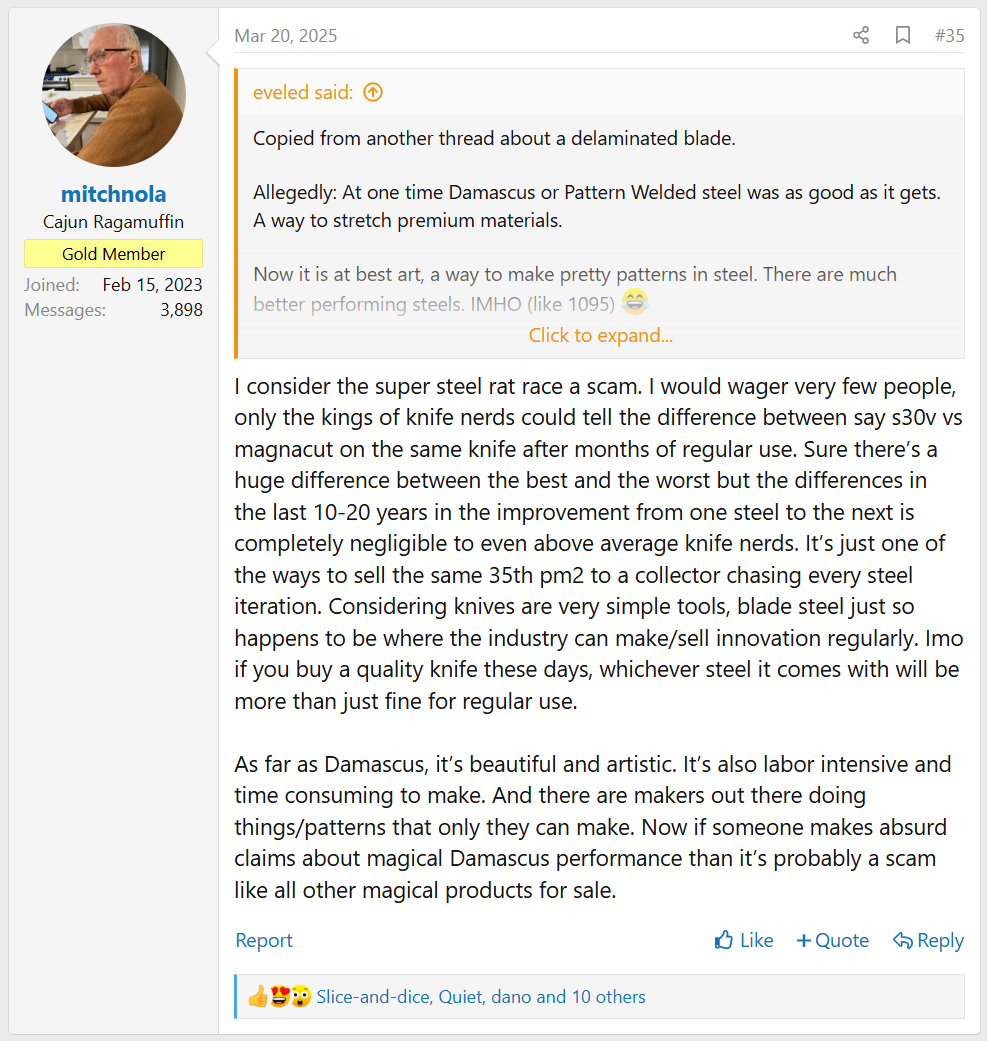
As these high-performance alloys like S30V, M390, and more recently, MagnaCut, became mainstream, a counter-narrative emerged. Skeptics within knife forums and digital communities began to suggest that the pursuit of superior steel was a matter of "diminishing returns." This sentiment often manifests as a criticism of "safe queen" collectors—individuals who purchase high-end knives but never use them enough to experience the edge retention benefits. Furthermore, some argue that the differences between steels within the same premium category are so minute that they are effectively indistinguishable to the human hand.
Quantifying Performance: The CATRA Metric
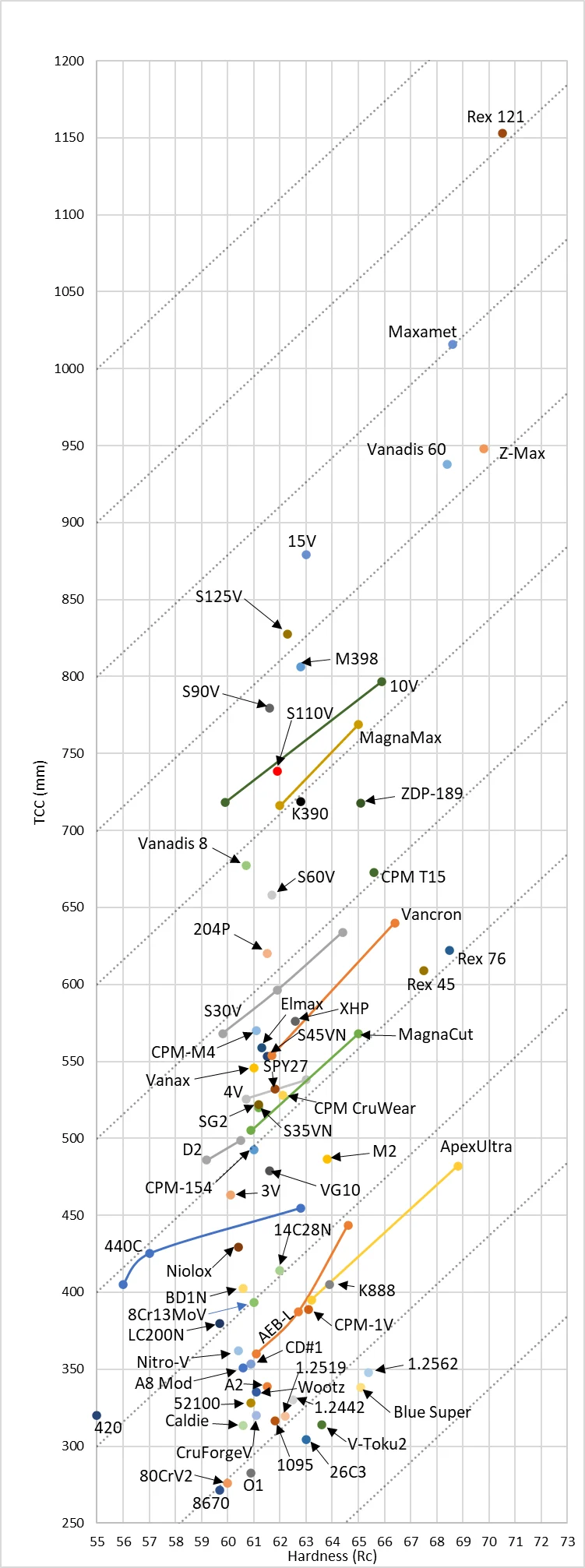
To move beyond anecdotal evidence, metallurgists utilize standardized testing, most notably the Cutlery and Allied Trades Research Association (CATRA) edge retention test. This machine-controlled test eliminates human error by using a motorized blade to cut through 5% silica-impregnated cardstock. The results are measured in Total Card Cut (TCC), representing the cumulative millimeters of material sliced before the edge reaches a specific level of dullness.
Data from these tests reveal a staggering range of performance. For instance, a low-alloy steel such as 8670 may test under 300 mm of cardstock cut. In contrast, extreme wear-resistance steels like Rex 121 can exceed 1,150 mm. This represents a nearly 400% difference in edge life. In a controlled, side-by-side slicing environment with identical edge geometry, such a gap would be immediately apparent to any user. The debate, therefore, is not whether a difference exists, but whether the average user’s lifestyle allows those differences to manifest.
The Analytical Framework: The Commuter vs. The Variable User
A useful analogy for understanding why some users fail to notice steel differences is the comparison of fuel economy in vehicles. If a driver uses a car solely for a consistent 20-mile commute at a steady speed five days a week, a 20% improvement in miles per gallon (MPG) becomes mathematically obvious over time. The environment is controlled, and the variables are limited.
Conversely, a "family car" or "soccer parent" vehicle—used for errands, sports practices, and irregular trips—presents a much higher degree of variability. Because the usage is inconsistent, the driver may not notice a 20% or even a 50% difference in efficiency without meticulously tracking the data. This mirrors the experience of the average knife user. When cutting random materials (cardboard one day, rope the next, food the following) at irregular intervals, the "noise" of daily life masks the signal of the steel’s performance. The lack of a "mileage tracker" on a knife blade means that while a superior steel is objectively lasting longer, the user’s perception may not register the improvement.
The Supremacy of Edge Geometry
One of the primary reasons steel performance is often dismissed as "hype" is the overwhelming influence of edge geometry. Metallurgical experts agree that the thinness and angle of a knife’s edge are the most significant factors in how a knife cuts and how long it stays sharp.

Empirical testing shows that a "budget" steel like AUS-6, when sharpened to a very acute 12.5 degrees per side (dps), can match or exceed the edge retention of a "super steel" like S110V if the latter is sharpened to a thicker 20 dps. This leads to frequent confusion in the marketplace. A consumer may purchase a high-end knife that features a thick, robust edge intended for durability. When that knife fails to slice as efficiently as a cheaper, thinner kitchen knife, the consumer often concludes that the premium steel is a marketing gimmick. In reality, the steel’s potential was throttled by the manufacturer’s geometric choices.
The Engineering Trade-off: Toughness vs. Wear Resistance
The selection of a knife steel is rarely about finding a "perfect" material, but rather about managing engineering trade-offs. The two most competing properties in metallurgy are wear resistance (the ability to resist dulling from abrasion) and toughness (the ability to resist chipping or breaking under impact).
High-wear-resistance steels, such as Maxamet or Rex 121, achieve their edge retention through a high volume of hard carbides. However, these carbides also make the steel more brittle. Industry reports show a higher incidence of catastrophic edge failure (chipping) in these "super steels" when subjected to lateral stress or impact.
Conversely, steels like AEB-L or 3V prioritize toughness. Testing involving controlled impacts on edges ground at 15 dps vs. 25 dps demonstrates that geometry once again plays a role, but the inherent limits of the steel are real. A high-hardness, low-toughness steel will chip where a high-toughness steel might simply ripple or deform. This distinction is critical for professional applications; a woodworker requires the toughness of an A2 tool steel, while a warehouse worker benefit more from the abrasive wear resistance of S30V.
Hardness vs. Strength: Misconceptions in Failure Analysis
Hardness, typically measured on the Rockwell C scale (Rc), is another area where user perception often diverges from scientific reality. A common misconception is that "soft" steels are "tougher." In many instances, a knife edge that rolls or deforms is failing not because it lacks toughness, but because it lacks the yield strength provided by adequate hardness.
In a notable industry comparison, 1095 carbon steel at a lower hardness was tested against MagnaCut at a higher hardness in a "nail chop" test. The softer 1095 steel suffered significant deformation (rolling), whereas the harder MagnaCut edge remained intact. This demonstrated that the MagnaCut was not only tougher but also stronger. For the end-user, this means that a higher-quality steel, properly heat-treated to a higher hardness, can actually be more "durable" in certain high-stress scenarios than the traditional "tough" steels of the past.
The Sharpening Paradox and Corrosion Resistance
While edge retention is often debated, two categories where users almost universally notice differences are corrosion resistance and ease of sharpening. Stainless steels, defined by a chromium content of at least 10.5% in the steel’s matrix, offer clear functional advantages in humid or marine environments. The development of nitrogen-based steels like Vanax or LC200N has pushed this further, creating blades that are virtually rust-proof even in saltwater.
Sharpening, however, presents a paradox. High-wear-resistance steels are often labeled as "impossible to sharpen." Modern analysis suggests this is largely a function of the abrasives used. When using traditional stones, the hard vanadium carbides in super steels can be difficult to abrade. However, with the advent of diamond and Cubic Boron Nitride (CBN) abrasives, the time difference to raise a burr on Rex 121 versus a simple carbon steel is significantly reduced. The perceived "difficulty" is often more about the user’s equipment and the amount of steel that must be removed—a factor again tied to edge geometry.
Broader Implications for the Knife Industry
The ongoing debate over steel performance has significant implications for both manufacturers and consumers. For manufacturers, the pressure to use the latest "flavor of the month" steel is high, as the enthusiast market is driven by technical specifications. This can lead to the use of expensive alloys in knives where the geometry or intended use does not justify the cost.
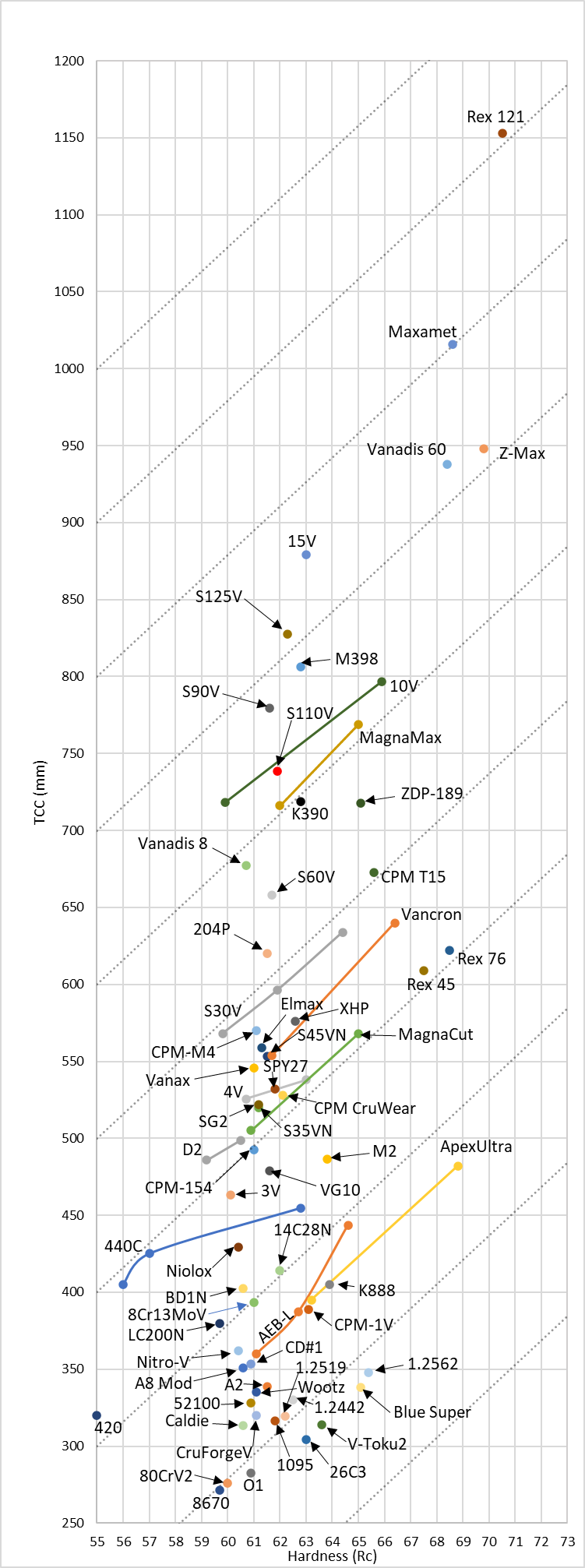
For the consumer, the data suggests a middle-path approach. While the extreme differences between "budget" and "premium" steels are scientifically verifiable and practically significant for heavy users, the differences between steels within the same category (e.g., S30V vs. S35VN vs. M390) are unlikely to be noticed by the average person in daily carry (EDC) scenarios.
Ultimately, the "indistinguishable" nature of knife steels is a matter of usage resolution. Much like a high-resolution monitor is only beneficial when viewing high-resolution content, a high-performance steel only reveals its value when pushed to its limits through consistent, high-volume work. For the casual user, the choice of steel may be less about performance and more about the peace of mind that comes with owning a highly engineered tool. For the professional or the power user, however, the differences are not just measurable—they are transformative.