In a significant move poised to enhance the utility and accessibility of its artificial intelligence ecosystem, Google has announced the full rollout of its advanced Notebooks feature within the Gemini app to all free users. This expansion follows an initial launch to Google AI subscribers earlier this month, marking a pivotal step in Google’s strategy to democratize sophisticated AI tools and integrate them seamlessly into daily workflows. The Notebooks functionality, which originated from the experimental NotebookLM project, promises to transform how users organize, synthesize, and interact with information through conversational AI, providing a dedicated and persistent workspace for complex tasks.
A New Paradigm for AI Interaction: The Arrival of Notebooks
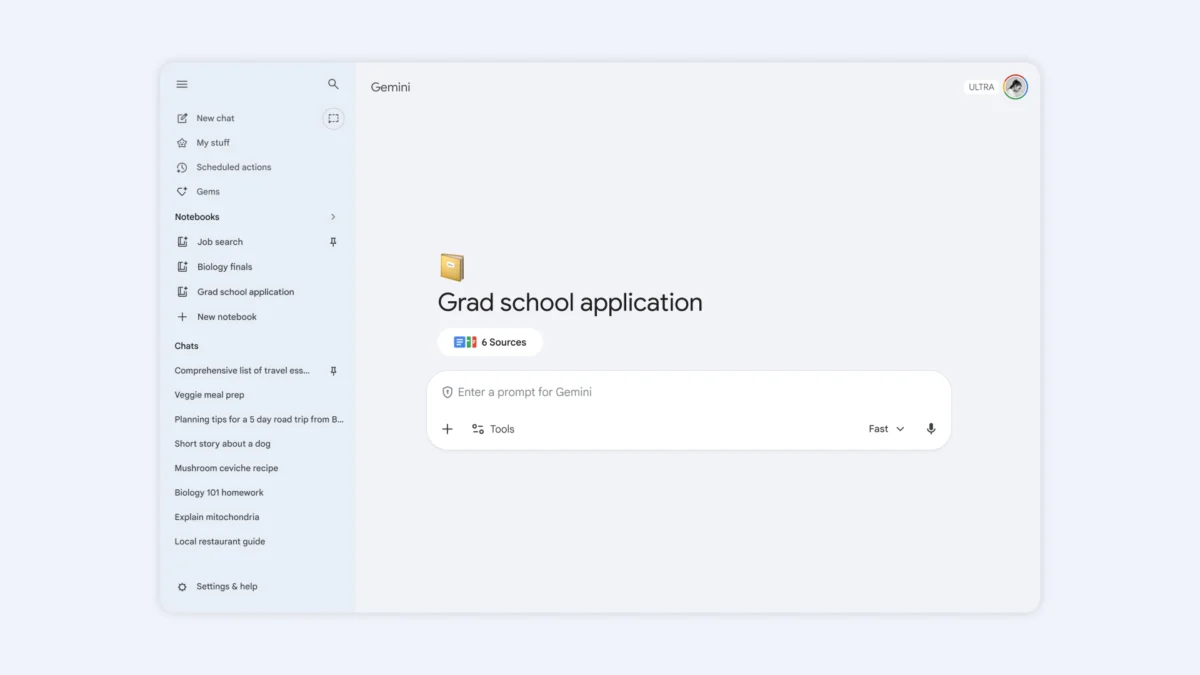
Accessible via gemini.google.com, the new "Notebooks" section is now prominently displayed in the side panel of the Gemini interface, positioned strategically above "Gems" and "Chats." This intuitive placement underscores its importance as a core feature for managing AI interactions. The introduction of Notebooks is not merely an organizational tweak; it represents a fundamental shift towards a project-centric approach within AI assistants. Traditionally, AI conversations have been ephemeral, often requiring users to re-establish context with each new interaction. Notebooks aim to solve this challenge by offering a persistent environment where AI understands the cumulative context of ongoing projects.
These notebooks are identical in functionality to those found within the standalone NotebookLM app, which Google initially introduced as a research project focused on empowering users to interact with their own documents using AI. By bringing this proven framework into the Gemini app, Google is leveraging existing successful models and expanding their reach. Users can now harness the power of AI to generate sophisticated "Studio outputs," including detailed Video Overviews and visually compelling Infographics, directly from their collected chats and source materials. This capability significantly elevates Gemini from a simple conversational bot to a powerful knowledge synthesis and content generation engine.
Understanding the Core Mechanics: Persistent Context and Enhanced Organization

At its heart, a Gemini notebook functions as a digital project space, providing a "dedicated space to organize your chats and files." This organizational framework is crucial for tackling multifaceted tasks that involve multiple AI interactions and diverse information sources. Any ongoing conversation within the Gemini app can be effortlessly incorporated into a notebook through a simple three-dot overflow menu, ensuring that valuable insights and generated content are not lost in the stream of daily interactions.
A key differentiator of the Notebooks feature is its intelligent context retention. Google has confirmed that the AI will "consider all chats in [a] notebook when responding," meaning the generative model maintains a comprehensive understanding of all previous discussions and uploaded documents pertinent to that specific project. This "notebook memory" significantly reduces the need for repetitive context-setting, allowing for more fluid, intelligent, and productive interactions. While this persistent memory is a default setting, users retain control through a toggle option, enabling them to disable it if a fresh context is desired for specific conversations within a notebook. Furthermore, the feature supports "custom instructions," allowing users to define preferred tones, response formats, and specific parameters, thereby tailoring the AI’s output to precise project requirements and personal stylistic preferences. This level of customization ensures that the AI’s assistance is not just intelligent but also deeply personalized.
A Deeper Dive into Functionality and User Experience
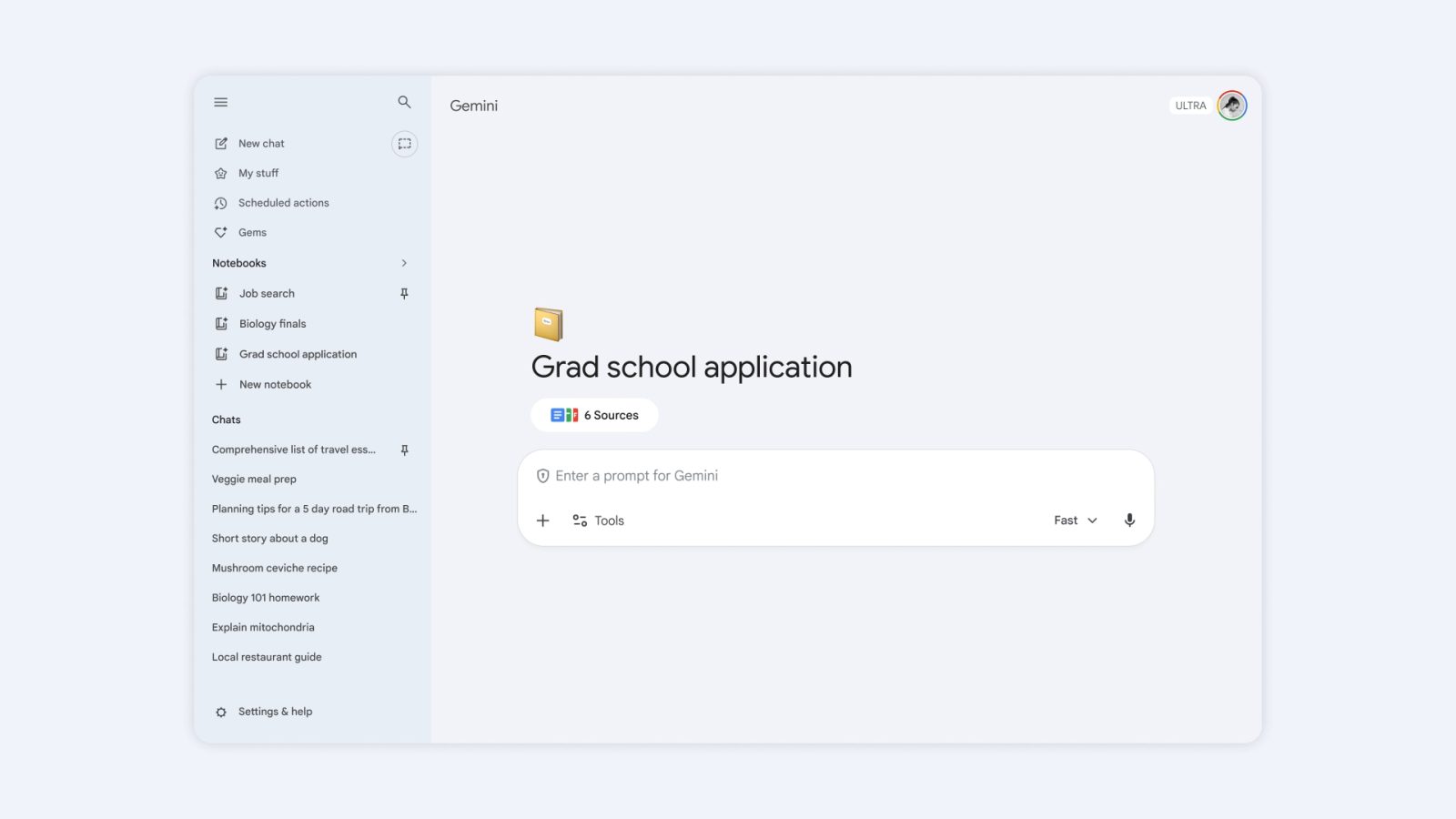
Upon opening a Gemini notebook, users are presented with a highly functional and intuitive interface. Above the prompt box, a dedicated section allows for easy browsing of all included sources, providing quick access to the foundational information driving the AI’s responses. Below this, a chronological list of all chats within that specific notebook offers a clear overview of the project’s progression and conversational history. This structured layout ensures that users can quickly navigate their project, review past interactions, and add new information as needed.
Crucially, users within Notebooks retain full access to the comprehensive suite of Gemini Tools and the integrated web search functionality. This means that while working within a focused project environment, the AI can still tap into real-time information from the internet, perform data analysis, or interact with other Google services, making the notebooks incredibly versatile for research, planning, and content creation. The seamless integration of these tools ensures that the notebook is not an isolated silo but a dynamic hub connected to the broader information ecosystem.
Tiered Access and Strategic Monetization
The rollout of Notebooks to free users comes with specific limitations designed to encourage exploration of Google’s premium AI offerings. Free users can create notebooks with support for up to 50 sources. While substantial for many individual projects, this limit provides a clear incentive for those with more demanding needs to consider Google’s subscription tiers. AI Plus subscribers benefit from an increased capacity of 100 sources per notebook, offering enhanced flexibility. For professional and power users, the "Pro" tier expands this to 300 sources per notebook, while the "Ultra" subscription provides the most extensive capacity at 600 sources per notebook.
This tiered approach is a standard strategy in the competitive AI market, balancing accessibility with a clear value proposition for paid services. By offering a robust, albeit limited, version of Notebooks to free users, Google aims to drive adoption, demonstrate the tangible benefits of its AI, and eventually convert a segment of its user base to premium subscriptions. This strategy is critical in an AI landscape increasingly dominated by companies like OpenAI (with ChatGPT Plus) and Microsoft (with Copilot Pro), all vying for user engagement and subscription revenue.
The Broader Vision: Personal Knowledge Bases Across Google Products
Looking beyond the immediate rollout, Google has articulated an ambitious vision for the future of Notebooks: they are slated to evolve into "personal knowledge bases shared across Google products." This strategic direction hints at a profoundly integrated AI experience, where the contextual understanding and organized information within a notebook could seamlessly inform interactions across Google Drive, Docs, Gmail, Calendar, and potentially even Chrome. Imagine an AI assistant that, understanding your project context from a Gemini notebook, can help draft an email, summarize a document in Drive, or schedule a related meeting with unprecedented accuracy and relevance.
The company has teased "even more helpful features" for notebooks in the future, suggesting a continuous evolution of their capabilities. While the current rollout focuses on the web interface, Google has confirmed that notebooks are "not yet live in the mobile or Mac apps," but full availability across these platforms is expected "over the coming weeks." This cross-platform consistency is vital for ensuring that the power of personalized AI assistance is accessible wherever and whenever users need it, from desktop workstations to on-the-go mobile devices.
Chronology of Gemini’s Evolution and Notebook Integration

The journey to this significant rollout has been marked by several key milestones in Google’s AI development:
- Early 2023: Google launches Bard, its experimental conversational AI service, as a direct response to the rising prominence of OpenAI’s ChatGPT.
- Mid-2023: Google introduces NotebookLM, an experimental AI-powered notebook designed to help users understand and synthesize information from their own documents, emphasizing source grounding and factuality.
- December 2023: Google unveils its next-generation AI model, Gemini, promising multimodal capabilities and superior performance. This marks a strategic shift from Bard’s underlying architecture.
- February 2024: Bard is rebranded as Gemini, and the Google One AI Premium plan is introduced, providing access to the more powerful Gemini Advanced model and deeper integration across Google services.
- Earlier This Month (April 2026): The Notebooks feature, adapted from NotebookLM, begins rolling out to Google AI subscribers within the Gemini app, offering an early preview of its integrated capabilities.
- Present Day (Late April 2026): Google expands the Notebooks feature to all free users of the Gemini app, significantly broadening its reach and impact.
- Coming Weeks: Anticipated full availability of Notebooks across Gemini mobile and Mac applications, completing the cross-platform integration.
This chronology illustrates Google’s rapid iteration and strategic integration of its various AI initiatives, consolidating powerful features under the unified Gemini brand.
Implications for the Competitive AI Landscape
The introduction of Notebooks to free Gemini users carries substantial implications for the fiercely competitive AI market. By offering advanced organizational and contextual features, Google directly challenges rivals who may offer similar core AI chat functionalities but lack the robust project management capabilities now integrated into Gemini.
- Enhanced User Stickiness: The ability to maintain persistent project contexts and organize complex information within Gemini is likely to increase user engagement and make the platform more indispensable for tasks requiring ongoing AI assistance. Users are less likely to switch between AI tools if one offers a cohesive workspace for their projects.
- Democratization of Advanced AI: Providing these features to free users lowers the barrier to entry for sophisticated AI-powered knowledge management. This could lead to broader adoption and innovation as more individuals and small businesses explore practical applications.
- Google’s Ecosystem Advantage: The future vision of notebooks acting as "personal knowledge bases shared across Google products" highlights Google’s unique advantage. Its vast ecosystem of productivity tools (Docs, Drive, Gmail, Calendar) provides an unparalleled foundation for deep AI integration, potentially creating a truly intelligent, context-aware digital assistant that transcends individual applications.
- Pressure on Competitors: Rivals like OpenAI and Microsoft will likely feel pressure to enhance their own project management and contextual memory features within their AI offerings to keep pace with Gemini’s evolving capabilities.
Fact-Based Analysis of Broader Impact
The rollout of Notebooks to free users within the Gemini app represents more than just a new feature; it is a strategic maneuver by Google to solidify its position as a leader in the generative AI space. By merging the capabilities of NotebookLM with the broader Gemini platform, Google is creating a more intelligent, organized, and personalized AI experience. This move is indicative of a broader trend in AI development: moving beyond simple question-and-answer interactions to providing comprehensive, project-oriented assistance.

For individual users, this means a significant boost in productivity and efficiency. Researchers can consolidate findings, writers can manage complex narratives, students can organize study materials, and professionals can streamline project planning, all within a single, AI-powered environment. The ability to generate "Studio outputs" like Video Overviews and Infographics further empowers users to not only process information but also to present it effectively, blurring the lines between AI assistance and content creation.
Ultimately, Google’s expansion of Notebooks underscores its commitment to making powerful AI tools accessible and integrated, paving the way for a future where AI acts not just as an information provider, but as an intelligent, persistent collaborator in every aspect of our digital lives. The coming weeks, with the anticipated rollout to mobile and Mac apps, will further cement this vision, making Gemini notebooks a ubiquitous and indispensable tool for knowledge workers and casual users alike.