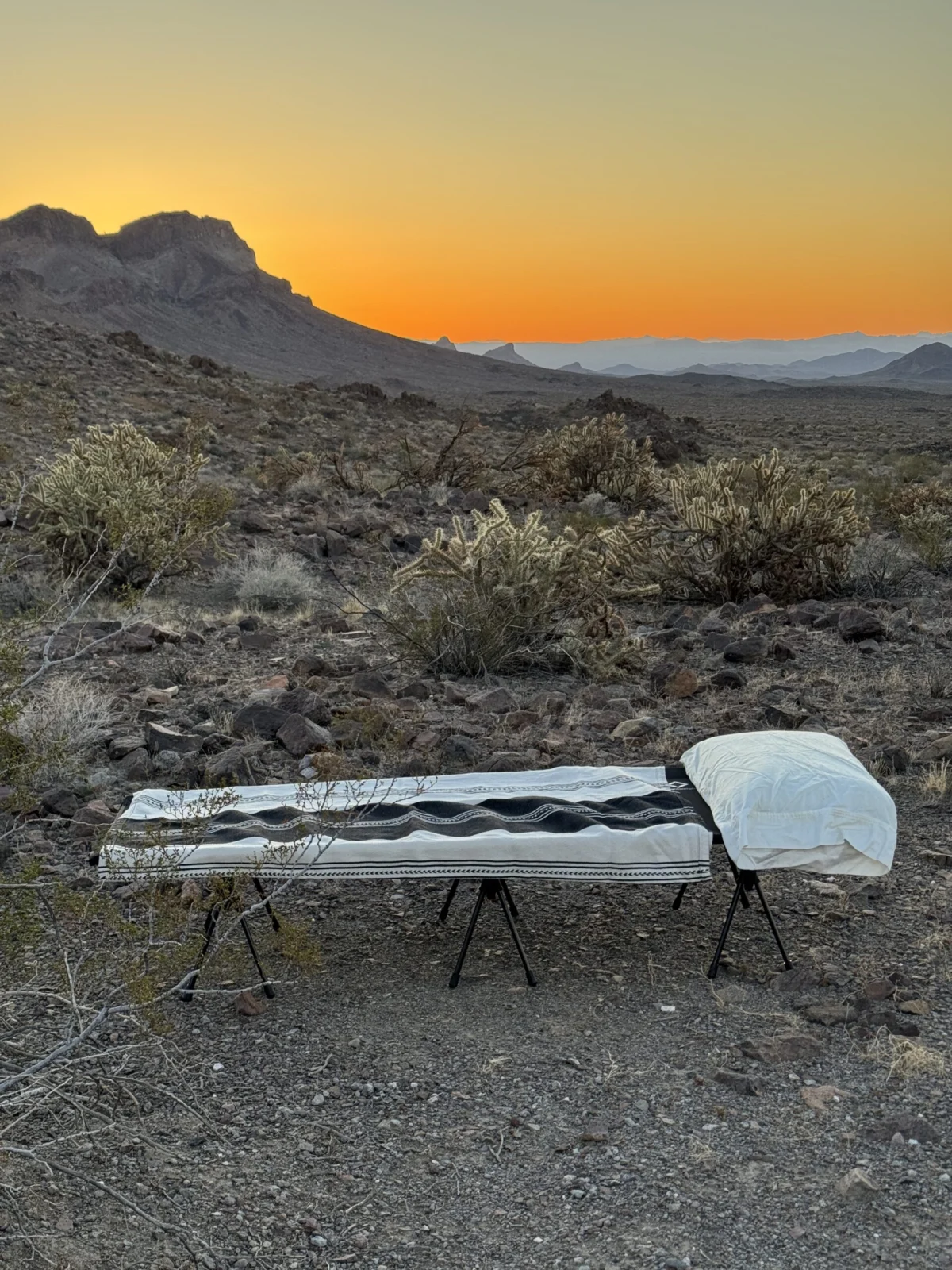
A few months ago, a photograph posted to social media sparked a conversation that transcended the digital realm, delving into the fundamental human need for restorative sleep, even when removed from the comforts of modern life. The image, accompanied by the evocative caption, "we need not be pagans," prompted a considerable response, notably from Alaska-based woodworker and artist Zach LaPerrière. LaPerrière’s interest, specifically in the author’s sleeping setup, has culminated in a comprehensive exploration of how to achieve optimal sleep quality in diverse outdoor environments. This article aims to expand upon that initial inquiry, providing a detailed examination of the equipment, considerations, and philosophies behind successful outdoor slumber.
The Quest for Uninterrupted Rest: Core Principles
The overarching objective, as articulated by the author, is simple yet profound: to sleep outdoors, under the vast expanse of the night sky, and to do so soundly. This pursuit is not merely about survival; it is about enhancing the overall experience of adventuring. The success of any outdoor sleeping arrangement hinges on a nuanced understanding of the prevailing environmental conditions. While the specific location of the initial photograph—the Turtle Mountains Wilderness in California’s Mojave Desert, en route to Arizona—suggests arid conditions, the principles discussed have broader applicability.
In the vast majority of camping scenarios, particularly those in arid southwestern landscapes, the primary concerns typically revolve around temperature fluctuations and wind. The presence of rain or insects, while significant in other biomes, often recedes in importance. This prioritization of factors forms the bedrock of selecting appropriate gear and crafting an effective sleep system.
Evaluating Sleep Systems: From Comfort to Compactness
The foundation of a comfortable outdoor sleep experience, for many, begins with a raised sleeping platform. The Helinox Cot One Convertible, augmented with leg extensions to achieve an 8.5-inch elevation from the ground, emerges as a favored choice. This elevation offers several advantages, including improved air circulation, a buffer against ground moisture and cold, and a perceived sense of security.
However, the cot landscape is not monolithic. The author highlights REI’s Wonderland Comfort Cot as a benchmark for sheer comfort. Its adjustable features and ample padding reportedly provide an exceptionally restful night’s sleep, even without additional insulation. This cot is lauded for its plush feel, making it a viable option for extended periods of relaxation as well as sleep. Yet, its practicality for certain travel styles is significantly curtailed by its considerable size and weight. Described metaphorically as "road-tripping with Chewbacca," this cot, even when disassembled, occupies substantial space and adds considerable heft to a load. This inherent bulk and weight led to its eventual divestment by the author, underscoring the critical trade-off between ultimate comfort and portability.
In stark contrast, the Helinox cot excels in its packability. Breaking down into a remarkably small package and weighing a mere five pounds, its compact and lightweight nature ensures it can be a permanent fixture in a vehicle, readily available for spontaneous excursions. This emphasis on portability is a key consideration for those who prioritize minimizing their gear footprint.
The Crucial Layer: Insulation and Comfort
While a cot provides a welcome elevation, the direct sleeping surface remains a critical component of the sleep system. The author acknowledges that sleeping directly on the Helinox cot without padding is feasible, albeit a less than ideal experience. To enhance comfort and insulation, two distinct options are presented:
- Exped MegaMat (4-inch inflatable): Possessing an R-Value of 8.1, this inflatable mattress offers substantial thermal insulation, crucial for maintaining body temperature in cooler conditions. Its four-inch thickness provides a significant buffer against the ground.
- Hest Foamy (foam, R-Value 8.8): This newer addition to the author’s sleep arsenal boasts an even higher R-Value of 8.8, indicating superior thermal resistance. Its construction from foam offers inherent durability and a significant advantage: it cannot be punctured, thereby eliminating the risk of a catastrophic leak. Furthermore, the Foamy features a waterproof bottom layer, making it an excellent standalone option for ground camping, particularly on slickrock surfaces where a cot setup might be impractical.
The choice of an insulation layer is intrinsically tied to the ambient temperature. For pleasant evenings, a simple cotton blanket, as seen in the initial photograph, suffices. As temperatures dip, a wool blanket or a sleeping bag becomes necessary. The author’s sleeping bag collection is diverse, featuring brands like NEMO, Marmot, and Exped, which are rotated according to need, demonstrating a pragmatic approach to gear utilization.
The Often-Overlooked Essential: The Pillow
A pillow, often relegated to an afterthought, is deemed a non-negotiable element for achieving quality sleep. For years, a repurposed household pillow served this purpose. However, the author is currently evaluating Hest’s Camp Pillow. While it integrates well into the hood of a sleeping bag, the author expresses a desire for slightly increased softness, indicating an ongoing refinement of this essential component.
The Spectrum of Sleep: From Car Camping Luxury to Ultralight Aspirations
The philosophy underpinning car camping, in particular, is that comfort should not be sacrificed. However, there exists an underlying aspiration to achieve a high level of sleep quality with minimal gear. This drive is informed by past experiences, such as a mule-packing trip in Durango, Mexico, during the 1990s. Witnessing a mule packer achieve a deep sleep on the ground with only a wool blanket served as a powerful illustration of resourcefulness and simplicity. This method, while seemingly straightforward, presents challenges for side sleepers, a demographic to which the author belongs. Direct ground sleeping, without any padding, has consistently resulted in a negative assessment, prompting introspection on whether increased physical exertion might contribute to a deeper, more forgiving sleep.
Backpacking and Bikepacking: Navigating the Ultralight Terrain
The realm of backpacking and bikepacking introduces a different set of constraints, where weight and bulk are paramount. For inflatable sleeping pads, the Therm-A-Rest NeoAir series remains a trusted choice. These pads are renowned for their exceptional warmth-to-weight ratio.
In a recent backpacking excursion in a remote canyon within Grand Staircase-Escalante National Monument, the author utilized Exped’s Flex 1.5R closed-cell foam pad. While this pad proved adequate on sandy terrain, its perceived thinness on harder surfaces led to a desire for greater cushioning. Exped’s subsequent release of the Flex R3, a pad twice the thickness of its predecessor, addresses this need. However, this increased thickness comes at a cost: a weight of 18 ounces, significantly more than comparable inflatable options. This highlights the perpetual trade-off in ultralight gear: the inherent lightness of inflatables versus the durability and puncture-proof nature of foam. The decision between these options often boils down to a personal calculus of risk tolerance and the perceived value of bulk versus weight.
This exploration extends to broader questions of gear philosophy: is foam inherently superior to inflatables despite the added bulk? Is a bivy sack a more practical shelter than a tent? Does a quilt offer an advantage over a traditional sleeping bag? Could a waterproof bag alone suffice as a sleep system? The author’s enthusiasm for this ongoing experimentation underscores a core tenet of the outdoor community: the pursuit of knowledge through practical application.
The Unattainable Ideal: Embracing Variability
Ultimately, the notion of a single, perfect sleeping setup is an illusion. The dynamic nature of the outdoors ensures that no one-size-fits-all solution exists. Each biome presents unique challenges, every individual possesses a distinct physiology, and every adventure carries its own specific objectives. Furthermore, the capricious nature of weather means that each night is a new variable.
Despite these inherent complexities, the imperative to adapt and make do remains. The author candidly admits to enduring numerous miserable nights, a testament to the reality of outdoor living. However, this acknowledgment does not diminish the value of striving to optimize sleep quality. A personal goal of achieving 100 nights of camping within a year provides a fertile ground for testing a wide array of sleeping configurations.
The invitation to readers to suggest gear for testing or to share their own strategies for achieving comfort in rugged environments serves as a call to collective learning. This open exchange of knowledge is vital for pushing the boundaries of what is possible in outdoor comfort and for fostering a deeper appreciation for the restorative power of a good night’s sleep, wherever the trail may lead. The pursuit of this fundamental comfort is not a luxury; it is an integral component of a successful and enjoyable outdoor experience, allowing adventurers to face each new day with renewed energy and a clear mind.