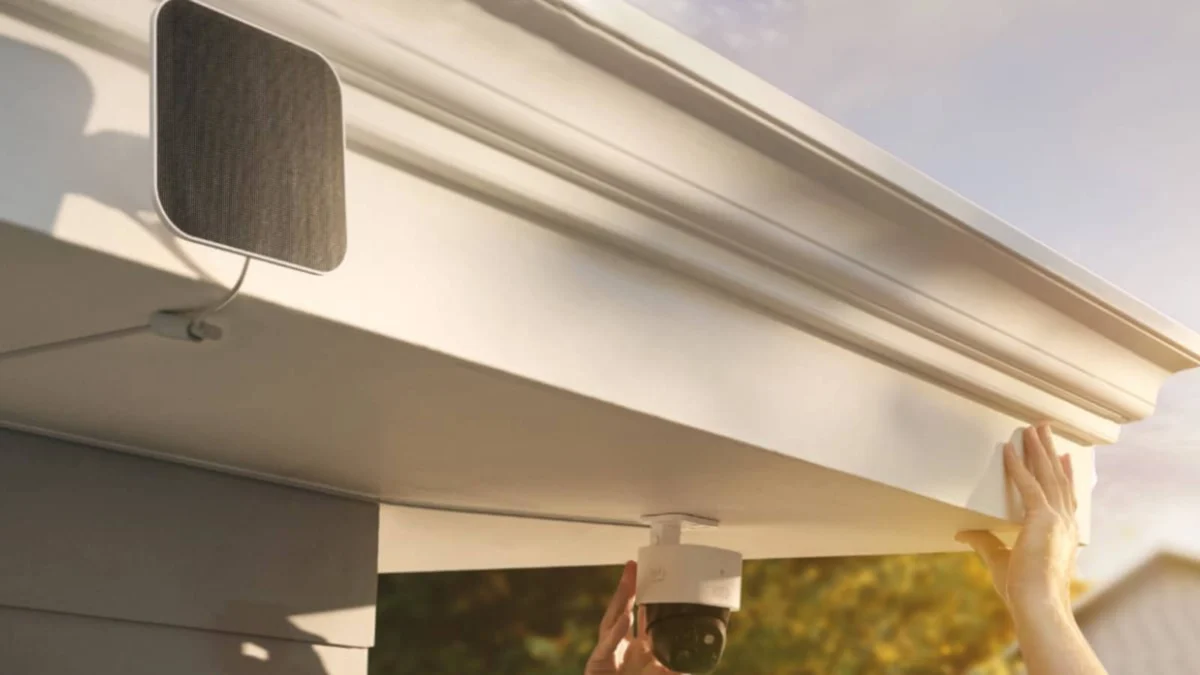
The Eufy SoloCam S340, a notable contender in the burgeoning market of wireless home security cameras, is currently available at a significantly reduced price of $120 on Amazon, marking a 40% discount from its standard $200 retail cost. This price adjustment places the device squarely within an accessible range for consumers seeking robust, low-maintenance surveillance solutions, underscoring a broader industry trend towards democratizing advanced security technology. The offer, which positions the S340 as an "install-it-and-forget-it" option, reflects not only competitive market dynamics but also the increasing consumer demand for self-contained, subscription-free smart home devices.
The Evolving Landscape of Home Security: From Traditional to DIY Smart Systems
The home security sector has undergone a profound transformation over the past decade, shifting from reliance on professionally installed, wired systems with recurring monitoring fees to a diverse ecosystem of do-it-yourself (DIY) smart cameras and integrated platforms. This evolution has been driven by several key factors: advancements in wireless connectivity, miniaturization of components, increased processing power at the edge, and a growing consumer preference for flexible, cost-effective solutions. Companies like Eufy, a subsidiary of Anker Innovations, have capitalized on these trends by offering products that combine ease of installation with sophisticated features typically found in higher-end systems.
Historically, home security was largely the domain of specialized companies offering comprehensive packages that often included sensors, alarms, and professional monitoring services. While these services still hold a significant market share, the advent of smart cameras has empowered homeowners to take a more direct role in their property’s surveillance. The global smart home security market, valued at approximately $4.7 billion in 2023, is projected to grow substantially, reaching an estimated $12.3 billion by 2030, according to industry reports. This growth is fueled by rising security concerns, increasing disposable incomes, and the continuous innovation in smart home technology, making devices like the Eufy SoloCam S340 increasingly relevant.
The Eufy SoloCam S340: Features and Market Positioning
The Eufy SoloCam S340 distinguishes itself through a suite of features designed for convenience and comprehensive coverage, addressing common pain points for consumers. Its battery-powered operation, coupled with an integrated solar charging panel, eliminates the need for constant manual recharging, a significant advantage for outdoor installations. The camera requires approximately two hours of direct sunlight daily to maintain continuous operation, a testament to advancements in energy efficiency and solar cell technology. The detachable solar panel further enhances installation flexibility, allowing users to position the camera in optimal viewing angles while ensuring the solar panel receives maximum sun exposure, even if the camera itself is in a shaded area.
One of the camera’s most compelling attributes is its ultra-clear 3K resolution, which translates to a video output of 2880×1620 pixels. This resolution offers a significant improvement over standard 1080p Full HD cameras, providing sharper images and greater detail, which is crucial for identifying individuals or objects in surveillance footage. Paired with a 360-degree pan and tilt functionality, the S340 ensures comprehensive coverage, effectively eliminating blind spots. Users can remotely control the camera’s orientation via the Eufy app, allowing for dynamic monitoring of large outdoor areas without needing multiple fixed cameras. This level of flexibility is particularly appealing for properties with complex layouts or varying surveillance needs.
A critical differentiator for the SoloCam S340, and a hallmark of Eufy’s product philosophy, is its emphasis on local storage. The camera comes equipped with 8GB of built-in storage, negating the requirement for a monthly cloud storage subscription fee. This feature directly addresses a prevalent consumer concern regarding recurring costs associated with many smart home devices. While cloud storage offers convenience and off-site backup, local storage appeals to privacy-conscious users and those seeking to minimize long-term expenses. The 8GB capacity is generally sufficient for several days to weeks of recorded motion-triggered events, depending on the frequency of activity and video quality settings.
Furthermore, the S340 seamlessly integrates into broader smart home ecosystems, offering compatibility with both Amazon Alexa and Google Assistant. This allows users to pull up live video feeds on compatible smart displays (such as Amazon Echo Show or Google Nest Hub) using voice commands, enhancing the overall convenience and accessibility of the security system. Such integrations are becoming standard expectations for smart home devices, reflecting the trend towards a unified, interconnected living environment.
Chronology of Smart Camera Development and Eufy’s Market Trajectory
The journey of smart home security cameras can be traced back to the early 2010s, with pioneering companies introducing basic Wi-Fi-enabled cameras. Initial offerings often suffered from connectivity issues, limited features, and reliance on expensive cloud subscriptions. However, continuous innovation rapidly improved these devices. By the mid-2010s, HD resolution, two-way audio, and rudimentary motion detection became common. The late 2010s saw the rise of AI-powered features like person detection, facial recognition, and activity zones, significantly reducing false alerts.
Eufy, launched by Anker Innovations in 2016, entered the smart home market with a clear focus on user-friendly, privacy-centric devices. Their first security cameras gained traction by offering competitive pricing and a strong emphasis on local storage, challenging the subscription-heavy models of competitors. The SoloCam series, introduced more recently, represents the evolution of this philosophy, integrating advanced features like solar power and enhanced resolution into a self-contained unit. The S340, released in the latter half of 2023, built upon previous models by offering the dual-camera setup (a wide-angle lens and a telephoto lens, allowing for a clearer digital zoom) and the pan-and-tilt functionality, establishing itself as a flagship solar-powered option. This consistent innovation timeline underscores Eufy’s commitment to staying competitive in a rapidly evolving market.
Supporting Data: Market Dynamics and Consumer Preferences
The current discount on the Eufy SoloCam S340 can be contextualized by examining broader market trends. According to a 2023 report by Statista, the average selling price for smart outdoor security cameras ranged from $150 to $250, depending on features and brand. The S340’s original price of $200 places it squarely in this mid-range segment, offering premium features without commanding a top-tier price. Its discounted price of $120 makes it exceptionally competitive, potentially capturing a larger segment of budget-conscious consumers who still prioritize advanced capabilities.

Consumer surveys consistently highlight several key buying factors for smart home security cameras:
- Ease of Installation and Use: DIY setup is a major draw, with many consumers preferring wireless, battery-powered options.
- Cost of Ownership: Upfront cost is important, but recurring subscription fees are a significant deterrent for many, making local storage models highly attractive.
- Video Quality: High resolution (1080p, 2K, 3K) is crucial for clear identification.
- Field of View and Coverage: Pan/tilt capabilities and wide-angle lenses are increasingly sought after.
- Battery Life and Power Options: Solar charging or long-lasting batteries reduce maintenance.
- Smart Home Integration: Compatibility with major voice assistants and smart home platforms is expected.
- Privacy and Data Security: Local storage and strong encryption protocols are vital for consumer trust.
The Eufy SoloCam S340 directly addresses most of these critical consumer preferences, making its discounted price a particularly strong value proposition in the current market.
Implied Official Responses and Competitive Strategy
While Eufy has not issued a direct statement regarding the specific Amazon discount, such price reductions are typically part of a calculated business strategy. From a company perspective, these deals serve multiple purposes:
- Market Share Expansion: Aggressive pricing can help capture a larger segment of the market, especially during peak shopping seasons or in response to new competitor offerings.
- Inventory Management: Discounts can help clear existing stock to make way for newer models or to optimize warehouse efficiency.
- Brand Awareness and Loyalty: A well-timed deal can attract new customers to the Eufy ecosystem, potentially leading to future purchases of other Eufy products.
- Competitive Response: In a crowded market with players like Arlo, Ring, Wyze, and Google Nest, strategic pricing is essential to maintain relevance and appeal. Eufy’s focus on local storage provides a unique selling proposition against competitors who often rely on cloud subscriptions for full functionality.
Industry analysts might interpret this 40% discount as a move by Eufy to solidify its position in the mid-range outdoor security camera segment, particularly appealing to consumers wary of subscription models. It also reflects the intense competition, where innovation and affordability drive purchasing decisions.
Broader Impact and Implications for the Smart Home Security Industry
The proliferation of advanced yet affordable security cameras like the Eufy SoloCam S340 has several significant implications for the smart home security industry and consumers alike:
Firstly, it continues to democratize home security. What was once a premium service is now accessible to a much broader demographic, allowing more households to enhance their safety without substantial upfront investments or ongoing fees. This shift contributes to a general uplift in neighborhood safety and individual peace of mind.
Secondly, it intensifies competition among manufacturers. The pressure to innovate while maintaining competitive pricing is immense. Companies are forced to differentiate not just on features but also on business models (e.g., subscription vs. subscription-free), privacy policies, and ecosystem compatibility. This healthy competition ultimately benefits consumers through better products and more choices.
Thirdly, the emphasis on local storage championed by Eufy has broader implications for data privacy and security. As concerns about cloud data breaches and corporate access to personal footage grow, devices offering robust local storage options provide an attractive alternative. This trend could encourage other manufacturers to develop more hybrid storage solutions or emphasize on-device processing to enhance privacy.
Fourthly, the integration of renewable energy sources like solar power is a significant step towards more sustainable and self-sufficient smart home devices. As climate change concerns grow, consumers are increasingly seeking eco-friendly products. Solar-powered cameras reduce reliance on grid electricity and disposable batteries, aligning with broader environmental sustainability goals. This technological advancement also contributes to the "install-it-and-forget-it" paradigm, minimizing user intervention and maintenance.
Finally, the increasing sophistication of AI and machine learning at the edge, even in mid-range devices, promises further advancements. Future iterations may see enhanced object recognition, predictive analytics for potential threats, and more seamless integration with other smart home components for automated responses (e.g., lights turning on when motion is detected at night).
In conclusion, the current Amazon deal on the Eufy SoloCam S340 is more than just a temporary price reduction; it is a microcosm of the dynamic forces shaping the modern home security market. It highlights the convergence of advanced technology, consumer-centric design, and strategic pricing, all contributing to a future where sophisticated home surveillance is not just effective, but also remarkably accessible and sustainable. As consumers increasingly prioritize autonomy, privacy, and value, devices embodying these principles are poised to define the next generation of smart home security.