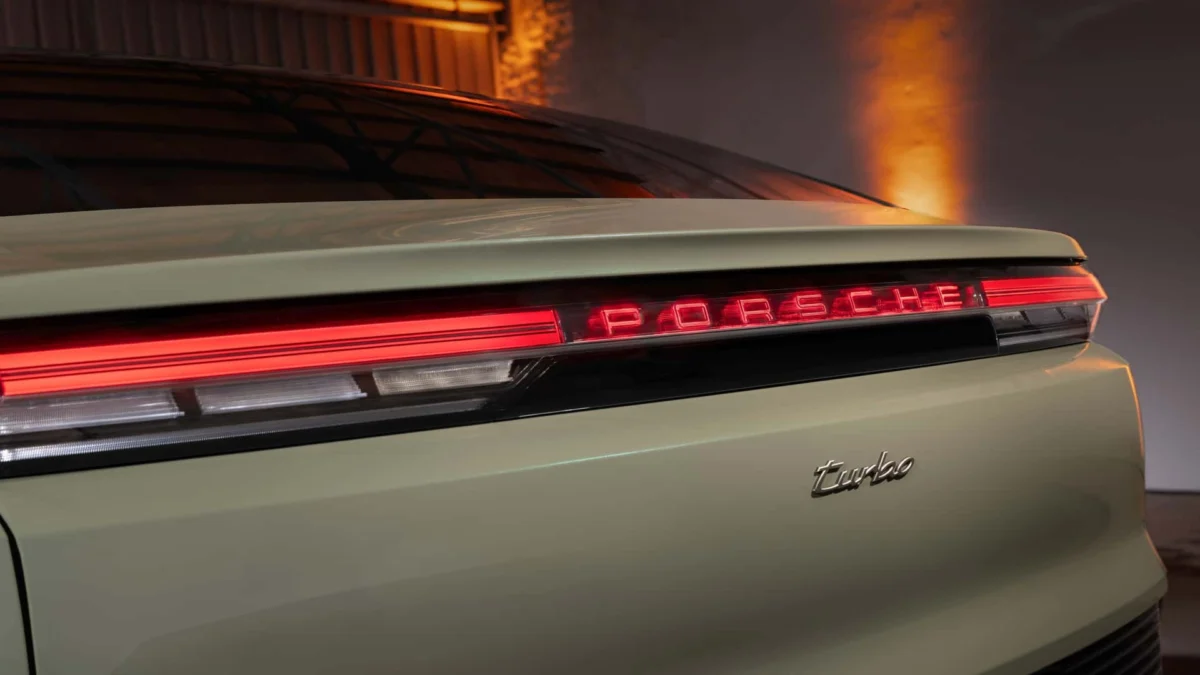
Porsche has formally solidified its commitment to a centralized European manufacturing model, effectively distancing itself from the localization strategy recently adopted by its Volkswagen Group sibling, Audi. Despite the mounting fiscal burden of United States import duties, Porsche’s Chief Financial Officer, Jochen Breckner, confirmed that the Stuttgart-based automaker has no intention of shifting production to American soil. The decision creates a striking contrast within the Volkswagen Group portfolio, as Audi simultaneously moves forward with a multibillion-dollar investment in a dedicated manufacturing facility in Georgia.
For Porsche, the arithmetic of automotive production is dictated by the constraints of high-end, low-volume manufacturing. Breckner noted that even if final assembly were relocated to the United States, the brand would remain tethered to its dense, specialized European supply chain. The logistical requirement of exporting proprietary engines, complex electronics, and bespoke components across the Atlantic would negate the cost-saving benefits of a local plant. Consequently, the entire Porsche lineup, including its high-volume Cayenne SUV, will continue to be manufactured in Europe and imported into the US market.
The Financial Reality of the Tariff Regime
The economic backdrop for this decision is defined by a rigorous 15 percent import tariff on most European-manufactured vehicles, which sits atop a standard 2.5 percent base rate. For a premium brand with thin but high-margin volume, these figures represent a significant erosion of profitability. Porsche’s financial disclosures indicate that the company is effectively "stress-testing" its business model against the permanence of these tariffs, operating under the assumption that the current protectionist trade climate will remain unchanged for the foreseeable future.
The fiscal impact is substantial. In the first nine months of 2025 alone, Porsche incurred roughly €500 million in tariff-related costs. Looking ahead to 2026, the automaker has cautioned investors that these costs are expected to climb into the high hundreds of millions of euros. While Porsche posted an operating profit of €387 million in the third quarter of 2026—a notable recovery from the €967 million loss recorded during the same period in 2025—the brand continues to face significant revenue headwinds. Quarterly revenue saw a 7.5 percent decline to €8 billion, exacerbated by a protracted slowdown in the Chinese automotive market, which historically served as a pillar of the brand’s global growth.
Chronology of the Strategic Divergence
The divergence between Audi and Porsche reflects a broader debate within the Volkswagen Group regarding the long-term viability of trans-Atlantic shipping. The timeline of these strategic shifts highlights the tension between legacy manufacturing hubs and the need for regional market agility:
- 2023–2024: Volkswagen Group executives engage in multi-year discussions with US federal and state officials regarding investment incentives, tariff relief, and the expansion of the "Middle Georgia Megasite."
- Late 2024: Internal discussions within the VAG (Volkswagen AG) board intensify regarding the necessity of a localized supply chain to mitigate the impact of fluctuating trade policies.
- Early 2025: Audi formally announces a $4 billion investment in the Georgia plant, signaling a commitment to high-volume production of electric and internal combustion SUVs to serve the North American market directly.
- Mid-2025: Porsche assesses its internal production metrics, concluding that its volume threshold is insufficient to support the capital expenditure of a dedicated American assembly line.
- Late 2025/Early 2026: Porsche’s leadership, led by CFO Jochen Breckner, publicly rejects the localization path, opting instead to absorb tariff costs as a necessary expense for maintaining brand identity and production quality.
Audi’s Contrasting Approach to Scale
The decision to establish a plant in Georgia is a fundamental pillar of Audi’s "North American Growth Strategy." Unlike Porsche, which prioritizes exclusivity and brand heritage, Audi operates at a scale that necessitates proximity to its end users. The Georgia facility is engineered for high-volume production, targeting an output of 200,000 vehicles annually once it reaches full capacity. By 2031, the plant is expected to support approximately 4,500 direct jobs.
For Audi, the transition to local manufacturing is a defensive move intended to bypass the billion-euro annual tariff hit it has been absorbing while importing vehicles from Europe and Mexico. By producing in the United States, Audi effectively insulates itself from the volatility of international trade politics. The project represents a long-term hedge, ensuring that the brand remains price-competitive in a crowded SUV segment where margin pressure is intense.
Market Implications and Future Outlook
Porsche’s strategy is not one of stagnation, but rather of measured consolidation. With year-to-date deliveries falling 16 percent to 178,532 units, the company is pivoting its recovery efforts toward product evolution rather than infrastructure expansion. Central to this strategy is the introduction of a new combustion-powered compact SUV in 2028, designed to succeed the current gas-powered Macan.
The company maintains that its decision to keep production in Europe is fundamentally about the integrity of its manufacturing ecosystem. By keeping its specialized workforce and suppliers in Germany and surrounding European nations, Porsche ensures the level of craftsmanship that defines its premium pricing. The brand relies on the premise that its customer base is less sensitive to the price fluctuations necessitated by tariffs than the average mass-market consumer.
However, the implications of this decision are profound. As trade barriers remain high, Porsche is essentially betting that the "Made in Germany" label—and the specific performance metrics associated with its European production—will continue to command a premium that justifies the 15 percent surcharge. This approach relies on a stable, albeit expensive, supply chain.
Furthermore, the split between Audi and Porsche within the same corporate parentage suggests that the Volkswagen Group is moving toward a bifurcated global strategy. The mass-market and premium-volume brands are increasingly localizing to manage geopolitical risk, while the ultra-luxury and high-performance segments are doubling down on the "heritage-first" model.
Conclusion: A Calculated Risk
As the automotive industry faces a period of unprecedented transformation—characterized by the transition to electric powertrains, shifting consumer preferences, and the resurgence of trade protectionism—Porsche’s stance remains an outlier. While competitors like Audi, BMW, and Mercedes-Benz have sought to mitigate tariff exposure through regional manufacturing, Porsche’s refusal to follow suit highlights a commitment to a singular, high-quality production standard.
The financial performance of the coming fiscal year will be critical in determining whether this strategy holds water. If Porsche can maintain its margins and successfully launch its next-generation SUV models, the decision to absorb tariff costs may be viewed as a masterstroke of brand preservation. Conversely, if the cost of international trade continues to escalate or if global demand softens further, the company may find itself forced to revisit the very logistical calculations it has recently dismissed. For now, the "Porsche model" remains firmly anchored in Europe, relying on the strength of its brand equity to weather the storm of global trade volatility.