Niagara Specialty Metals has officially announced the wide release of MagnaMax, a high-performance powder metallurgy stainless steel designed specifically to bridge the gap between extreme wear resistance and high-level corrosion resistance. The steel is scheduled to go on sale to the general public and small-scale custom knifemakers on May 1, 2026, at 9:00 AM through the company’s online storefront. This release marks a significant milestone in the evolution of cutlery grade steels, following the industry-altering success of its predecessor, MagnaCut.

The development of MagnaMax represents a focused effort to provide knifemakers with a material that offers enhanced edge retention and wear resistance without the traditional trade-offs in toughness or rust resistance that typically plague high-alloy stainless steels. By optimizing the carbide structure and chemical composition, the engineers behind MagnaMax have produced a steel that challenges established benchmarks like M390, 20CV, and S35VN.
The Genesis and Evolution of MagnaMax
The trajectory of MagnaMax began shortly after the launch of MagnaCut, which gained rapid acclaim for its unique balance of properties. While MagnaCut was hailed for its toughness and corrosion resistance, some segments of the knife community—particularly those focused on hunting, cardboard processing, and high-use EDC (Every Day Carry) tools—sought even greater edge longevity.
Initial testing of the first production heats of MagnaMax revealed a slight deviation in the carbon specification, landing on the lower end of the target range. While functional, this prompted a secondary round of comprehensive testing on a more representative heat. Working in collaboration with custom knifemaker Matthew Gregory, researchers conducted extensive Charpy toughness testing and CATRA (Cutlery Allied Trades Research Association) edge retention analysis to finalize the heat treatment protocols now being released to the public.
Technical Specifications and Metallurgical Profile
MagnaMax is a powder metallurgy (PM) stainless steel. The PM process is critical for this grade, as it ensures a fine, uniform distribution of carbides that would be impossible to achieve through traditional ingot casting. The primary goal of the MagnaMax composition is to increase the volume of hard vanadium and niobium carbides compared to MagnaCut, thereby boosting wear resistance.
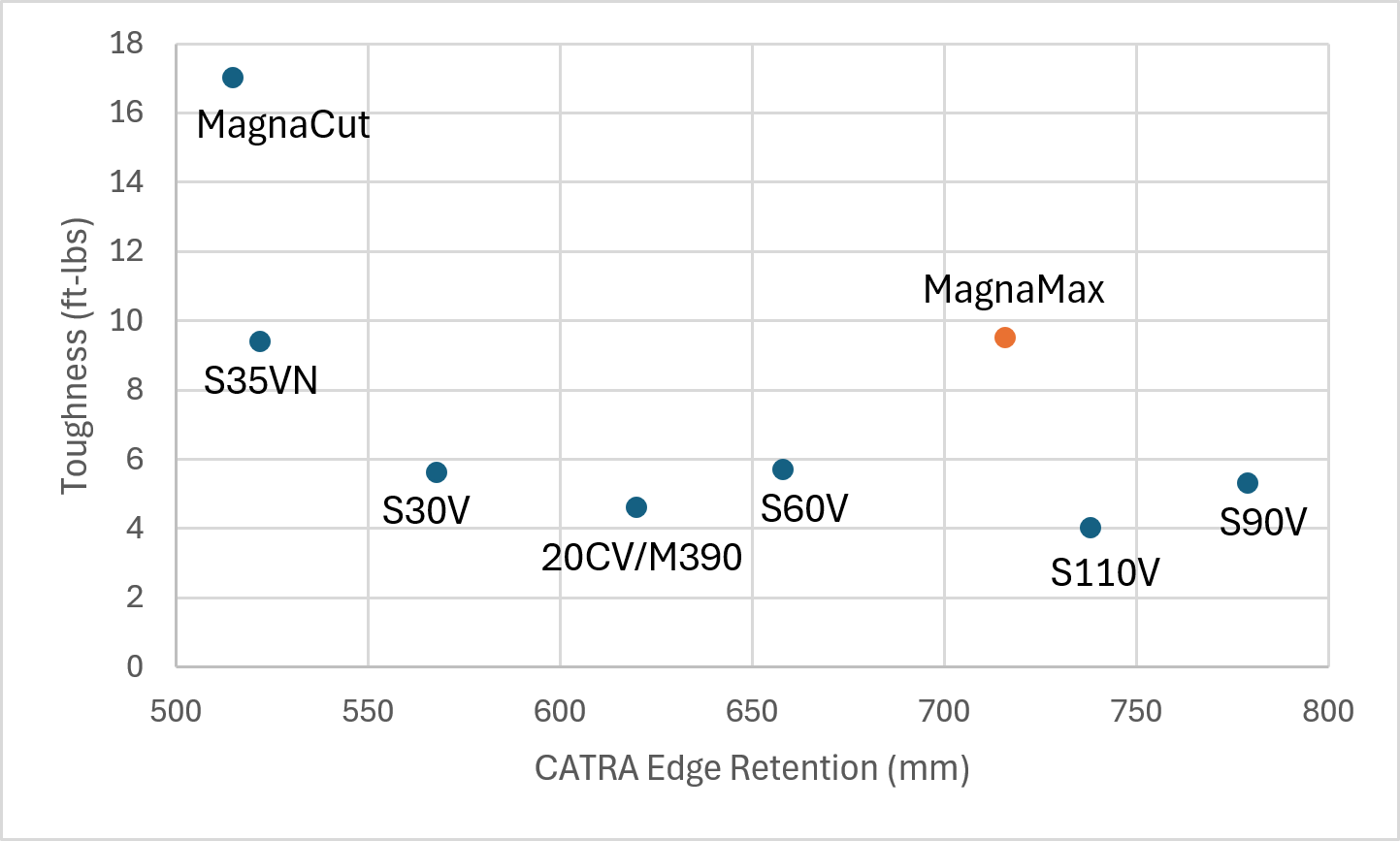
In comparative analysis, MagnaMax demonstrates a superior balance of toughness and edge retention over popular "super steels" such as M390 and 20CV. Traditionally, increasing wear resistance leads to a precipitous drop in toughness, making the steel prone to chipping. However, MagnaMax maintains a toughness profile similar to established grades like CPM-154 and S35VN, while offering a significant upgrade in how long the edge remains sharp under abrasive conditions.
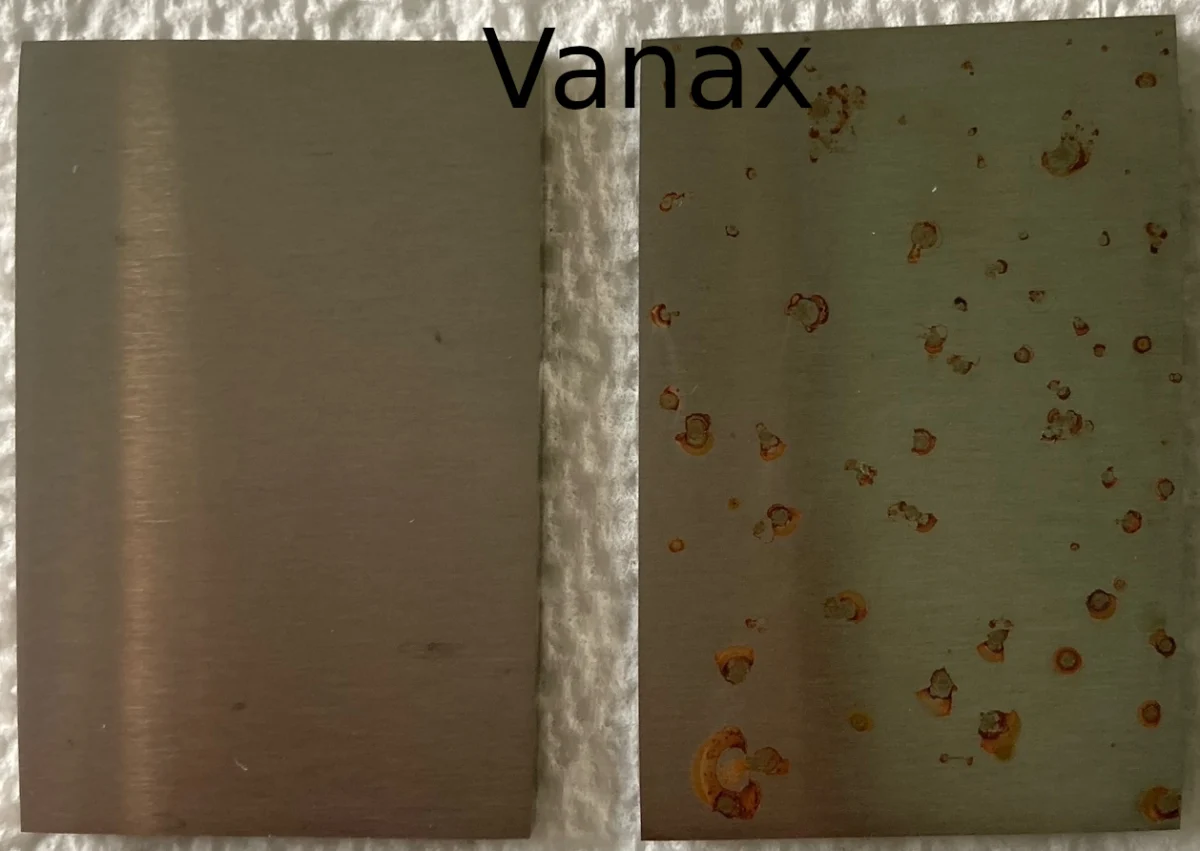
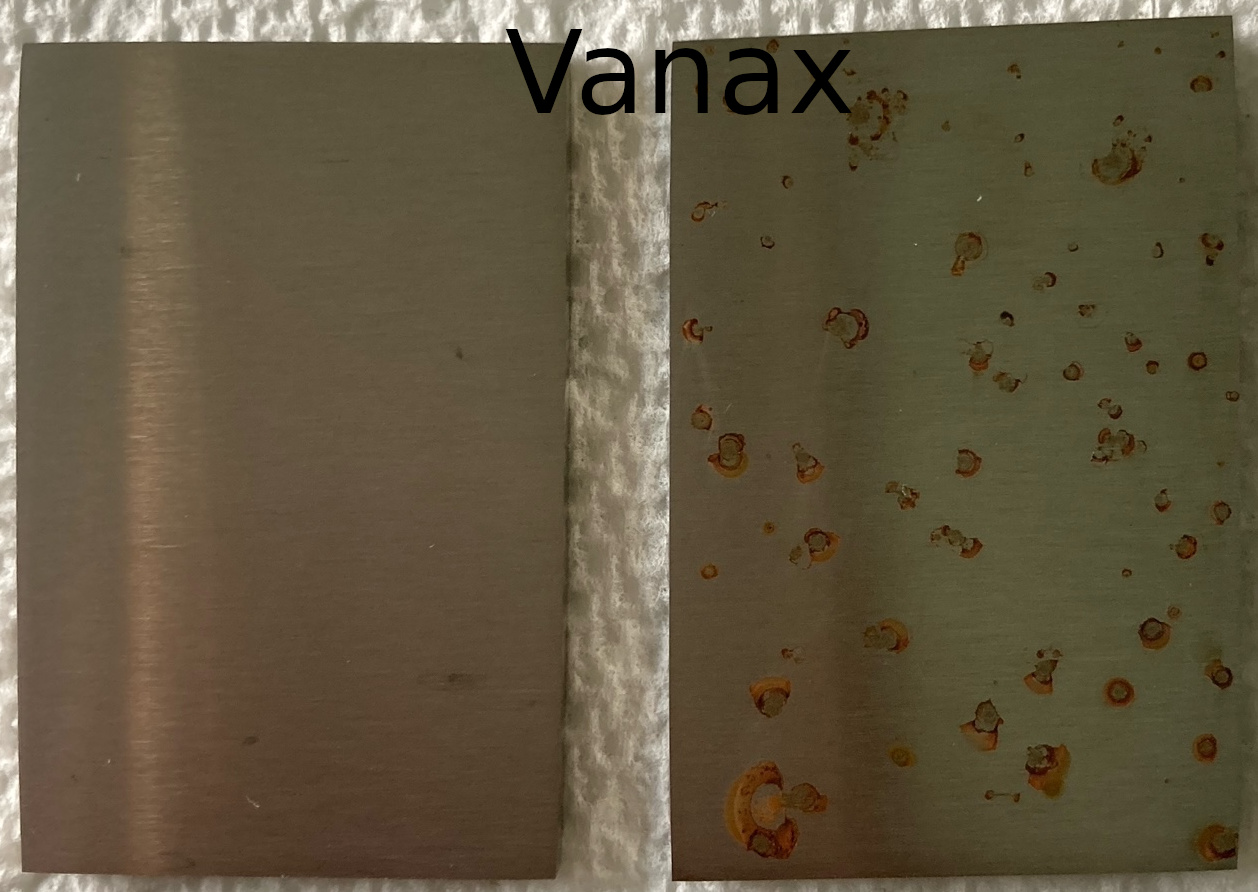
Furthermore, MagnaMax manages to match the corrosion resistance of Vanax and MagnaCut, provided the heat treatment is executed correctly. This is achieved by ensuring that the chromium is fully dissolved into the steel matrix rather than being tied up in chromium carbides, which are the primary culprits in localized pitting and rust.
Comprehensive Heat Treatment Protocols
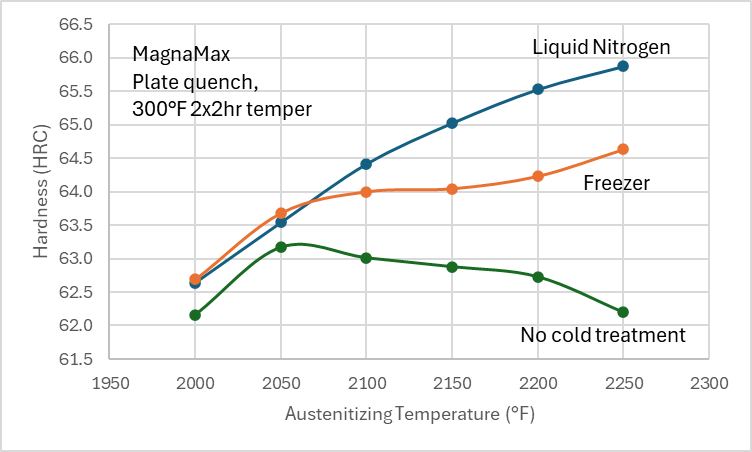
To achieve the intended performance metrics, precise heat treatment is mandatory. The data provided by Niagara Specialty Metals and Knife Steel Nerds outlines two primary paths for knifemakers: one utilizing liquid nitrogen (cryogenic treatment) and one utilizing standard household freezers or dry ice.
Cryogenic Heat Treatment Path
For professional makers seeking the absolute peak of the steel’s potential, the cryogenic path is recommended. This method ensures the maximum conversion of austenite to martensite, resulting in higher hardness and better stability.
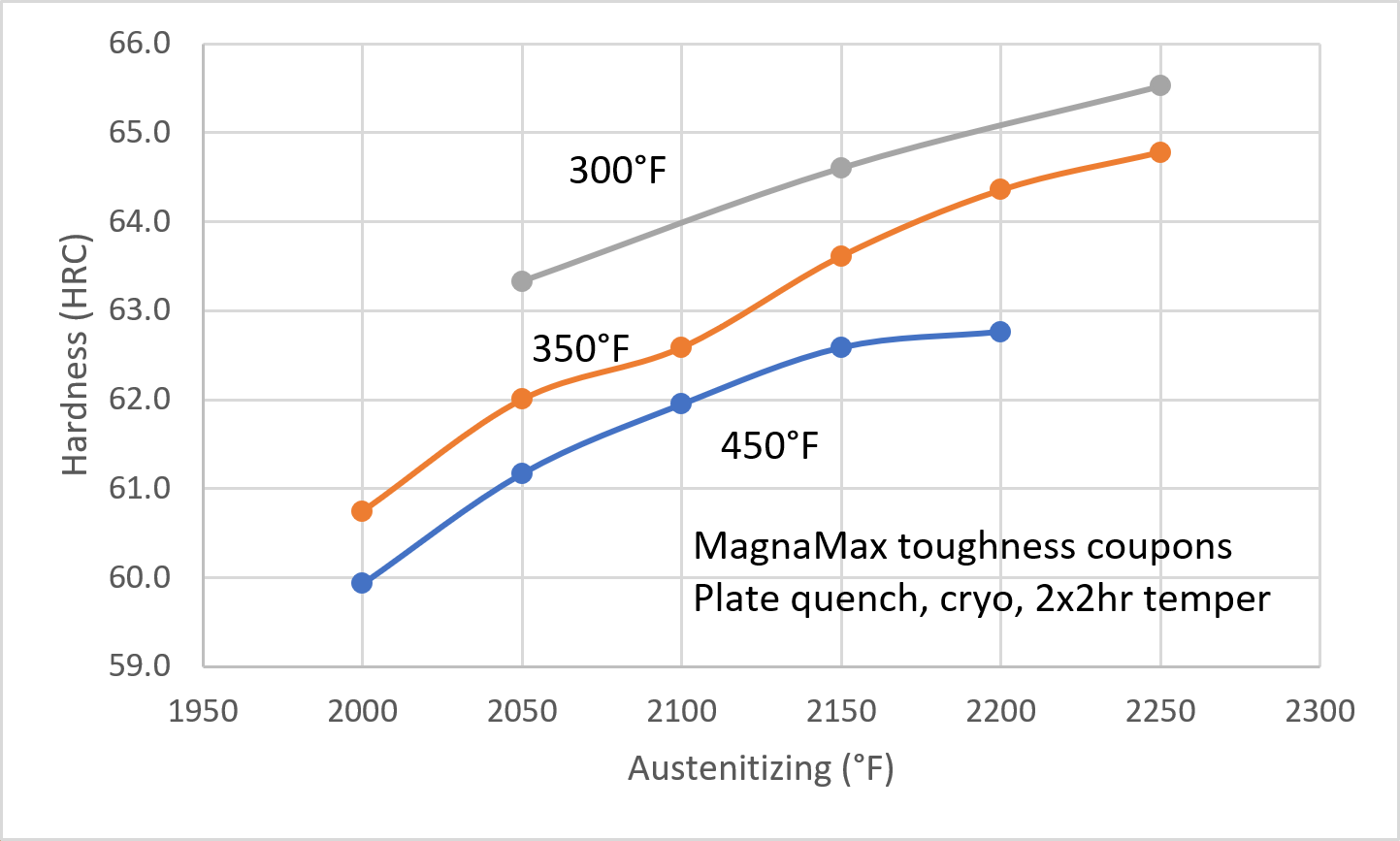
- Austenitizing: The steel should be heated to between 2100°F and 2250°F (1150–1230°C). A baseline temperature of 2150°F (1175°C) is recommended for a balanced set of properties.
- Quenching: A plate quench is suggested to ensure rapid cooling and to maintain flatness in knife blades.
- Cryogenic Processing: Immediately following the quench to room temperature, the blade must be submerged in liquid nitrogen. Delays in this step can lead to stabilized retained austenite, which negatively impacts edge stability and sharpening ease.
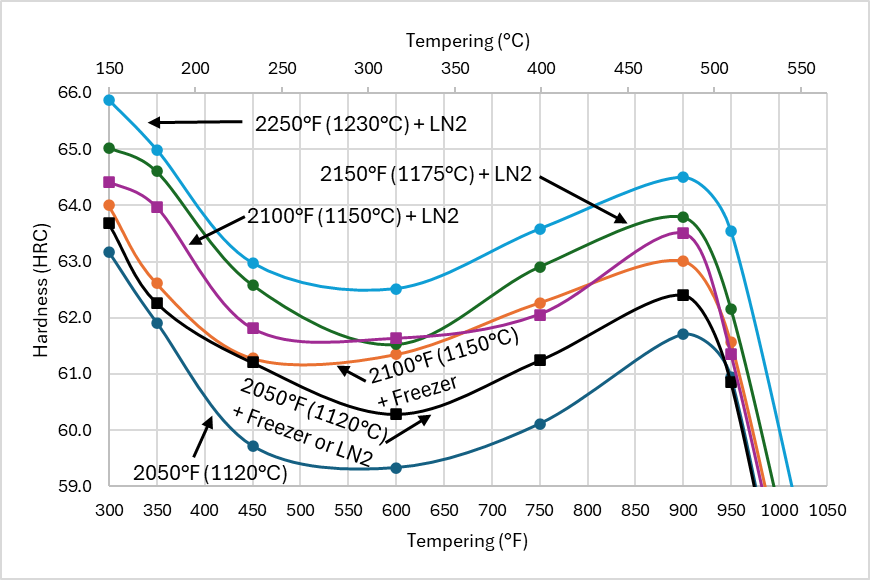
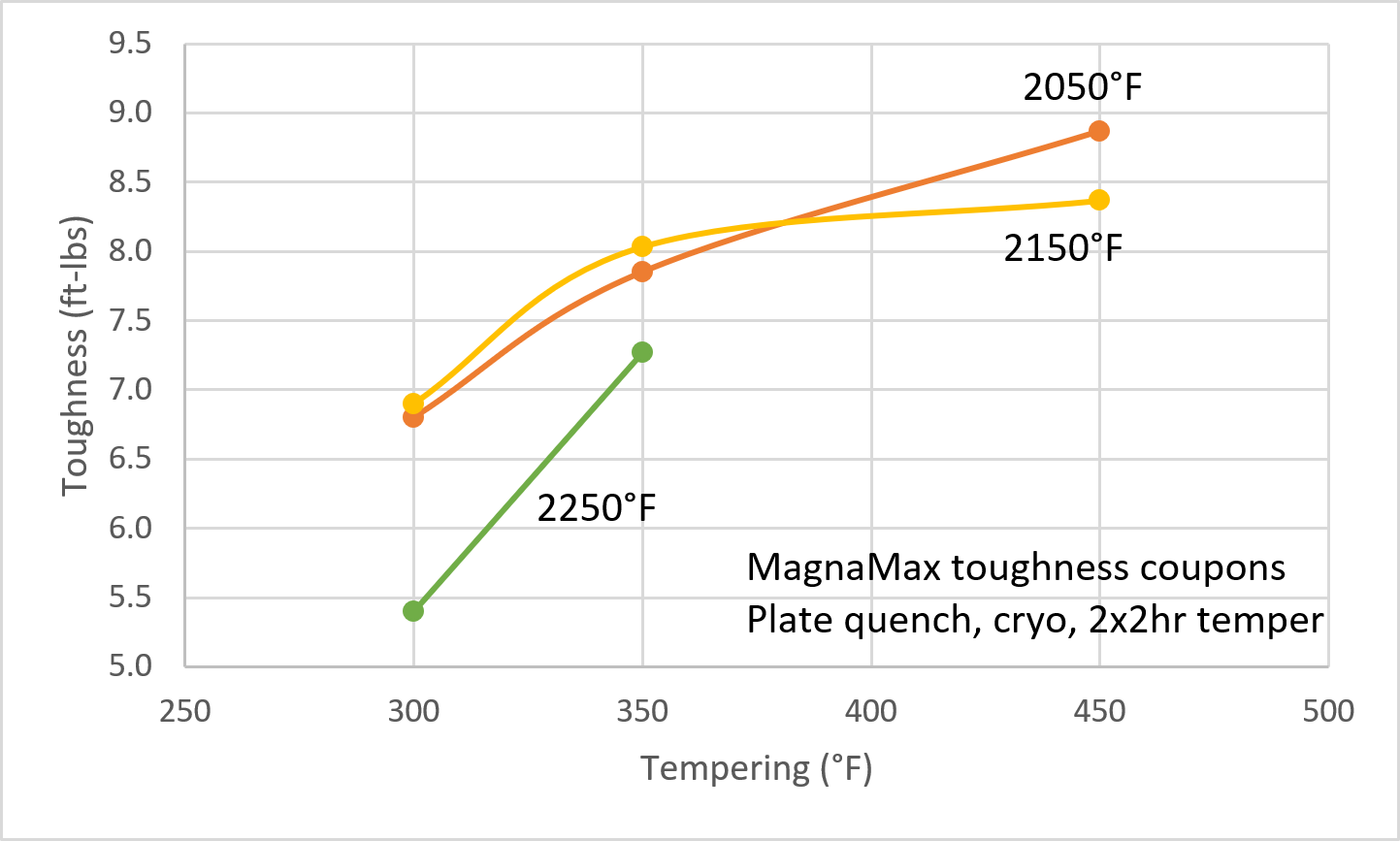
- Tempering: Two tempering cycles of two hours each are required. The recommended range is 300°F to 450°F (150–230°C), with 350°F (175°C) serving as the baseline for optimal toughness-to-hardness ratios.
Standard Cold Treatment Path
Recognizing that not all small-scale shops have access to liquid nitrogen, the protocols include a freezer-based alternative. While slightly less effective than true cryo, it remains superior to no cold treatment at all.
- Austenitizing: A lower range of 2050°F to 2100°F (1120–1150°C) is advised to prevent excessive retained austenite that a standard freezer cannot convert.
- Cold Treatment: The blade should be placed in a freezer or dry ice immediately after quenching.
- Tempering: Similar to the cryo path, two cycles at 350°F (175°C) are recommended.
Required Soak Times
The duration for which the steel is held at the austenitizing temperature is critical for dissolving the necessary carbides. The following schedule has been validated through empirical testing:
- 2050°F: 20 minutes
- 2100°F: 15 minutes
- 2150°F: 10 minutes
- 2200°F – 2250°F: 5 minutes
Analysis of Hardness and Toughness Data
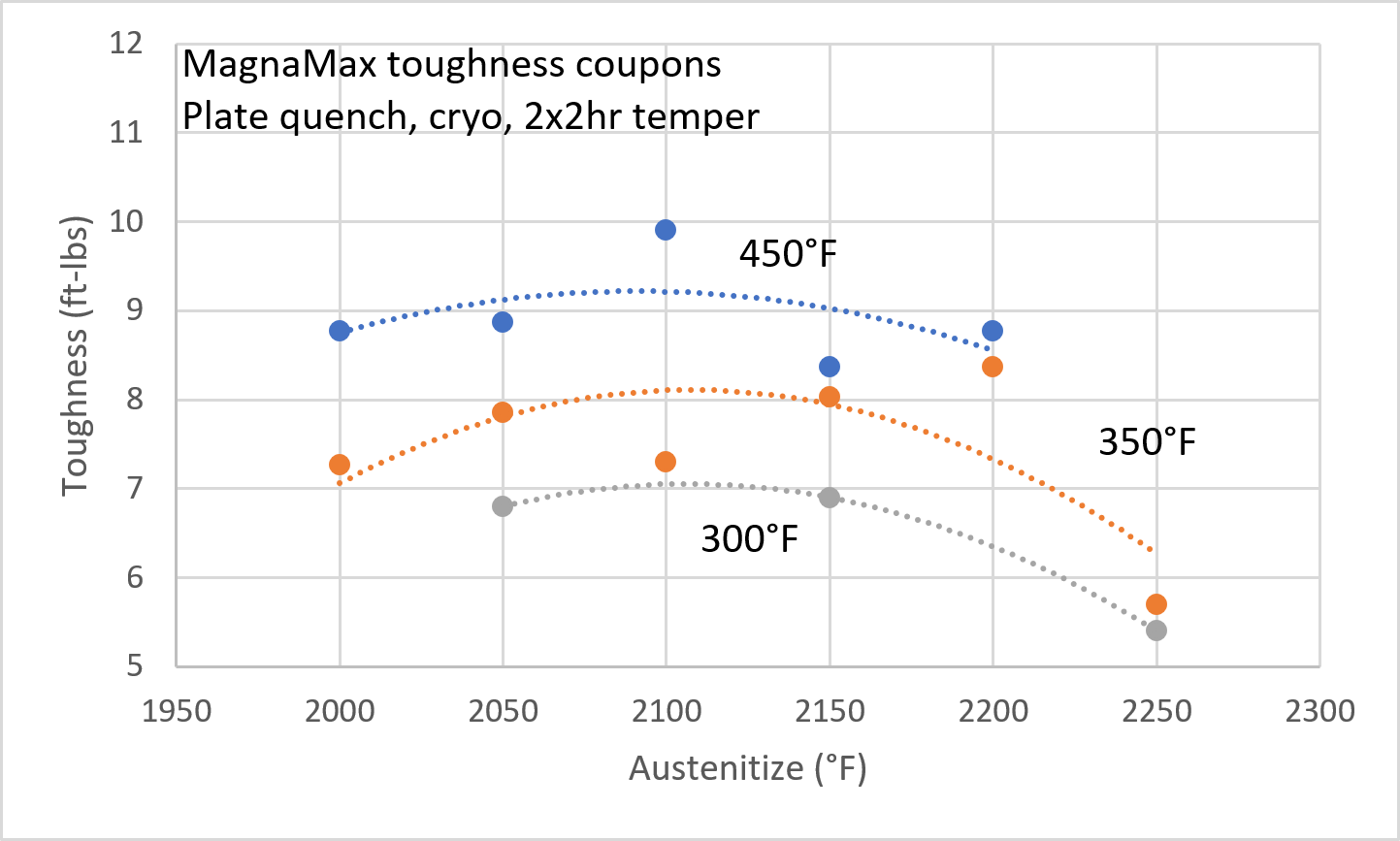
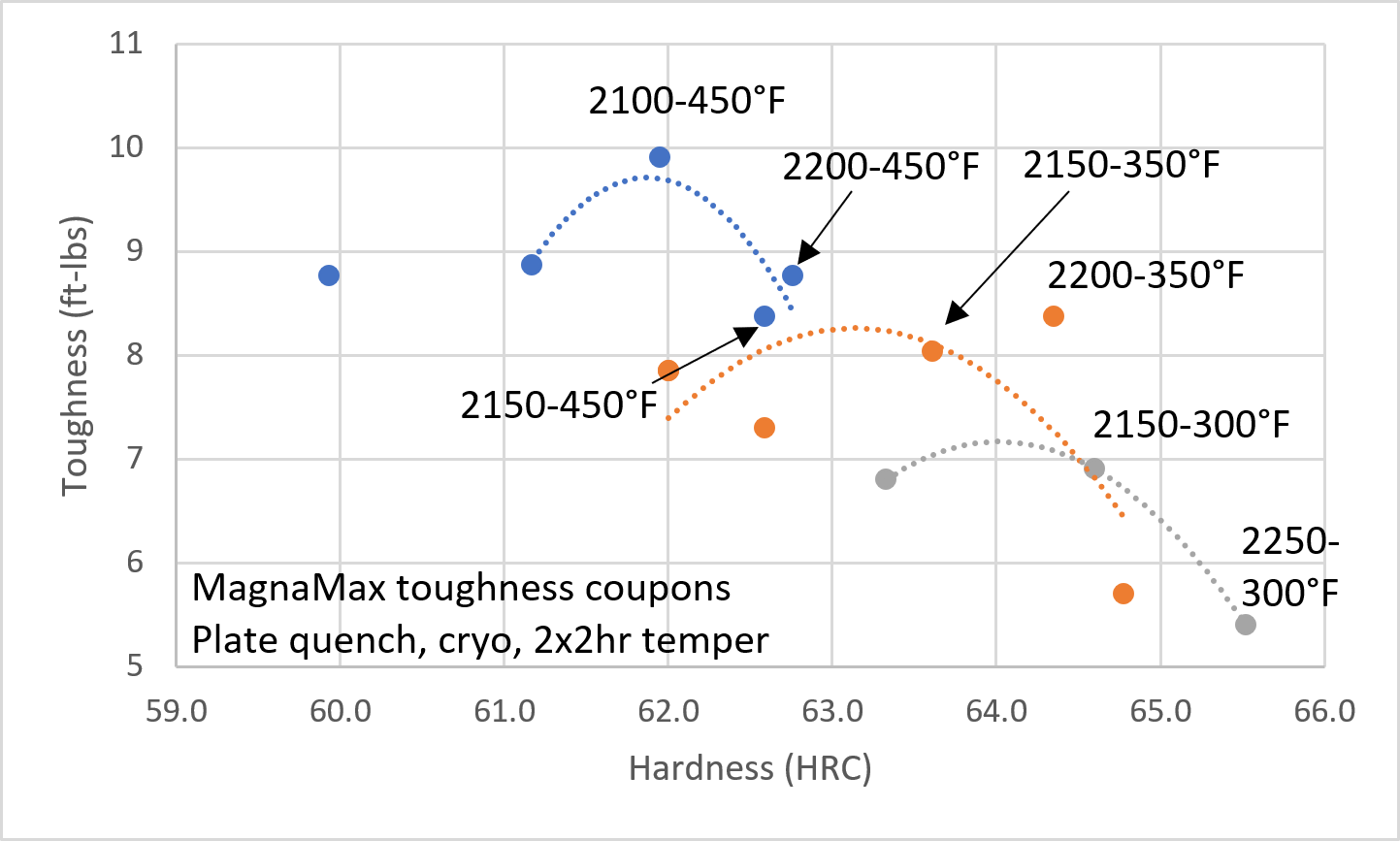
The final testing phase utilized "quarter-size" unnotched Charpy coupons (2.5 x 10 mm) to measure the energy required to break the steel under impact. The results indicate that MagnaMax reaches its peak hardness-toughness balance when austenitized at 2150°F to 2200°F.
At these temperatures, the steel exhibits toughness levels comparable to non-stainless tool steels like K390 and Vanadis 8. This is a remarkable achievement for a stainless grade, as it allows for the creation of thin, high-performance geometries that can withstand hard use without the fear of catastrophic failure or the maintenance burden of a non-stainless blade.
One critical warning emerged from the data regarding "secondary hardening." When tempered between 600°F and 1000°F, the steel undergoes a secondary hardening phase. While this increases hardness, it causes chromium to precipitate out of the matrix and form carbides, which drastically reduces the steel’s ability to resist corrosion. For this reason, low-temperature tempering (under 450°F) is strictly recommended for all cutlery applications.
Industry Implications and Market Impact
The release of MagnaMax is expected to have a profound impact on the custom and mid-tech knife markets. For years, knifemakers have had to choose between the "stainless" category (often sacrificing edge retention) and the "high-wear tool steel" category (sacrificing rust resistance). MagnaMax effectively removes this binary choice.
Implications for Custom Makers
Small-scale makers often struggle to source high-end PM steels in small quantities or specific thicknesses. By offering MagnaMax through the Niagara Specialty Metals online store, the manufacturer is providing direct access to the "maker" community, bypassing the large-scale industrial minimums that often restrict new materials to major production companies.
Performance Benchmarking
In CATRA testing, which measures how many millimeters of silica-impregnated cardstock a blade can cut before dulling, MagnaMax significantly outpaces MagnaCut. This places it in the upper echelon of stainless steels, competing directly with high-vanadium grades but offering better sharpenability and toughness.
Chronology of the MagnaMax Launch
- Late 2024: Initial conceptualization and chemical balancing aimed at increasing wear resistance over MagnaCut.
- November 2025: Production of the first experimental heat. Initial data suggests high potential but notes carbon levels at the lower end of the spec.
- January 2026: Preliminary property summary published; initial interest from the knifemaking community spikes.
- March 2026: Testing of the second, more representative heat of steel is completed, involving Matthew Gregory for toughness validation.
- April 2026: Final heat treatment protocols and comparative data charts are released to the public.
- May 1, 2026: Wide release scheduled for 9:00 AM via Niagara Specialty Metals.
Conclusion
MagnaMax stands as a testament to the rapid pace of metallurgical innovation in the 21st century. By prioritizing the specific needs of the cutlery industry—rather than repurposing industrial tool steels—Niagara Specialty Metals has created a product that maximizes the inherent strengths of powder metallurgy.
For the small knifemaker, the May 1st release represents an opportunity to work with a material that offers "super steel" performance with a predictable and well-documented heat treatment process. As the knife community moves toward increasingly specialized tools, MagnaMax is positioned to become the new standard for high-performance, corrosion-resistant cutting tools. Potential buyers are encouraged to create accounts on the Niagara Specialty Metals website ahead of the 9:00 AM launch to ensure a seamless procurement process, as demand is expected to be high.