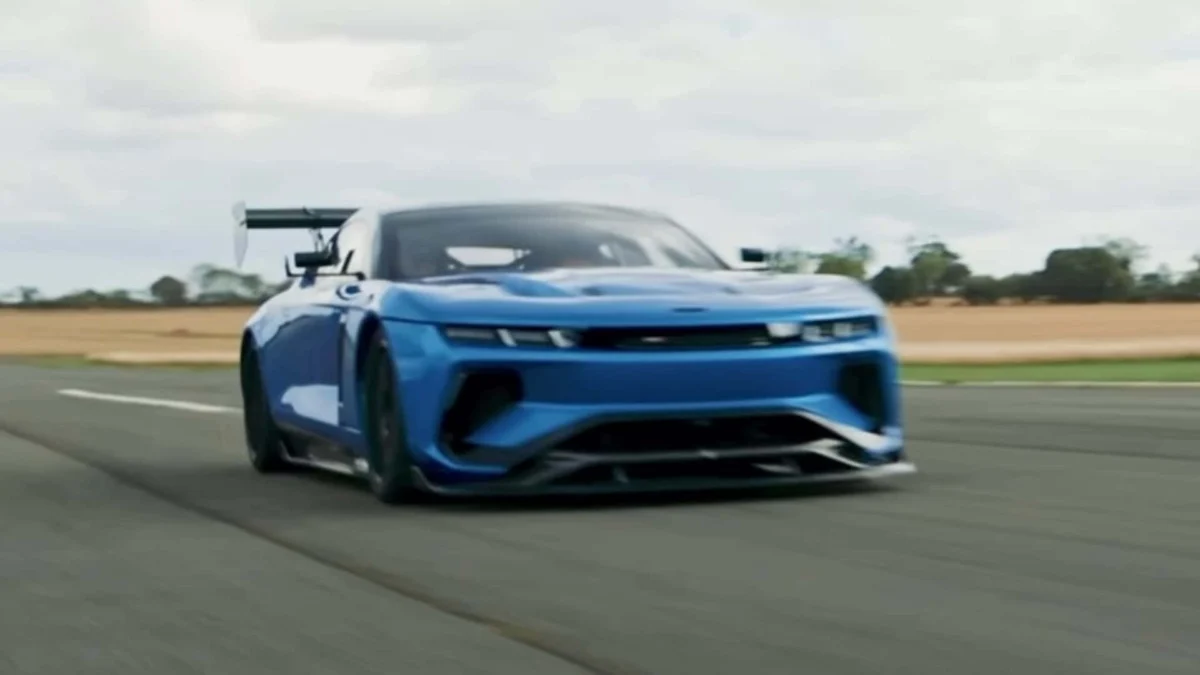
The storied British automotive brand Jensen is making a calculated return to the global performance stage with the unveiling of the Jensen Interceptor GTX. Currently presented as a track-focused prototype, the vehicle represents a bridge between the company’s celebrated heritage and a modern, high-horsepower future. While the present iteration is restricted to circuit use, the project signals a strategic move toward the development of road-legal grand touring and high-performance variants, potentially revitalizing a nameplate that defined British luxury sports cars for decades.
A Legacy Reimagined: The Jensen Context
The Jensen Interceptor, originally produced between 1966 and 1976, was renowned for its quintessential "gentleman’s express" persona—a sophisticated Italian-designed body paired with robust American V8 muscle. By blending these elements, Jensen carved a niche in the automotive market that appealed to enthusiasts who demanded both continental style and effortless, high-displacement power.
The modern reincarnation of the brand has faced significant hurdles, including decades of inactivity and shifting ownership. However, the debut of the GTX prototype suggests that the current management team is prioritizing engineering integrity over mere aesthetic nostalgia. By opting for a track-only debut, the manufacturer has signaled a "development-first" philosophy, ensuring that the chassis and powertrain integration meet the demands of modern motorsport before attempting to comply with stringent road-legal safety and emissions regulations.
Powertrain Engineering: The Heart of the Beast
At the core of the Interceptor GTX lies a 6.8-liter supercharged V8 engine, a testament to the brand’s commitment to the traditional, high-output displacement philosophy. Rather than developing an engine from the ground up—an prohibitively expensive and risky endeavor for a boutique manufacturer—Jensen has utilized a General Motors base, which is then subjected to a comprehensive, top-tier overhaul by Late Model Engines (LME) in Houston, Texas.
This partnership is crucial. LME is widely regarded as a specialist in extreme-output LS and LT platform engines. The process involves significant modifications that move the engine far beyond its stock configuration:
- Cylinder Head Upgrades: Precision CNC machining is utilized to optimize flow, paired with the integration of titanium valves to accommodate higher RPMs and improved thermal management.
- Rotating Assembly: The internal components are entirely replaced with forged, high-strength parts designed to withstand the immense mechanical stress of forced induction at high boost levels.
- Management Systems: The engine is controlled by a MoTeC electronic management system, a staple in professional-grade racing, allowing for granular control over fueling, ignition timing, and boost pressure.
The current output is rated at approximately 973 horsepower. However, technical documentation indicates that the engine’s architecture is capable of producing up to 1,200 horsepower with specific tuning adjustments, effectively positioning the vehicle in the upper echelon of modern hypercars. This immense power is managed through a manual transmission, a design choice that highlights the brand’s focus on the driver-machine connection—a rare feature in an era increasingly dominated by dual-clutch and automated systems.
Development Timeline and Future Road-Car Aspirations
The current prototype is the culmination of years of iterative planning. Since the announcement of the brand’s return, the development team has focused on establishing a platform that can sustain such extreme power delivery. The timeline is as follows:
- Initial Relaunch Announcement: Jensen confirmed its return to the market, focusing on a new performance-oriented model inspired by the original Interceptor design language.
- Concept Refinement: The transition from early renderings to physical prototyping saw a pivot toward the "GTX" designation, focusing on track-oriented aerodynamic improvements and chassis rigidity.
- Prototype Reveal: The unveiling of the track-only Interceptor GTX marks the public testing phase, where the vehicle is subjected to real-world stress testing.
- Future Road-Car Expansion: The long-term roadmap includes the introduction of two distinct road-going versions: the GT, intended for grand touring comfort, and the GTR, a more aggressive, track-inspired street car.
While no official launch date for the road-legal variants has been announced, the company has stated that these models will share the fundamental engineering DNA of the current race prototype. This implies that the suspension geometry, braking systems, and core chassis structures are currently being refined under the extreme conditions of track racing to ensure durability when these features are eventually adapted for public roads.
The Impact of Modern Boutique Manufacturing
The Jensen Interceptor GTX project is emblematic of a broader trend in the automotive industry: the rise of low-volume, high-performance manufacturers that leverage global supply chains to create bespoke vehicles. By outsourcing the engine overhaul to specialists like LME and utilizing advanced engine management from MoTeC, Jensen is able to compete with established supercar manufacturers without the massive overhead of a proprietary powertrain development department.
However, the transition from a track-only prototype to a road-legal vehicle is fraught with regulatory complexity. Safety regulations, such as crash-test compliance, pedestrian protection standards, and noise ordinances, often necessitate significant changes to a vehicle’s structure. For a boutique firm, these requirements can be the primary hurdle to commercial viability. The successful transition of the Interceptor GTX will depend on whether the company can maintain its performance profile while adhering to these international mandates.
Market Implications and Analyst Outlook
The automotive market has shown a renewed interest in "restomod" and boutique performance vehicles that emphasize analog driving experiences. The decision to keep a manual gearbox in a 1,000-horsepower vehicle is a clear indicator that Jensen is targeting a specific segment of the market—collectors and enthusiasts who prioritize engagement over automated efficiency.
From an economic standpoint, the Interceptor GTX will undoubtedly be positioned as a high-end luxury item. Given the cost of specialized engine development, high-end componentry, and the limited-production nature of such a project, the eventual road-car version is expected to carry a significant price tag. Despite this, the brand’s history, combined with the extreme performance metrics currently being advertised, suggests that there is a viable audience for such a machine.
The "glorious song" of the supercharged V8, as noted in initial test reports, serves as a primary marketing asset. In an era of electrification, where performance is often delivered with near-silence, the visceral, audible output of the Jensen Interceptor GTX offers a point of differentiation that is highly valued by traditionalists.
As the project moves forward, industry observers will be watching to see how Jensen manages the transition from a specialized race car to a consumer-facing product. If the company can successfully translate the raw power and mechanical feedback of the prototype into a reliable, road-ready package, it will represent one of the most successful brand revivals in recent British automotive history. For now, the prototype serves as a potent reminder that even as the industry pivots toward new power sources, the appeal of a high-displacement, supercharged V8 remains firmly intact.