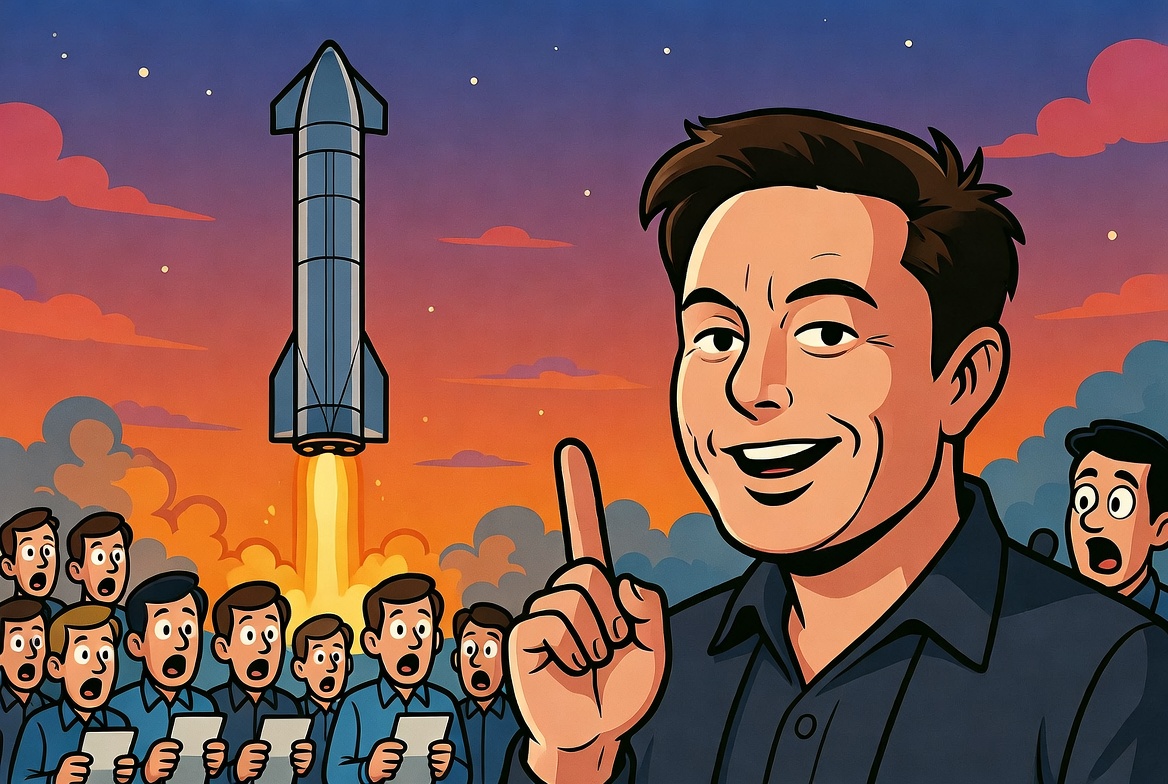
In a bold declaration that reverberated through the financial markets, Elon Musk, the visionary behind SpaceX and Tesla, issued a stark warning to entities maintaining significant short positions against the rocket company. Speaking via his X (formerly Twitter) platform on July 17, 2026, Musk stated, "The survival probability of firms who maintain a significant short position in SpaceX over time is very low." This pronouncement arrives amidst a period of considerable post-Initial Public Offering (IPO) volatility for SpaceX, now publicly traded under the ticker symbol $SPCX on NASDAQ.
The SpaceX IPO, widely heralded as the largest in history, saw its stock initially surge to an astonishing peak valuation exceeding $2.6 trillion, briefly outstripping established tech giants like Microsoft and Amazon. However, the subsequent five weeks have witnessed a notable market correction, with the stock price declining approximately 30% from its zenith. This downturn, while perhaps providing short sellers with an estimated $8.7 billion in gains, has seemingly galvanized Musk’s long-term bullish conviction and prompted his direct challenge to those betting against the company’s future.
Musk’s warning is not an isolated incident but rather a continuation of a well-established pattern of him confronting financial adversaries who bet against his ventures. His public statements often frame short sellers as fundamentally misunderstanding the disruptive potential and exponential growth trajectories of his companies. This latest salvo from Musk underscores his unwavering belief in SpaceX’s transformative mission and its potential to redefine the global economy.
The Ambitious Vision: A Trillion-Dollar Space Economy
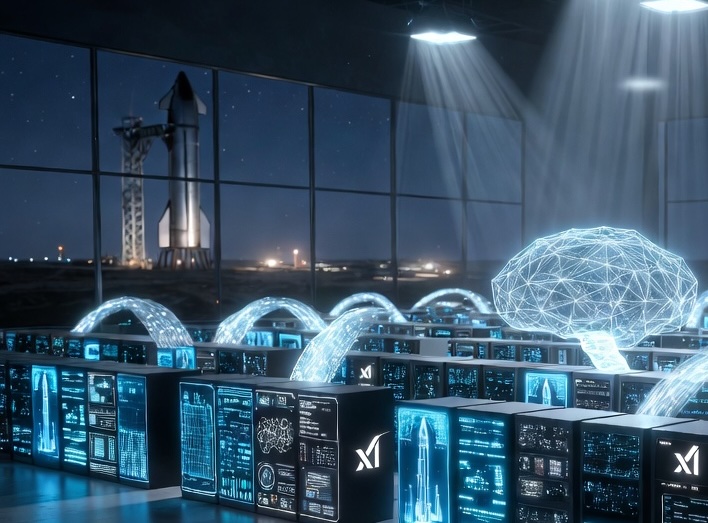
The foundation of Musk’s confidence in SpaceX’s long-term prospects lies in a detailed, bullish analysis that posits the cost reductions enabled by the Starship program could unlock a multi-trillion-dollar space economy. This ambitious projection encompasses a wide array of nascent industries, including the beaming of solar power from orbit, the extraction of resources from asteroids, the establishment of orbital data centers, and even the long-term goal of Mars terraforming. Collectively, these endeavors are projected to create over $100 trillion in new market capitalization over the coming decades.
Within this expansive vision, SpaceX is positioned not merely as a launch provider but as the indispensable infrastructure backbone of this emerging space-based economy. Its role is likened to that of Amazon Web Services (AWS) in the cloud computing revolution, providing foundational services that enable a vast ecosystem of innovation. SpaceX’s projected revenue streams are expected to be substantial, stemming from regular launch services, crew transportation to and from orbital destinations, and the burgeoning traffic of data across an ever-expanding cosmic frontier. This monopoly-like potential in critical space infrastructure is a key driver of Musk’s conviction and a likely source of his disdain for short-term bearish speculation.
A Pattern of Confrontation: Musk vs. the Shorts
Elon Musk’s history of public spats with short sellers is extensive and well-documented, particularly concerning Tesla. He has frequently articulated a narrative where persistent bears are ultimately destined for significant financial losses as his companies achieve their technological and commercial milestones. A notable instance occurred in July 2024, when Musk declared that once Tesla achieved full autonomy in its vehicles and scaled the production of its Optimus humanoid robots, "anyone still holding a short position will be obliterated." He even extended this sentiment to prominent figures, referencing Microsoft co-founder Bill Gates and his reported short bets against Tesla, suggesting that even such well-capitalized individuals would not be immune to the company’s upward trajectory.
Further back, in 2018, Musk preemptively taunted short sellers, stating they had "about three weeks before their short position explodes," a remark that was followed by a period of sharp gains in Tesla’s stock price. Musk has not shied away from expressing his strong disapproval of short selling, once calling it "value destroying" and even suggesting it "should be illegal." His rationale consistently centers on the view that short selling represents a bet against innovation, progress, and the fundamental creation of new value.

Critics, however, often dismiss Musk’s pronouncements as hyperbole or "hype," especially when near-term financial metrics, such as quarterly delivery numbers or immediate stock price fluctuations, fail to meet optimistic expectations. They point to the inherent volatility of growth-oriented companies and the cyclical nature of market sentiment as factors that short sellers are adept at navigating.
The Long Game: Exponential Leaps and Existential Risk
Despite the skepticism, Musk’s pattern of behavior suggests a consistent framing of short positions against his companies as fundamentally misjudging the pace and scale of technological advancement. He views his ventures as embodying exponential leaps, a concept that often eludes traditional valuation models based on linear growth. For SpaceX’s short sellers, the implicit message from Musk is clear: betting against the ambitious multi-planetary aspirations and the foundational infrastructure required to achieve them carries an existential risk for the firms involved.
From Musk’s perspective and that of his fervent supporters, the ultimate upside potential of the space economy far surpasses any valuation models derived from Earth-bound industries. They view current market dips and short seller gains as transient phenomena within a multi-decade ascent toward a future where humanity is a multi-planetary species, supported by a thriving off-world economy. This long-term outlook is a critical component of SpaceX’s strategic positioning and likely informs Musk’s unwavering confidence in the face of short-term market pressures.
Tesla’s FSD: A Focus on Personalized Driving Experiences
Beyond the high-stakes world of SpaceX, Elon Musk has also been actively engaging with the ongoing development and refinement of Tesla’s Full Self-Driving (FSD) software. In recent communications, Musk shed light on upcoming improvements designed to significantly reduce the need for human intervention, a key metric in the pursuit of true autonomous driving.
One particularly noteworthy enhancement, hinted at by Musk in the week prior to July 20, 2026, centers on the FSD system’s ability to "remember your specific interventions and match each person’s individual preferences." This feature aims to create a more personalized and intuitive driving experience, adapting to the unique habits and decision-making patterns of each driver.
This development was spurred by discussions within the Tesla community, particularly concerning FSD’s occasional deviations from driver-selected lane preferences, such as exiting carpool or express lanes, even when those settings are enabled. Musk’s subsequent comments indicate a broad scope for these learned preferences, with a particular emphasis on improving parking maneuvers.
Highway Lane Adherence and Parking Precision
The ability for FSD to recall and adhere to highway lane preferences, such as the consistent use of carpool or express lanes, addresses a common point of contention among Tesla owners. While the FSD menu offers options for HOV (High-Occupancy Vehicle) lane travel, instances where the vehicle does not consistently maintain these preferred lanes have been reported. Furthermore, concerns about "left lane camping," an illegal maneuver in many jurisdictions, highlight the need for FSD to exhibit more nuanced and legally compliant lane discipline.
While Tesla has not officially confirmed whether these learned preferences will extend to all new FSD behaviors, the potential for fewer interventions is significant. The capability to remember individual driver choices regarding lane usage could lead to a smoother, more predictable, and ultimately safer autonomous driving experience.
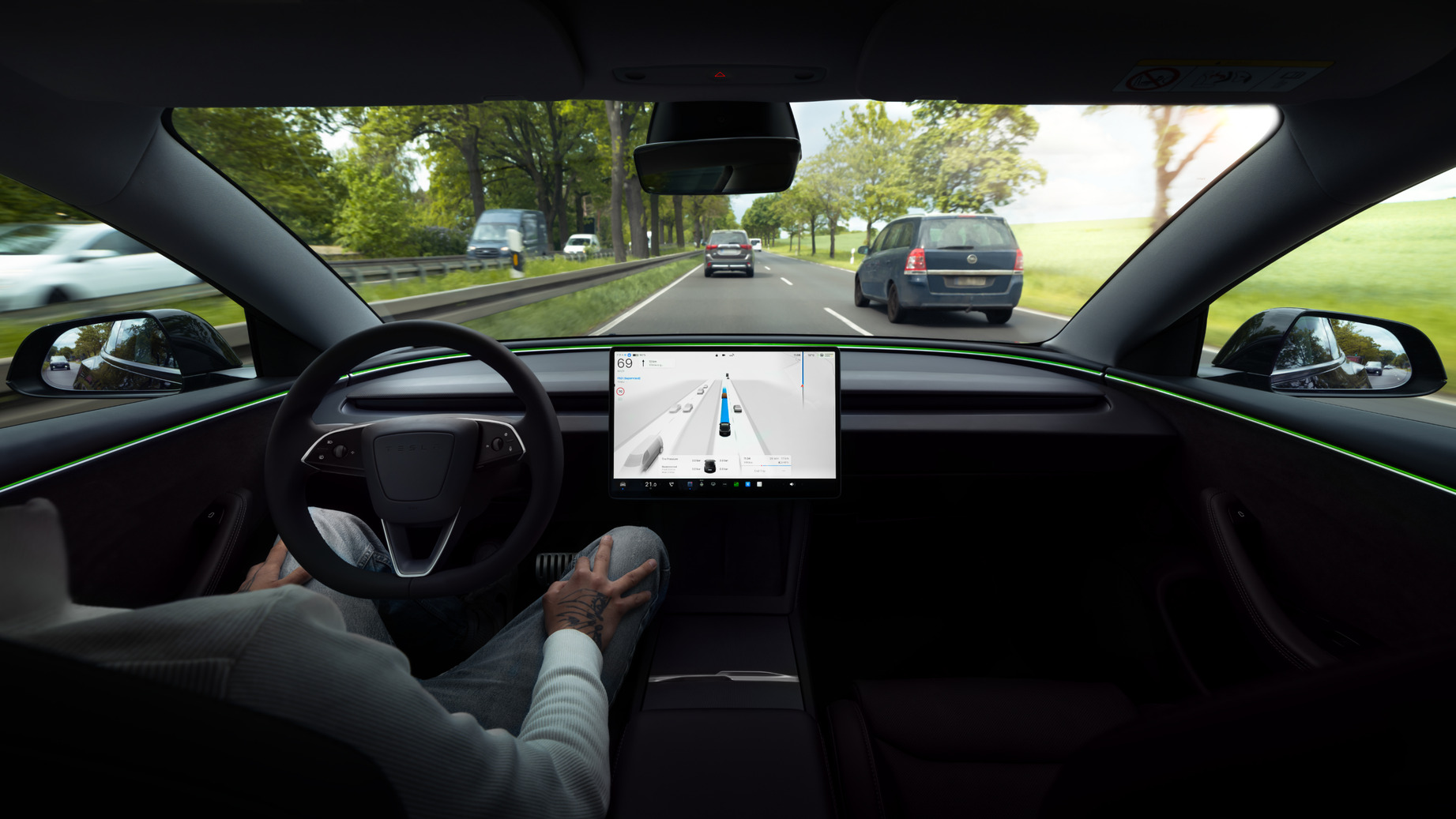
The focus on parking preferences, however, appears to be a primary driver of this update. Musk himself has previously identified parking as the "most frequent reason for interventions" in FSD. While FSD generally performs well in parking scenarios, issues have been observed, including occasional difficulties in accurately positioning the vehicle or selecting the correct driveway. The upcoming improvements are expected to address these nuances, allowing FSD to learn and adapt to how drivers prefer their vehicles to enter and park in specific situations, whether pulling in or backing in. This refinement is crucial for achieving the company’s goal of minimizing all non-critical driver interventions, paving the way for truly unsupervised driving.
Tesla Diner Celebrates First Anniversary with a Special Treat
In a more lighthearted announcement, the Tesla Diner in Hollywood celebrated its first anniversary on July 21, 2026, with a special event that blended automotive innovation with classic diner nostalgia. The celebration offered a glimpse into Tesla’s broader ambitions beyond electric vehicles.
The diner, which opened its doors a year prior, marked its first birthday with a range of attractions, including an appearance by the Cybercab, a special birthday menu, and the presence of an Optimus humanoid robot. A unique offering for the first 50 customers who placed an in-car order at midnight was a limited-edition Tesla Diner birthday hat personally signed by Tesla’s Chief Designer, Franz von Holzhausen.
The concept of the Tesla Diner, first floated by Elon Musk as far back as 2018, was envisioned as an "old school drive-in, roller skates and rock restaurant," later described as a fusion of "Grease" meets "The Jetsons" with Supercharging capabilities. What sets the diner apart is its innovative ordering system, which allows Tesla owners to place food orders directly from their vehicle’s touchscreen before arrival. This feature is seen as a precursor to a larger integration with Tesla’s autonomous vehicle services, particularly the Cybercab fleet.

The diner model is positioned as a template for a new era of commerce, where autonomous vehicles can seamlessly interact with service establishments. A robotaxi arriving for a charge could place an order for its passengers, have it ready upon arrival, and allow the occupants to continue their journey without interruption. This vision of "drive-through commerce" where the vehicle handles the logistics represents a significant departure from traditional retail experiences.
Following the successful launch of the Hollywood location, Tesla has signaled intentions to expand the diner concept to major cities worldwide and along Supercharger corridors. The first anniversary celebration, with its extensive list of attractions including roller-skating servers, a light show, and a Skypad DJ, serves as a strong testament to the concept’s viability and potential for growth. As Tesla continues to advance its autonomous driving technology and expand its Cybercab services, the Tesla Diner stands as an early indicator of how these innovations could reshape consumer experiences and create new avenues for business. The birthday party is not just a celebration but a demonstration of a proof of concept, with the robotaxi fleet poised to become the underlying business model for this futuristic service industry.