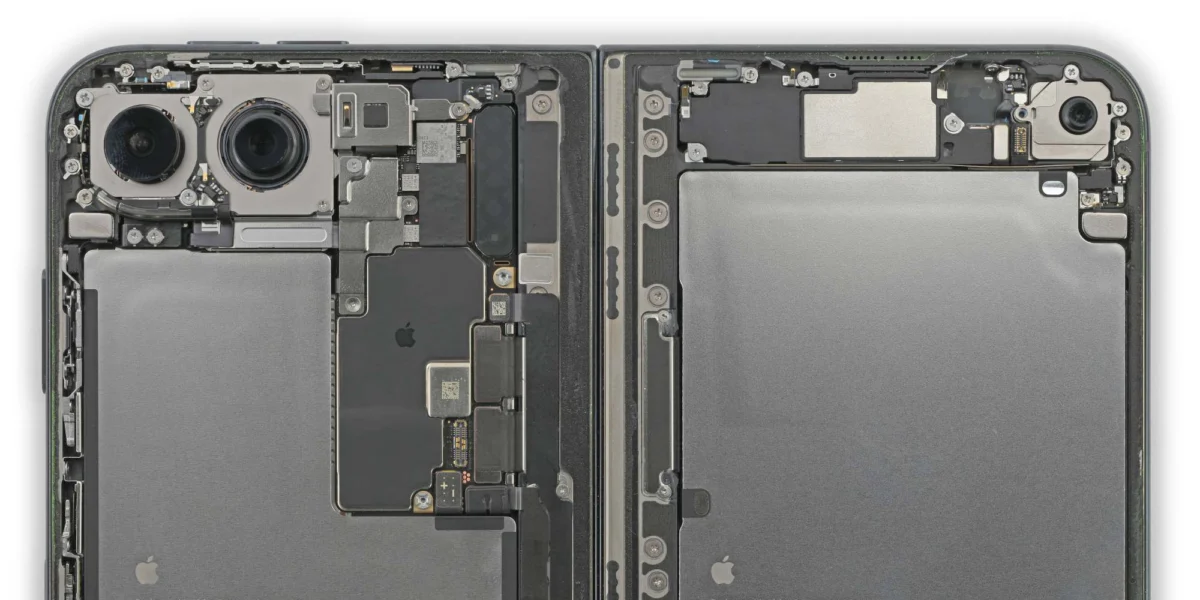
The technology repair community and consumers alike have spent the past week examining the inner workings of Apple’s long-awaited entry into the foldable smartphone market. iFixit, renowned for its meticulous hardware teardowns and evaluations of device repairability, has officially published its comprehensive disassembly of the iPhone Duo. The findings offer a fascinating look at Apple’s first-generation folding architecture, highlighting both notable engineering achievements in modular design and worrying structural vulnerabilities that may explain the sudden wave of premature screen failures reported by early adopters.
Earning an initial repairability score of 5 out of 10, the iPhone Duo stands as the highest-rated foldable smartphone evaluated by the platform to date. While this score remains provisional until official replacement parts and hardware calibration tools are made widely available by the manufacturer, it marks a significant psychological milestone for a form factor historically notorious for its delicate nature, proprietary adhesive traps, and near-impossible consumer repair paths.
Inside the Hinge: Engineering Complexity and Dust Resistance
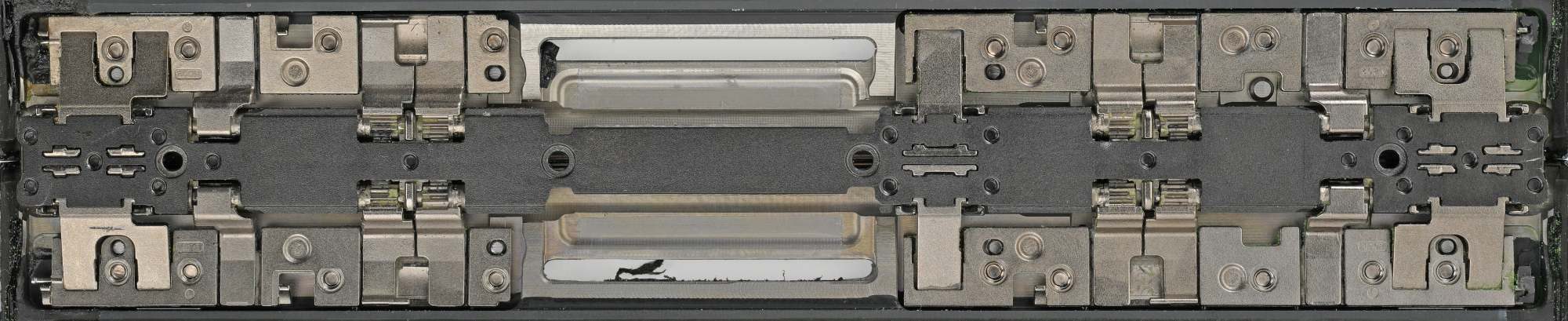
The core of any foldable device is its mechanical hinge, and the iPhone Duo is no exception. For years, Apple’s public patent filings hinted at a complex, multi-component folding mechanism designed to minimize the prominent crease seen on competing devices. Now, with the hardware fully disassembled, iFixit’s analysis confirms that the retail implementation is even more intricate than anticipated, featuring a dense network of miniature gears, tension springs, and interconnected metal joints.
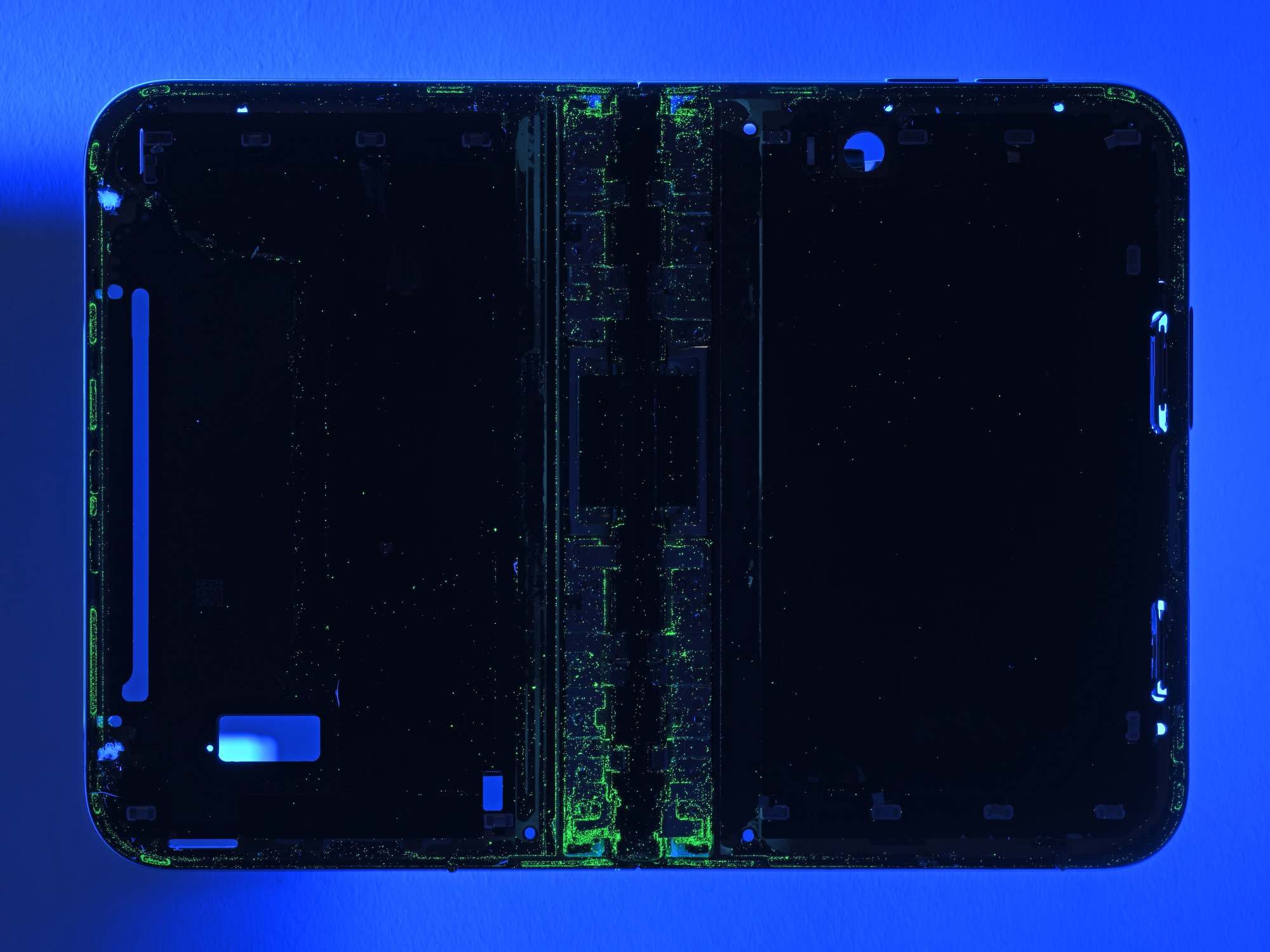
To test the durability of Apple’s IP68 dust-resistance rating—which certifies the device as dust-tight and capable of surviving submersion in up to six meters of water for thirty minutes—iFixit subjected the iPhone Duo to its traditional fluorescent dust test prior to the teardown. Immediately following the test, technicians noted audible crunching and grinding noises emanating from the hinge during folding and unfolding maneuvers. However, subsequent physical disassembly revealed a surprisingly minimal accumulation of particulate matter inside the primary gear assemblies, outperforming several generational predecessors from rival manufacturers in dust mitigation.
The hinge utilizes a classic waterdrop geometry, which creates a wider internal radius to prevent the flexible inner display from bending at an overly sharp, stress-inducing angle. Furthermore, Apple has incorporated precision-curved mechanical guides to dictate the precise trajectory of the moving joints. These guides are engineered to distribute mechanical stress evenly across the display layers as the housing transitions between its open and closed configurations.
Investigating the Causes Behind Early Screen Failures
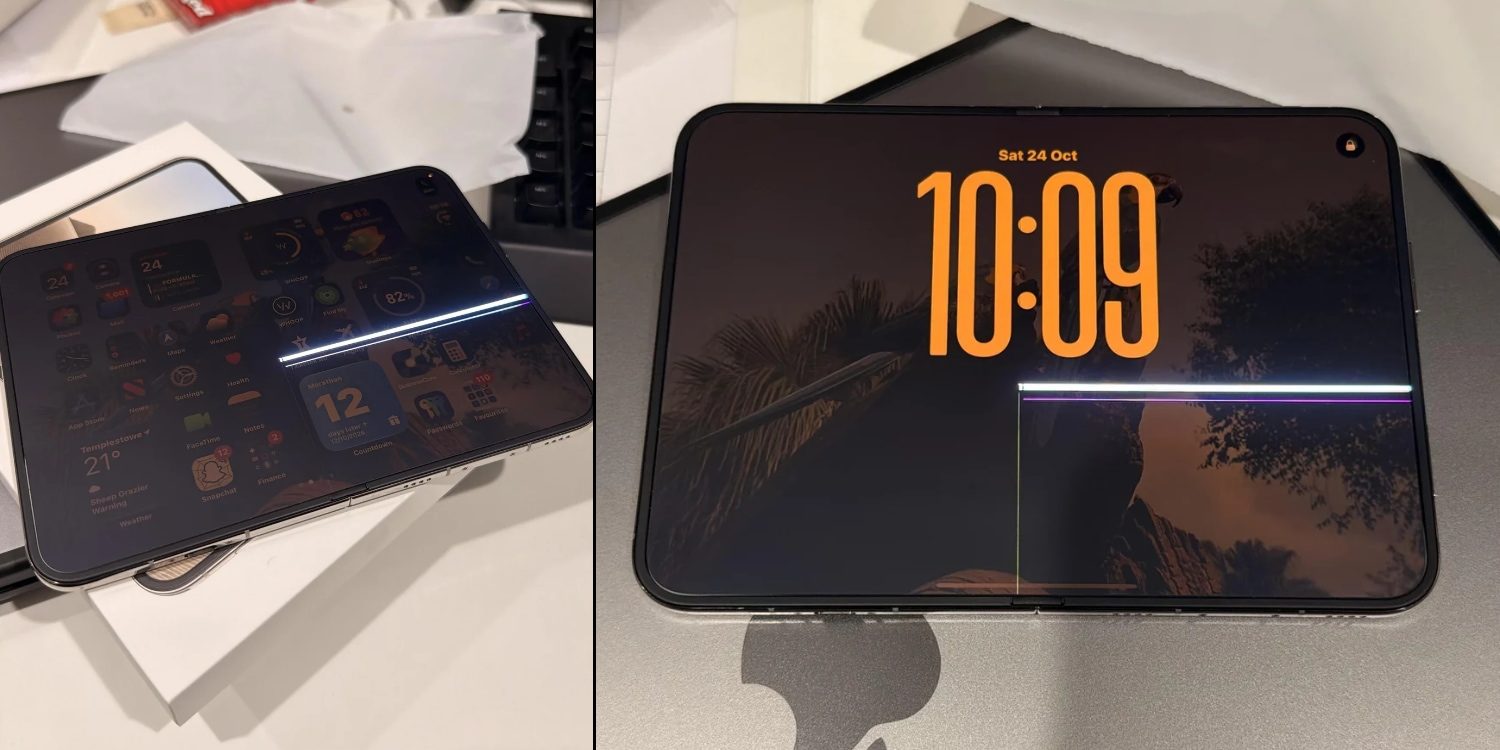
Despite these sophisticated protective measures, the timing of the iFixit teardown coincides with a growing volume of consumer complaints regarding spontaneous screen failures. Owners of the iPhone Duo have taken to various online forums to report a recurring phenomenon: a distinct crunching sound heard during standard folding operations, immediately followed by the sudden appearance of vertical bright lines, dead pixels, or catastrophic OLED panel failure along the vertical axis of the inner screen.
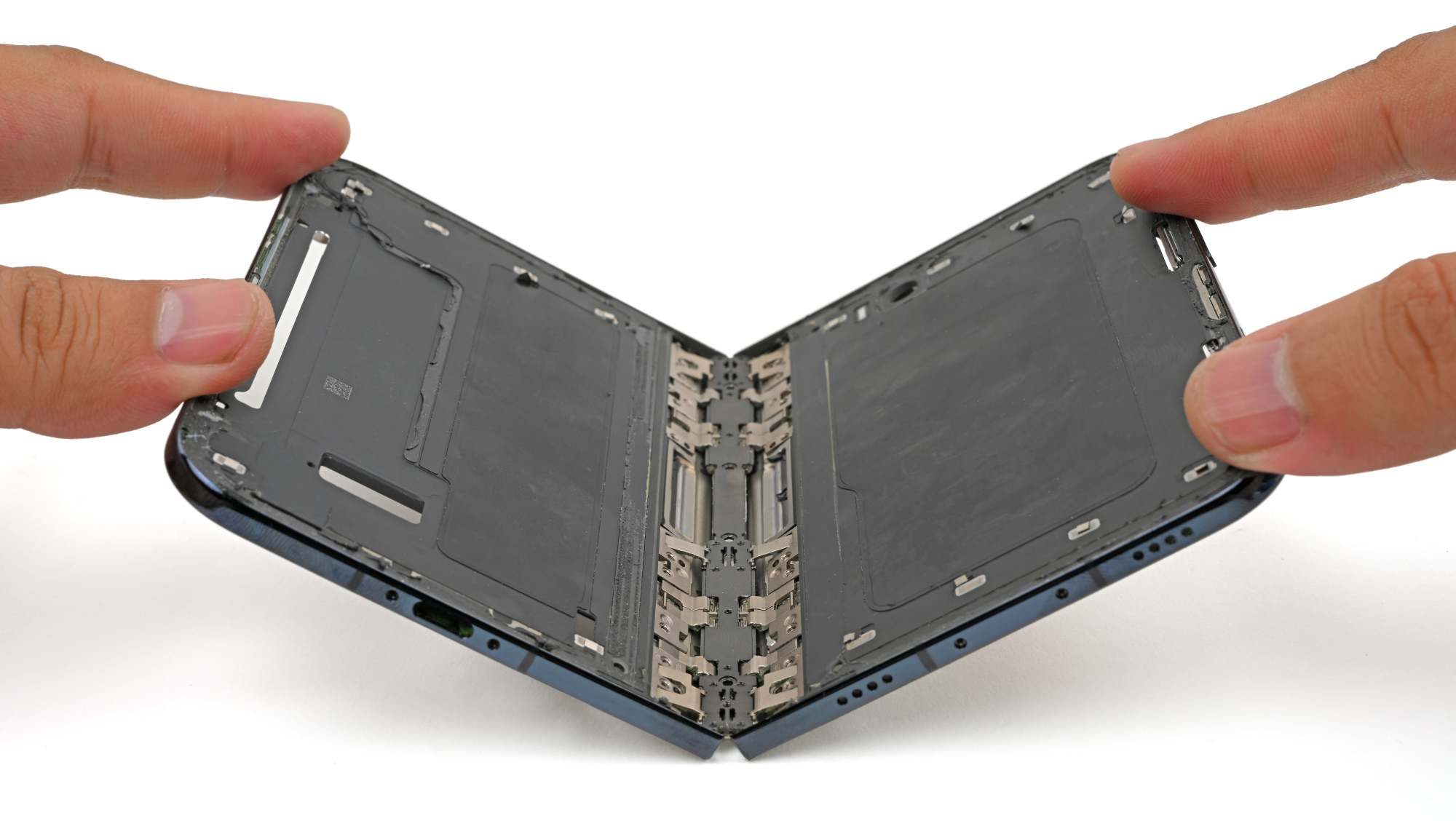
Using computed tomography (CT) scans, microscopic imaging, structural measurements, and Apple’s extensive patent archive, the iFixit engineering team constructed a detailed three-dimensional computer model of the hinge to investigate potential root causes. Their analysis points to several plausible hypotheses regarding the origin of the mechanical stress.
The primary suspect centers on a central support bar designed to back the display. If this bar fails to fully retract into its designated recess during the closing motion, it could exert localized, excessive pressure directly onto the vulnerable underside of the flexible screen. A secondary hypothesis involves the curved metal guide rails. During the folding cycle, these rails briefly elevate above the plane of the surrounding internal chassis. Should microscopic assembly tolerances slip or mechanical debris interfere with their path, these rails could inadvertently collide with the display layers. Finally, iFixit noted that multiple structural support walls converge precisely at the failure zone commonly cited by users, creating a concentration of mechanical rigidity directly adjacent to a high-flex area.
While the teardown could not definitively isolate a single manufacturing defect, the geometric intersection of these components provides a compelling roadmap for ongoing engineering audits.
Advanced Display Technologies and Nanotexture Innovation
Beyond the mechanical hinge, the teardown highlighted Apple’s unique approach to mitigating the visual impact of the folding crease. The iPhone Duo utilizes a specialized matte nano-texture finish on its inner foldable display. Under high-magnification microscopy, the screen surface is revealed to be populated by an array of microscopic, rounded topographical bumps designed to diffuse ambient light and scatter reflections, thereby rendering the central crease far less visible to the naked eye under harsh lighting conditions.
Further microscopic examination of the pixel grid uncovered an unconventional layout near the front-facing camera cutout and along the central folding axis. Rather than adhering to a uniform geometric orientation, certain subpixels feature distinct oval shapes angled in varying directions. According to cross-referencing with Apple patent documentation, this calculated irregularity is intended to reduce optical diffraction artifacts, ensuring that light passing through the display panel does not create distracting distortion patterns.
For the under-display selfie camera, Apple adopted a structural approach similar to the infrared biometric sensor array found on the iPhone 18 Pro. The pixel density in the immediate camera zone is reduced, featuring wider physical gaps between subpixels to allow sufficient illumination to reach the sensor without compromising color accuracy or brightness on the active display.
Modular Assembly and Battery Replacement Innovations
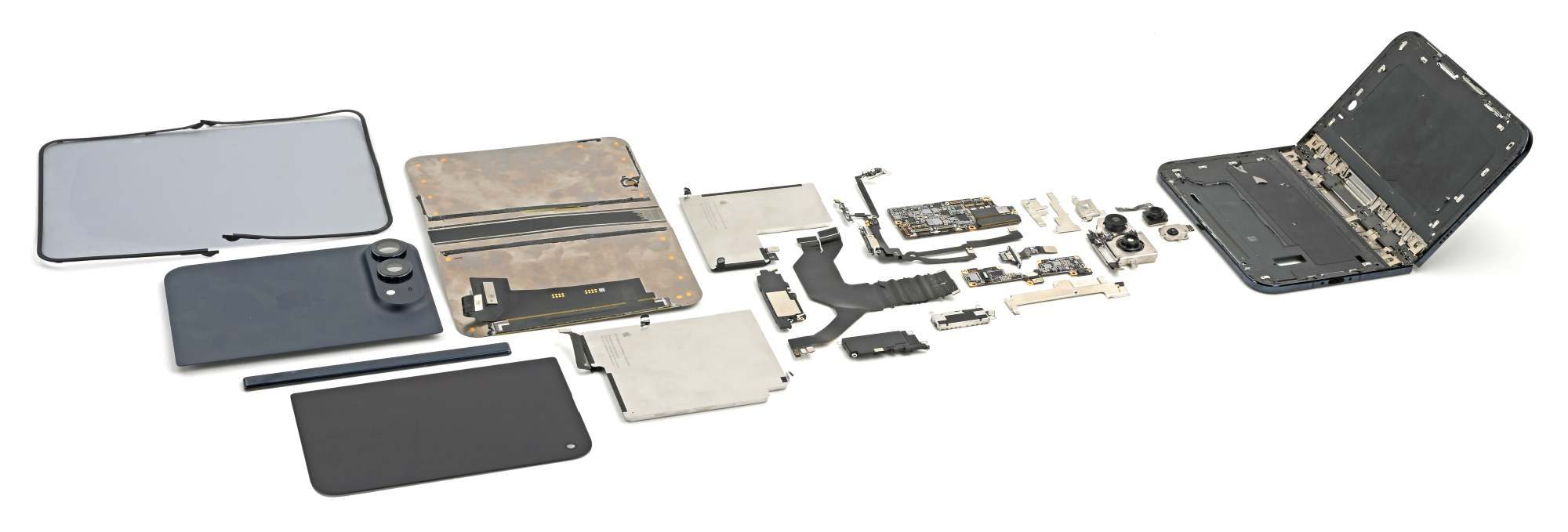
In terms of physical construction, the iPhone Duo incorporates several design choices that contribute to its relatively favorable repair score. The plastic bezel framing the inner display is secured using mechanical clips rather than industrial adhesive, allowing technicians to detach it without causing structural fracture. Similarly, the outer cover display is secured with fasteners that facilitate straightforward removal—a crucial design victory, given that numerous internal component swaps necessitate accessing the device through the front panel.
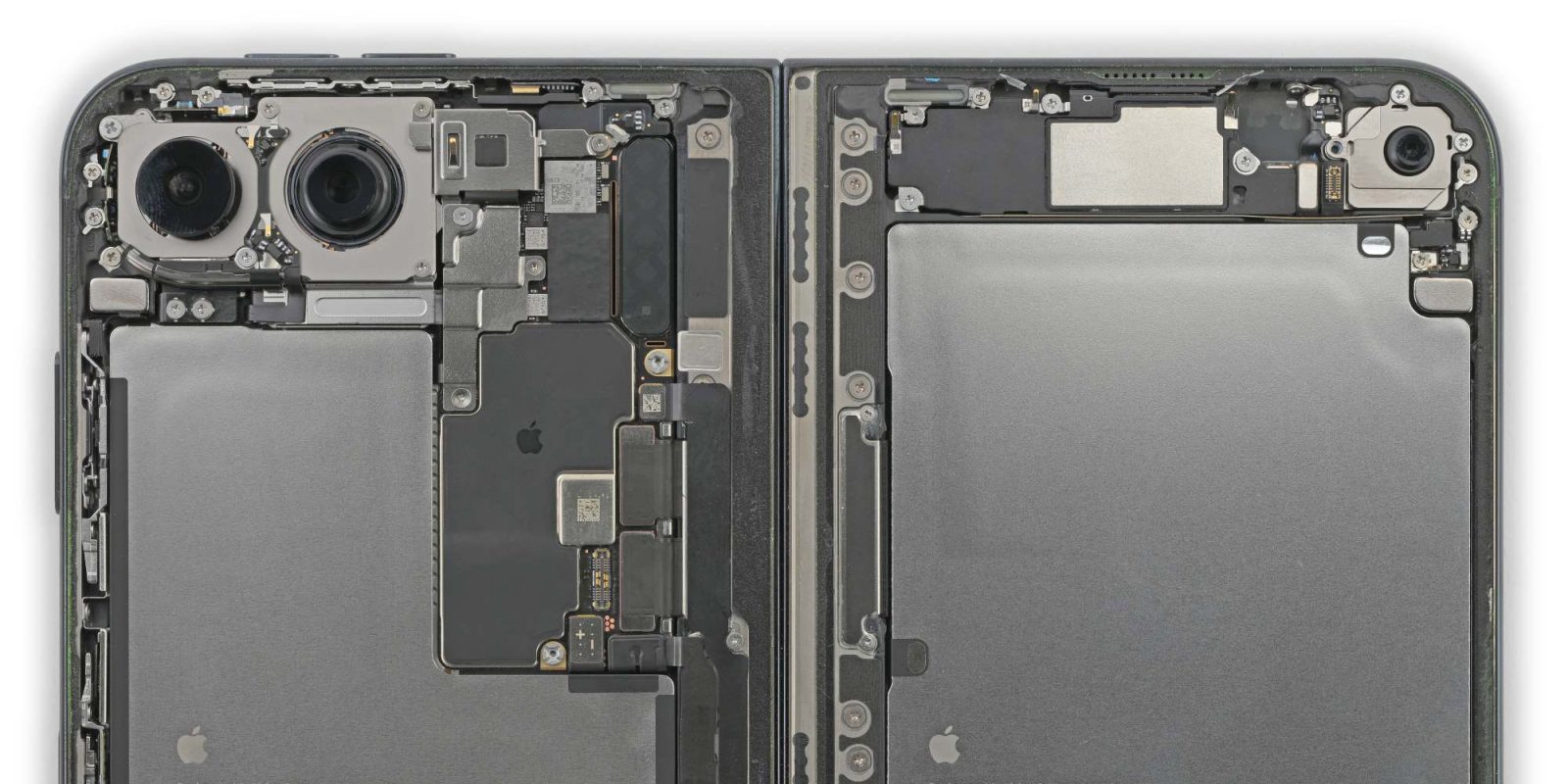
Power is managed via a dual-battery configuration distributed symmetrically across both halves of the folding chassis. The larger cell, located beneath the rear glass panel, boasts a capacity of 11.567 Wh, while the secondary cell beneath the outer display delivers 7.506 Wh, bringing the total combined energy storage to 19.073 Wh.
Most notably, iFixit praised Apple’s implementation of electrically releasable adhesives for both battery units. By applying a controlled electrical current to the adhesive strips, technicians can neutralize the bonding agent instantly, eliminating the need for hazardous manual prying or thermal softening. This advancement represents the most user-friendly battery extraction process observed in a foldable smartphone to date.
Broader Industry Implications and Consumer Outlook

The release of the iPhone Duo and its subsequent technical dissection arrive at a critical juncture for the mobile device industry. Foldable smartphones have transitioned from experimental luxury items into mainstream flagship alternatives, yet durability concerns have continually hindered widespread consumer adoption.
Apple’s entry into the space establishes a new baseline for hardware sophistication, balancing modular repair convenience with advanced materials science. However, the concurrent emergence of screen cracking issues underscores the immense physical tolerances required to manufacture a reliable folding display. How Apple chooses to address these early hardware failures—through potential manufacturing adjustments, retail repair protocol updates, or extended warranty support—will likely define the market trajectory of the iPhone Duo and shape consumer confidence in foldable technology for years to come.