The evolution of the mechanical keyboard market over the past decade has transformed what was once a niche hobby for typing enthusiasts into a multi-million-dollar peripheral industry. Long before the COVID-19 pandemic catalyzed a massive mainstream surge in demand for premium desk setups, boutique manufacturers like IQUNIX were already quietly setting the standard. By championing high-grade PBT keycaps, CNC-machined aluminum chassis, and robust internal dampening long before they became industry norms, the brand earned a reputation for being ahead of the curve.
While IQUNIX has successfully expanded its portfolio to cater to the burgeoning Hall Effect and magnetic switch demographic with its EZ series, the company continues to explore traditional mechanical design paths. Its latest offering, the IQUNIX MQ80, attempts to distill years of engineering expertise into a compact, low-profile, all-aluminum package. However, despite its striking aesthetics and exceptional acoustic profile, the MQ80 enters a fiercely competitive market where steep pricing and practical limitations hinder its status as an effortless recommendation.
Origins and Market Positioning: The Shift Toward Low-Profile Aluminum
To understand the trajectory of the IQUNIX MQ80, one must examine the broader shifts within the peripheral landscape. For years, mechanical keyboards were defined by tall, high-profile designs that prioritized travel distance and mechanical switch feedback above desk ergonomics. However, as remote work solidified and consumers spent more time at home office setups, the demand for sleek, laptop-adjacent low-profile boards skyrocketed.
Competitors such as Keychron, Logitech, and NuPhy quickly capitalized on this trend, flooding the market with aluminum-bodied, low-profile alternatives that offered wireless connectivity, hot-swappable switches, and programmable software at aggressive price points. IQUNIX, historically known for its luxury pricing and heavy-duty desktop centerpieces, faced a strategic imperative to adapt.
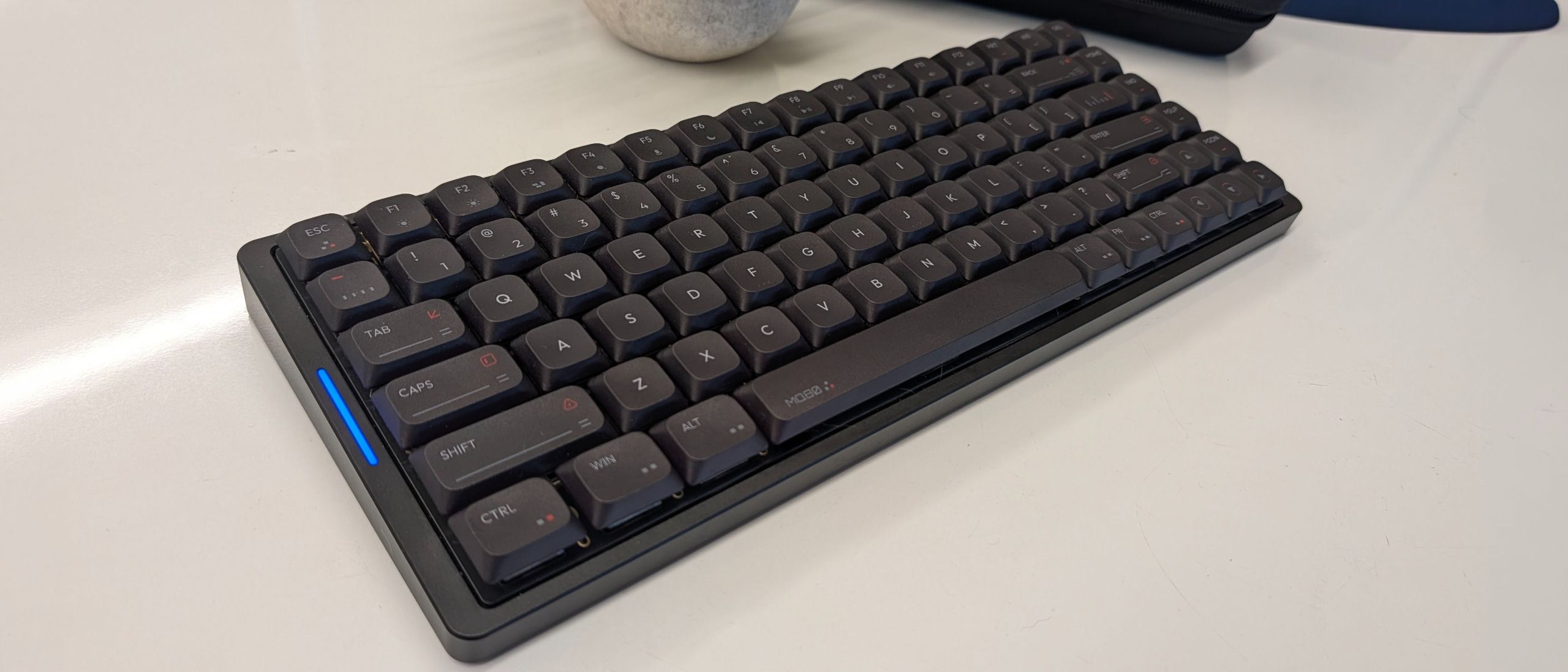
The MQ80 represents the brand’s answer to this low-profile movement. Rather than merely adopting a slim chassis, the engineers sought to compress the luxurious typing experience of their heavy desktop boards into a sleeker profile. The result is a device constructed almost entirely from aluminum, boasting a remarkably rigid frame that resists flexing under pressure. Furthermore, IQUNIX paid meticulous attention to the acoustic engineering of the board, ensuring that each keystroke delivers a refined, thocky sound signature that is rarely achieved in low-profile form factors.
Design, Build Quality, and Acoustics
Upon unboxing the IQUNIX MQ80, the build quality immediately communicates its premium pedigree. The heavy-duty aluminum chassis gives the keyboard a reassuring heft that anchors it firmly to any desk surface, preventing sliding during intense typing sessions or gaming matches. The anodized finish is smooth to the touch and resistant to fingerprints, maintaining a professional, understated aesthetic suitable for both corporate offices and minimalist gaming battle stations.
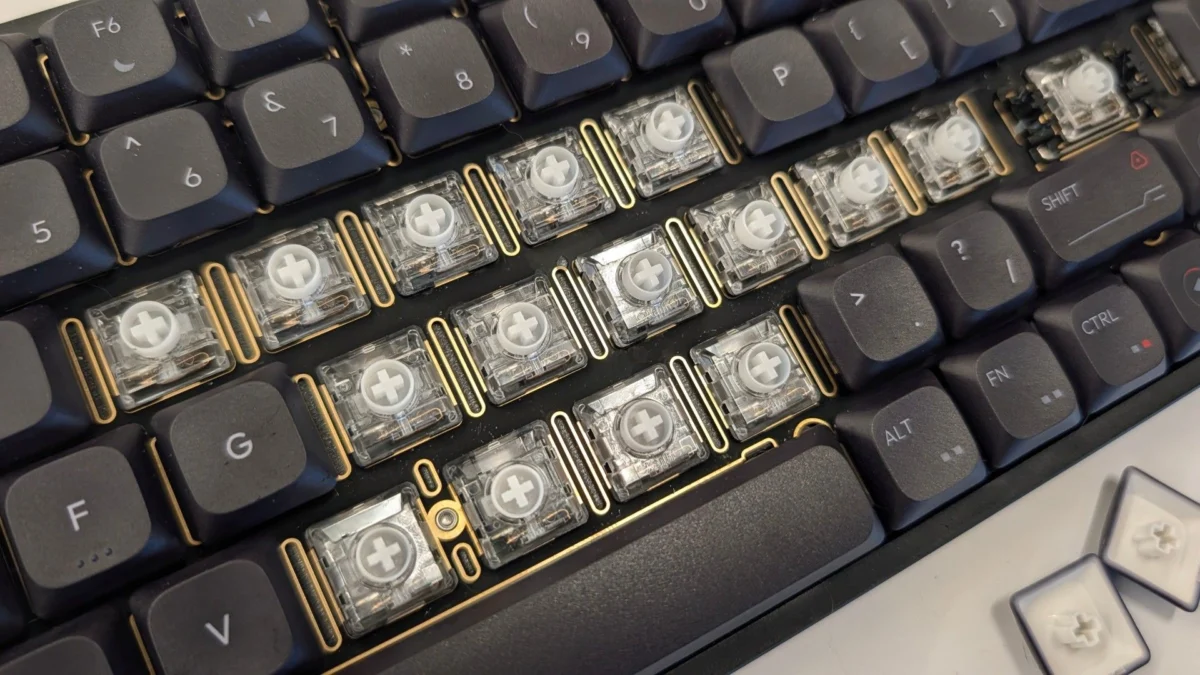
The keycaps, adhering to IQUNIX’s long-standing preference for high-quality materials, offer a pleasing texture with legends that resist shine and wear over extended use. Beneath these keycaps lie custom-engineered low-profile mechanical switches designed to bridge the gap between traditional tactile feedback and the rapid actuation required by modern users.
Where the MQ80 truly distinguishes itself from rivals is in its acoustic profile. Low-profile keyboards often suffer from a hollow, pingy sound due to the limited internal cavity space available for dampening materials. IQUNIX utilized a multi-layered internal padding system that absorbs unwanted reverberations, resulting in a clean, muted, and satisfyingly deep sound signature. For enthusiasts who prioritize acoustics—a major focal point of modern mechanical keyboard culture—the MQ80 punches well above its weight class.
Connectivity, Software, and Portability Challenges
Despite its strengths in build quality and acoustics, the IQUNIX MQ80 encounters friction when evaluated on daily usability and modern feature sets. In an era where multi-device Bluetooth pairing, 2.4GHz wireless dongles, and robust companion software are baseline expectations for premium keyboards, the MQ80’s feature implementation feels conservative.
Wireless connectivity is stable, allowing users to seamlessly transition between desktop setups and mobile devices. Battery life is respectable, though the dense aluminum frame can sometimes interfere with optimal wireless range if obstructed by heavy desk accessories.
However, portability—a primary selling point for low-profile keyboards—is severely compromised by the board’s physical design choices. While low-profile keyboards are traditionally engineered to be slipped into backpacks for on-the-go productivity alongside laptops, the MQ80’s solid aluminum construction makes it surprisingly heavy. It lacks the lightweight agility of competitors like the NuPhy Air series, positioning the MQ80 more as a stationary desktop fixture than a true travel companion.
Additionally, companion software customization remains an area where boutique manufacturers often lag behind industry giants. While the MQ80 supports basic key remapping and lighting adjustments, the user interface for configuration lacks the polish and deep macro functionality found in software ecosystems from brands like Razer, Corsair, or even Keychron’s VIA/QMK integration.
Competitive Landscape and Pricing Pressures
The most significant hurdle facing the IQUNIX MQ80 is not its hardware execution, but the macroeconomic environment of the peripheral market. When IQUNIX first established its luxury status, premium materials justified significantly higher price tags. Today, however, the democratization of CNC aluminum manufacturing means that consumers can find comparable build qualities at drastically lower price points.
Competitors have flooded the mid-tier market with aluminum-bodied keyboards that offer hot-swappable switches, advanced gasket-mount designs, and extensive software customization for a fraction of the cost. Magnetic Hall Effect switches—which allow for adjustable actuation points—have also captured the attention of high-end gamers, leaving traditional mechanical boards with a smaller slice of the enthusiast pie.
Reviewers and industry analysts note that while the MQ80 excels as a luxury typing instrument, its cost-to-performance ratio makes it a difficult sell at its launch MSRP. For consumers who specifically dislike magnetic switches and prefer the traditional tactile feedback of mechanical switches, the MQ80 is a compelling, beautifully crafted option. For everyone else, the prevailing recommendation leans toward patience.
Broader Industry Implications and Future Outlook
The trajectory of the IQUNIX MQ80 highlights a broader transitional phase for boutique peripheral makers. As manufacturing techniques become mainstream, luxury build quality alone is no longer enough to command a premium. Companies must innovate through proprietary software ecosystems, unique switch technologies, or aggressive pricing strategies to capture market share.
For IQUNIX, the MQ80 proves that the company retains its world-class manufacturing capabilities and deep understanding of ergonomics and acoustics. The chassis design and sound profiling are masterclasses in mechanical keyboard engineering. Yet, as the market matures, consumer expectations have evolved past hardware excellence alone.
Ultimately, the IQUNIX MQ80 stands as a testament to the heights of traditional keyboard craftsmanship. It is well-made, undeniably stylish, and a joy to type on for extended periods. However, in a crowded marketplace defined by rapid innovation and aggressive pricing, it is no longer an instant purchase. Prospective buyers are advised to acquire the MQ80 if they explicitly prefer traditional mechanical switches over magnetic alternatives, or simply wait for promotional retail sales to maximize its overall value proposition.