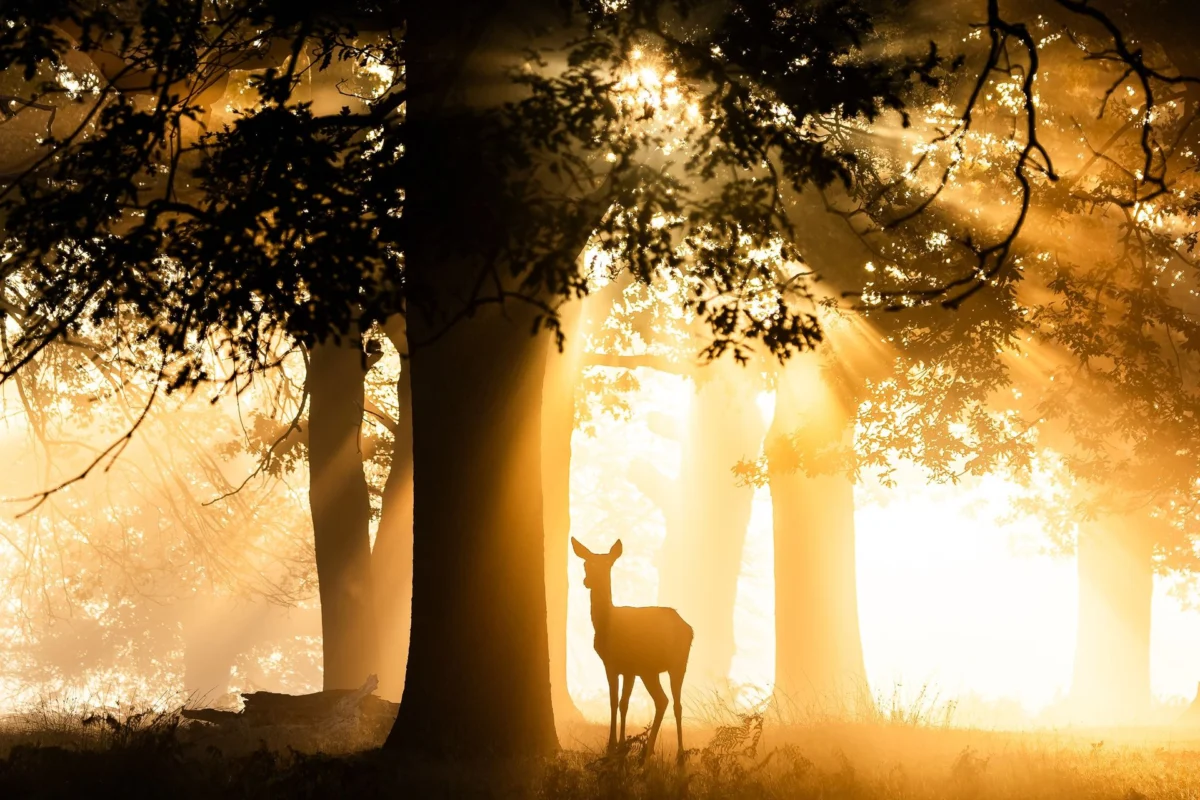
For professional wildlife and landscape photographers, the traditional definition of "good weather"—typically characterized by cloudless skies, bright sunshine, and warm temperatures—is often subverted in pursuit of atmospheric storytelling. This reality was vividly demonstrated this autumn in London, England, where Getty Images photographer Brook Mitchell captured a breathtaking series of wildlife photographs centered around the annual deer rut in Richmond Park. Working in the chilly, pre-dawn hours, Mitchell leveraged dense ground fog and low-angle sunrise light to produce a striking visual narrative that quickly earned recognition as one of Getty’s top news photo selections of the week.
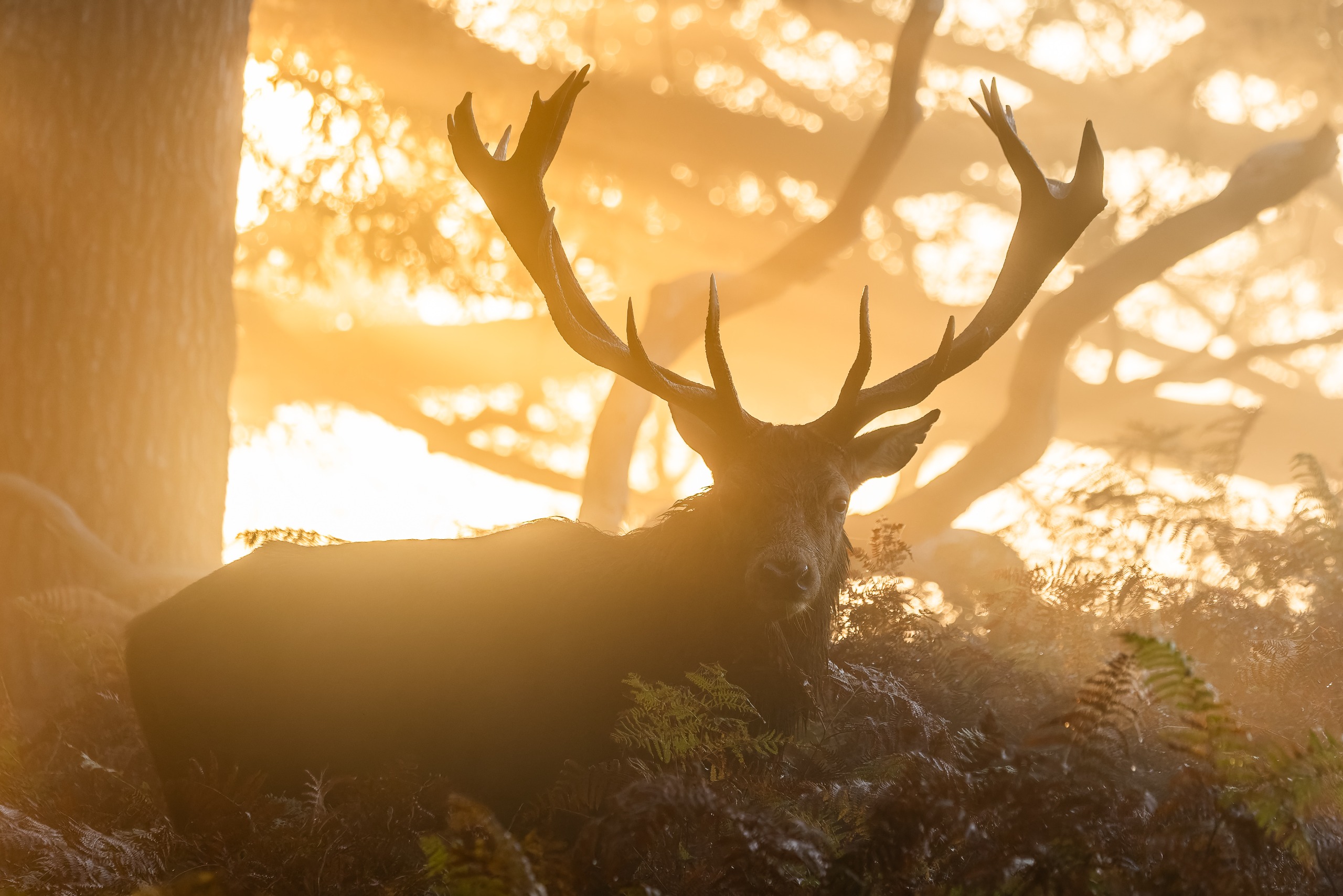
The resulting portfolio showcases magnificent red stags and fallow bucks moving through a misty landscape, their silhouetted antlers cutting through glowing shafts of morning sunlight. Beyond their aesthetic appeal, the images offer a masterclass in the technical challenges and rewards of wildlife photography under volatile meteorological conditions, providing a timely look into a centuries-old natural phenomenon unfolding just miles from the heart of the British capital.
The Dynamics of the Autumn Rut
October marks the peak of the rut, or the annual mating season, for the resident deer populations across the United Kingdom. During this critical biological window, hormonal shifts drive male red stags and fallow bucks to become exceptionally active, vocal, and territorial. Stags can frequently be heard emitting deep, guttural roars across misty meadows to advertise their dominance to potential rivals and attract receptive hinds.
This heightened activity fundamentally alters the behavior of the deer, making them more visible during daylight hours than at other times of the year, yet it also introduces heightened unpredictability. While park visitors and photographers alike are drawn to Richmond Park—London’s largest royal park, spanning over 2,500 acres and housing roughly 630 roaming red and fallow deer—authorities continually issue strict advisories regarding safety. The Royal Parks organization mandates that the public maintain a minimum distance of 50 meters from the animals at all times, particularly during the volatile rutting season when stags can become aggressive if they perceive a threat to their harems.
For photographers operating within these regulatory boundaries, long focal-length lenses become absolute necessities. Mitchell’s ability to frame intimate, detailed portraits of the stags while adhering to these crucial safety buffers highlights the indispensable role of professional-grade telephoto optics in modern wildlife documentation.
Navigating the Elements: The Challenge and Science of Fog
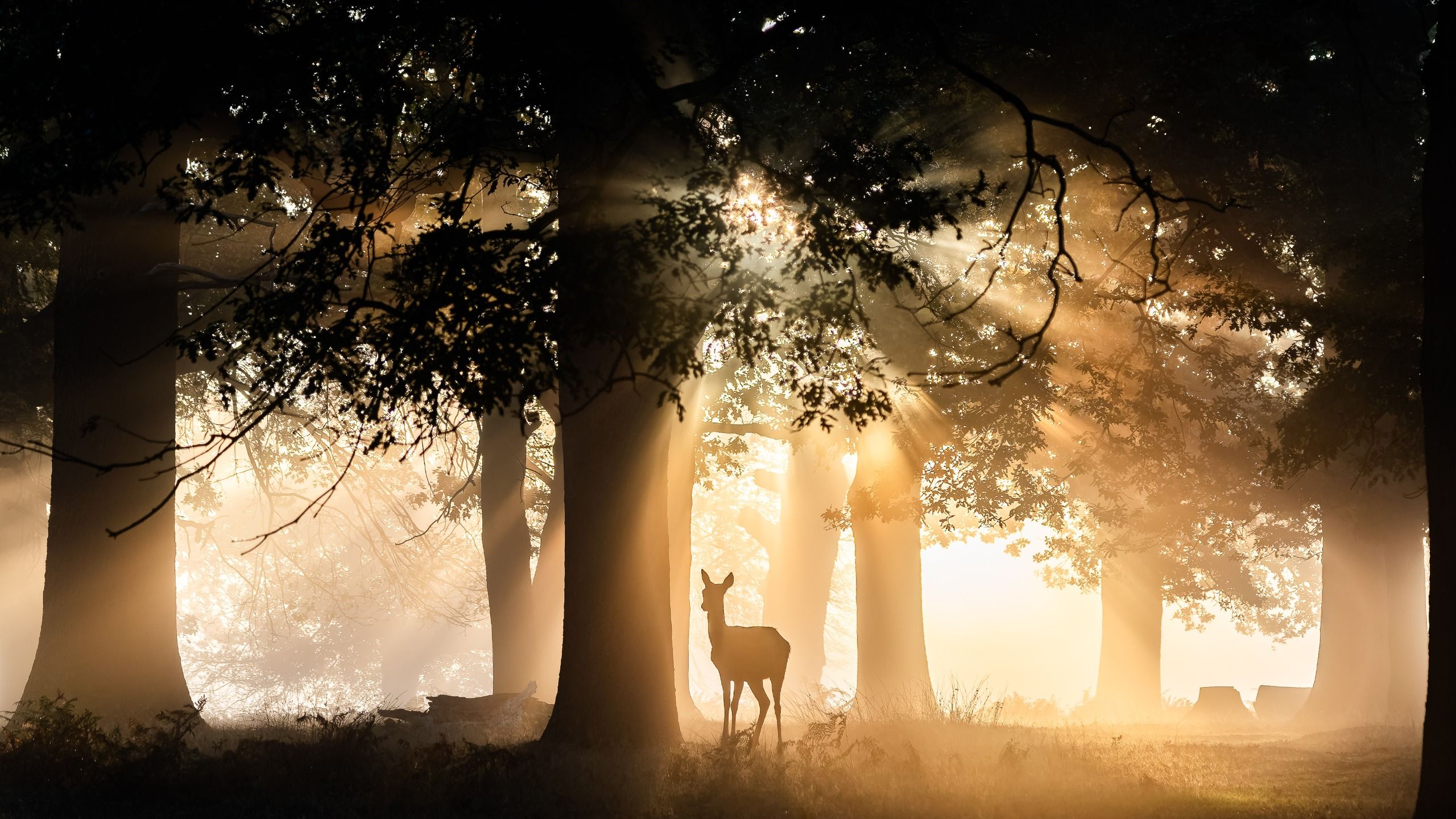
The defining characteristic of Mitchell’s acclaimed photo series is not merely the presence of the deer, but the ethereal quality of the environment in which they were captured. Dense autumn morning fog blanketed Richmond Park, rolling across the ancient grasslands and framing centuries-old oak trees in soft, muted tones.
While fog is widely prized by visual artists for its ability to impart mystery, depth, and a painterly quality to outdoor scenes, it presents significant technical hurdles for camera operators. Low visibility forces photographers to rely heavily on advanced autofocus systems capable of tracking fast-moving subjects through visual obstructions. Furthermore, the high moisture content in dense fog frequently leads to rapid condensation buildup on glass elements, requiring constant lens maintenance and weather-sealed equipment.
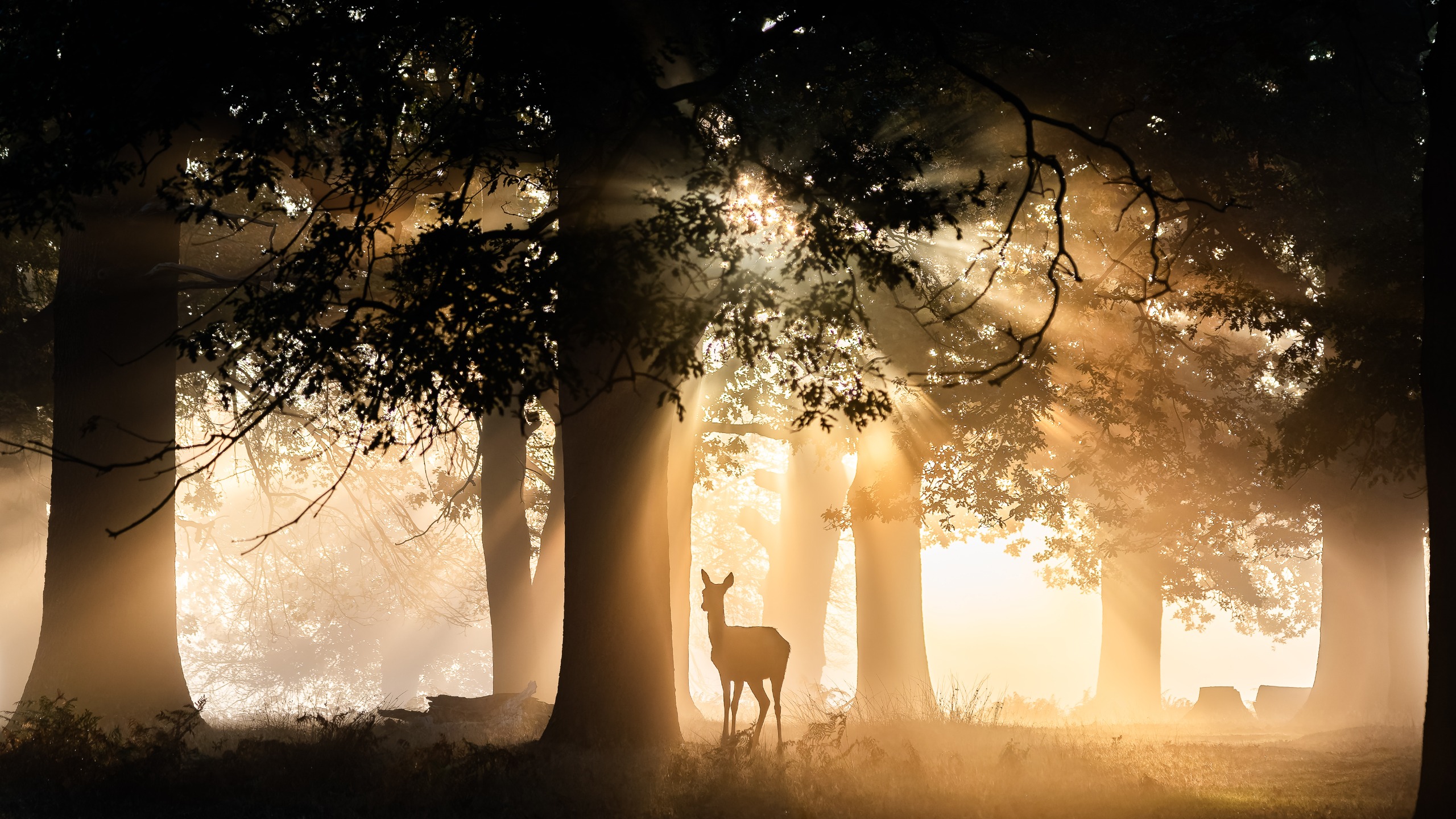
However, when ground fog interacts with a low-rising sun in the absence of dense overhead cloud cover, it creates a rare and dramatic optical phenomenon known as crepuscular rays—commonly referred to as "sunbeams" or "God rays." These luminous streaks occur when early morning sunlight hits microscopic water droplets suspended in the air, causing the light to scatter visibly.
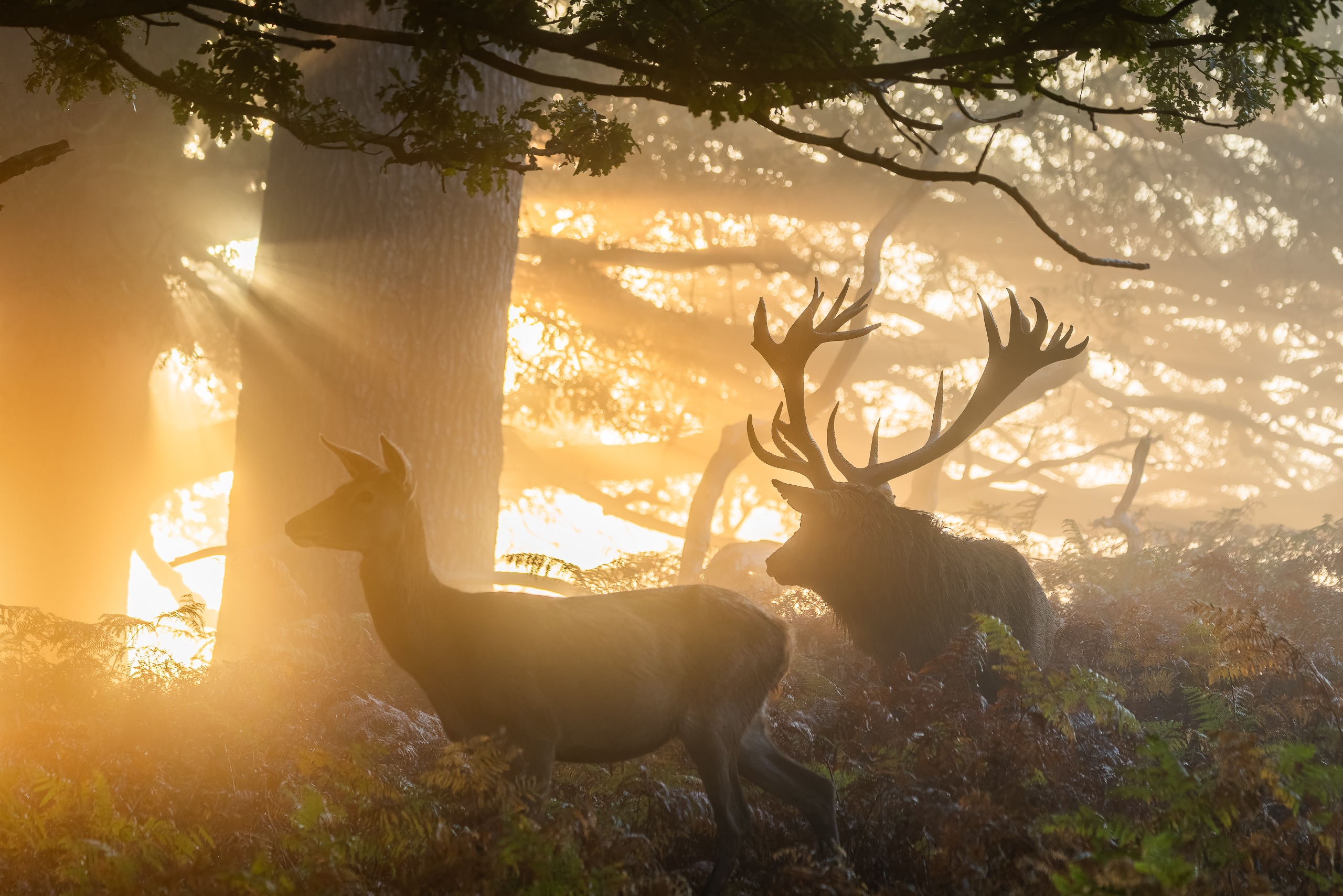
To successfully capture these rays, photographers must carefully orchestrate their positioning relative to the light source. Shooting directly toward the sun is traditionally discouraged in basic photography due to the risk of severe lens flare and washed-out highlights; however, in misty conditions, facing the light source is essential to illuminating the suspended moisture particles. Furthermore, because these shafts of light possess intense luminosity, photographers must employ precise exposure techniques—such as narrowing the aperture or increasing the shutter speed—to preserve highlight details in the sky while maintaining adequate shadow detail in the surrounding terrain and wildlife subjects.
High-End Gear and Professional Execution
Executing shots of this caliber requires gear capable of withstanding harsh environmental conditions while delivering uncompromising image quality. For this assignment in Richmond Park, Brook Mitchell utilized professional-grade equipment from Canon’s ecosystem, anchoring his setup with the Canon EOS R5 Mark II mirrorless camera paired with the versatile Canon RF 100-500mm f/4.5-7.1 L IS USM telephoto zoom lens.
The Canon EOS R5 Mark II, designed for high-speed professional sports, wildlife, and photojournalism applications, offers advanced subject-tracking autofocus powered by deep-learning algorithms. This technological capability proved vital when tracking erratic stag movements through fluctuating veils of fog. Coupled with the reach and optical clarity of the RF 100-500mm L-series lens, the equipment enabled Mitchell to maintain safe distances from the rutting stags while isolating subjects against dark, contrasting backdrops such as ancient parkland trees—a framing technique that significantly enhances the visibility and dramatic impact of scattered sunbeams.
Broader Impact and Implications for Wildlife Journalism
The inclusion of Mitchell’s photographs in Getty Images’ premier weekly news roundups underscores a broader trend in contemporary photojournalism: the growing demand for high-impact visual storytelling that bridges natural history and breaking news. While wildlife photography is frequently relegated to specialized nature magazines, imagery documenting urban-adjacent wilderness areas—such as London’s royal parks—serves a vital educational function.
These photographs remind urban populations of the rich biodiversity existing just beyond metropolitan concrete structures. At the same time, the widespread publication of rutting season images plays an indirect role in public safety and conservation education. By showcasing the raw power, behavioral complexity, and seasonal vulnerability of red stags, media outputs reinforce the importance of habitat preservation and responsible human-wildlife coexistence in protected urban green spaces.
As autumn progresses into winter across the United Kingdom, the annual rut draws to a close, and the stags disperse to calmer feeding grounds. Yet, the visual records captured during these fleeting, foggy mornings in Richmond Park serve as a permanent testament to the unique intersection of atmospheric science, animal behavior, and elite photographic craftsmanship.