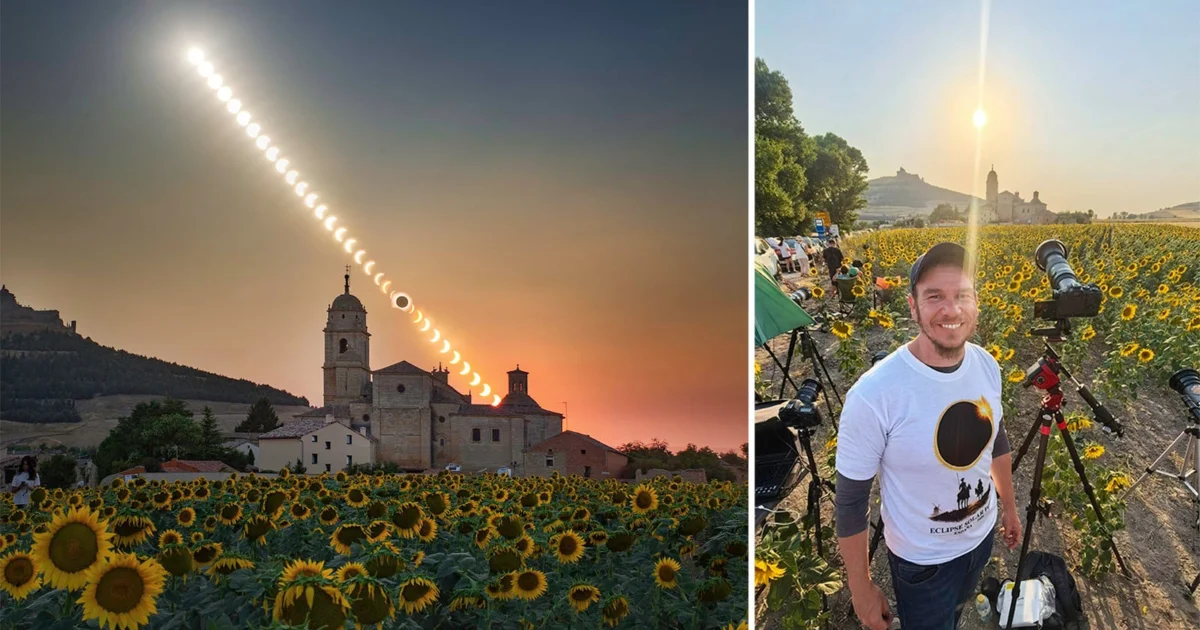
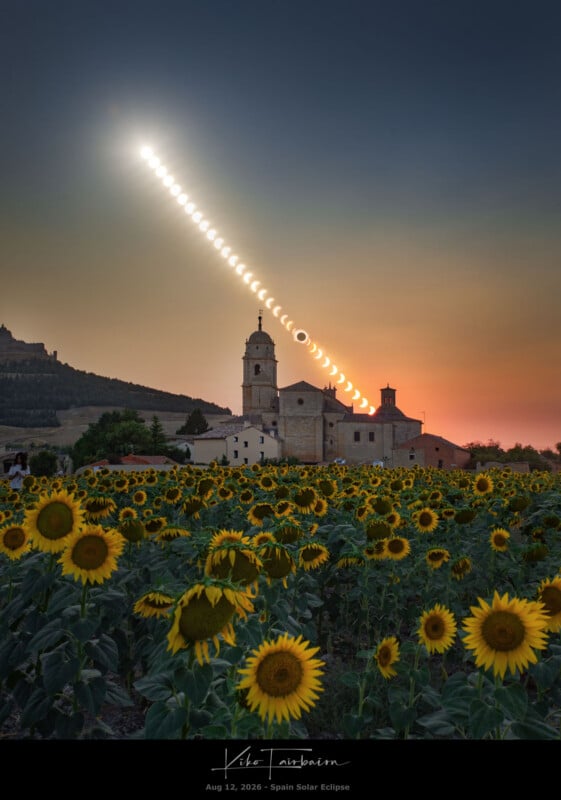
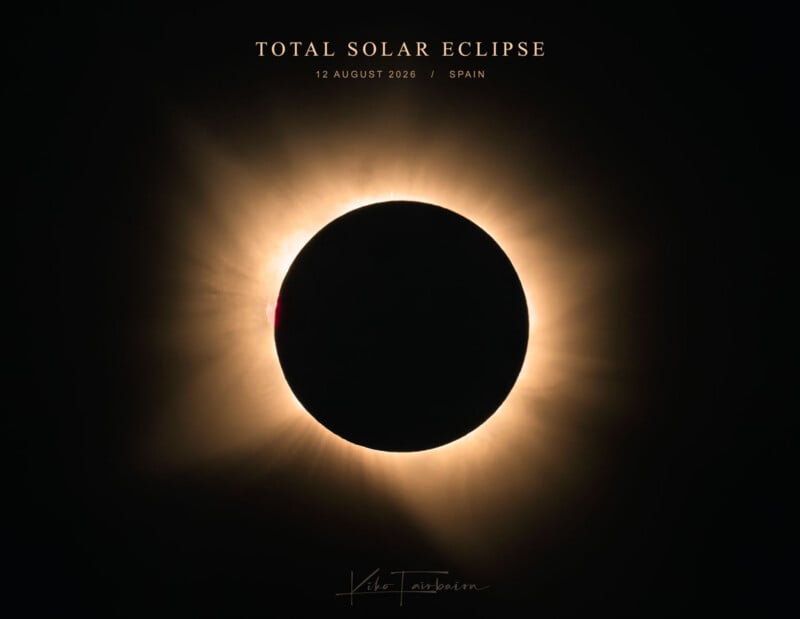
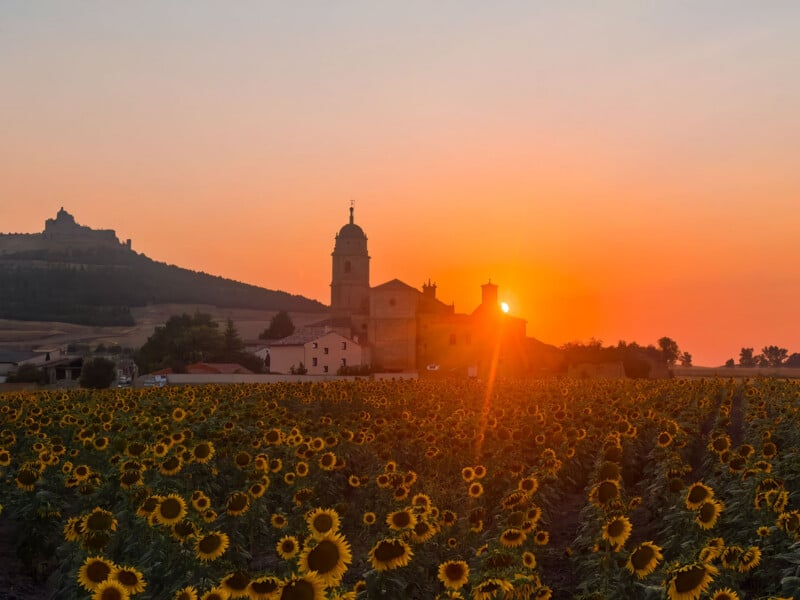
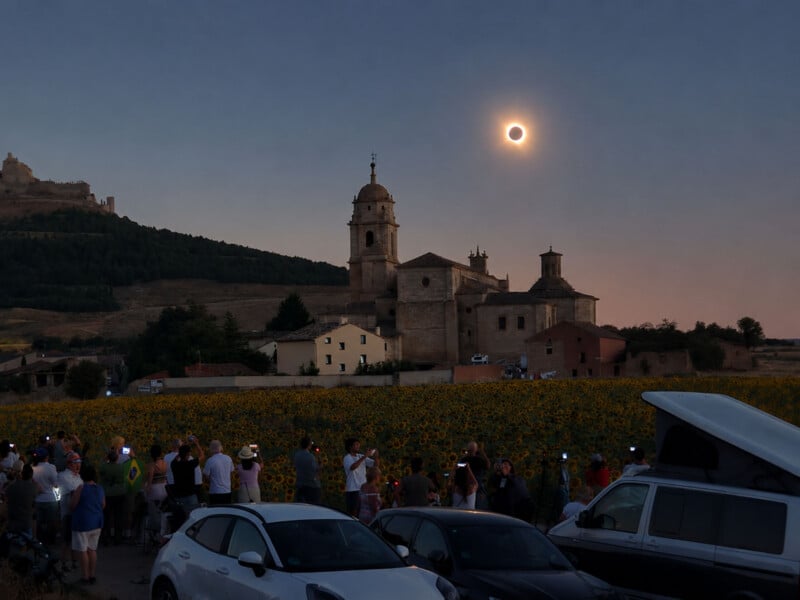
The total solar eclipse that traversed northern Spain on August 12, 2026, provided a rare convergence of celestial mechanics and human artistry, serving as the backdrop for a meticulous year-long photographic project by Brazilian astrophotographer Kiko Fairbairn. While millions of observers across the Iberian Peninsula turned their eyes upward to witness the moon obscuring the solar disc, Fairbairn was engaged in a complex technical operation near Castrojeriz, designed to capture the event not merely as a scientific phenomenon, but as a carefully composed narrative of landscape and light. The resulting imagery, which features the eclipsed sun positioned precisely over ancient architecture and a vibrant sunflower field, highlights the extreme intersection of meticulous pre-planning and the volatile nature of field photography.
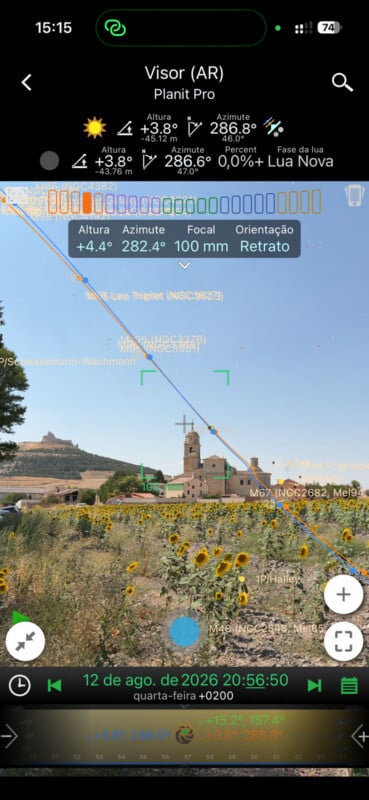
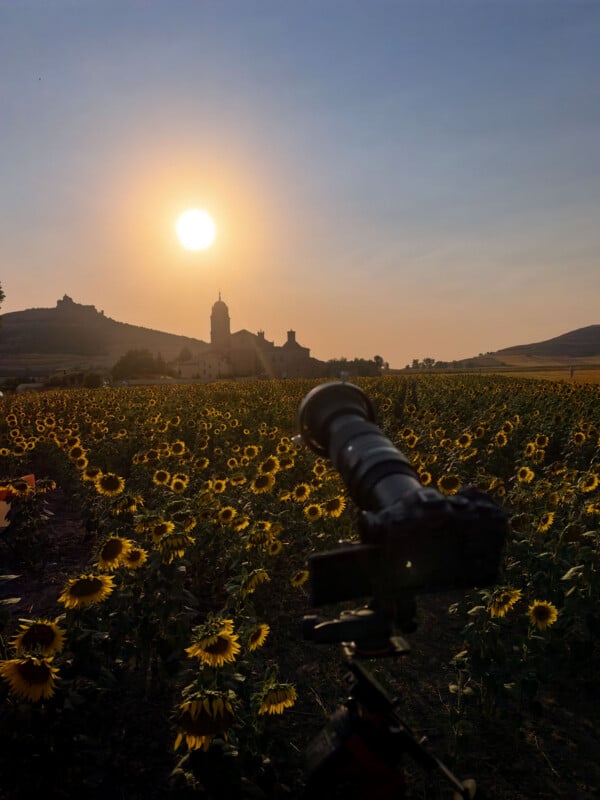
The logistical undertaking began over twelve months prior to the event. For an astrophotographer of Fairbairn’s caliber, the primary challenge is the geographical precision required to capture a total solar eclipse. Totality—the period during which the moon completely blocks the sun—occurs only within a narrow corridor, known as the path of totality. In Spain, this path stretched across the northern provinces, offering a brief window of darkness that lasted approximately 106 seconds for those situated in the optimal central axis. Fairbairn’s strategy involved a combination of high-precision mapping software and on-site field scouting to ensure that his chosen foreground elements, specifically the medieval church and castle ruins near Castrojeriz, would align perfectly with the trajectory of the sun at the moment of peak obscuration.
Technical Execution and Equipment Strategy
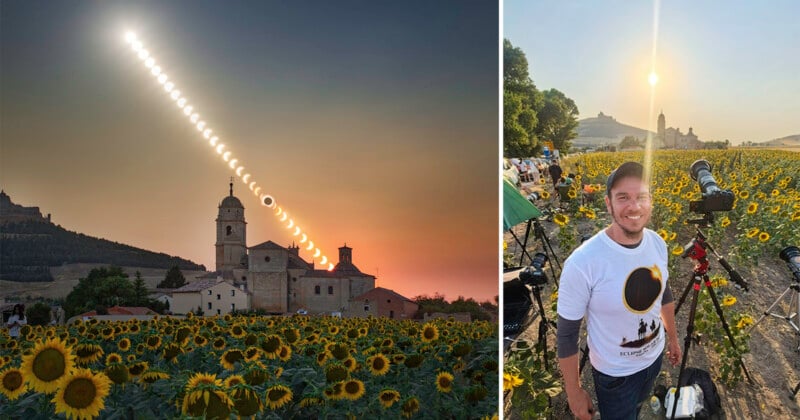
To mitigate the risks inherent in such a fleeting event, Fairbairn employed a dual-camera setup, a common practice among professional eclipse photographers who require both scientific data and artistic composition. His primary setup for capturing the sun’s corona consisted of a Canon EOS R6 Mark III paired with a 150-600mm telephoto zoom lens. To compensate for the earth’s rotation during the exposure, this rig was mounted on a dedicated solar tracker equipped with a specialized solar filter. This setup was automated to record the progression of the eclipse, allowing the photographer to dedicate his attention to his secondary camera—a Canon EOS 5D Mark III.
The decision to utilize the older 5D Mark III for landscape storytelling reflects a deliberate choice by the photographer to rely on a proven, robust system for the more unpredictable aspects of the shoot. Fairbairn focused his efforts on a layered composition that included sunflowers in the foreground, the silhouette of a historic church, and the celestial event occurring above. Through iterative testing with varying focal lengths, he concluded that a 38mm setting on a 24-70mm lens provided the necessary compression to balance the foreground flora with the architectural landmarks and the solar arc.
The technical complexity of the shoot was further compounded by the rapidly shifting light conditions. As the moon moved in front of the sun, the ambient light levels dropped precipitously, mimicking a rapid sunset. To address this, Fairbairn implemented an aggressive bracketing strategy. By capturing three exposures for every sequence—a base exposure, one two stops underexposed, and one two stops overexposed—he ensured a high dynamic range (HDR) safety margin. This approach, supported by a Haida ND 3.0 filter and a constant power supply via a dummy battery and power bank, allowed for consistent, high-quality data capture across nearly 300 frames without the need for manual adjustments during the 106-second window of totality.
The Chronology of the 2026 Solar Eclipse
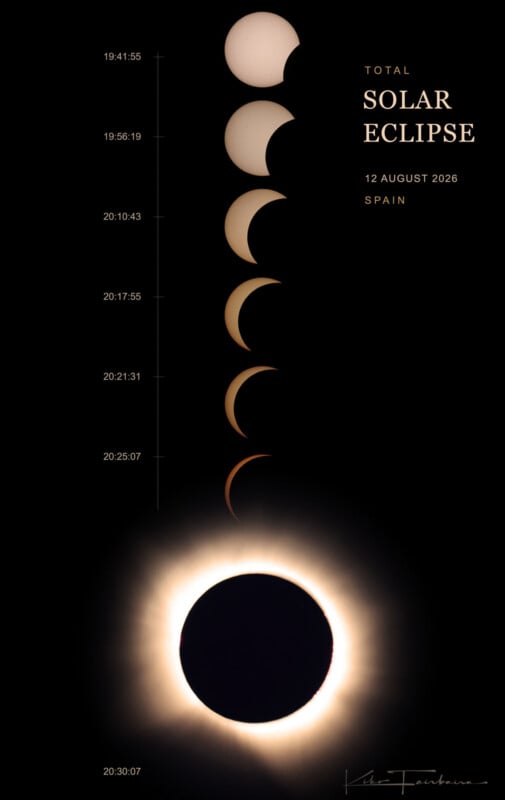
The event on August 12, 2026, followed a trajectory that had been calculated by astronomical institutions years in advance. For the region of Burgos, the eclipse began with a partial phase, where the moon gradually bit into the sun’s edge. During this hour-long ingress, the environment underwent a noticeable transformation: temperatures cooled, bird activity quieted, and the light took on an eerie, silvery quality.
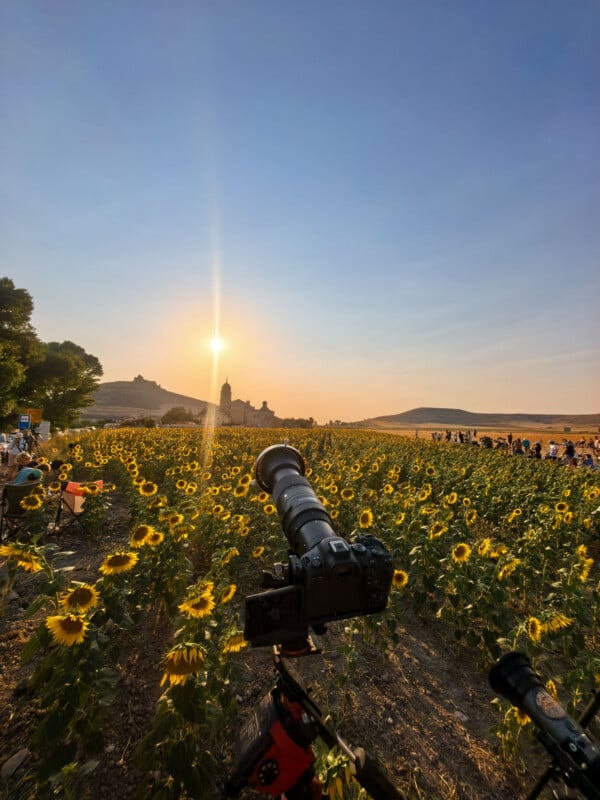
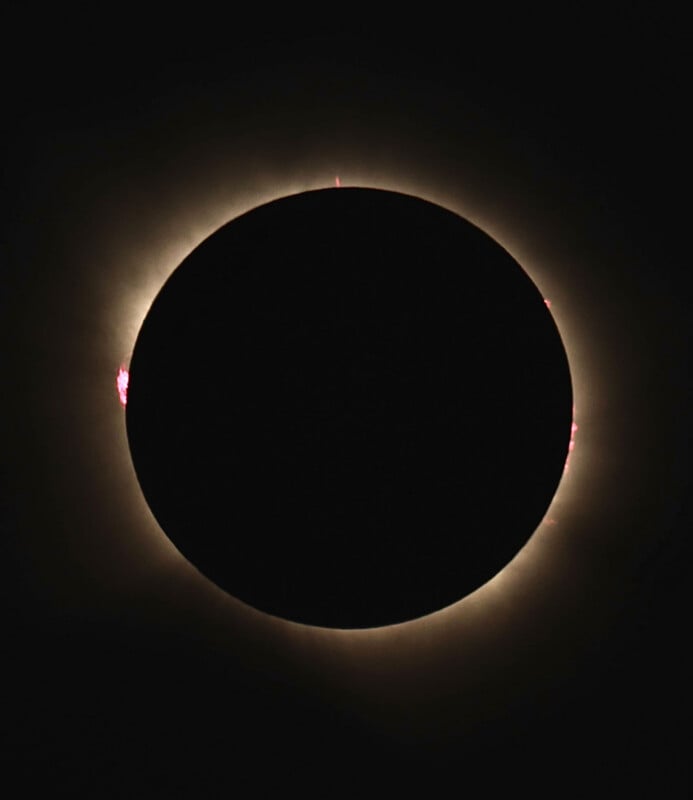
For the photography team, this period was the most tension-filled. Despite the use of sophisticated augmented reality (AR) apps to simulate the eclipse’s path against the local horizon, the final alignment remained subject to the exactness of the photographer’s physical placement. The relief experienced by Fairbairn once the sun entered the frame as anticipated marks the transition from mathematical planning to creative execution. The totality phase, which began shortly thereafter, revealed the solar corona—the sun’s outer atmosphere—which is only visible to the naked eye when the photosphere is completely obscured.
Broader Implications for Astrophotography
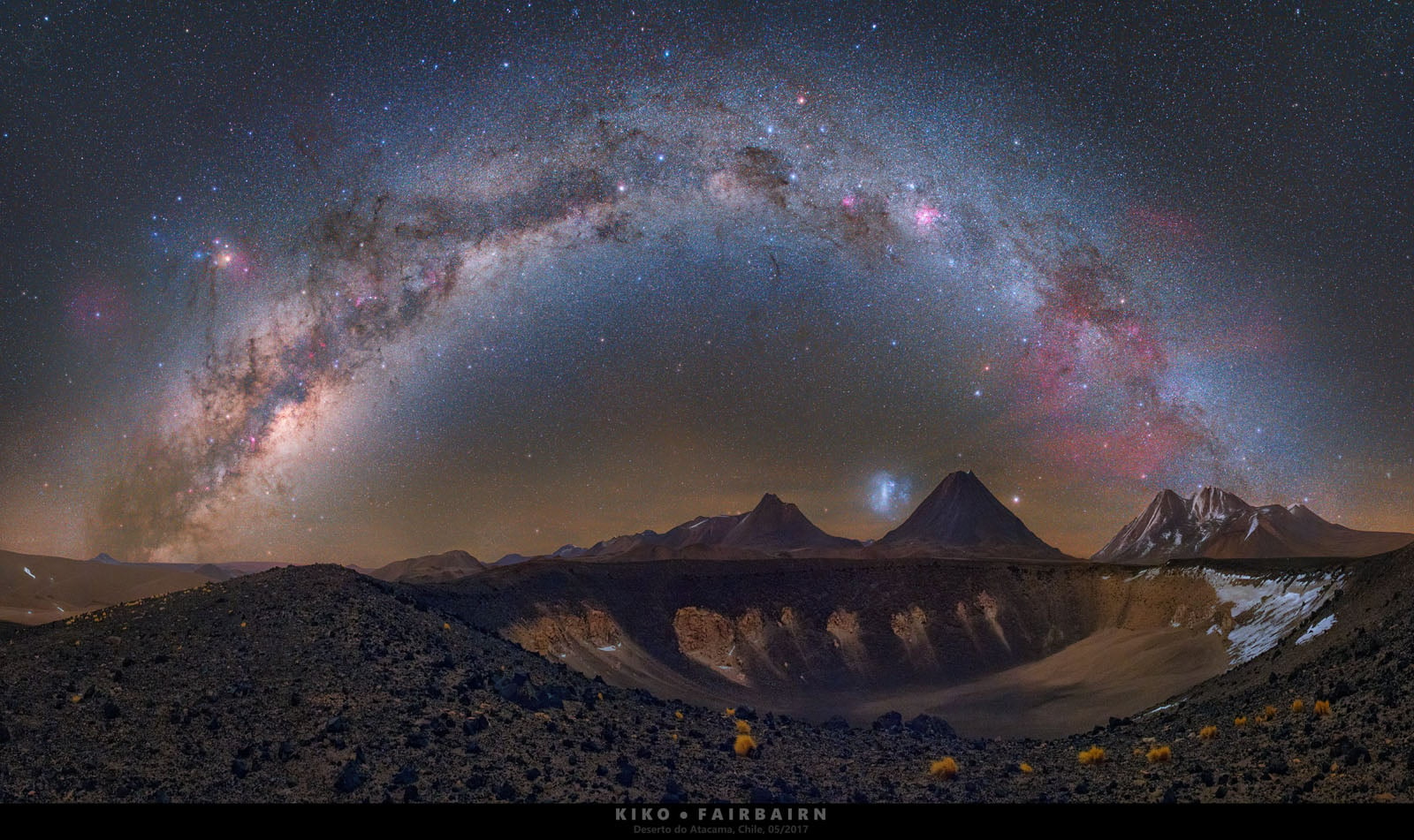
The intersection of science and art is a defining characteristic of Fairbairn’s work. As a previous winner of the Sir Patrick Moore Prize in Astronomy Photographer of the Year, his career has been dedicated to demystifying complex celestial events for a general audience. The 2026 eclipse serves as a case study for the evolution of modern astrophotography, where the barrier to entry has been lowered by technology, yet the mastery of the craft remains dependent on human intuition and preparation.
Data from the event confirms that total solar eclipses occur due to a precise cosmic coincidence: the sun is approximately 400 times larger than the moon, but it is also roughly 400 times farther away from Earth. This results in the two bodies appearing to be of near-identical angular size in our sky. This ratio is what allows for the spectacular visual display of the corona. Fairbairn notes that understanding this physical reality adds a layer of intellectual depth to the photographic process, transforming a simple image into a document of a fundamental astronomical alignment.
The Human Element: Experience vs. Documentation
A recurring theme in the discourse surrounding high-stakes photography is the tension between recording the event and experiencing it. Fairbairn emphasizes that the most common failure for photographers during an eclipse is the preoccupation with equipment to the detriment of the experience. His collaboration with his sister, who managed behind-the-scenes documentation, provided him with the freedom to step away from his viewfinder during the final seconds of totality.
This human-centric approach is echoed by the broader community of astrophotographers who gathered in Spain for the event. The sense of collective anticipation, the exchange of technical support, and the shared vulnerability in the face of weather conditions—a variable that cannot be controlled—created a communal experience that transcended the technical results. Reactions from fellow observers and attendees underscored the profound psychological impact of totality, often described as a "shock and awe" event that challenges one’s perception of the familiar sun.
Conclusion and Legacy
The images produced by Kiko Fairbairn in the aftermath of the 2026 eclipse are intended to serve as more than mere records of an astronomical occurrence. They are carefully curated pieces of storytelling that leverage the natural symbolism of the sunflower—a plant heliotropically connected to the sun—to comment on the fragility and beauty of our solar system.

As Fairbairn continues his work as an educator and speaker, the project serves as a template for future expeditions. It illustrates that while modern software can provide the coordinates for a perfect shot, the defining quality of professional photography remains the photographer’s ability to synthesize environment, emotion, and technical rigor. The 2026 eclipse in Spain was not merely a moment of darkness, but a testament to the enduring human desire to capture and understand the mechanics of the cosmos. For those who witnessed it, the event serves as a reminder of the precision of our universe and the capacity for humans to document its most ephemeral highlights.