Tesla Inc. and SpaceX have initiated a federal lawsuit against Illinois-based nanotechnology company TERA-print LLC, seeking a judicial declaration that their massive, multi-billion-dollar semiconductor manufacturing project does not infringe upon existing trademark rights. The legal action, filed in the U.S. District Court for the Western District of Texas, marks an escalation in a high-stakes intellectual property dispute that threatens to cloud the branding of one of Elon Musk’s most ambitious infrastructure endeavors to date.
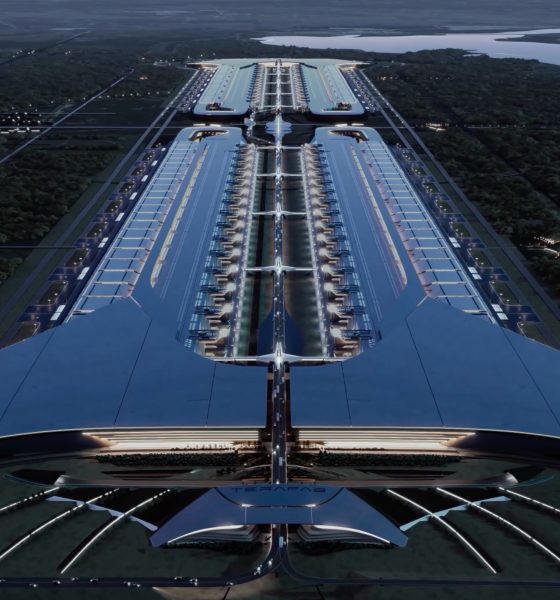
The conflict centers on the term "Terafab," a moniker chosen for an unprecedented $16.8 billion semiconductor manufacturing facility slated for Grimes County, Texas. Spanning approximately 100 million square feet, the sprawling complex is designed to anchor the future production of advanced AI computing chips, hardware for the humanoid Optimus robotics program, and specialized components to support SpaceX’s expanding orbital data center architecture.
However, the rapid progression of the Texas megaproject has collided with pre-existing intellectual property claims held by smaller technology entities, setting the stage for a protracted legal battle over naming rights in the rapidly growing artificial intelligence hardware sector.

Origins of the Trademark Dispute
The legal friction began earlier this year when Tesla formally submitted three trademark applications to the United States Patent and Trademark Office (USPTO) on May 18. These filings sought federal protection for the terms "Terafab" and "Tesla Terafab" across commercial categories specifically designated for semiconductor chips, silicon wafers, and integrated circuit manufacturing services.
Just five days later, TERA-print LLC issued a formal cease-and-desist letter to Tesla and SpaceX. TERA-print, a specialized nanotechnology enterprise operating out of Illinois, has maintained a federal trademark for "Tera-Fab" since 2021. According to court filings, the smaller firm asserted that consumer recognition of its established brand would be severely compromised if consumer-facing tech giants utilized a nearly identical designation for high-volume chip production.
TERA-print’s primary commercial footprint rests upon the development and sale of specialized desktop photolithography printers. These precision instruments are deployed primarily by academic and corporate researchers engaged in complex biological engineering, micro-sensor fabrication, and nanoscale material science.
Chronology of Breakdown in Negotiations
Following the initial cease-and-desist letter, representatives for TERA-print escalated the dispute on June 10 by introducing explicit threats of litigation for federal trademark infringement, false designation of origin, and unfair competition under U.S. intellectual property statutes.
Recognizing the potential bottleneck such litigation could impose on their timeline, legal teams representing Tesla, SpaceX, and the related AI entity SpaceXAI engaged in direct dialogue with TERA-print leadership. Between June and August, the parties convened for six distinct negotiation sessions aimed at forging a mutually agreeable licensing or co-existence framework.
Despite these intensive discussions, the talks ultimately collapsed in late summer. TERA-print representatives noted that settlement communications remained active as recently as September 2, leaving the company surprised when the corporate giants filed preemptively for declaratory judgment in federal court rather than awaiting a formal infringement suit from the nanotech firm.

Strategic Maneuvering and Expedited Filings
A central point of contention within the federal complaint involves the timing of trademark expansion applications submitted by TERA-print. Court documents highlight that on May 22—merely one day before dispatching its initial cease-and-desist letter—TERA-print filed paperwork with the USPTO seeking to dramatically expand the scope of its existing 2021 registration.
The amended application sought to encompass semiconductor materials, silicon chips, advanced nanoelectronic devices, and artificial intelligence design services—domains in which TERA-print had not previously claimed commercial activity. Tesla and SpaceX have characterized this eleventh-hour expansion as an opportunistic maneuver designed to manufacture artificial conflict. They note that the filing occurred approximately two months after Elon Musk publicly unveiled the strategic roadmap for the Terafab initiative and just days after Tesla’s primary trademark submissions were entered into the public record.
Conversely, TERA-print leadership has defended the integrity of its intellectual property portfolio. Andrey Ivankin, Chief Technology Officer of TERA-print, emphasized that the firm possesses active defense contracts with the United States Department of Defense focused on specialized semiconductor fabrication. Furthermore, Ivankin noted that TERA-print holds a fractional ownership stake in Mattiq Inc., an artificial intelligence-driven materials discovery company built directly upon TERA-print’s proprietary nanotechnology platforms. The firm maintains that it is fully prepared to defend its commercial standing and intellectual property assets through the judicial process.

Differentiating Scale and Scope
In their legal arguments, Tesla and SpaceX contend that any perceived market overlap between the two entities is superficial at best. The corporate plaintiffs emphasize the vast disparity in scale, target audience, and industrial application between a desktop research printer and a gargantuan manufacturing complex.
The planned Grimes County facility represents a foundational pivot in supply chain independence for Musk’s corporate ecosystem. By internalizing the production of cutting-edge silicon, the companies aim to insulate their respective hardware pipelines from global geopolitical disruptions and fabrication bottlenecks. The capital expenditure alone—projected at $16.8 billion—underscores an industrial output geared toward mass-market automotive robotics, orbital payloads, and hyperscale data infrastructure.
Legal experts observing the case note that trademark law hinges significantly on the "likelihood of confusion" among relevant consumers. Legal counsel for Tesla and SpaceX are expected to argue that purchasers of enterprise-grade AI hardware and aerospace infrastructure operate in a highly sophisticated commercial sphere utterly distinct from the academic and laboratory buyers who acquire TERA-print’s desktop lithography tools.

Broader Legal and Infrastructure Context
The intellectual property showdown represents only one of multiple legal hurdles currently confronting the Terafab development in Texas. The trademark filing arrived on the heels of a separate legal action launched by SpaceX designed to shield sensitive municipal agreements, environmental assessments, and proprietary facility schematics from mandatory public disclosure laws.
As local community stakeholders and municipal authorities continue to grapple with the infrastructural demands of the 100-million-square-foot mega-project—ranging from local grid power allocation to regional water consumption—the federal court in Austin holds the immediate authority over whether the enterprise can legally advance under its chosen banner.
Implications for the AI and Semiconductor Industry
As artificial intelligence hardware developers race to secure dedicated fabrication capacity, brand identity and intellectual property protection have assumed heightened strategic value. Semiconductor foundries typically operate under established corporate brands that rarely face consumer-facing trademark disputes of this nature. However, as vertically integrated technology conglomerates increasingly bring specialized chip design and manufacturing in-house, traditional boundaries between software, hardware, and industrial fabrication are increasingly blurring.
A ruling by the U.S. District Court for the Western District of Texas in favor of Tesla and SpaceX would clear the path for unencumbered global marketing and regulatory registration of the Terafab brand. Conversely, a ruling upholding TERA-print’s expanded claims could compel the corporate coalition to pursue a costly corporate rebranding campaign or negotiate a substantial financial settlement to acquire the disputed nomenclature. For now, the future branding of America’s newest silicon foundry rests squarely in the hands of federal jurists in Austin.