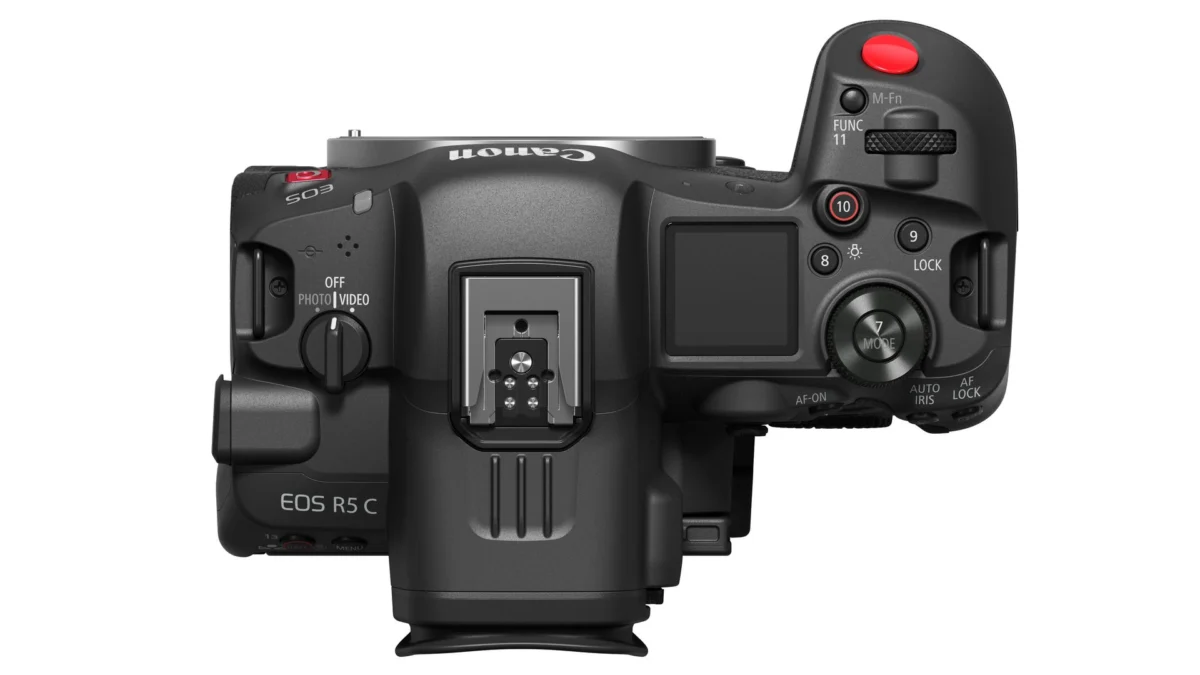
The hybrid digital imaging market has reached a new milestone as the critically acclaimed Canon EOS R5 C drops to its lowest-ever price in the United Kingdom, now available at Wex Photo Video for £2,399. Timed strategically alongside recent promotional retail events such as Canon Store Week, this significant price reduction marks an appealing entry point for independent filmmakers, documentary crews, and professional hybrid creators looking to acquire top-tier production equipment without paying the original, premium MSRP.
Bridging the demanding worlds of high-end cinema and high-resolution photography, the Canon EOS R5 C represents a unique engineering achievement. While it shares a foundational lineage with Canon’s popular consumer-oriented EOS R5 mirrorless camera, the ‘C’ designation introduces a specialized Cinema EOS operating system, an integrated active cooling fan system, and advanced video codecs. This design philosophy directly targets creators who refuse to compromise between pristine motion picture output and razor-sharp photographic stills.
Main Facts and Technical Capabilities
At the heart of the Canon EOS R5 C is a powerful 45-megapixel full-frame CMOS sensor paired with the advanced DIGIC X image processor. This hardware combination enables the device to function as two distinct, fully realized tools encased in a single, weather-sealed magnesium alloy chassis.
In its video configuration, the camera distinguishes itself by capturing native 8K resolution internally at up to 60 frames per second. Utilizing 12-bit Cinema RAW Light, the camera records an extraordinary amount of dynamic range and color depth, making it exceptionally well-suited for high-end HDR productions and professional color grading pipelines. To achieve the maximum 8K 60p frame rate, the camera requires an external power source—such as a compatible USB-C power bank or a dedicated mains adapter—which drives the internal processing power and active cooling fan required to manage heat dissipation during intensive recording sessions.
Beyond its flagship 8K capabilities, the camera supports flexible recording modes across various sensor crops. It accommodates Super 35 recording up to 5.9K at 60p and Super 16 recording up to 2.9K at 60p. These options provide videographers with expansive lens adaptability and variable data rates, accommodating workflows ranging from fast-paced electronic news gathering to deliberate cinematic narrative projects.
When users toggle the physical power switch into the photographic stills mode, the camera instantly adopts the interface and feature set of the standard EOS R5. It delivers 45-megapixel stills at bursts up to 20 frames per second using the electronic shutter, complete with Canon’s renowned Dual Pixel CMOS AF II technology, which features sophisticated subject tracking for humans, animals, and vehicles.
Chronology and Market Evolution
The journey of the Canon EOS R5 C reflects the rapidly shifting landscape of professional digital video production. When Canon originally announced the camera, it targeted a niche segment of the market that felt underserved by traditional cinema bodies and standard mirrorless cameras alike. Standard mirrorless cameras frequently faced thermal limitations—notoriously highlighted by the initial heat dissipation challenges of the original EOS R5 when shooting extended video clips.
To resolve these limitations, Canon engineers redesigned the chassis of the R5 to incorporate a prominent, protruding rear section housing a whisper-quiet cooling fan. This addition allowed the R5 C to record indefinitely without the thermal shutdowns that typically plague compact mirrorless bodies during long-form video shoots.

Over the subsequent months and years, the camera underwent crucial firmware updates that expanded its utility. Notably, the EOS R5 C earned official certification on the prestigious Netflix approved camera list. This certification validated the camera’s technical specifications for high-end episodic television and streaming feature productions, cementing its status not merely as a high-end enthusiast device, but as a legitimate primary (A-cam) or secondary (B-cam) production tool for broadcast-quality content creators.
The recent price cut to £2,399 at major UK retailers like Wex Photo Video represents the culmination of a gradual downward price adjustment trend. As manufacturing efficiencies stabilize and competing camera manufacturers introduce rival hybrid systems, retailers have leveraged promotional windows—such as Canon Store Week—to offer unprecedented discounts, bringing professional-grade 8K cinema gear within financial reach of a broader demographic of creators.
Industry Response and Expert Analysis
The broader digital imaging community has closely monitored the trajectory of the EOS R5 C, viewing its latest price drop as a significant development for the independent film sector. Industry analysts note that traditional cinema cameras from established brands often require substantial investments in proprietary rigging, external monitors, and specialized power solutions. By contrast, the EOS R5 C utilizes the expansive ecosystem of RF-mount lenses and accessible battery formats, drastically reducing the total cost of ownership for production crews.
Cinematographers and gear reviewers have consistently praised the camera’s dual-system approach. The physical toggle switch separating the photography operating system from the Cinema EOS video interface eliminates the operational confusion that often arises when hybrid shooters attempt to navigate nested menus designed for a single discipline. In the video mode, operators gain access to waveform monitors, false color displays, timecode inputs, and professional audio mapping options that are standard on dedicated cinema line equipment.
However, industry experts also highlight the practical trade-offs associated with the device. The inclusion of the active cooling fan increases the overall depth and weight of the camera body compared to the streamlined profile of the standard R5. Furthermore, battery life when using the compact LP-E6NH batteries in video mode is notably shorter than that of larger cinema cameras, reinforcing the necessity for external V-mount battery rigs or USB-C power delivery solutions during professional shoots.
Broader Impact and Market Implications
The positioning of the EOS R5 C at this new sub-£2,400 price point carries profound implications for the mid-tier camera market. As consumer expectations for video resolution escalate—with clients routinely demanding 4K delivery and, increasingly, 8K archival footage—production companies face pressure to upgrade their gear lockers without inflating their operational budgets.
By offering native 12-bit RAW recording and Netflix-approved status at a price traditionally associated with mid-range crop-sensor cameras, Canon has set a new benchmark for value in the professional video sector. Independent documentary filmmakers, corporate video production agencies, and wedding cinematographers now have access to a tool capable of delivering Hollywood-grade color science and resolution without the prohibitive financial barrier to entry that once defined cinema-class equipment.
As retail competition continues to evolve and supply chains adapt to shifting global demands, promotions such as the current Wex Photo Video discount underscore a broader democratization of high-end visual technology. The Canon EOS R5 C stands as a testament to the convergence of still photography and motion picture capture, proving that versatility and uncompromising professional performance can coexist within a single, increasingly accessible package.