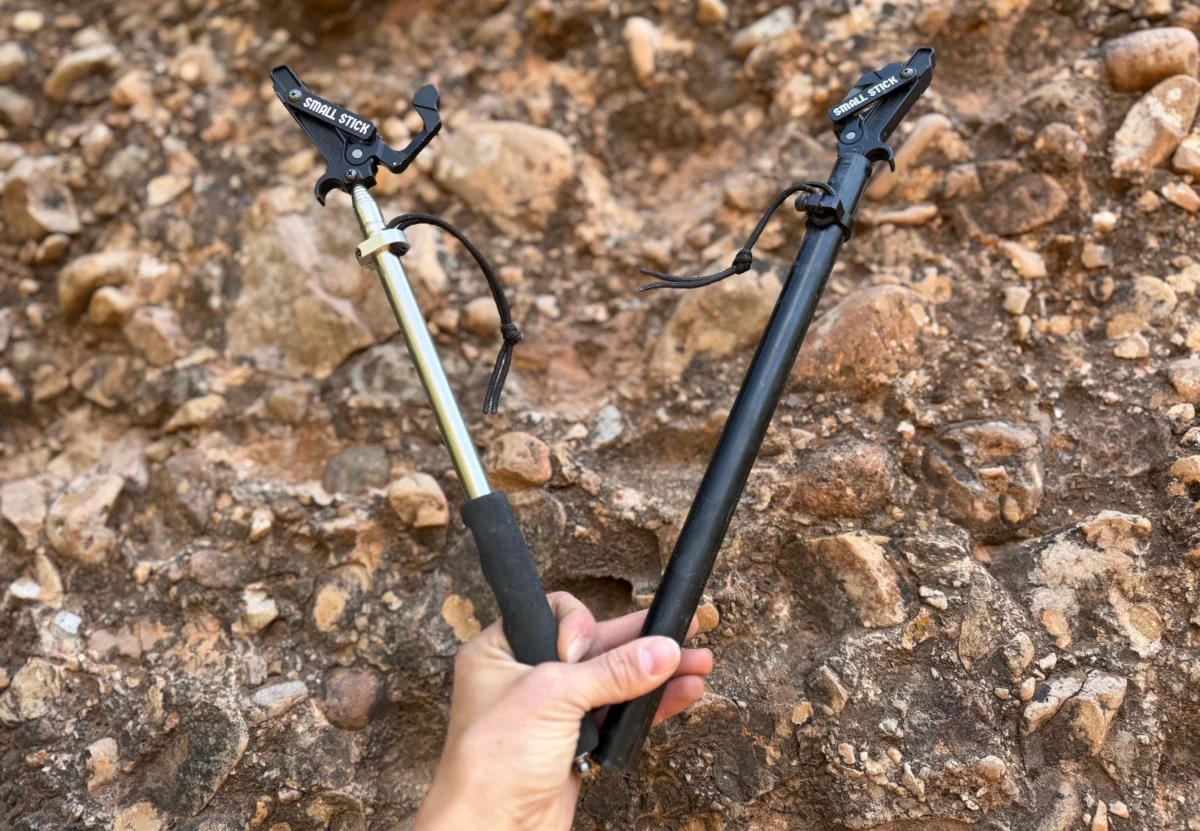
The climbing world is no stranger to innovative gear designed to push boundaries and enhance safety. Among the latest entrants is the Small Stick, a mid-route stick clip developed by Small Stick Climbing, aiming to assist climbers in clipping bolts while ascending, particularly on projects or challenging sections. While the concept promises greater confidence and accessibility, early user experiences have highlighted both the potential of the device and the critical importance of product reliability.
Early Stumbles and Product Evolution
The journey of the Small Stick began with a presale model tested last fall on the 5.10c route "Pocket Rocket" in Moab, Utah. The initial experience was less than ideal. During an attempt to clip the first bolt, situated just above a roof overhang, a crucial component of the collapsible pole on the Small Stick snapped. This failure sent the quickdraw and rope plummeting, causing a tense moment for the climber and her husband, Casey, who was managing the equipment from below.
Upon reporting the incident, Small Stick Climbing acknowledged the defect. Out of 250 units distributed in the presale, this was the second reported pole break. The company’s response was swift, characterizing the issue as "two too many" failures and indicating a commitment to rectifying the problem. This early setback, though concerning, set the stage for a redesigned product.
A few months later, a revised Small Stick, along with a more robust and longer version, the Small Stick Plus, were provided for further testing. The redesign included a modification to the arms cradling the carabiner, making them more supple and requiring less force for a successful clip. After several months of rigorous use across various terrains and conditions in Utah, neither the original redesigned Small Stick nor the Small Stick Plus experienced any pole failures or other structural damage. This suggests that the initial design flaw has been addressed, paving the way for a more reliable product.
Origins and Design Philosophy
The genesis of the Small Stick lies in a climber’s personal need. Hayley McKinney, co-founder of Small Stick Climbing, reportedly approached her partner, Ryman Wiemann, with a desire for a stick clip that could be used effectively mid-route, rather than solely for the initial bolts of a climb. McKinney, an aerospace engineer by trade, developed a fear of falling after a serious trad fall in 2019. She found that the cautious use of stick-clipping techniques helped her manage and ultimately overcome this debilitating fear. This personal motivation fueled the development of a product designed to enhance climber confidence and allow for more controlled progression on challenging routes.
Wiemann, leveraging his expertise in aerospace engineering with experience designing prototype parts for entities like NASA and SpaceX, applied his skills to create a durable climbing tool. The Small Sticks are constructed using 7075 aerospace-grade aluminum, a material renowned for its strength-to-weight ratio. While the poles are imported, the majority of the product is manufactured in their Las Vegas, Nevada workshop, emphasizing a commitment to quality control and domestic production for key components.
Product Specifications and Comparison
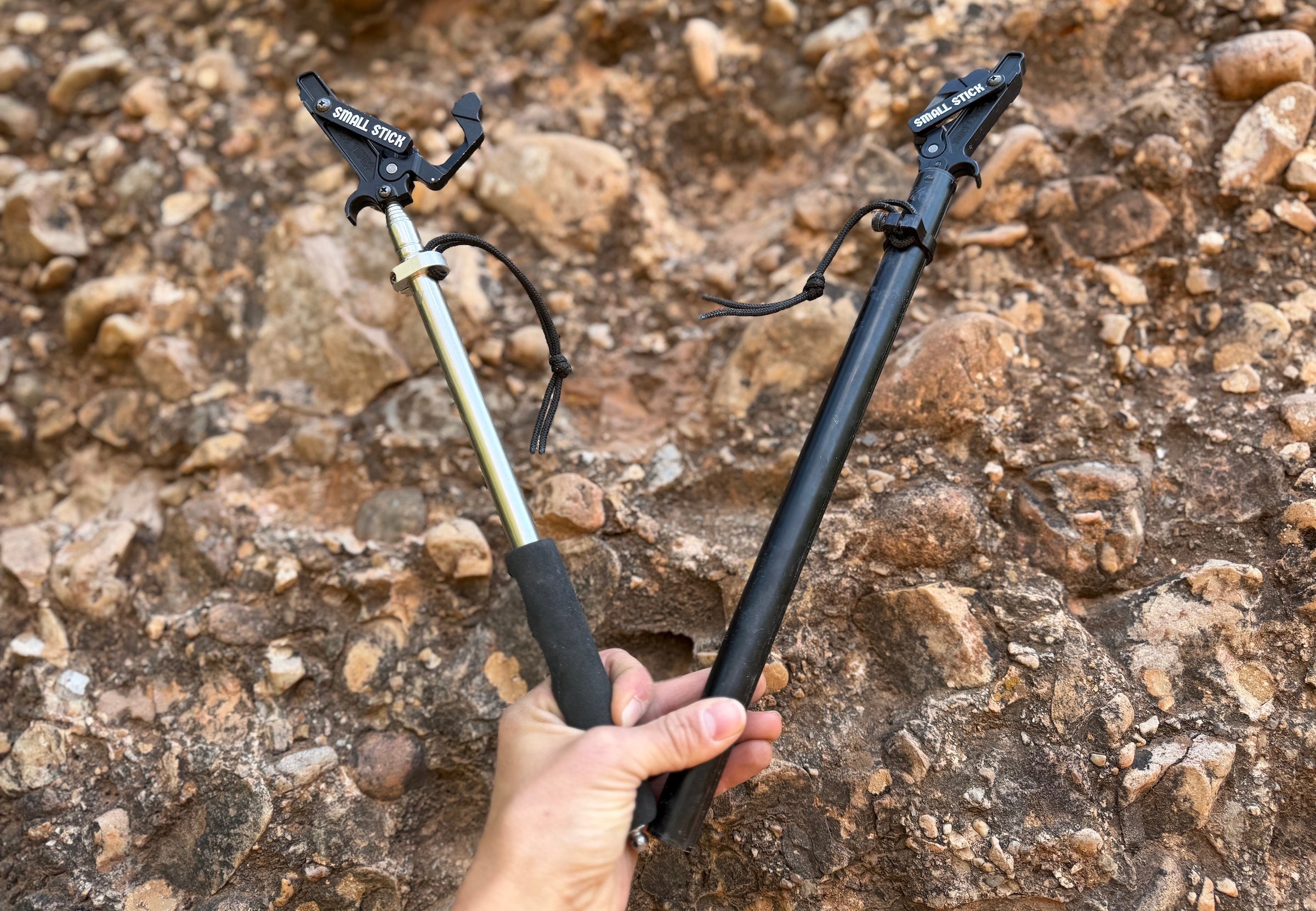
The Small Stick line currently comprises two models: the Original Small Stick and the Small Stick Plus. Both are designed to function similarly to traditional stick clips, featuring extendable poles and compatibility with most quickdraws. The process involves loading a quickdraw into the device, clipping the rope to the lower carabiner, extending the pole to reach the bolt, and making the clip. This allows climbers to establish a top-rope setup for a few moves, facilitating easier progression on difficult sections. Both models are remarkably compact when collapsed, measuring just over a foot in length and weighing comparably to standard climbing gear, making them unobtrusive additions to a climber’s harness.
-
Original Small Stick:
- Extended Length: 5 feet 5 inches
- Compact Length: 13.5 inches
- Weight: 113 grams (comparable to an average quickdraw)
- Price: $79.00
-
Small Stick Plus:
- Extended Length: 6 feet 3 inches
- Compact Length: 14.5 inches
- Weight: 149 grams (comparable to a Black Diamond C4 #4 cam)
- Price: $99.99
A full-sized version is reportedly in development, suggesting a potential expansion of the product line to cater to a wider range of climbing scenarios.
The mid-route stick clip market, though niche, is seeing increased interest. Several competitors offer similar functionalities, each with its own set of advantages and disadvantages:
-
Magic Wand (Hangdog Climbing): This device, while compact and affordable ($25.99), requires specialized carabiners. Each version is designed for a specific carabiner type, necessitating carabiner swaps or the purchase of multiple specialized quickdraws for repeated use on a route. This lack of universal compatibility can be a significant drawback for climbers seeking seamless integration with their existing gear.
-
Pronghorn Stick Clip (Boulder, CO): The Pronghorn is perhaps the closest competitor to the Small Sticks, offering an impressive extended reach of up to eight feet. It also packs down to a very compact 13 inches. However, it is designed to work with "most" wire-gate carabiners and cannot clip permadraws, unlike the Small Stick Plus. Furthermore, the Pronghorn’s construction relies on less robust materials compared to the Small Sticks’ aerospace-grade aluminum and stainless steel components. A key differentiator is the Small Sticks’ design, which allows for pole replacement, a feature not available on the Pronghorn or other similar models, hinting at a longer product lifespan.
-
Trango Beta Stick EVO (Climb length): Trango offers the Beta Stick EVO, with a "Climb" length variant theoretically usable for mid-route clipping. However, its considerable weight (314 grams) and susceptibility to breakage due to plastic components make it less ideal for dynamic climbing. Its current out-of-stock status further limits its immediate relevance in the market.
Performance Review: Strengths and Weaknesses
After months of testing across various Utah climbing areas, including Ogden Canyon, the La Sal Mountains, and Devil’s Playground, a clearer picture of the Small Sticks’ performance emerges.
Strengths:
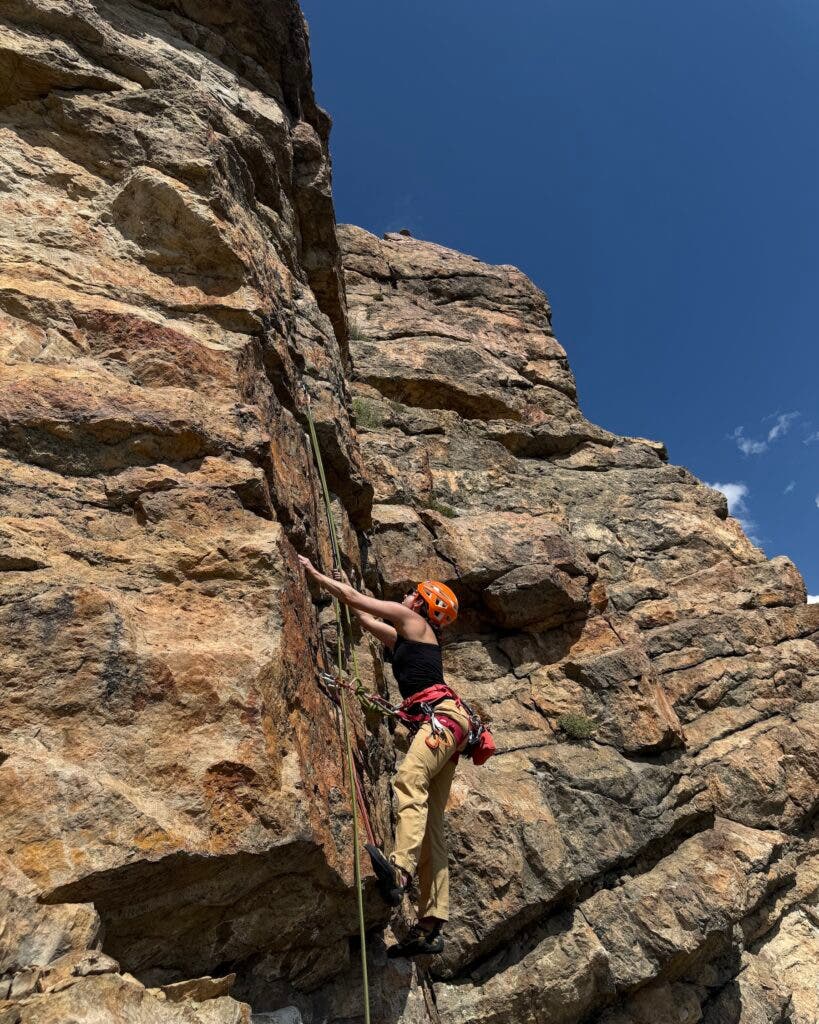
- Enhanced Confidence for Projecting and Runouts: The Small Stick proves invaluable for climbers working on challenging projects, allowing them to decipher cruxes and build up to redpoint attempts without losing crucial ground or the mental momentum gained on a climb. For shorter climbers or those with a fear of falling, it offers a practical solution to overcome runout sections and reach bolts that might otherwise be difficult to clip.
- Compact and Lightweight Design: Both models are easily clipped to a harness via a small loop and are virtually unnoticeable during climbing. The poles did not accidentally extend during the testing period, a crucial safety feature.
- Quickdraw Compatibility: The Small Sticks are highly compatible with a wide range of quickdraws, eliminating the need for specialized gear for most users, unlike some competitors. The Small Stick Plus even offers a method for clipping permadraws, further enhancing its versatility.
- Durability (Post-Redesign): The redesigned models have demonstrated robust performance, with no structural failures reported during the testing phase. The use of high-quality materials suggests a long-term durability for the core components.
- Repairability: The ability to replace poles, a known potential failure point, adds significant value and extends the product’s lifespan, distinguishing it from many competitors.
Weaknesses:
- Pole Wobble on Original Small Stick: The original Small Stick, when fully extended, exhibits a noticeable wobble. This can make precise bolt clipping challenging, especially in windy conditions or when reaching the absolute limit of its extension. This issue is largely absent in the sturdier Small Stick Plus.
- Clipping Finesse Required: While the design has been improved, making clips can still be finicky for some users, particularly those who are less dexterous or patient. Approximately 25-30% of attempts resulted in frustration and abandonment of the clipping attempt.
- Potential for Premature Carabiner Closure: In awkward clipping positions, or while attempting to adjust the stick, the carabiner could occasionally close prematurely, requiring a reset.
- Mindset Impact: An unexpected consequence of using mid-route stick clips is their potential to alter a climber’s mindset. The perceived safety net can, paradoxically, lead to more timid climbing, as the temptation to avoid challenging or runout sections by clipping the next bolt becomes a subconscious influence. This effect is more pronounced for climbers who primarily use the device to mitigate fear rather than for project progression.
Addressing Pole Stability and Usage Recommendations
Small Stick Climbing offers several recommendations to mitigate issues related to pole stability and longevity. They advise pulling up the slack in the rope from the belayer’s side to reduce the weight on the pole. Additionally, for longer pitches, they suggest tying off the rope to the harness to further offload weight, which can improve pole stability and extend the product’s lifespan. While the author has implemented some of these suggestions, the original Small Stick still demonstrates a slight downward arc when fully extended.
The company also offers a one-year warranty for pole breaks. For devices outside this warranty period, replacement poles are available for purchase, further underscoring the pole as a key component for potential wear and tear.
Broader Implications for the Climbing Community
The development and refinement of products like the Small Stick reflect a growing trend in the climbing industry towards tools that enhance accessibility and allow climbers to push their limits safely. For individuals who grapple with fear of falling or physical limitations such as height, these devices can be transformative, opening up routes and styles of climbing that might otherwise be inaccessible.
However, the initial design flaw and subsequent user feedback highlight the critical importance of rigorous testing and quality control in the development of safety-critical climbing equipment. The quick response from Small Stick Climbing in addressing the issue and redesigning the product is commendable and crucial for building trust within the climbing community.
The potential psychological impact of using such devices also warrants consideration. While the Small Stick can be a powerful tool for projecting and building confidence, climbers must remain mindful of its influence on their overall risk assessment and decision-making on the wall. A balanced approach, where the stick clip is used strategically to facilitate progression rather than as a crutch to avoid challenges, is likely the most beneficial path for long-term climbing development.
In conclusion, the Small Stick and Small Stick Plus represent a significant innovation in the realm of mid-route stick clips. Despite an inauspicious start, the company’s commitment to product improvement has yielded a more reliable and functional tool. For climbers seeking to enhance their projecting capabilities, manage runout sections, or gain greater confidence on challenging ascents, the Small Stick Plus, in particular, appears to be a strong contender, offering a blend of durability, functionality, and a thoughtful design that addresses a genuine need within the climbing community. The ongoing evolution of such products promises to continue shaping how climbers approach and conquer their aspirations on the vertical.