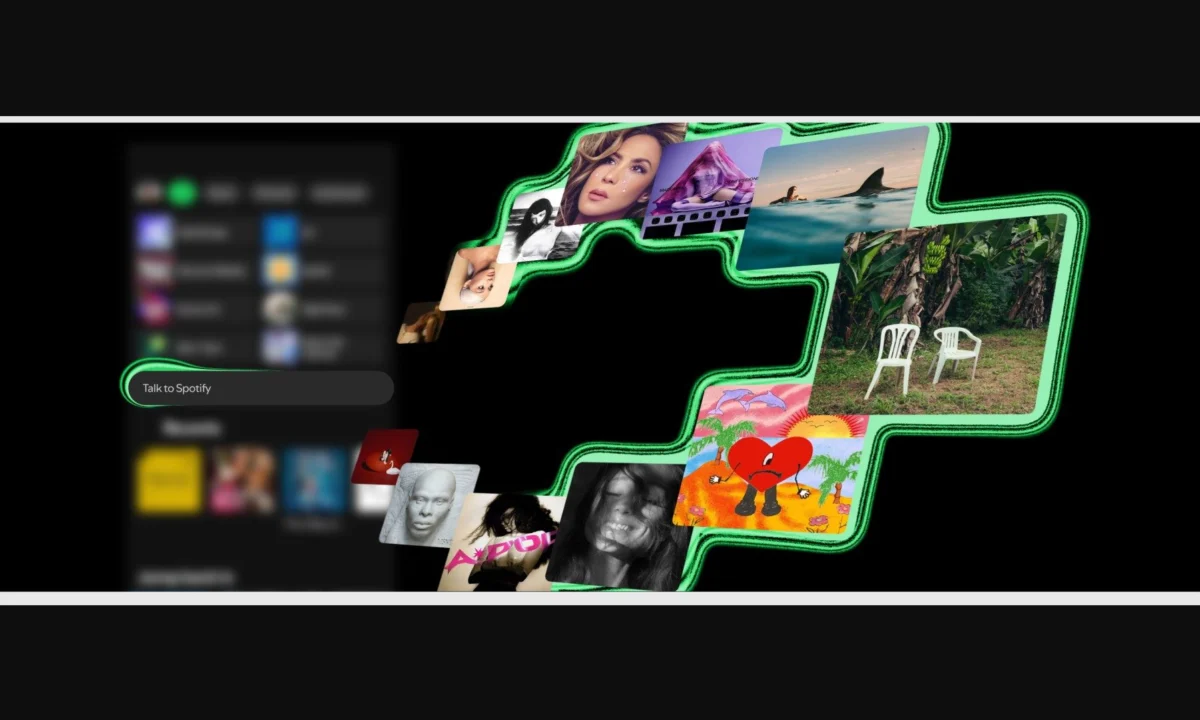
Spotify is ushering in a new era of music discovery and control with the beta rollout of its AI-powered conversational feature, poised to transform how Premium subscribers interact with their audio landscape. This innovative tool, accessible from the Home and Now Playing screens, functions as a sophisticated personal audio assistant, allowing users to verbally or textually request music, podcasts, and audiobooks, and then refine those selections through natural language follow-up questions. This move marks a significant step in Spotify’s ongoing integration of artificial intelligence, aiming to provide a more intuitive, personalized, and engaging listening experience.
The new feature empowers users to transcend the traditional search bar, enabling them to articulate their desires in a conversational manner. Instead of meticulously typing in song titles or artist names, users can now simply speak or type their requests, such as "Play something upbeat for a workout" or "Find podcasts about sustainable living." The AI then not only fulfills the initial request but also facilitates iterative refinement. For instance, a user might follow up with "Add more songs by that artist," "Focus on recent releases," or "Make it a bit more mellow." This dynamic interaction promises to significantly reduce the friction associated with discovering and curating audio content, aligning with the growing consumer demand for seamless and intelligent digital experiences.
Background and Chronology of Spotify’s AI Integration

Spotify’s foray into artificial intelligence is not a recent development. The company has been strategically investing in and experimenting with AI technologies for several years, integrating them across various facets of its platform to enhance user engagement and operational efficiency.
The genesis of this AI-driven evolution can be traced back to earlier initiatives aimed at personalization. Features like the highly popular AI DJ, introduced in early 2023, offered a glimpse into Spotify’s vision. This feature curates personalized music streams, complete with an AI-generated voice that introduces songs and explains the rationale behind recommendations. This served as a crucial stepping stone, demonstrating the potential of AI to create a more dynamic and informative listening environment.
Following this, the AI Playlist feature emerged, allowing users to generate playlists based on written prompts describing a desired mood, activity, or genre. This provided a more creative avenue for playlist creation, moving beyond manual selection and curated algorithmic suggestions.
More recently, Studio by Spotify Labs has been developed, a generative AI tool capable of creating personalized podcasts and daily briefings tailored to individual listening habits. This highlights Spotify’s ambition to leverage AI for content generation and highly individualized content delivery.
Adding another layer to their AI strategy, Spotify announced a separate generative AI tool designed for creating licensed covers and remixes. This ambitious project, which involves collaboration with participating artists and songwriters, signals a potential future where users can creatively engage with music in novel ways, albeit with commercial and licensing considerations.
The current conversational AI feature, now rolling out in beta, represents the culmination of these efforts, aiming to bring a sophisticated, interactive AI directly into the core user experience for music and podcast control and information retrieval.

Key Capabilities of the Conversational AI Feature
The new AI-powered conversational feature is designed to be a comprehensive audio assistant, offering a wide range of functionalities:
- Intuitive Music and Podcast Playback: Users can request specific songs, artists, albums, podcasts, or audiobooks. The AI can also interpret broader requests, such as "Play something I haven’t heard before" or "Find a playlist for a rainy day."
- Dynamic Content Refinement: The ability to engage in follow-up conversations allows for precise tuning of the audio experience. This includes adding specific artists to a queue, narrowing down genre selections, adjusting the mood of the music (e.g., "make it more upbeat," "calmer"), or requesting music from a particular era.
- Actionable Commands: Beyond playback, users can instruct the AI to perform actions such as saving a song, adding it to the playback queue, or following an artist.
- In-Depth Information Retrieval: The feature can provide detailed information about the currently playing track, album, or podcast. Users can ask questions like "When was this album released?", "What genre is this song?", or "What inspired this record?" This capability transforms the app into an interactive music encyclopedia.
- Personalized Recommendations and History Queries: Leveraging user listening history, the AI can offer highly personalized recommendations. Crucially, it can also answer questions related to past listening habits. For example, users can inquire, "When did I first listen to this song?" or "What genres have I been listening to most recently?" This deep dive into personal listening data offers unprecedented insights and control.
- Cross-Content Support: The AI’s capabilities extend beyond music to encompass podcasts and audiobooks. Users can request more content from a specific author, find other podcast episodes featuring a particular guest, or delve into the nuances of an audiobook’s narrative.
The inclusion of listening history queries is particularly noteworthy. This feature taps into the vast datasets Spotify has amassed, offering users a unique way to reflect on their musical journey and discover patterns they might not have consciously noticed. This goes beyond simple recommendations and delves into user self-discovery.

Beta Rollout and Availability
The conversational AI feature is currently rolling out in a beta phase, initially available to Premium users aged 18 and older in the United States, Ireland, and Sweden. The feature is accessible in English through Spotify’s iOS and Android mobile applications. Spotify has cautioned that as the feature is still under development and testing, responses may not always be perfect. This iterative approach to deployment allows the company to gather user feedback and refine the AI’s performance and accuracy before a wider global release.
The selection of these initial regions is strategic, likely chosen for their mature digital markets, high smartphone penetration, and diverse user bases that can provide robust testing data. The phased rollout also mitigates the risk of widespread issues and allows for targeted improvements based on real-world usage.

Broader Impact and Implications
The introduction of a conversational AI feature by Spotify has several significant implications for both the music streaming industry and the broader digital landscape:
- Enhanced User Experience and Engagement: By making music discovery and control more intuitive and interactive, Spotify aims to deepen user engagement. A more seamless and personalized experience can lead to increased listening hours, greater user satisfaction, and a reduced likelihood of churn. This moves beyond passive consumption to a more active and conversational relationship with the platform.
- Competitive Differentiation: In an increasingly crowded streaming market, innovative features are crucial for differentiation. Spotify’s advanced AI capabilities position it as a technology leader, potentially attracting and retaining users who value cutting-edge digital experiences. Competitors will undoubtedly be watching closely and may be compelled to develop similar AI-driven features to remain competitive.
- Data Utilization and Personalization: The ability of the AI to access and interpret user listening history opens up new avenues for hyper-personalization. This could lead to more accurate recommendations, more tailored content discovery, and potentially even personalized audio experiences that adapt in real-time to a user’s mood or activity. The ethical implications of such deep data utilization will continue to be a subject of discussion.
- Evolution of Human-Computer Interaction: This feature represents another step in the evolution of how humans interact with technology. The move towards natural language interfaces for complex tasks like music curation signifies a broader trend of making digital services more accessible and intuitive, mirroring advancements seen in virtual assistants and chatbots across various industries.
- Potential for New Revenue Streams: While currently available to Premium users, the success of this feature could pave the way for future monetization strategies. For instance, enhanced AI capabilities could be bundled into higher-tier subscriptions or offered as add-ons for specific functionalities, such as advanced remixing tools or personalized podcast creation.
- Industry Standard Shift: If successful, Spotify’s conversational AI could set a new industry standard for how users interact with audio streaming services. This could pressure other platforms to invest heavily in similar AI technologies to avoid falling behind. The long-term impact on how music is discovered, consumed, and even created could be profound.
While the technology is still in its nascent stages, the potential for Spotify’s conversational AI to redefine the user experience is undeniable. As the beta program progresses and the feature is refined, its impact on how we listen to music and engage with our favorite audio content will likely be substantial. The future of audio streaming appears to be increasingly intelligent, interactive, and personalized, with Spotify at the forefront of this transformative wave. The company’s commitment to AI integration underscores its ambition to remain a dominant force in the ever-evolving digital entertainment landscape.