
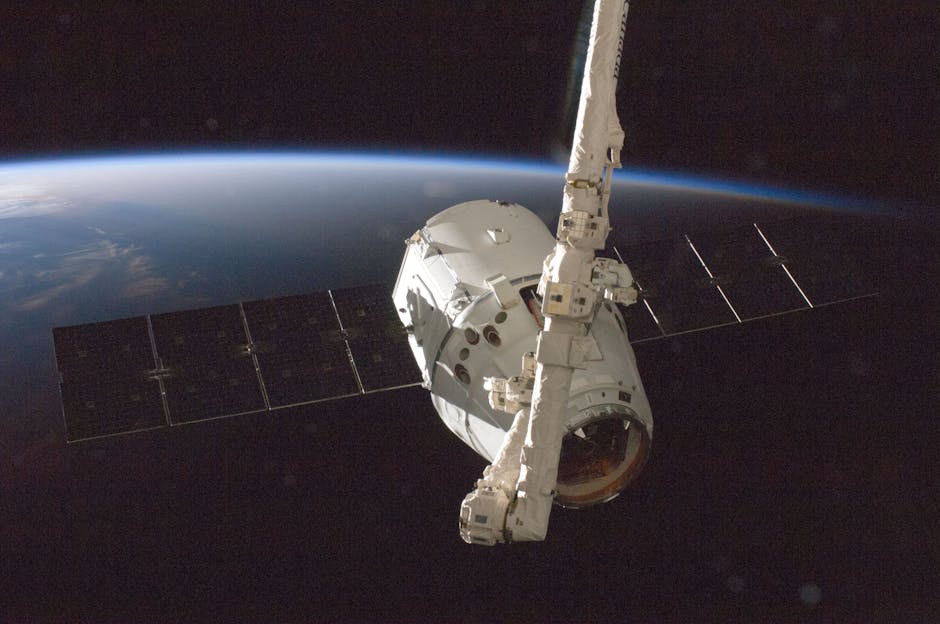
Orbital Refueling: Extending Satellite Lifespans and Enabling New Missions
The concept of in-orbit refueling for satellites is rapidly transitioning from theoretical possibility to operational reality, promising to revolutionize space sustainability and unlock ambitious new mission profiles. This advanced capability involves transferring propellant from a dedicated refueling spacecraft to a client satellite while both are in orbit. Traditionally, satellites are designed with a finite amount of propellant, dictating their operational lifespan. Once this propellant is depleted, the satellite becomes space debris or is decommissioned. Orbital refueling directly addresses this limitation, offering a mechanism to replenish propellant reserves, thereby significantly extending a satellite’s service life. This extension not only maximizes the return on investment for expensive satellite assets but also reduces the environmental burden of discarded spacecraft in orbit. Beyond mere longevity, orbital refueling is a critical enabler for more complex and demanding space missions that require substantial propellant budgets for maneuvering and station-keeping.
The technological foundation for orbital refueling rests on several key components and processes. The core elements include a refueling spacecraft, equipped with propellant storage tanks and a docking or rendezvous mechanism, and the client satellite, which must be designed with a standardized refueling interface. The refueling process itself typically involves a complex sequence of automated or remotely controlled maneuvers. This begins with the refueling spacecraft rendezvousing with the client satellite, carefully matching its orbital parameters and velocity. Once in close proximity, a docking mechanism, often employing probes, latches, and fluid connectors, is engaged. The transfer of propellant then occurs, usually through a controlled pressurized system. The design of these interfaces is paramount, requiring strict adherence to international standards and protocols to ensure interoperability between different manufacturers and satellite generations. The propellant itself can vary, with common choices including hypergolic propellants like hydrazine and nitrogen tetroxide, or cryogenic propellants such as liquid oxygen and liquid hydrogen, each presenting unique challenges in terms of storage and handling in the vacuum of space.
The strategic importance of orbital refueling for space sustainability cannot be overstated. The growing number of satellites in Earth orbit, particularly with the proliferation of large constellations, presents a significant challenge in terms of orbital debris. Decommissioning satellites by de-orbiting them requires a substantial amount of propellant. By enabling satellites to extend their operational lives, orbital refueling directly reduces the number of satellites that eventually need to be de-orbited. Furthermore, the ability to refuel in orbit allows for more precise end-of-life disposal, potentially guiding satellites to designated graveyard orbits or controlled de-orbit trajectories, thus minimizing the risk of creating new debris. This proactive approach to space debris mitigation is becoming increasingly crucial as orbital congestion intensifies, threatening the long-term viability of space operations for all actors. Investing in refueling infrastructure is therefore an investment in the future of space exploration and utilization.
Beyond sustainability, orbital refueling unlocks unprecedented mission capabilities and flexibility. Satellites can be launched with less propellant, allowing for smaller, less expensive launch vehicles or carrying larger payloads. Once in orbit, they can then be refueled to achieve their operational propellant margins. This “fuel-up-on-orbit” strategy can reduce launch costs and enable missions previously constrained by payload mass limitations. Furthermore, refueling allows for in-orbit servicing and upgrades. A refueling spacecraft could, for example, be equipped with other servicing capabilities, such as robotic arms for minor repairs or the ability to transfer other fluids. This opens the door to a more modular and adaptable approach to space infrastructure, where satellites are not fixed-life assets but rather components that can be maintained and enhanced throughout their operational period. Imagine a scenario where a satellite’s performance degrades due to propellant loss during a complex maneuver; a simple refueling mission could restore its full capability, avoiding the cost and time of launching a replacement.
The economic case for orbital refueling is compelling. The cost of launching a satellite is a significant portion of the overall mission expenditure. By extending a satellite’s lifespan by several years through refueling, the cost per year of operation is drastically reduced. This increased return on investment makes space assets more valuable and sustainable. Moreover, the development of a robust orbital refueling ecosystem creates new economic opportunities in the space sector, fostering innovation in spacecraft design, propulsion systems, robotics, and ground segment operations. Companies specializing in refueling services can emerge, offering tailored solutions to satellite operators, akin to the established aviation refueling industry on Earth. This commercialization of refueling capabilities is a vital step towards a more mature and economically viable space economy. The ability to extend the life of critical infrastructure like communication satellites, weather monitoring platforms, and national security assets translates directly into long-term economic benefits and enhanced operational resilience.
Several key players and technologies are driving the advancement of orbital refueling. Companies like Northrop Grumman with its Mission Extension Vehicle (MEV) and Mission Robotic Vehicle (MRV), and Orbit Fab with its Rainmaker refueling depots and fuel-transfer adapters, are at the forefront of developing and demonstrating these capabilities. The MEV, for example, has demonstrated the ability to dock with and provide propulsion services to existing satellites, effectively extending their lifespans. Orbit Fab is focused on establishing a network of propellant depots in orbit, creating a readily accessible refueling infrastructure for a variety of spacecraft. These pioneering efforts involve advanced robotics, autonomous rendezvous and docking systems, and precise propellant transfer technologies. The development of standardized refueling interfaces is also crucial, with organizations like the Space Logistics Association working to define common protocols for interoperability. The evolution of propulsion systems, including electric propulsion which requires less propellant but longer burn times, also influences the design and requirements for orbital refueling.
The technical challenges associated with orbital refueling are significant but are being systematically addressed. One of the primary challenges is the precise rendezvous and docking of two spacecraft in the harsh environment of space. This requires sophisticated guidance, navigation, and control (GNC) systems, as well as robust docking mechanisms that can withstand the vacuum, extreme temperature variations, and potential micro-meteoroid impacts. Another challenge is the safe and efficient transfer of propellant. This involves managing pressure differentials, preventing leaks, and ensuring the purity of the transferred propellant. For cryogenic propellants, the challenges are amplified due to their extremely low temperatures and boil-off issues, requiring advanced insulation and management systems. Furthermore, the long-term reliability of refueling components and the ability to operate autonomously or with minimal ground intervention are critical for mission success. The development of standardized refueling ports and connectors is also a complex engineering task, ensuring compatibility across different satellite designs and manufacturers.
The regulatory and legal landscape surrounding orbital refueling is also evolving. As refueling becomes more commonplace, international agreements and national regulations will need to address issues such as liability, spectrum allocation for communication during refueling operations, and debris mitigation standards. Ensuring safe and responsible operations will require clear guidelines and oversight from space agencies and international bodies. The development of common standards for refueling interfaces and procedures is essential to foster an interoperable and safe refueling market. This also includes addressing the potential for misuse of refueling technology and ensuring that it contributes to the peaceful and sustainable use of outer space. The establishment of a clear and predictable regulatory framework is vital to attract investment and accelerate the widespread adoption of orbital refueling services.
The future of orbital refueling is incredibly promising, with potential applications extending far beyond simple satellite life extension. We can envision orbital fuel depots strategically located in various orbits, acting as gas stations for spacecraft. This would enable more ambitious deep-space missions, allowing spacecraft to refuel before embarking on journeys to other planets or asteroids. It could also facilitate rapid deployment of satellites for urgent national security needs or disaster response. The ability to refuel in orbit also opens up possibilities for in-orbit manufacturing and assembly. Refueling spacecraft could support the construction of large structures in space, such as telescopes or space-based solar power stations, by providing the necessary propellants for maneuvering and station-keeping. Furthermore, the development of advanced refueling technologies could lead to the creation of orbital tugs that can move satellites to different orbits or de-orbit them more efficiently. The continued miniaturization and increased efficiency of propulsion systems will also play a role in shaping the future of refueling, potentially leading to smaller and more agile refueling vehicles.
The concept of "space logistics" encompassing refueling, servicing, and debris removal is gaining traction. Orbital refueling is a cornerstone of this emerging industry, enabling a more sustainable and dynamic space environment. As the number of satellites continues to grow and the ambition of space missions expands, the demand for reliable and efficient in-orbit refueling services will undoubtedly increase. The ongoing research and development, coupled with successful demonstrations, are paving the way for a future where refueling is a routine aspect of space operations, transforming our ability to explore, utilize, and sustain the final frontier. The technological advancements, economic drivers, and growing recognition of space sustainability imperatives are converging to make orbital refueling a critical component of future space endeavors. The development of robust, cost-effective, and standardized refueling solutions will be key to unlocking the full potential of this transformative technology, ensuring that space remains a valuable resource for generations to come.
